
This article may contain affiliate links. If you buy through these links, we may earn a commission at no extra cost to you.
If you are trying to build a healthier kitchen, cookware is one of the most confusing places to start.
A pan can say “PFOA-free” and still not tell you everything you need to know. Another pan can be marketed as “granite,” “stone,” “titanium,” or “non-toxic” without clearly explaining what the cooking surface actually is.
That is why this guide focuses specifically on PFOA and PTFE-free pots and pans. The goal is not to make your kitchen feel scary or impossible. The goal is to help you understand the labels, avoid the weakest claims, and choose cookware that fits the way you actually cook.
Quick Answer: What Should You Buy?
If you want PFOA and PTFE-free pots and pans, look for cookware that clearly states it is PTFE-free and preferably PFAS-free, not just PFOA-free.
For most homes, the easiest swap is one good ceramic nonstick frying pan for eggs, pancakes, and delicate foods, paired with more durable materials like stainless steel, cast iron, carbon steel, or enameled cast iron for daily cooking.
My practical recommendation is this:
- Choose ceramic nonstick if you want the easiest transition away from traditional nonstick.
- Choose stainless steel if you want longer durability and are willing to learn heat control.
- Choose cast iron or carbon steel if you cook with higher heat and do not mind seasoning.
- Choose enameled cast iron for soups, stews, braising, and slow cooking.
- Choose titanium no-coating cookware only if you want a premium option and accept a learning curve.
If you want the broader cookware overview first, start with our best non-toxic cookware sets guide. For this article, we are going deeper into the specific PFOA/PTFE-free nonstick question.
Anita’s Take
Most articles about PFOA and PTFE-free cookware focus almost entirely on product comparisons. What I find more useful is understanding what the labels actually mean — and what they do not tell you.
After my lung surgery, reducing unnecessary chemical exposure in my home became more personal to me. Not in a fearful way, but in a practical one. Cookware is something many of us use every day, so it makes sense to choose clearer materials when we can.
The honest answer is that no pan is completely perfect or risk-free. “PFOA-free” alone is not enough information. What matters is choosing more transparent materials, using them correctly, and replacing pans when they are scratched, peeling, or no longer performing well.
That is the approach I use in my own kitchen: fewer mystery coatings, better everyday habits, and realistic upgrades that make cooking feel easier, not more stressful.
The Best Options at a Glance
| Pick | Best For | Main Material / Coating | Main Strength | Main Weakness |
| GreenPan Valencia Pro Ceramic Nonstick Cookware Set | Best overall ceramic set | Ceramic nonstick | Strong everyday set from a well-known ceramic brand | Nonstick performance can fade if overheated, thermal-shocked, or cleaned harshly |
| Caraway Ceramic Cookware Set | Best design-forward set | Ceramic nonstick | Beautiful, organized, clear non-toxic positioning | Expensive and not ideal for high-heat cooking |
| SENSARTE Ceramic Nonstick Cookware Set | Best budget full set | Ceramic nonstick | Affordable way to replace multiple old pans | Less proven long-term than premium brands |
| Our Place Titanium Pro Cookware Duo or Always Pan Pro | Best premium no-coating option | Engineered titanium no-coating surface | Avoids traditional coated nonstick | Expensive and needs oil, heat control, and technique |
| OXO Ceramic Nonstick Frying Pan | Best single everyday pan | Ceramic nonstick | Good one-pan upgrade for eggs and delicate foods | Not a full kitchen solution |
| Blue Diamond Ceramic Nonstick Frying Pan | Best budget starter pan | Ceramic nonstick | Affordable and easy to find | Durability and listing claims should be checked carefully |
| Tramontina Ceramic Non Stick Cookware Set | Best familiar cookware brand option | Ceramic nonstick | Practical set from a known cookware brand | Exact claims vary by product line |
Why “PFOA-Free” Is Not Enough
“PFOA-free” sounds reassuring, and it is better than nothing. But it does not automatically mean a pan is PTFE-free or PFAS-free.
That distinction matters.
The FDA notes that certain PFAS have historically been authorized for food-contact applications, including nonstick coating applications. The EPA also explains that many PFAS break down very slowly and can persist in people, animals, and the environment over time. That is why the wording on cookware matters.
PFOA is one chemical that was historically used in the manufacturing of some nonstick coatings. PTFE is the slippery polymer used in traditional Teflon-style nonstick cookware. PFAS is the broader family of fluorinated chemicals that includes many different substances.
So when a pan only says “PFOA-free,” the next question should be:
What is the actual cooking surface?
If the product does not clearly explain whether it uses PTFE, PFAS, ceramic nonstick, stainless steel, cast iron, carbon steel, enamel, or another surface, I would not treat the label as enough.
Consumer Reports has also warned that “non-toxic cookware” claims can be difficult to rely on without reading the details. That is exactly why this guide does not rank pans only by marketing language. We look at what the surface is, how it behaves with heat, and who should avoid it.
For readers who want the deeper background on older cookware concerns, our guide to the health risks of traditional cookware is a good companion article.
PFOA, PTFE, and PFAS in Plain English
PFOA
PFOA is one specific chemical within the broader PFAS family. It was historically used in the production of some nonstick cookware coatings.
When a pan says “PFOA-free,” that may sound like the full answer, but it is only one part of the picture.
A PFOA-free pan may still use PTFE. That does not automatically make it dangerous when used correctly, but it does mean the label is incomplete if your goal is to avoid traditional fluorinated nonstick coatings.
Want to learn more about non-stick coatings? See our guide to PFOA and PTFE-free pots and pans.
PTFE
PTFE is the traditional slippery nonstick polymer most people associate with Teflon-style cookware.
If your goal is to avoid classic nonstick coatings, look specifically for PTFE-free language. Do not assume “PFOA-free” means “PTFE-free.”
The BfR, Germany’s Federal Institute for Risk Assessment, explains that PTFE-coated cookware is mainly a concern when it is strongly overheated while empty. That is one reason I prefer not to rely on vague nonstick claims. Clear material information and correct use both matter.
PFAS
PFAS is the broader family of fluorinated chemicals. If a cookware brand clearly says “PFAS-free,” that is usually a stronger claim than only saying “PFOA-free.”
Still, label clarity matters. Some cookware pages use broad marketing terms without explaining the cooking surface well. For a more complete material breakdown, our guide to the pros and cons of non-toxic cookware materials is worth reading.
The Cookware I’d Consider First
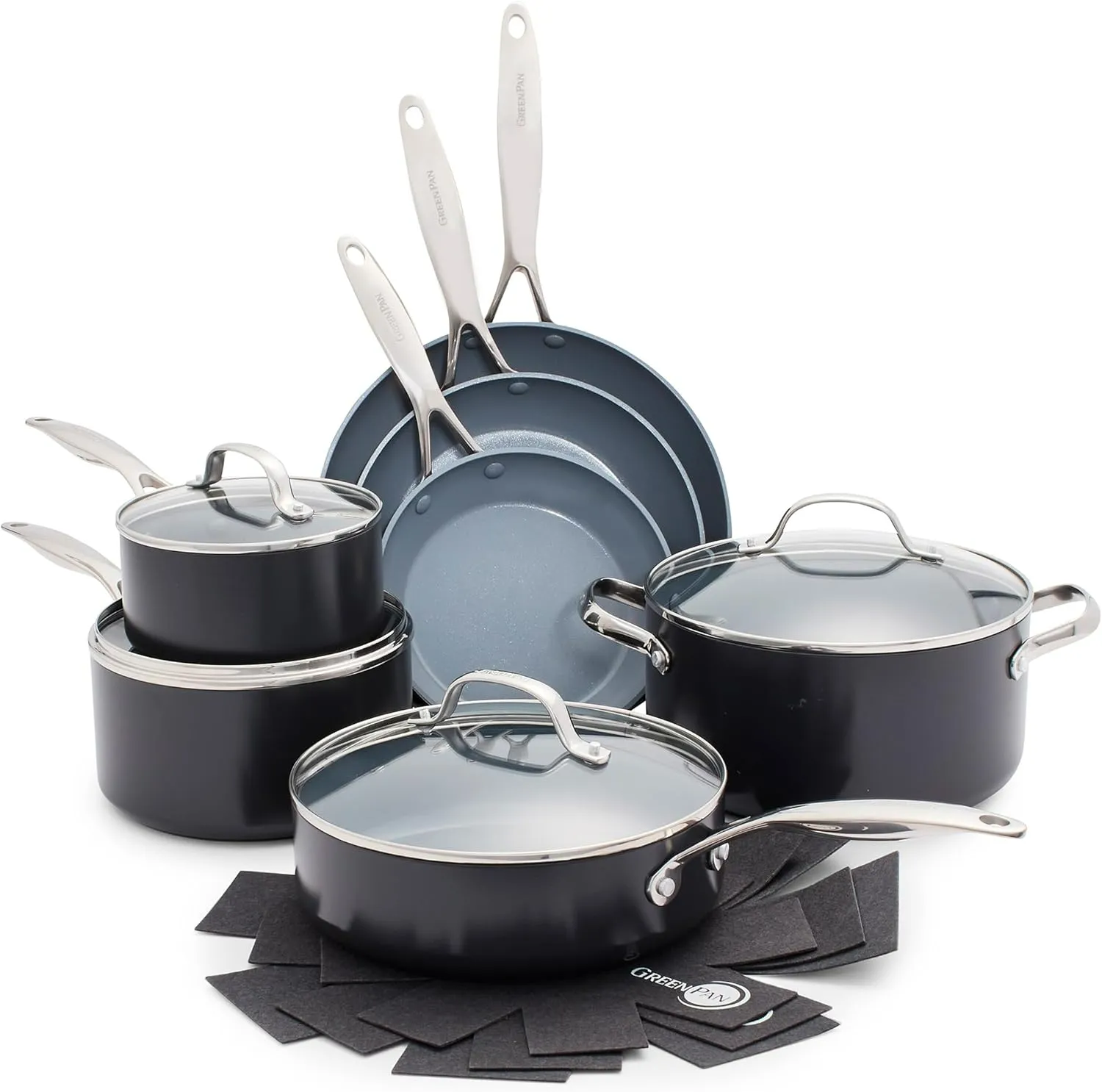
1. GreenPan Valencia Pro Ceramic Nonstick Cookware Set
Best for: Families who want a practical ceramic nonstick set
GreenPan Valencia Pro is one of the most practical places to start if you want a ceramic nonstick cookware set that can replace older traditional nonstick pans.
It is widely available, recognizable, and designed for everyday home cooking. If you want several frypans, saucepans, and everyday pieces in one purchase, this is one of the stronger ceramic nonstick directions to consider.
Why I’d consider it
GreenPan has built its brand around ceramic nonstick cookware, and the Valencia Pro line is one of its more established options.
It makes sense for someone who wants a full set, not just one frying pan. It can work well for families who cook simple daily meals and want to move away from older PTFE-style nonstick cookware.
Where it falls short
This is still ceramic nonstick. It is not lifetime cookware in the same way stainless steel, cast iron, carbon steel, or enameled cast iron can be.
The weak point with ceramic nonstick is not only “be gentle.” The surface performance depends on the integrity of the ceramic layer. Repeated overheating, heating an empty pan too aggressively, sudden temperature changes, and abrasive cleaning can all reduce food release over time.
That means a pan can still look fine but start behaving differently: eggs begin sticking, oil films become harder to remove, and the surface no longer releases food the way it did at first.
Who should avoid it
Avoid this set if you want cookware that can handle years of hard high-heat cooking with little maintenance.
Also skip it if you already cook well with stainless steel or cast iron and only need one nonstick pan for eggs.
Material and safety notes
Pros
- Strong everyday ceramic nonstick option
- Good for families and meal prep
- Available as a full cookware set
- Easier transition from traditional nonstick
- Well-known ceramic cookware brand
Cons
- Ceramic nonstick can lose performance with rough use
- Not ideal for frequent high-heat searing
- More expensive than basic budget sets
- Requires gentle utensils and careful cleaning
- Food release can decline if the pan is repeatedly overheated or thermal-shocked
Best for
GreenPan Valencia Pro is best for someone who wants a practical full ceramic nonstick set and is willing to treat it carefully.
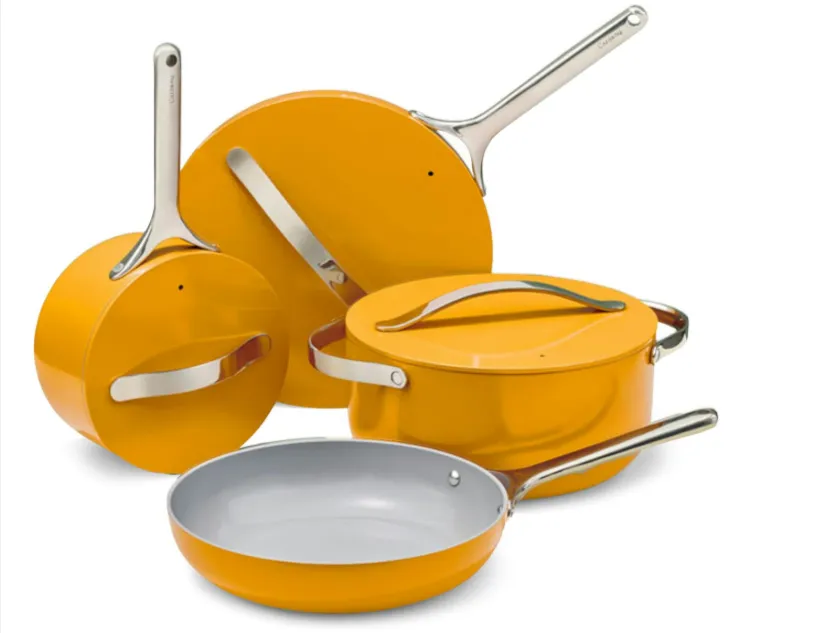
2. Caraway Ceramic Cookware Set
Best for: A design-forward kitchen reset
Caraway is one of the most visible ceramic cookware brands in the non-toxic kitchen space. It is popular with people who want cookware that looks beautiful, stores neatly, and feels like a complete kitchen upgrade.
This is not the cheapest option, and it is not the toughest option. But it is a strong fit for readers who care about design, organization, and clear non-toxic positioning.
Why I’d consider it
Caraway is easy to understand for readers who want a cohesive cookware set rather than mixing several brands and materials.
The brand is also good at explaining its ceramic nonstick positioning, which helps readers who are overwhelmed by cookware labels.
Where it falls short
Caraway is often more of a lifestyle cookware purchase than a heavy-duty cooking purchase.
The ceramic surface is designed for lower to medium heat. If you regularly blast the pan on high heat, heat it empty, or rinse a hot pan under cold water, the nonstick experience can decline faster.
This is the part many pretty cookware pages do not explain clearly: ceramic nonstick is more like a performance surface than a forever material. It can be a good choice, but it needs calmer cooking habits.
Some users may also find the set bulky to store, even though the included storage system is part of the appeal.
Who should avoid it
Avoid Caraway if you cook on high heat, want the most durable option for the money, or do not care about the design and storage experience.
If performance-per-dollar is your main priority, stainless steel or a single ceramic pan may be a better choice.
Caraway is one of the most popular ceramic cookware brands in this category. Read our full Caraway Cookware Set review to see whether it’s worth the investment.
Material and safety notes
Pros
- Strong design and storage appeal
- Clear non-toxic cookware positioning
- Good for a full kitchen reset
- Works well for low to medium heat cooking
- Easy for beginners to understand
Cons
- Premium price
- Ceramic coating needs careful handling
- Not ideal for high-heat cooking
- May be more style-forward than performance-forward
- Not necessary if you already own durable stainless steel or cast iron
Best for
Caraway is best for someone who wants a beautiful, organized ceramic cookware set and is willing to cook gently to protect the surface.
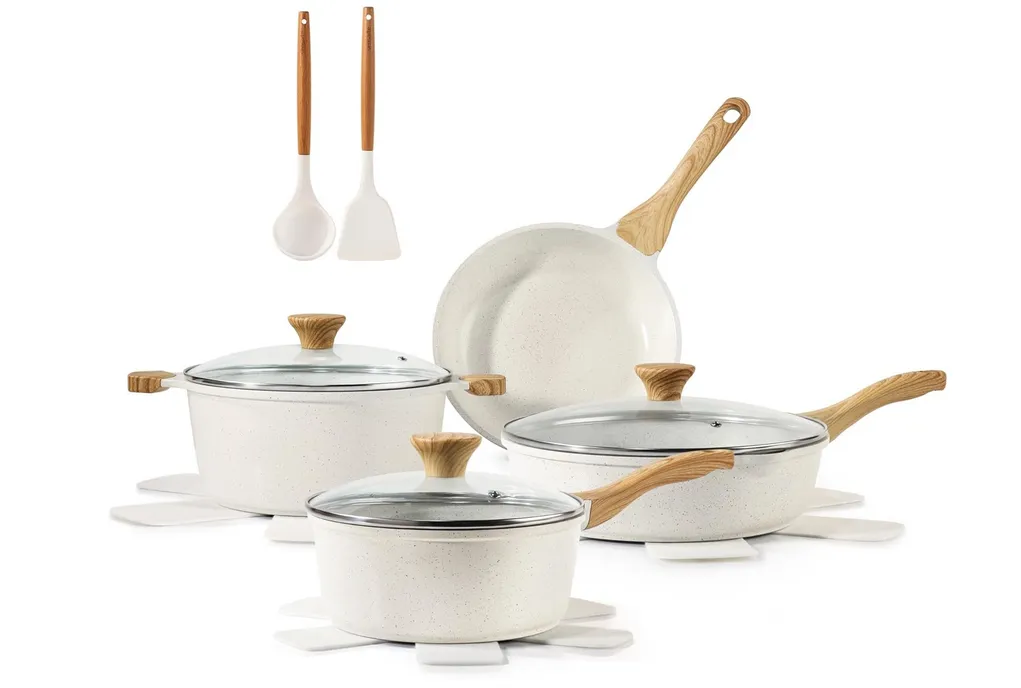
3. SENSARTE Ceramic Nonstick Cookware Set
Best for: Budget-friendly full cookware replacement
SENSARTE is a more affordable option for readers who want to replace several old nonstick pans without spending premium-brand money.
This can make sense for a first apartment, rental kitchen, student kitchen, second home, or anyone who wants to make the swap now instead of waiting for a luxury cookware budget.
Why I’d consider it
The biggest strength is accessibility. Many people cannot start with Caraway, Our Place, or a premium stainless steel setup.
SENSARTE gives readers a lower-cost way to move toward PFOA/PTFE-free ceramic cookware, provided the exact listing supports those claims.
Where it falls short
Budget cookware is where product validation matters most.
Piece counts can be inflated with lids, utensils, protectors, or accessories. Long-term durability may vary. Some sets may include removable handles or lightweight construction that not everyone will like.
The other issue is ceramic durability. A budget ceramic set may look like a clean swap, but if the surface is overheated, thermal-shocked, or scrubbed with rough pads, it may lose its nonstick feel earlier than a more expensive set.
This is not the product I would position as the most durable option. It is the realistic starter option.
Who should avoid it
Avoid SENSARTE if you want heirloom cookware, heavy-duty performance, or the most proven long-term brand.
Also avoid any listing that does not clearly support the safety claims used in this article.
Material and safety notes
Pros
- Budget-friendly
- Good for replacing several old pans at once
- Accessible for beginners
- Often available in larger sets
- Useful for renters or second homes
Cons
- Less premium feel
- Durability may vary
- Larger sets may include pieces readers do not need
- Listing claims must be checked carefully
- Ceramic performance can decline quickly if used like high-heat stainless steel or cast iron
Best for
SENSARTE is best for readers who want a budget-friendly ceramic set and understand that it may not last like stainless steel or cast iron.
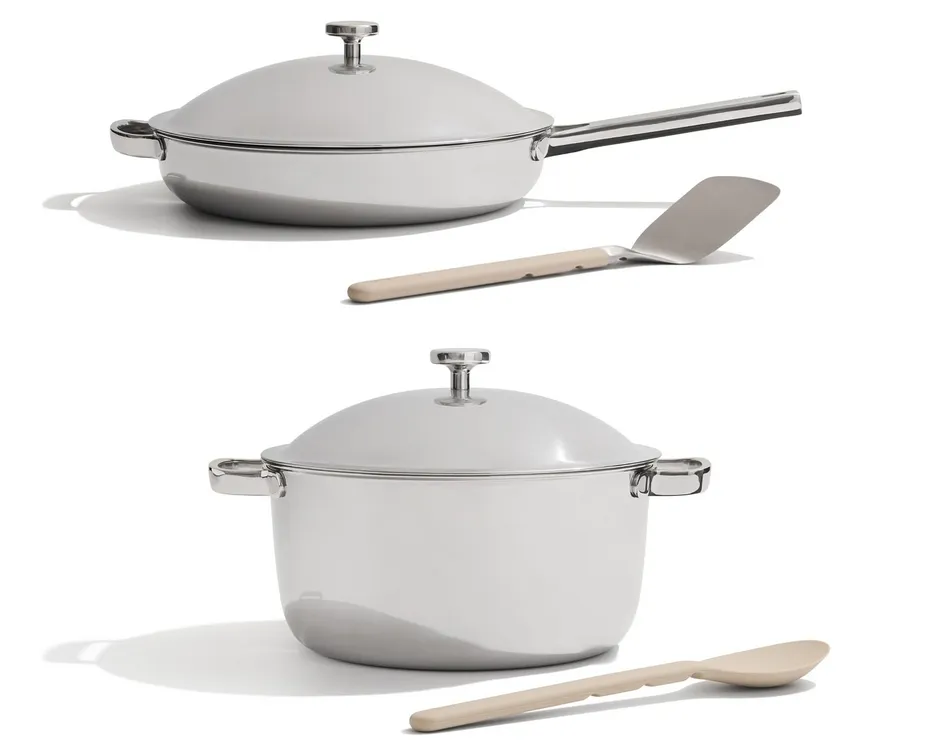
4. Our Place Titanium Pro Cookware Duo or Always Pan Pro
Best for: A premium no-coating direction
Our Place Titanium Pro is different from standard ceramic nonstick because it is positioned around a no-coating nonstick surface.
The brand describes its Titanium Always Pan Pro as using NoCo technology, with a nonstick experience created through engineered titanium rather than a traditional chemical coating. That distinction matters because this is not the same category as ceramic-coated nonstick.
Why I’d consider it
Most safer nonstick options are still coated. Our Place Titanium Pro gives readers a more modern, premium alternative.
It is especially interesting for someone who dislikes the idea of coatings wearing, peeling, or flaking over time.
Where it falls short
This is expensive cookware, and it is not magic.
A no-coating titanium surface may not feel as instantly slippery as a brand-new ceramic nonstick pan. It still needs correct heat, enough fat, and patience. Food often needs proper contact with heat before it releases.
This is closer to a hybrid between premium stainless-style cooking and nonstick convenience than a classic “nothing ever sticks” pan.
It may also be overkill for readers who only need one affordable egg pan.
Who should avoid it
Avoid this if you want the cheapest option, want a traditional slippery nonstick feel, or do not want to learn a new cooking surface.
Material and safety notes
Pros
- Coating-free direction
- Premium design
- Strong option for people avoiding traditional coated nonstick
- Useful for readers who want fewer but better pieces
- Good differentiation from standard ceramic cookware
Cons
- Expensive
- Learning curve
- Not necessary for every kitchen
- May not feel like classic nonstick
- Needs fat, heat control, and patience
- Exact product version must be checked carefully
Best for
Our Place Titanium Pro is best for someone who wants a premium no-coating direction and is willing to pay for it.
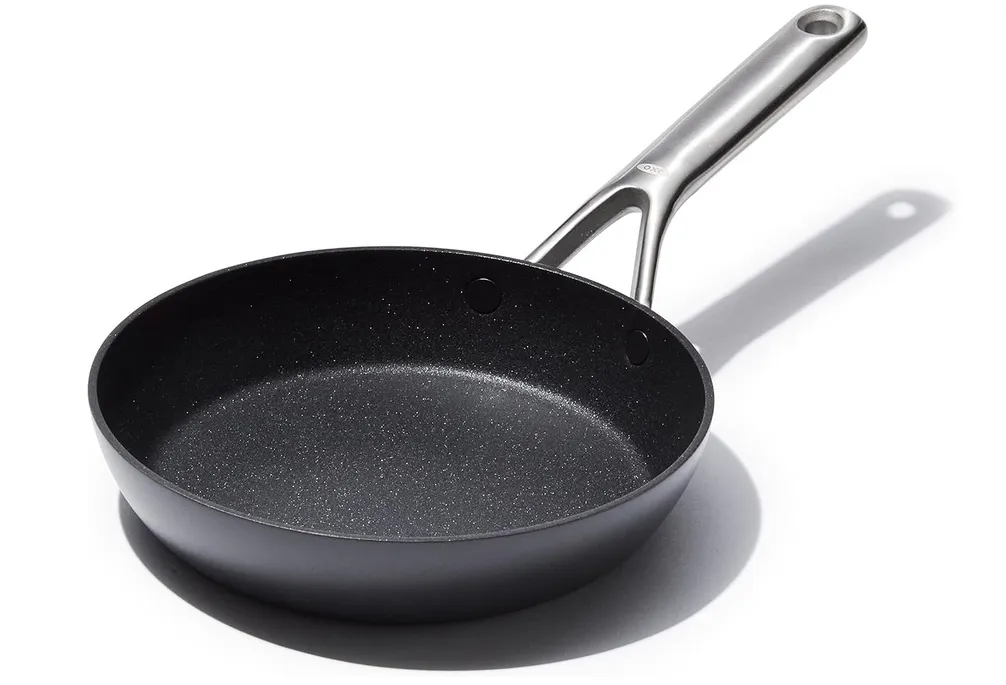
5. OXO Ceramic Nonstick Frying Pan
Best for: One everyday frying pan upgrade
Not everyone needs a full cookware set.
In many homes, the most-used problem item is one scratched nonstick frying pan used for eggs, pancakes, and quick meals. If that is your situation, a single ceramic nonstick frying pan may be a smarter first upgrade than buying ten new pieces.
Why I’d consider it
OXO is a familiar kitchen brand, and this kind of pan is practical for people who want one simple replacement.
It is a good “start here” option for readers who are not ready for a full cookware overhaul.
Where it falls short
One pan will not fix your whole kitchen.
It also needs the same care as other ceramic nonstick pans. If you cook on high heat, use metal utensils, or scrub it aggressively, performance may decline.
Who should avoid it
Avoid this if you need a full cookware set, cook for a large family every day, or want one pan that can sear, sauté, fry, and handle rough use.
Also avoid any OXO listing that does not clearly support the material claims used here.
Material and safety notes
Pros
- Good single-pan upgrade
- Familiar brand
- Easier than replacing a whole set
- Useful for eggs and delicate foods
- Practical for small kitchens
Cons
- Not a complete cookware solution
- Ceramic nonstick may wear over time
- Not ideal for high heat
- Exact listing claims must be validated
Best for
OXO is best for someone who wants one everyday ceramic nonstick pan for lower-heat cooking.
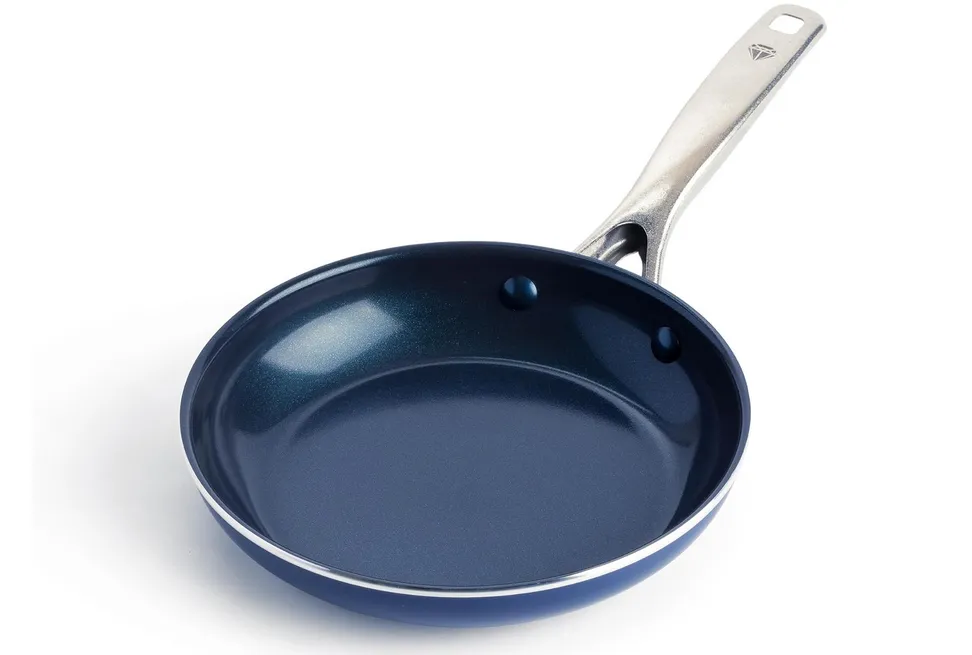
6. Blue Diamond Ceramic Nonstick Frying Pan
Best for: Budget starter pan
Blue Diamond is one of the more affordable ceramic nonstick options many readers will recognize from Amazon.
It is not the premium choice, but it can be a realistic first step for someone who wants to stop using an old scratched nonstick pan without spending a lot.
Why I’d consider it
A useful money page needs realistic options.
Not every reader is ready to spend premium money on cookware. Blue Diamond gives budget-conscious readers a simple entry point.
Where it falls short
Budget pans usually involve trade-offs.
The nonstick effect may not last as long as readers hope, especially if the pan is overheated, cleaned harshly, or used with the wrong utensils.
Who should avoid it
Avoid this if you want the most durable ceramic cookware, cook every day for a family, or expect long-term premium performance from a budget pan.
Material and safety notes
Pros
- Affordable
- Easy to find
- Good first replacement for an old scratched pan
- Useful for eggs and simple meals
- Low barrier to entry
Cons
- Budget-level durability
- May not last as long as premium options
- Not a full kitchen replacement
- Listing claims vary by exact product
Best for
Blue Diamond is best for readers who want a low-cost first step away from old nonstick cookware.
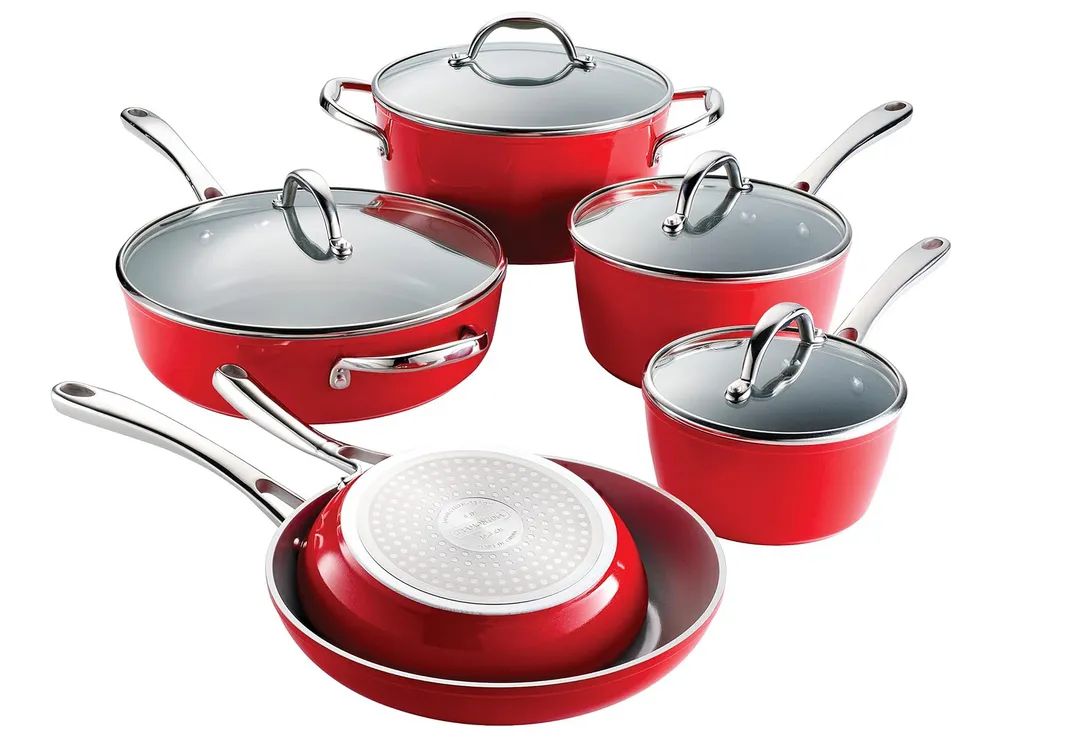
7. Tramontina Ceramic Non Stick Cookware Set
Best for: A familiar cookware-brand set
Tramontina is a familiar cookware brand, especially for people who prefer mainstream kitchen products over newer direct-to-consumer brands.
A ceramic nonstick Tramontina set can be a practical option for readers who want a known brand, a full set, and a PFOA/PTFE-free direction.
Why I’d consider it
Tramontina gives the article a useful middle ground.
It is not as trend-driven as Caraway and not as premium or experimental as Our Place. It can work for readers who want a more conventional cookware brand.
Where it falls short
Tramontina has many product lines, and not all listings communicate claims in the same way.
Some pieces may use aluminum bodies, plastic handles, or different ceramic interiors depending on the exact set. That is not automatically bad, but it means the listing must be checked carefully.
Who should avoid it
Avoid this if you want stainless steel, cast iron, or coating-free cookware instead of ceramic nonstick.
Also avoid any Tramontina listing that does not clearly state PFOA/PTFE-free language.
Material and safety notes
Pros
- Familiar cookware brand
- Practical full-set option
- Less lifestyle-focused than some newer brands
- Good bridge between budget and premium
- Useful for everyday cooking
Cons
- Exact claims vary by line
- Not as design-forward as Caraway
- Not as durable as stainless steel or cast iron
- Requires careful product validation
Best for
Tramontina is best for readers who want a practical ceramic cookware set from a known cookware company.
How to Choose Without Falling for Weak Labels
The safest-looking marketing is not always the clearest marketing.
When you compare PFOA and PTFE-free pots and pans, look beyond the front of the product page. The best product pages explain the cooking surface clearly. The weakest ones rely on vague words like “healthy,” “stone,” “granite,” “eco,” or “non-toxic” without telling you what the surface actually is.
If you are unsure where this article fits in the bigger cookware picture, our complete guide to choosing non-toxic cookware can help you compare the major materials before you buy.
Look for PTFE-free, not only PFOA-free
“PFOA-free” is a baseline, not the full answer.
For this article, the stronger label is:
- PTFE-free
- PFAS-free
- Ceramic nonstick
- Coating-free
- Stainless steel
- Cast iron
- Carbon steel
- Enameled cast iron
If a pan only says “PFOA-free,” I would keep reading before buying.
Two of the most frequently compared ceramic cookware brands are GreenPan and Caraway. See our detailed GreenPan vs Caraway cookware comparison to understand the key differences.
Decide if you really need nonstick
This is the question many guides skip.
Ceramic nonstick is convenient, but it is not the most durable cookware category. If you use nonstick mostly for eggs, pancakes, fish, or delicate foods, one good ceramic pan may be enough.
For daily cooking, stainless steel may be a better investment. If you want to compare durable stainless options, our stainless steel cookware brands guide is a better next step than buying another coated set.
Do not use ceramic nonstick like cast iron
Ceramic nonstick is not meant for rough cooking.
Use lower to medium heat, gentle utensils, and soft cleaning tools. If you want to sear steak or cook at very high heat, use cast iron, carbon steel, or stainless steel instead.
For readers moving toward carbon steel, our De Buyer cookware guides can help explain where that material fits.
Be careful with “stone,” “granite,” and “titanium” language
These words can be useful, but they can also be marketing.
A “granite” pan is not necessarily a slab of granite. A “titanium” pan is not automatically coating-free. A “stone” pan may still have a nonstick coating.
The question is always:
What is the actual food-contact surface?
If the answer is not clear, I would not make it a top pick.
Ceramic, Stainless Steel, Cast Iron, or Carbon Steel?
There is no single best cookware material for every kitchen.
| Material | Best For | Nonstick Feel | Durability | What to Watch |
| Ceramic nonstick | Eggs, pancakes, low-oil cooking | High at first | Medium | Coating can wear if overheated, thermal-shocked, or scratched |
| Stainless steel | Daily cooking, boiling, sauces, sautéing | Low to medium with technique | High | Requires heat control and enough fat |
| Cast iron | Searing, baking, simple skillets | Medium when seasoned | Very high | Heavy and needs maintenance |
| Carbon steel | Eggs, searing, high-heat cooking | Medium to high when seasoned | High | Needs seasoning and drying |
| Enameled cast iron | Soups, stews, braising | Low to medium | High | Heavy, enamel can chip if abused |
| Titanium no-coating cookware | Premium alternative | Varies by design | Promising, but category-dependent | Expensive and can require technique |
If you cook a lot, I would not build the whole kitchen around ceramic nonstick. I would use it strategically.
For example:
- One ceramic nonstick pan for eggs
- Stainless steel for daily cooking
- Enameled cast iron for slow meals
- Cast iron or carbon steel for high heat
- Wood cutting boards instead of plastic prep surfaces
- Glass or stainless steel storage instead of plastic containers
That kind of setup is more realistic than trying to find one perfect pan.
When I Would Skip Ceramic Nonstick
Ceramic nonstick can be useful, but it is not always the right answer.
I would skip ceramic nonstick if:
- You cook on high heat most days.
- You want cookware that lasts decades.
- You use metal utensils often.
- You hate hand washing.
- You stack pans roughly.
- You sear meat frequently.
- You already cook well with stainless steel or cast iron.
- You want the lowest replacement cycle possible.
In those cases, look at stainless steel, cast iron, carbon steel, or enameled cast iron first.
Our enameled cast iron Dutch oven guide is a better fit if you cook soups, stews, braises, and slow meals often. If the Lodge vs Le Creuset comparison is already live, that can also be linked naturally from this section.
When You Should Replace Old Nonstick Pans
You do not need to panic and throw out your whole kitchen overnight.
But you should seriously consider replacing old nonstick cookware if:
- The surface is scratched
- The coating is flaking
- Food sticks badly even with oil
- You do not know what the coating is
- The pan has been overheated empty
- You use it every day
- You only see “PFOA-free” with no PTFE or PFAS clarity
- You cook around pet birds and want to be extra cautious with fumes
The first replacement should usually be the pan you use most.
For many people, that is one frying pan. Replace that first, then slowly upgrade the rest of the kitchen when it makes sense.
How to Make Safer Nonstick Pans Last Longer
Even better nonstick pans need the right care.
Use these rules:
- Cook on low to medium heat most of the time.
- Do not preheat an empty nonstick pan for long.
- Use wood, silicone, or nylon utensils.
- Avoid aerosol cooking sprays.
- Let the pan cool before washing.
- Hand wash when possible.
- Use soft sponges, not abrasive pads.
- Do not stack pans without protection.
- Stop using pans with peeling or flaking surfaces.
- Keep stainless steel, cast iron, or carbon steel for high-heat jobs.
If you want a deeper maintenance guide, our article on how to care for non-toxic cookware explains how to make safer cookware last longer.
Building a Low-Toxic Kitchen Beyond Cookware
Cookware matters, but it is only one part of the kitchen.
Once your most-used pans are handled, the next practical upgrades are usually:
- A safer cutting board
- Glass food storage containers
- Stainless steel air fryer baskets or accessories
- Stainless steel ice cube trays
- Better water filtration
- A meal prep setup that avoids plastic-heavy surfaces
For example, our non-toxic cutting board guide helps you compare wood, bamboo, plastic, and other materials. Our glass food storage guide is a good next step if you are still storing hot food in plastic containers.
If you use an air fryer often, our stainless steel air fryer basket guide and stainless basket vs ceramic-coated air fryer comparison can help you avoid mystery-coated inserts.
For a full kitchen workflow, our zero-toxic-load meal prep station guide ties boards, knives, containers, and prep surfaces together.
FAQ
Are PFOA and PTFE the same thing?
No. PFOA and PTFE are not the same thing.
PFOA is one chemical within the broader PFAS family. PTFE is the traditional slippery nonstick polymer used in many Teflon-style pans.
A pan can be PFOA-free and still use PTFE. That is why “PFOA-free” alone is not enough if you are trying to avoid traditional nonstick coatings.
Is PTFE-free the same as PFAS-free?
Not always.
PTFE-free means the pan does not use PTFE as the nonstick coating. PFAS-free is a broader claim. If your goal is to reduce exposure to fluorinated nonstick chemistry, look for clear PFAS-free language when possible.
Are ceramic nonstick pans completely non-toxic?
No cookware should be treated as completely risk-free.
Ceramic nonstick pans can be a helpful option for people avoiding PTFE-style coatings, but quality, care, heat level, and exact product claims still matter.
The most honest answer is this: ceramic nonstick may be a better fit for low to medium heat nonstick cooking, but it is not perfect, permanent, or maintenance-free.
What is the safest cookware material?
There is no single safest cookware material for every person.
For long-term durability, stainless steel, cast iron, carbon steel, and enameled cast iron are strong options. For easy nonstick cooking, ceramic nonstick can be useful, especially for eggs and delicate foods.
A balanced kitchen usually combines several materials.
If you are just starting, our beginner’s checklist for transitioning to non-toxic cookware can help you prioritize what to replace first.
How long do ceramic nonstick pans last?
Ceramic nonstick pans usually do not last as long as stainless steel, cast iron, or carbon steel.
How long they last depends on the brand, coating quality, heat level, utensils, cleaning method, and how often you use them. If food starts sticking badly or the surface looks damaged, it may be time to replace the pan.
Can I use metal utensils on ceramic nonstick?
I would avoid metal utensils unless the exact product clearly says they are safe and you are comfortable with the risk.
Wood, silicone, or nylon utensils are usually gentler and help extend the life of the pan.
Are PFOA and PTFE-free pans safe for birds?
If you have pet birds, be extra cautious with all nonstick cookware.
Birds can be very sensitive to fumes from overheated cookware. Many bird owners choose to avoid PTFE cookware completely and use stainless steel, cast iron, carbon steel, or clearly PTFE-free ceramic options instead.
Do not overheat empty pans, and keep birds away from cooking fumes.
Is stainless steel better than ceramic nonstick?
Stainless steel is usually better for durability, high-heat cooking, and long-term value.
Ceramic nonstick is easier for eggs, pancakes, and delicate foods. The best choice depends on how you cook.
If you are building a healthier kitchen, I would not choose only one. Use stainless steel for most cooking and keep one ceramic nonstick pan for the foods that genuinely need it.
Final Verdict: What Should You Buy?
If you want the easiest full kitchen swap, start with a ceramic nonstick set like GreenPan Valencia Pro, Caraway, SENSARTE, or Tramontina — but only if you are willing to cook on lower heat and protect the surface.
If you only want to replace one old scratched pan, start with a single ceramic frying pan from a brand like OXO or Blue Diamond.
If you want to avoid coatings as much as possible, look at stainless steel, cast iron, carbon steel, enameled cast iron, or a premium no-coating option like Our Place Titanium Pro.
The smartest low-toxic kitchen is not about buying every trendy pan. It is about replacing the highest-use, highest-concern items first and choosing clearer materials from here forward.
For a broader product guide, read our best non-toxic cookware sets article. For a more complete kitchen workflow, read our zero-toxic-load meal prep station guide.
Compare today’s best PFOA and PTFE-free cookware options on Amazon.