Last Updated: August 2026
Non‑toxic air fryers are no longer a niche request in 2026—they are what health‑conscious home cooks search for first. If you are worried about PFAS “forever chemicals,” scratched non‑stick, or mystery coatings, the best rated non toxic air fryers now prioritize stainless steel, high‑quality ceramic, or glass where food sits and are clearer about what is inside their baskets and trays.
This guide focuses on the best non toxic airfryer options in 2026, from mainstream stainless‑heavy models (great for most families) to genuinely PFAS‑free air fryer ovens that avoid PTFE entirely. You will see which models are realistic “bridge” upgrades, which are closer to truly PFAS‑free, and how to choose the right size and format for the way you actually cook.
Quick answer – Best Rated Non‑Toxic Air Fryers in 2026
- Best mainstream non‑toxic upgrade (basket style): Instant Vortex Plus 6‑in‑1 — a stainless‑accented workhorse that becomes a much lower‑tox everyday fryer when you line the non‑stick basket with parchment, stainless inserts or PFAS‑free silicone.
- Best family‑size non‑toxic air fryer (dual‑zone): Ninja Foodi DualZone DZ401 — a large‑capacity, two‑drawer unit that lets you cook separate components at once, ideal for plant‑forward family dinners when combined with ceramic‑coated or parchment‑lined baskets.
- Best compact glass non-toxic air fryer: Fritaire 5QT Glass Air Fryer — offers full cooking visibility and stainless-steel accessories without relying on a traditional coated basket
At a Glance — 2026 Editors’ Top Picks (Non-Toxic & PFAS-Aware)
Availability, voltage and plug type vary by region (EU, UK, US, AU), so always double-check the exact model and certifications sold where you live.
| Brand & Model | Capacity | Materials & PFAS stance* | Why we like it in a non-toxic kitchen |
| Instant Vortex Plus 6-in-1 | 6 qt | Stainless housing; non-stick basket. | Powerful everyday driver. Best used with parchment or stainless inserts to limit direct coating contact. |
| Ninja Foodi DualZone DZ401 | Two independent 5-quart baskets (10 qt total). | Dual baskets with certified 100% PFAS-free cooking surfaces. | Ideal for families—cook two distinct dishes at once while keeping your kitchen routine cleaner. |
| Fritaire 5QT Glass Air Fryer | 5 qt | Tempered glass and 304 stainless steel; PFAS-, PFOA- and PTFE-free food-contact surfaces. | Its tempered-glass bowl, 304 stainless-steel accessories and PFAS-, PFOA- and PTFE-free food-contact surfaces provide a clearer materials upgrade |
| Philips Airfryer 3000 Series NA330/00 | 6.5 qt | Advanced polymer assembly; precise temp control. | Built-in viewing window lets you monitor food without opening the basket and dropping heat. |
| Cuisinart TOA-70 Air Fryer Toaster Oven | 0.6 cu ft oven | Stainless steel interior cavity with metal racks | Excellent oven-format choice—keeps the cooking environment focused on bare metal rather than non-stick drawers. |
*Manufacturers change designs and coatings over time. Always read the current product description and manuals for the specific model number in your region.
Always verify that your chosen model specifies stainless steel, ceramic or glass where food touches and lists certifications such as CE, UL/ETL, NSF, RoHS and (in the EU/UK) REACH compliance.
My Honest Take as the Founder of Healthy Home Upgrade
I do not own a non-toxic air fryer yet, but it is genuinely high on my list. We are a family of four, and like most families we use our kitchen appliances every single day. That is exactly why I take the materials question seriously. Something that runs daily, at high heat, with food sitting directly on its surfaces, deserves the same attention I give to cookware, water filters and everything else in our home.
When I look at air fryers for a family like ours, three things matter most to me. First, what is the basket actually made of and is the brand transparent about PFAS. Second, is it large enough to cook a real meal for four people without doing it in two rounds. Third, is it built well enough to last, because replacing appliances frequently is neither sustainable nor non-toxic.
If I were buying today I would lean toward the Ninja DZ401 for the dual zone convenience or the Cuisinart TOA-70 for the stainless interior. Both of my children are genuinely interested in healthy cooking and I want an appliance that supports that curiosity rather than one we have to be careful around.
My overall view is simple. You do not need to wait for the perfect PFAS-free model to exist. A well-chosen air fryer with stainless surfaces, used with parchment or silicone liners, is already a meaningful upgrade from an old scratched Teflon pan. Start there and build from it.
Want the safest fryers only? Dive into the Top 5 Non-Toxic Air Fryers with Stainless Steel Baskets
Why Material — And PFAS — Matter in an Air Fryer
Non-stick coatings made life convenient — but at a cost.
PFAS (per- and polyfluoroalkyl substances) is a large chemical family used in many non-stick and water-repellent products, including some cookware and appliances. These “forever chemicals” are extremely persistent in the environment and have been linked in research to issues such as certain cancers, immune disruption and reproductive problems when exposure is high enough over time.
That doesn’t mean every non-stick pan or air fryer is immediately dangerous. Regulators still allow specific PFAS for food contact, but:
- Scratched or degraded coatings can release small fragments and PFAS into food or air.
- PFAS are under increasing regulatory pressure, especially in Europe, where broad restrictions are being prepared under REACH.
For many families, that’s enough reason to choose more inert materials wherever possible — especially in a device that might run several times a day.
Stainless steel advantages
- Non-reactive and widely accepted as food-safe.
- Scratch-resistant and long-lasting.
- Handles high temperatures without breaking down.
- Fully recyclable and common in professional and medical settings.
Ceramic advantages
- Naturally smooth surface without traditional PFAS.
- Often feels more “non-stick” than raw metal when new.
- Works well for gentle, even heating.
Glass advantages
- Fully inert and transparent.
- Lets you see food without opening the basket.
- Makes it easy to assess cleanliness at a glance.
So is ceramic more healthy than stainless steel?
For most people, both can be very healthy when they come from serious brands and are used correctly. Stainless can sometimes leach tiny traces of nickel or chromium into very acidic foods, usually far below safety thresholds. Poorly formulated ceramic glazes could leach metals if quality control is poor.
The bigger health difference is usually not ceramic vs stainless — it’s both of these versus cheap, mystery non-stick coatings that scratch and flake easily.
Curious how air fryer materials compare to other cookware? Here’s the Pros and Cons of Non-Toxic Cookware Materials
What Does “PFAS-Free Air Fryer” Really Mean?
You’ll see a lot of phrases in marketing:
- “PFOA-free”
- “PFOS-free”
- “PTFE-free”
- “Non-toxic ceramic”
- “PFAS-free accessories”
These are not all the same thing.
1. PFOA-/PFOS-free ≠ PFAS-free
Some brands say “PFOA-free” or “PFOS-free” because these specific PFAS are banned in many regions. But the coating may still contain other fluorinated compounds from the same family. Consumer testing has found frying pans advertised as “PFOA-free” that still contained other PFAS.
For a true PFAS-free air fryer, look for wording closer to:
- “Made without PFAS (including PTFE)”
- “PFAS-free interior surfaces and accessories”
Ideally, this appears in official documentation, not just in a vague ad.
2. “PFAS-free accessories”
Some oven-style air fryers now highlight that racks, trays and baskets are PFAS-free; the interior walls are stainless steel or glass. This is a strong step forward — those are the parts your food actually touches.
If a model includes coated pans or griddles, check whether they use ceramic or other non-PFAS coatings and handle them gently.
3. Why regulators are moving fast
In 2026, EU authorities and several countries accelerated proposals to limit or phase out PFAS in many consumer products, including food-contact materials, textiles and cookware.
The message is clear: future-proofing your kitchen means moving gradually away from PFAS-based non-stick where you can.
Love slow cooking? Pair your air fryer with the Best Enameled Cast Iron Dutch Ovens (2026)
Global Standouts of 2026
Below are models that either minimise traditional non-stick use or clearly position themselves as PFAS-aware or PFAS-free, while still being practical for daily life.
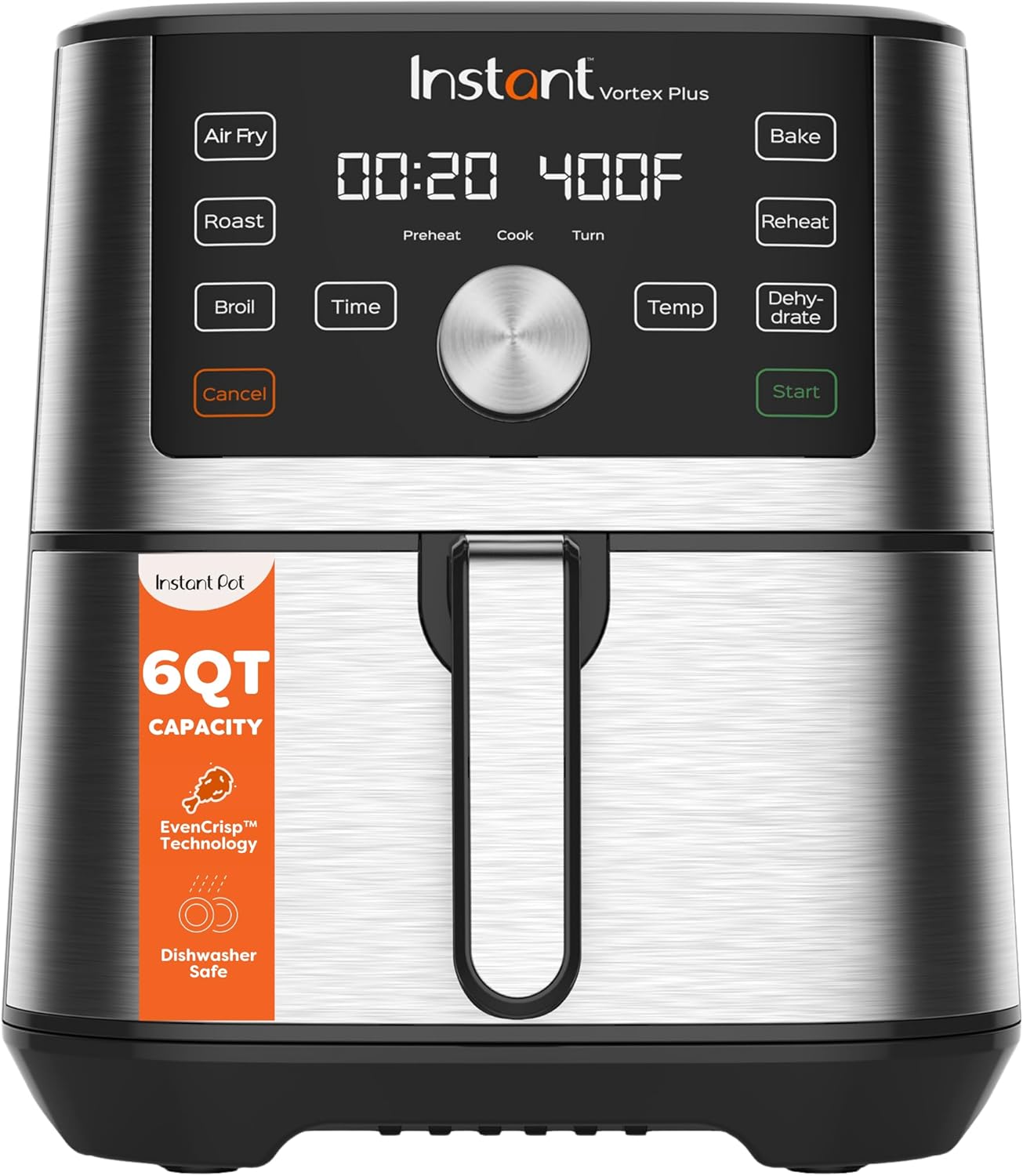
1. Instant Vortex Plus 6-In-1 (Best Mainstream Non-Toxic Upgrade)
Check Instant Vortex Plus 6-in-1 price on Amazon
Sleek on the outside and powerful on the inside, the Instant Vortex Plus is a strong candidate if you want the best non-toxic air fryer that still feels familiar and easy.
- Capacity: 6 quarts (great for 3–4 people).
- Materials: Stainless steel exterior with a non-stick basket and tray.
- Certifications: Typically CE, ETL, and others depending on region.
Why it fits a non-toxic kitchen
- Stainless surfaces around the heating area.
- Simple, intuitive controls that encourage you to cook more whole foods at home.
- Works well with stainless inserts, racks or parchment liners so food doesn’t sit directly on the non-stick surface for long periods.
Think of the Vortex Plus as a “bridge” appliance: not completely PFAS-free, but a big upgrade from old deep fryers and worn Teflon pans.
Healthy Home Upgrade Review
A practical step toward a safer, non-toxic kitchen, especially for beginners transitioning away from traditional non-stick air fryers.
Why it’s a good choice
The Instant Vortex Plus 6-In-1 is a popular choice for anyone looking for a safer, non-toxic air fryer upgrade without jumping straight into high-end stainless steel models. While not fully PFAS-free, newer versions are designed to reduce direct contact with non-stick surfaces, and some internal components use stainless steel. It offers a strong balance of performance, affordability, and accessibility, making it a practical option for everyday cooking in a more health-conscious kitchen.
Pros
- User-friendly controls with multiple cooking functions
- Fast preheating and even air circulation for consistent results
- Spacious capacity, ideal for families and meal prep
- More affordable than fully stainless steel air fryers
- Widely available and well-reviewed
Cons
- Not completely PFAS-free, still includes non-stick coating
- Basket coating may degrade over time with frequent use
- Less non-toxic compared to fully stainless steel basket air fryers
- Requires gentle cleaning to extend lifespan
Building a fully non-toxic kitchen? Check out the Best Stainless Steel Cookware Brands 2026
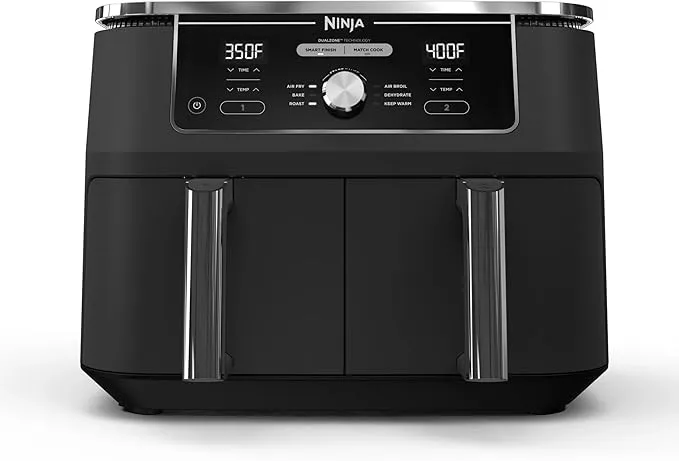
2. Ninja Foodi DualZone DZ401 (Best for Families and Batch Cooking).
Check Ninja Foodi DualZone DZ401 price on Amazon
For plant-based dinners or mixed diets, having two separate zones is a game-changer: vegetables in one basket, tofu or tempeh in the other, both ready at the same time.
- Capacity: Two independent 5-quart baskets (10 qt total).
- Functions: Air fry, air broil, roast, bake, reheat, dehydrate.
Why it works in a health-focused kitchen
- Two baskets reduce cross-flavour mixing — great if one person wants spicy tofu and another wants mild potatoes.
- The non-stick cooking surface is certified 100% PFAS-free, making this one of the few mainstream dual-basket air fryers that genuinely earns a place in a non-toxic kitchen.
- You can dedicate one drawer to veggies and the other to protein, building balanced bowls with minimal oil.
Healthy Home Upgrade Review: A strong choice for larger households who want batch cooking convenience without compromising on non-toxic standards — the PFAS-free certification makes this a genuine upgrade.
Why it’s a good choice The Ninja Foodi DualZone DZ401 stands out for its dual-basket design and its explicitly PFAS-free cooking surfaces — rare in this category. Ideal for families, meal prep, or anyone cooking in larger portions who doesn’t want to choose between convenience and a cleaner kitchen.
Pros
- DualZone technology cooks two foods at once
- 100% PFAS-free non-stick cooking surface
- XL capacity, perfect for families or batch cooking
- Multiple cooking functions for versatility
- Saves time with synchronized cooking settings
Cons
- Bulkier design takes up more counter space
- Heavier than standard air fryers
- Cleaning two baskets can take more effort
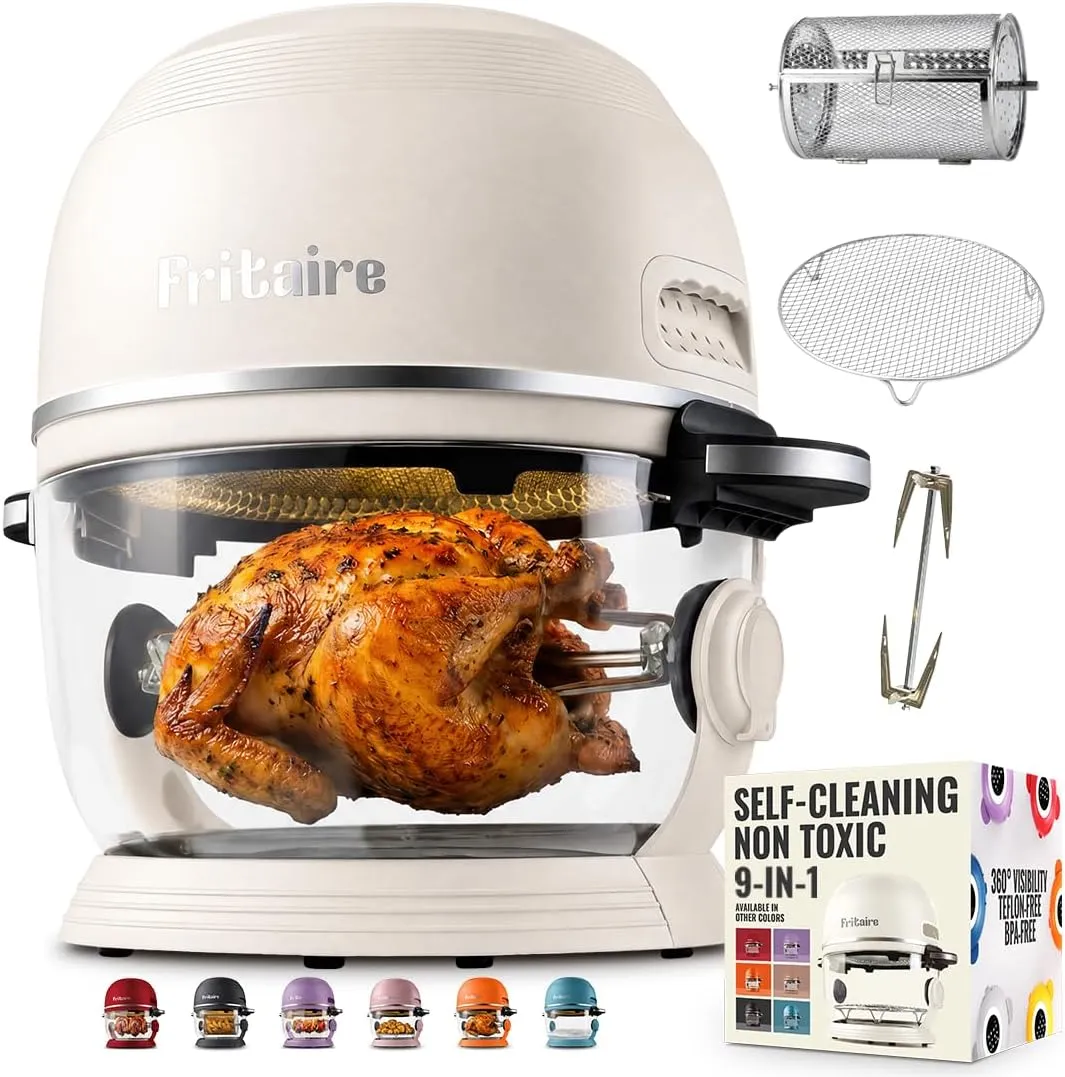
3. Fritaire 5QT Glass Air Fryer
Check Fritaire 5QT Glass Air Fryer price on Amazon
The Fritaire is a compact option for readers who want to avoid the traditional coated drawer-style basket. Its transparent glass bowl provides full cooking visibility, while the included accessories expand its everyday versatility.
- Capacity: 5 qt
- Temperature range: 90°F to 400°F
- Power: 1,300 watts
- Materials: Tempered glass and 304 stainless steel
- Highlights: Rotisserie, tumbling basket, air stand and self-cleaning cycle
Why it fits a non-toxic kitchen
- Food-contact surfaces are free from PFAS, PFOA and PTFE coatings.
- The non-reactive glass bowl eliminates the need for a coated cooking drawer.
- Its 304 stainless-steel accessories replace the coated trays found in many compact air fryers.
- The transparent bowl lets you monitor food without repeatedly opening the appliance.
Healthy Home Upgrade Review:
The Fritaire is one of the clearest material upgrades for compact kitchens. Food cooks against glass and stainless steel instead of a conventional non-stick basket, making it a strong option for shoppers who prioritize safer food-contact materials.
Why it’s a good choice
The Fritaire combines a compact five-quart capacity with versatile accessories for air frying, baking, dehydrating and rotisserie cooking. Its tumbling basket rotates food automatically for more even cooking, while the glass bowl provides full visibility throughout the process.
It is not completely plastic-free because the manufacturer discloses a small internal PPS component, but its primary food-contact surfaces offer a meaningful improvement over traditional coated baskets.
Pros
- PFAS-, PFOA- and PTFE-free food-contact surfaces
- Tempered-glass cooking bowl
- 304 stainless-steel accessories
- Full cooking visibility
- Rotisserie and tumbling basket included
- Self-cleaning cycle
- Compact five-quart capacity
Cons
- More expensive than basic compact air fryers
- Glass bowl is heavier than a standard drawer
- Maximum temperature is 400°F
- Self-cleaning still requires draining and rinsing
- Not completely plastic-free
- May be too small for larger families
4. Philips Airfryer 3000 Series (NA330/00)
Check Philips Airfryer 3000 Series NA330/00 price on Amazon
The Philips 3000 Series is a strong choice if you want a reliable, well-established brand with genuinely impressive cooking performance and a large family-friendly capacity.
Capacity: 6.5 qt — suitable for family-size portions. Performance: RapidAir Plus Technology for extra crispy, even results with up to 90% less fat than deep frying. 16 ways to cook including fry, grill, roast, bake, stir-fry, sauté, dehydrate, ferment and more. Special feature: Built-in viewing window so you can monitor food without opening the basket.
Why it’s a solid non-toxic choice
Big-brand reliability with Amazon’s Overall Pick status and 100+ units bought per month. Designed for long-term use with dishwasher-safe components, reducing waste and effort. The 3000 Series emphasises precise temperature control to avoid scorching and smoking — important for keeping any coating in better condition longer. If you already trust Philips for other kitchen appliances, this is a natural upgrade toward a safer, more health-conscious kitchen.
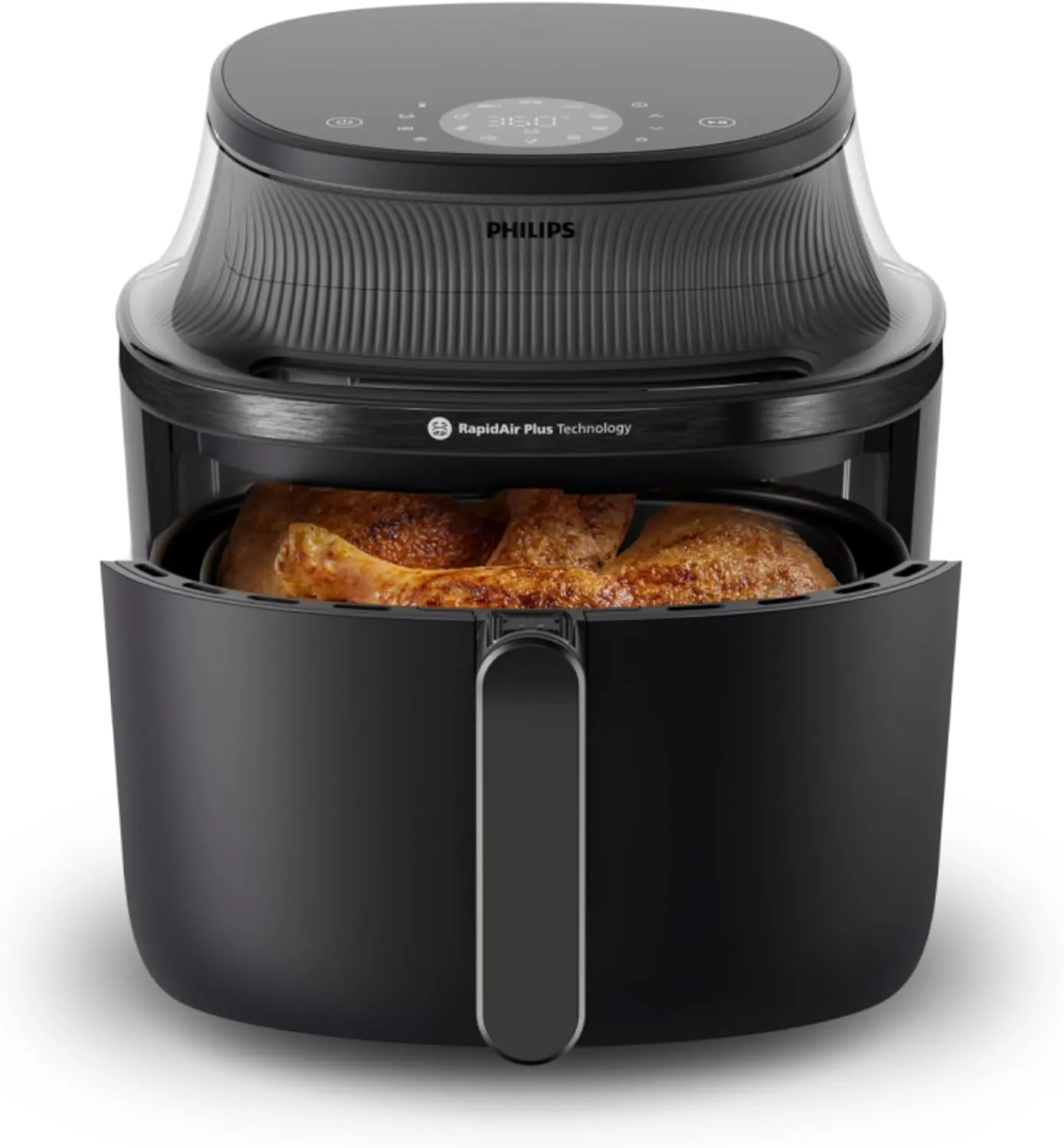
Healthy Home Upgrade Review: A reliable, well-established option backed by consistent performance and a trusted brand — now with RapidAir Plus technology for genuinely crispy results with far less oil.
Why it’s a good choice The Philips Airfryer 3000 Series stands out with its RapidAir Plus Technology, built-in viewing window and 16 cooking functions — making it one of the most versatile mainstream air fryers available. While not fully PFAS-free, it is a dependable upgrade for anyone looking to move toward a more health-conscious kitchen with a brand they can trust.
Pros
-
Trusted brand with proven reliability
-
RapidAir Plus Technology for extra crispy, even results
-
Large 6.5qt capacity, suitable for families
-
Built-in viewing window — no need to open the basket
-
16 cooking functions in one appliance
-
Dishwasher-safe components for easy cleaning
Cons
-
Not completely PFAS-free
-
Higher price point than basic models
-
Basket coating may wear over time with heavy use
5. Cuisinart TOA-70 Air Fryer Toaster Oven (Stainless-Style Cavity)
Check Cuisinart TOA-70 Air Fryer Toaster Oven price on Amazon
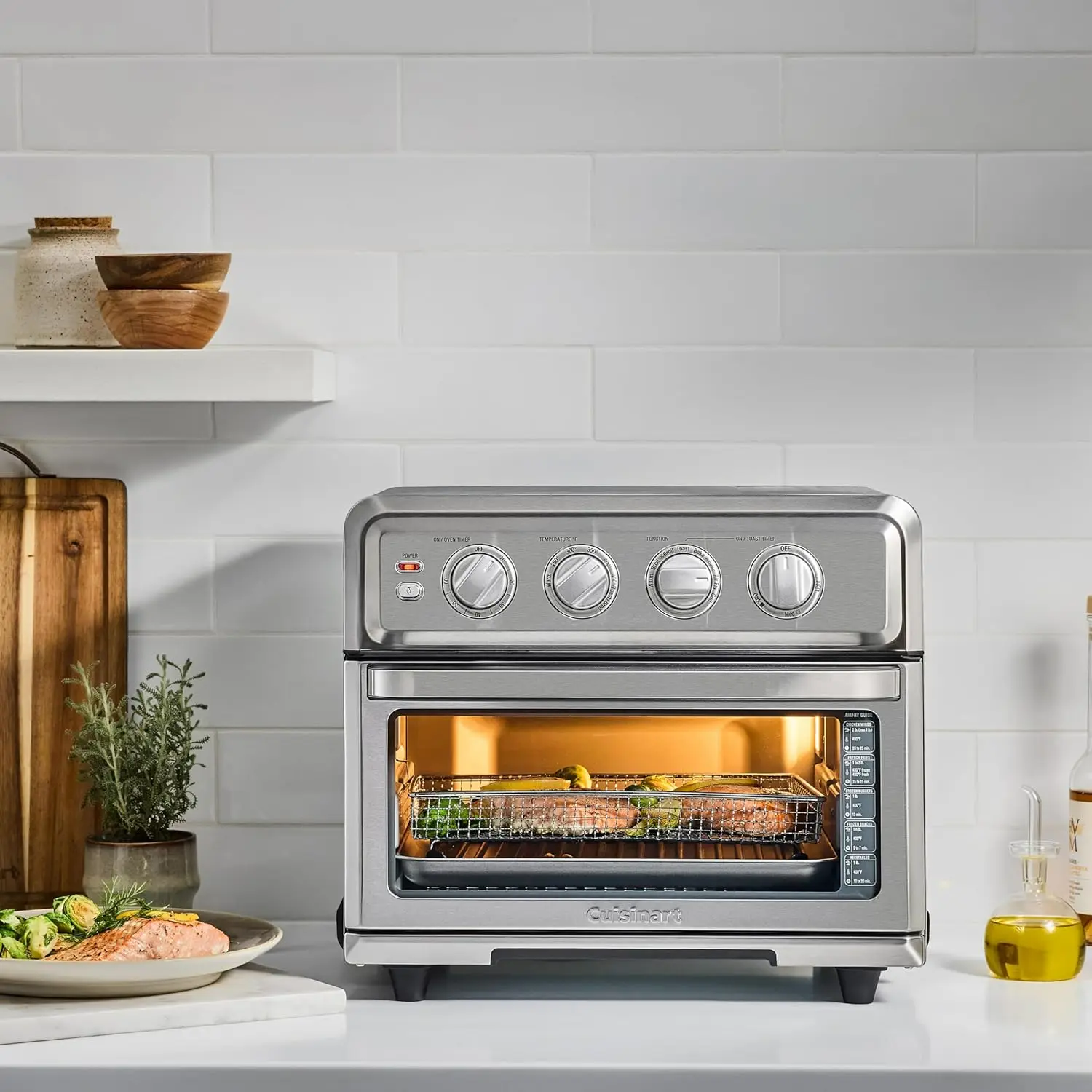
Half oven, half air fryer, all-in-one workhorse. The TOA-70 series is for people who want metal walls, racks and a visible oven cavity rather than a closed drawer.
- Capacity: 0.6 cu ft oven.
- Functions: Air fry, convection bake, convection broil, toast, warm and more.
Why it stands out in a non-toxic context
- Stainless steel interior with metal racks and trays, so much of what you see is bare metal.
- Some models now ship with ceramic non-stick plates rather than traditional Teflon-style coatings, and several retailers highlight PFAS-free accessories in specific variants.
- Perfect if you like to roast full trays of vegetables, bake sourdough, toast nuts and use the air fry setting as a mini convection oven.
If any included grill plate is coated, you can replace it with a stainless one sized to the oven.
Healthy Home Upgrade Review:
A solid step toward a more non-toxic kitchen, thanks to its stainless steel interior and versatile oven-style design.
Why it’s a good choice
The Cuisinart TOA-70 stands out with its stainless steel interior, reducing reliance on coated basket surfaces found in traditional air fryers. Its oven-style design offers more cooking flexibility, making it ideal for baking, toasting, broiling, and air frying in one appliance. While some accessories may still include coatings, it provides a cleaner, lower-toxicity alternative for those looking to upgrade their kitchen setup.
Pros
- Stainless steel interior reduces coating exposure
- Multi-function: air fry, bake, broil, toast, and more
- Larger cooking space than basket-style air fryers
- No enclosed non-stick basket design
- Great for multi-purpose cooking
Cons
- Some included trays or accessories may have coatings
- Takes up more counter space
- Exterior can get hot during use
- Not fully PFAS-free depending on accessories used
PFAS-Free Spotlight: Our Place Wonder Oven Pro
If your priority is a PFAS-free air fryer with strong design and multi-function capability, the Wonder Oven Pro belongs on your shortlist.
- Format: Countertop oven with air fry, bake, roast, toast and reheat functions.
- Materials: The brand states that interior surfaces and all included accessories are made without PFAS (including PTFE), focusing on stainless steel, glass and non-toxic finishes.
Why it’s exciting for non-toxic living
- A rare example where PFAS are explicitly excluded from the cooking surfaces.
- Oven format with multiple racks makes it easy to batch-cook vegetables, nuts, seeds and plant proteins.
- Strong visual design that looks at home in modern, minimalist kitchens.
Shipping and voltage options vary — it’s most widely available in North America, with selected availability in the UK and parts of Europe via the brand’s online store.
PFAS-Free Spotlight: Nuwave Bravo Pro / Bravo XL Pro
The Bravo line is often highlighted in PFAS-free air fryer guides for its stainless interior and currently PFAS-free accessories.
- Format: Large countertop oven with air fry, bake, roast, broil, toast, pizza, dehydrate and more.
- Capacity: Around 21–30 qt, depending on version — enough for family dinners.
Why it’s a strong PFAS-free candidate
- Stainless steel interior walls and racks.
- Accessories in current listings are advertised as PFAS-free, which is still unusual in this category.
- Wide temperature range (often up to 450–500°F / 230–260°C) for everything from low-temp dehydrating to high-heat roasting.
Again, always confirm the exact model number and regional listing to ensure the PFAS-free claim matches the unit you’re buying.
What a Healthy Air Fryer Is Really Good For
A non-toxic, stainless-heavy or PFAS-free air fryer is more than a “healthy fries machine.” Used well, it becomes a compact plant-based powerhouse in your kitchen.
Everyday vegan (or mostly plant-based) cooking
- Crispy tofu and tempeh
Press, marinate and air fry for protein-rich toppings for bowls, salads and wraps. - Veggie burgers and patties
Cook from fresh or frozen without frying in a pan of oil. - Roasted vegetables
Broccoli, cauliflower, carrots, fennel, Brussels sprouts and squash become sweet and caramelised with just a teaspoon of olive or avocado oil.
Hot circulating air usually means:
- Less oil than oven roasting.
- Much less oil than pan-frying.
Healthy snacks you don’t usually associate with air fryers
- Chickpea “crunchies”
Seasoned, air-fried chickpeas for fibre-rich snacking. - Kale or cabbage chips
Tossed in a little oil and seasoning, crisped at lower temps. - Roasted nuts and seeds
Sunflower, pumpkin seeds, cashews, almonds and hazelnuts — toasted for granola, salads or snack jars.
With the right air fryer, all of this can be made with whole ingredients, known oils and as little salt as you want.
Drying herbs and making your own tea ingredients
On low temperature, your air fryer can double as a mini dehydrator:
- Dry garden herbs – mint, lemon balm, thyme, rosemary, oregano and sage, spread thinly and dried for jars.
- Citrus peel for tea and seasoning – organic lemon, lime or orange peel sliced thin and dried fully before storage.
- Ginger and turmeric slices – dried slices to simmer later in hot water.
You’re not brewing tea inside the air fryer; you’re creating a small, non-toxic drying chamber so ingredients are ready whenever you are.
Plant-based meal prep
- Sheet-pan style bowls
Roast cubes of sweet potato, peppers, zucchini and tofu in batches, then keep in the fridge for quick grain bowls. - Baked falafel or veggie balls
Skip deep frying and still get a crisp crust. - Leftovers revival
Reheat roasted veg, pizza or baked dishes so they regain crispness instead of turning soggy.
Used this way, the best non-toxic air fryer becomes a central engine of a healthy lifestyle, not a novelty gadget.
Ceramic vs Stainless: Which Is Healthier in Daily Life?
From a health perspective, good ceramic and good stainless steel are both excellent when used as intended.
Stainless steel
- Extremely durable and hard to damage.
- Slightly more “stick” at first, but improves if you preheat and use a little oil.
- Tolerates bumps, dishwasher cycles (if allowed) and metal tools better than ceramic.
Ceramic
- Very smooth surface that often feels more non-stick.
- PFAS-free when quality glazes are used.
- Needs more gentle handling; sharp knocks or stacking can chip the coating.
When comparing a high-quality ceramic basket in a PFAS-free air fryer to a high-quality stainless basket, neither is dramatically “more healthy” across the board. The real upgrade comes from leaving low-quality, mystery non-stick behind.
Stainless Steel Air Fryer Oven: When to Choose It
A stainless steel air fryer oven is ideal when you want to combine:
- Air frying
- Baking and roasting
- Dehydrating and warming
in a single appliance.
Choose this style if you:
- Bake sourdough or whole-grain breads regularly.
- Cook for three to six people many nights of the week.
- Want to roast full trays of vegetables, nuts or seeds in one go.
The oven format works best if you see your air fryer as a primary cooking appliance, not just a side machine for frozen fries.
How to Clean a Stainless or Ceramic Air Fryer (Non-Toxic Routine)
Good cleaning habits keep your safest air fryer working well and help coatings (if any) last longer.
After each use
- Turn off and unplug; let it cool for 10–15 minutes.
- Remove basket, rack and tray.
- Rinse with warm water to remove crumbs and oil.
- Use a soft sponge or microfiber cloth with mild dish soap.
- Rinse and dry immediately with a clean towel.
For deeper cleaning or stains
- Use a paste of baking soda + water on stubborn spots.
- On stainless, very diluted white vinegar can help with mineral marks — rinse thoroughly afterwards.
- Avoid steel wool, metal scouring pads or harsh oven cleaners inside the basket or cavity (they can scratch surfaces, including stainless).
Regular cleaning prevents burnt oil, smoking and off-flavours — and keeps both stainless and ceramic surfaces safe and pleasant to cook on.
Best Stainless-Friendly Air Fryer Accessories
To keep your non-toxic air fryer genuinely low-risk, choose accessories that match your materials:
- Stainless racks and stackable trays for extra cooking layers.
- Stainless or silicone-tipped tongs to avoid scratching surfaces.
- PFAS-free silicone liners or mats for easy cleanup and less wear on baskets.
- Oven-safe glass or stainless mini pans for baked oats, gratins or fruit crisps.
Make sure accessories don’t block airflow and are rated for the temperatures you use most often.
Air Fryer Stainless Steel Stains: Cosmetic, Not Crisis
Even the best stainless steel air fryer can show:
- Brown spots from oils and marinades.
- Rainbow discolouration from high heat.
- Water spots from air-drying.
In a non-toxic air fryer, these are almost always cosmetic. Soak, apply a mild baking soda paste, rinse and dry — and your basket or tray usually looks close to new.
The real things to avoid are:
- Deep scratches that expose base materials in coated baskets.
- Chipped non-stick coatings.
Choosing stainless, ceramic and glass from the start is how you stay ahead of that.
Large vs Small: Which Non-Toxic Air Fryer Fits Your Life?
Large or dual-zone (family or serious vegan cook)
- Cook whole trays of vegetables, tofu and chickpeas at once.
- Prepare full dinners plus leftovers in a single run.
- Share one appliance among several people.
Small or compact (one to two people)
- Perfect for couples, students or tiny homes.
- Still powerful enough for daily, plant-forward meals.
- Heats faster and uses slightly less energy per cycle.
The healthiest choice is the air fryer you actually use. A compact PFAS-free air fryer on the counter is better than a huge model that lives in a cupboard.
Performance Meets Wellness
Each cycle of the air fryer fan is more than a shortcut to crispness; it’s a signal that you’re:
- Letting cleaner materials touch your food.
- Using less oil and overall fat.
- Creating less waste, because a well-built appliance can last years.
- Adding more vegetables, legumes and whole foods to your weekly routine.
A carefully chosen, non-toxic air fryer — ideally with stainless, ceramic or glass where food sits, and PFAS-free surfaces wherever you can find them — can become a cornerstone of a healthy, mostly plant-based kitchen, from morning nuts and oats to evening bowls and herbal infusions. The same “clean contact” principle applies to your prep station too, which is why many kitchens now pair safer appliances with Non-Toxic Cutting Boards to avoid dubious plastics before food ever reaches the basket. This mindset extends to the freezer as well, with home cooks skipping plastic ice molds in favor of stainless steel trays for herbal teas, lemon water, or broth cubes to keep the entire kitchen routine low-tox.
FAQ — Your Safest Air Fryer Questions Answered
Which air fryers are healthiest in 2026?
The healthiest air fryers in 2026 are those that:
- Use stainless steel, ceramic or glass where food touches.
- Have clear, credible claims about being PFAS-free or at least free from traditional PTFE-based non-stick on key cooking surfaces.
- Carry trusted certifications such as CE (EU), UL/ETL (US/Canada), NSF (food-contact safety) and RoHS/REACH (chemical restrictions).
Look for models like the Wonder Oven Pro or Bravo Pro if you specifically want a PFAS-free air fryer, and stainless-heavy models like Instant, Ninja, COSORI, Philips or Cuisinart if you want safer, mainstream options.
What exactly is a PFAS-free air fryer?
A PFAS-free air fryer is one where the manufacturer states that interior cooking surfaces and accessories are made without PFAS, including PTFE, PFOA and related fluoropolymers.
In practice, this usually means:
- Stainless steel, glass or truly PFAS-free ceramic coatings on baskets, racks and trays.
- No traditional Teflon-style coatings on surfaces that contact food.
Always read the exact product description and manual. A phrase like “PFOA-free” alone does not guarantee that an appliance is PFAS-free.
Are all stainless steel air fryers non-toxic?
Not automatically.
- A stainless exterior does not guarantee that the basket or crisping plates are PFAS-free.
- Some “stainless air fryers” still use non-stick on the inner basket or included pans.
To get closer to a truly non-toxic air fryer:
- Check what material the basket, tray and racks are made from.
- Look for wording like “stainless steel interior,” “ceramic-coated basket” or “PFAS-free accessories.”
- Avoid models where the only clear claim is “PFOA-free” but nothing else is specified.
Can I use a healthy air fryer for vegan cooking only?
Absolutely. Many people use their air fryer almost exclusively for:
- Vegetables and root fries.
- Tofu, tempeh and chickpeas.
- Nuts, seeds and whole-food snacks.
A non-toxic, stainless- or glass-heavy air fryer is especially well suited to a mostly plant-based lifestyle because it handles vegetables and legumes beautifully with minimal oil.
Can I dry herbs and make tea ingredients in an air fryer?
Yes — with a low-temperature setting and a bit of care.
Use:
- Low heat and good airflow to dry herbs, citrus peel, ginger and turmeric slices.
- Clean, dry jars for storage once everything is fully crisp and no moisture remains.
You still brew tea in a cup or teapot; the air fryer just gives you a mini dehydrator for non-toxic, homemade ingredients.
Are stainless steel and ceramic air fryers always PFAS-free?
No. Stainless and ceramic refer to the visible materials, but:
- Ceramic coatings can still hide other chemicals if quality is low.
- Some stainless baskets sit on top of non-stick trays or plates.
For the best non-toxic air fryer experience:
- Look for explicit wording about PFAS-free or no PTFE/PFOA.
- Choose well-known brands or models vetted by serious non-toxic reviewers.
The healthiest air fryers in 2026 are those that:
- Use stainless steel, ceramic or glass where food touches.
- Have clear, credible claims about being PFAS-free or at least free from traditional PTFE-based non-stick on key cooking surfaces.
- Carry trusted certifications such as CE (EU), UL/ETL (US/Canada), NSF (food-contact safety) and RoHS/REACH (chemical restrictions).
Look for models like the Wonder Oven Pro or Bravo Pro if you specifically want a PFAS-free air fryer, and stainless-heavy models like Instant, Ninja, COSORI, Philips or Cuisinart if you want safer, mainstream options.
A PFAS-free air fryer is one where the manufacturer states that interior cooking surfaces and accessories are made without PFAS, including PTFE, PFOA and related fluoropolymers.
In practice, this usually means:
- Stainless steel, glass or truly PFAS-free ceramic coatings on baskets, racks and trays.
- No traditional Teflon-style coatings on surfaces that contact food.
Always read the exact product description and manual. A phrase like “PFOA-free” alone does not guarantee that an appliance is PFAS-free.
Not automatically.
- A stainless exterior does not guarantee that the basket or crisping plates are PFAS-free.
- Some “stainless air fryers” still use non-stick on the inner basket or included pans.
To get closer to a truly non-toxic air fryer:
- Check what material the basket, tray and racks are made from.
- Look for wording like “stainless steel interior,” “ceramic-coated basket” or “PFAS-free accessories.”
- Avoid models where the only clear claim is “PFOA-free” but nothing else is specified.
Absolutely. Many people use their air fryer almost exclusively for:
- Vegetables and root fries.
- Tofu, tempeh and chickpeas.
- Nuts, seeds and whole-food snacks.
A non-toxic, stainless- or glass-heavy air fryer is especially well suited to a mostly plant-based lifestyle because it handles vegetables and legumes beautifully with minimal oil.
Yes — with a low-temperature setting and a bit of care.
Use:
- Low heat and good airflow to dry herbs, citrus peel, ginger and turmeric slices.
- Clean, dry jars for storage once everything is fully crisp and no moisture remains.
You still brew tea in a cup or teapot; the air fryer just gives you a mini dehydrator for non-toxic, homemade ingredients.
No. Stainless and ceramic refer to the visible materials, but:
- Ceramic coatings can still hide other chemicals if quality is low.
- Some stainless baskets sit on top of non-stick trays or plates.
For the best non-toxic air fryer experience:
- Look for explicit wording about PFAS-free or no PTFE/PFOA.
- Choose well-known brands or models vetted by serious non-toxic reviewers.
References & Certifications
If you like to double-check product safety and regulatory trends, these types of sources are useful:
- Independent non-toxic living reviews that test and compare PFAS-free air fryers made from stainless steel, ceramic and glass.
- EU REACH and ECHA pages on PFAS restrictions, showing how Europe is moving to phase out many PFAS in consumer goods.
- EPA and national health agencies’ PFAS information pages for background on exposure and long-term health effects.
These references are not meant to scare you, but to help you understand why many people now look specifically for non-toxic and PFAS-free air fryer designs.