Quick Answer
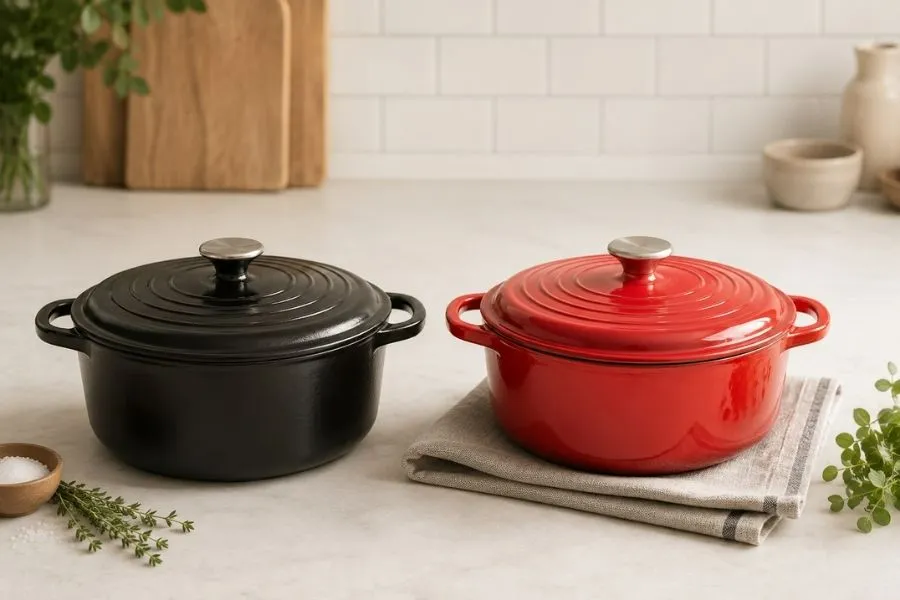
If your primary goal is value, Lodge is one of the easiest enameled cast iron Dutch ovens to recommend. It offers excellent cooking performance, durability, and versatility at a significantly lower price than Le Creuset.
If your primary goal is premium craftsmanship, long-term ownership, refined enamel quality, and a stronger reputation for manufacturing transparency, Le Creuset remains the premium benchmark.
For most households, Lodge offers better value.
For passionate home cooks who use a Dutch oven several times per week and are comfortable paying more for premium craftsmanship, Le Creuset may justify the higher investment.
Check Lodge Price / Check Le Creuset Price
My Honest Take as the Founder of Healthy Home Upgrade
When people compare Lodge and Le Creuset, most articles focus almost entirely on price.
I understand why. The price difference is often the first thing buyers notice.
But at Healthy Home Upgrade, I think there is a more interesting conversation to have.
Many readers are not simply looking for cookware that performs well. They are also thinking about materials, coatings, manufacturing transparency, long-term durability, and whether a product fits into a lower-toxic kitchen.
That does not mean every expensive product is automatically better.
It also does not mean every affordable product should be viewed with suspicion.
My approach is usually simple: I want to know what we know. I want to know what we do not know. And I want to avoid making claims that go beyond the available evidence.
That philosophy is especially important when discussing cookware materials.
In my own kitchen, I made the switch to enameled cast iron after my lobectomy, as part of a broader effort to reduce unnecessary chemical exposure at home. It was one of the practical changes that made the most sense to me — and one I have not regretted.
After researching both brands, I believe either option can be a meaningful upgrade for households looking to move away from traditional PFAS-based non-stick cookware. The more difficult question is deciding which one makes the most sense for your budget, priorities, and long-term kitchen goals.
At a Glance
| Feature | Lodge | Le Creuset |
| Price | Lower | Premium |
| Manufacturing | Overseas production | France |
| Enamel Quality | Very good | Excellent |
| Heat Retention | Excellent | Excellent |
| Bread Baking | Excellent | Excellent |
| Color Options | Limited | Extensive |
| Transparency | Moderate | Higher |
| Best For | Value-focused buyers | Premium buyers |
| PTFE Cooking Surface | No | No |
| PFAS-Based Non-Stick Coating | No | No |
| Overall Confidence Level | Moderate to High | High |
Why So Many People Compare Lodge and Le Creuset
Dutch ovens have become one of the most popular alternatives to traditional non-stick cookware.
Unlike lightweight cookware that may wear out after a few years, a quality Dutch oven can potentially last for decades.
People use them for soups, stews, braises, roasts, chili, slow-cooked meals, artisan bread, and one-pot recipes.
Many home cooks eventually discover that a Dutch oven becomes one of the most-used pieces of cookware in their kitchen.
The challenge is that the market contains everything from inexpensive imported products to premium French cookware costing several hundred dollars. Lodge and Le Creuset sit at opposite ends of that spectrum while still offering similar functionality.
That naturally raises an important question: Is Le Creuset worth several times the price? Or does Lodge deliver most of the same benefits for far less money?
Understanding Enameled Cast Iron Through a Healthier Home Lens
Before comparing brands, it helps to understand what enameled cast iron actually is.
A Dutch oven contains two primary components.
The Cast Iron Core
The body of the cookware is made from cast iron, which is valued because it retains heat extremely well, provides stable cooking temperatures, can last for decades, and works on most cooking surfaces.
The Enamel Coating
The cast iron is covered with a glass-like enamel layer. This coating helps prevent rust, eliminates seasoning requirements, makes cleaning easier, and creates a smoother cooking surface. This is one reason many people choose enameled cast iron instead of traditional raw cast iron.
Why Many Health-Conscious Buyers Prefer Enameled Cast Iron
Many consumers are specifically looking for alternatives to conventional non-stick cookware that relies on PTFE-based coatings.
Enameled cast iron is attractive because it does not use traditional PTFE non-stick coatings, performs exceptionally well at high temperatures, can last for many years, and works for a wide range of cooking styles.
That does not automatically make every Dutch oven identical. Material sourcing, manufacturing practices, quality control, and transparency still matter.
What We Know About Materials and Transparency
One of the challenges when evaluating cookware is that manufacturers rarely publish every detail about their formulations and manufacturing processes. This applies to many cookware brands, not just Lodge or Le Creuset.
Lodge
Lodge has earned a strong reputation for delivering affordable cast iron cookware. Its traditional cast iron products are manufactured in the United States. However, the company’s enameled cast iron line is produced overseas.
Based on publicly available information, Lodge uses porcelain enamel coatings and does not use traditional PTFE-style non-stick coatings on these products. Public information regarding specific enamel formulations is limited, and the brand maintains a strong reputation among consumers and reviewers.
For many buyers, this level of information is sufficient. Others may prefer more extensive disclosure.
Le Creuset
Le Creuset manufactures its enameled cast iron cookware in France and has been producing cookware for more than a century within the European regulatory environment.
Based on publicly available information, Le Creuset uses enamel-coated cast iron, products are manufactured in France, and the company has a long-established quality-control reputation with a generally higher level of manufacturing transparency than many lower-cost competitors.
For readers who prioritize transparency and long-term brand reputation, this may be an important consideration.
What We Don’t Know
This is perhaps the most important section in the entire article.
Many cookware comparisons present certainty where certainty does not exist.
The reality is that consumers rarely have access to every detail regarding raw material sourcing, pigments, supplier relationships, proprietary enamel formulations, and manufacturing inputs.
At Healthy Home Upgrade, we believe it is important to acknowledge uncertainty rather than fill gaps with assumptions.
We cannot confidently claim that a cookware product is completely risk-free. We also cannot assume a product is problematic simply because every manufacturing detail is not publicly available.
Transparency matters. Evidence matters. And when evidence is limited, honesty about that limitation matters too.
Materials Transparency Scorecard
| Category | Lodge | Le Creuset |
| PTFE-Free Cooking Surface | Yes | Yes |
| Cast Iron Core | Yes | Yes |
| Enamel Coating | Yes | Yes |
| Public Manufacturing Transparency | Moderate | Higher |
| Regulatory Oversight Visibility | Moderate | High |
| Long-Term Brand Track Record | Strong | Exceptional |
| Overall Confidence Level | Moderate to High | High |
Notice that none of these categories automatically determine which product is right for you. Instead, they help provide context for making a more informed decision.
Price Comparison: Where the Biggest Difference Appears
For many buyers, the conversation ultimately comes back to cost.
A Lodge Dutch oven is typically available at a fraction of the price of a comparable Le Creuset model. Depending on the size and retailer, Lodge often falls in the $60–$100 range, while Le Creuset equivalents regularly sit between $300–$400 or more.
The question is whether the additional cost translates into a meaningfully better ownership experience.
For most households cooking everyday family meals, the honest answer is: probably not on a performance basis alone.
Where Le Creuset justifies the premium is in enamel refinement, manufacturing transparency, brand longevity, and the overall ownership experience — including resale value and the fact that many Le Creuset pieces are passed down through generations.
If you are buying your first Dutch oven and want to know whether food will taste better in a Le Creuset than a Lodge, the answer is almost certainly no. If you are buying cookware you intend to use every day for the next twenty years and want the best craftsmanship available, the Le Creuset argument becomes much stronger.
Lodge Review: Strengths, Weaknesses, and Who It’s Best For
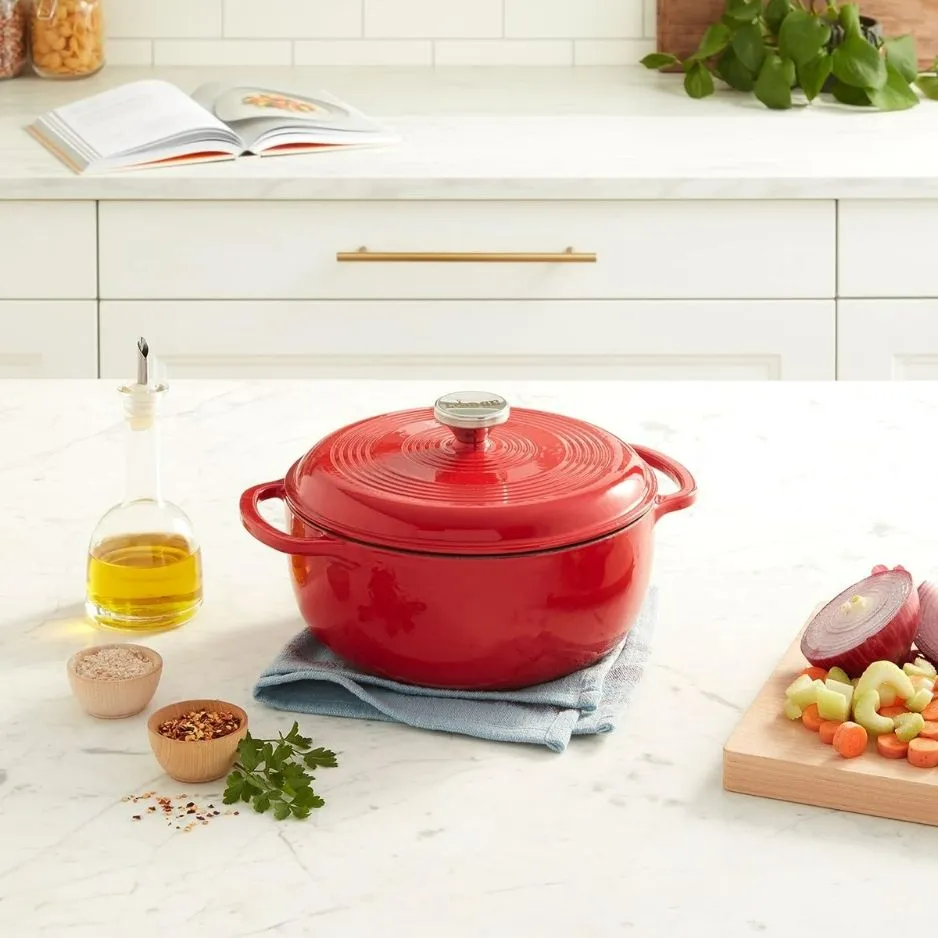
Lodge has built a loyal following by offering durable cast iron cookware at prices that are accessible to most households. For many buyers, Lodge represents the entry point into the world of Dutch ovens.
What We Like About Lodge
Excellent Value — Few products in the cookware industry deliver as much performance per dollar. The savings can be used elsewhere in the kitchen, such as a high-quality stainless steel skillet, a water filtration system, or better food storage containers.
Strong Cooking Performance — Lodge performs exceptionally well for soups, stews, braises, chili, bread baking, and slow-cooked meals. Most home cooks will find that Lodge delivers everything they need.
Widely Available — Replacement parts, accessories, and customer support are generally easy to access.
Potential Weaknesses of Lodge
Less Manufacturing Transparency — Compared to Le Creuset, Lodge provides less publicly available information about enamel sourcing and manufacturing details. Readers who prioritize maximum transparency may prefer brands that disclose more.
Finish Quality — Many users report that Lodge’s enamel finish is slightly less refined than premium competitors. This rarely affects cooking performance but can influence the overall ownership experience.
Heavier Feel — Some users find Lodge slightly heavier and less refined to handle than Le Creuset.
Who Should Buy Lodge?
Lodge may be the right choice if this is your first Dutch oven, budget matters, you want excellent value, you cook a few times per week, you want to move away from traditional non-stick cookware, or you prioritize function over luxury.
Who Should Avoid Lodge?
Lodge may not be ideal if maximum manufacturing transparency is your top priority, you strongly prefer European manufacturing, or premium fit and finish matter to you.
Le Creuset Review: Strengths, Weaknesses, and Who It’s Best For
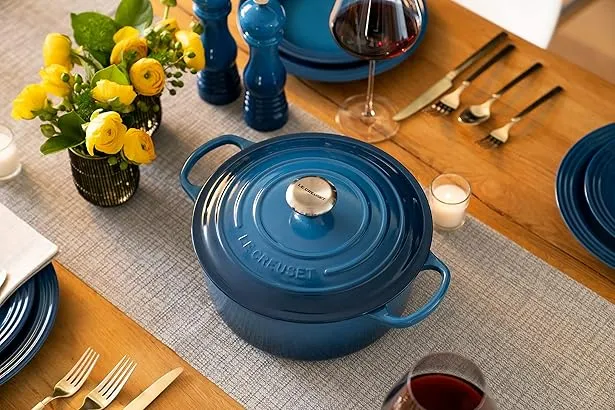
Le Creuset is one of the most recognizable names in premium cookware. The company has been producing enameled cast iron cookware for over a century and has built a reputation for craftsmanship and durability.
What We Like About Le Creuset
Premium Enamel Quality — Owners frequently describe it as smooth, durable, refined, and easy to clean. Le Creuset has earned a strong reputation for consistency.
Long-Term Brand Reputation — A company does not remain successful for over 100 years without earning consumer trust.
French Manufacturing — For buyers who pay attention to manufacturing location and regulatory frameworks, French production may be an attractive feature.
Design and Color Selection — Le Creuset offers one of the widest color selections in the industry. For some buyers, cookware is both a functional tool and a design element.
Potential Weaknesses of Le Creuset
High Price — A Le Creuset Dutch oven may cost several times more than a Lodge equivalent. That higher price does not necessarily translate into several times better performance.
Diminishing Returns — Le Creuset is often better than Lodge. The question is whether it is enough better to justify the price difference. The answer depends entirely on your priorities.
Who Should Buy Le Creuset?
Le Creuset may be the right choice if you cook frequently, appreciate premium craftsmanship, value long-term brand reputation, prefer European manufacturing, or enjoy premium kitchen products.
Who Should Avoid Le Creuset?
Le Creuset may not be the best choice if budget is a major concern, you cook only occasionally, or you want the best value rather than the best overall experience.
Cooking Performance Comparison
Heat Retention — Tie
Both brands use cast iron cores and perform exceptionally well when retaining heat. This makes them ideal for braising, slow cooking, long simmers, and baking bread. For most recipes, performance differences are minimal.
Heat Distribution — Slight Edge to Le Creuset
Le Creuset’s manufacturing consistency gives it a small advantage in heat distribution. However, most home cooks are unlikely to notice a dramatic difference during everyday cooking.
Searing — Tie
Both Dutch ovens excel at browning meat before braising. The heavy cast iron construction provides excellent heat stability.
Bread Baking — Slight Edge to Le Creuset
Le Creuset’s lighter weight and refined design provide a small advantage. That said, countless bakers produce excellent artisan bread using Lodge Dutch ovens.
Everyday Cooking — Lodge
Not because it performs better. Because it delivers nearly the same performance at a much lower cost. For everyday family cooking, that value is difficult to ignore.
Durability Comparison
One of the biggest reasons people invest in enameled cast iron is longevity. When properly cared for, both brands can last for decades.
Lodge offers durable cast iron construction, a strong long-term track record, and good enamel durability.
Le Creuset has an exceptional reputation for longevity, a premium enamel finish, and pieces that are often passed down through generations.
For most households, both products offer far more durability than conventional cookware.
Decision Matrix
Choose Lodge If:
- You want the best value
- You are buying your first Dutch oven
- Budget matters
- You want excellent performance without paying a premium
- You prioritize practicality
Choose Le Creuset If:
- You cook several times per week
- You appreciate premium craftsmanship
- Manufacturing location matters to you
- Long-term ownership is a priority
- You enjoy premium kitchen products
The Real Question
Are you looking for the best value? Or are you looking for the best overall ownership experience?
If value is your priority, Lodge wins. If ownership experience, craftsmanship, and brand reputation matter most, Le Creuset earns its premium position.
Compare Current Prices: Check Lodge Price / Check Le Creuset Price
Best Internal Links to Read Next
Continue building a healthier, lower-toxin kitchen with these related guides:
- Best Enameled Cast Iron Dutch Oven
- Best Non-Toxic Cookware Sets
- Best Stainless Steel Cookware Brands
- Understanding the Pros and Cons of Non-Toxic Cookware Materials
- Best Non-Toxic Air Fryer
- Non-Toxic Food Storage Containers
- Best Reverse Osmosis Water Filter
Frequently Asked Questions
Is Lodge Dutch Oven cookware non-toxic?
Lodge’s enameled cast iron cookware does not use traditional PTFE-based non-stick coatings and is generally considered a lower-toxic alternative to conventional non-stick cookware. However, as with most cookware manufacturers, the company does not publicly disclose every detail of its enamel formulation. Consumers who prioritize maximum transparency may want to consider this as part of their decision-making process.
Is Le Creuset non-toxic?
Le Creuset’s enameled cast iron cookware avoids traditional PTFE-based non-stick cooking surfaces and operates within the European regulatory framework. The company has one of the longest track records in the cookware industry and is widely regarded as a premium manufacturer. As with most cookware brands, complete proprietary enamel formulations are not publicly disclosed.
Does Le Creuset contain PFAS?
Le Creuset’s enameled cast iron cookware does not rely on traditional PFAS-based non-stick technology in the way conventional non-stick pans do. Consumers seeking alternatives to PTFE-style coatings often consider enameled cast iron one of the most practical long-term options.
Is Lodge made in China?
Lodge’s traditional cast iron cookware is manufactured in the United States. However, the company’s enameled cast iron product line is manufactured overseas. Consumers who place significant importance on manufacturing location may want to factor this into their decision.
Why is Le Creuset so expensive?
Several factors contribute to Le Creuset’s premium pricing: French manufacturing, long brand history, premium enamel finish, extensive quality control, wide color selection, and strong resale value. Many buyers are paying for the ownership experience as much as the cooking performance.
Which Dutch oven lasts longer?
Both Lodge and Le Creuset can potentially last for decades when properly maintained. Le Creuset has the stronger long-term reputation for durability, but many Lodge owners report excellent longevity as well.
Is Le Creuset worth the extra money?
That depends on your priorities. If you value craftsmanship, premium materials, French manufacturing, and a luxury ownership experience, many people believe the extra cost is justified. If your primary goal is cooking performance and value, Lodge often delivers a better return on investment.
Can a Dutch oven replace multiple cookware pieces?
Yes. Many households use a Dutch oven for soups, stews, bread baking, braising, slow cooking, and roasting. A high-quality Dutch oven is often one of the most versatile pieces of cookware in the kitchen.
Which is better for someone building a non-toxic kitchen from scratch?
Both are solid starting points when moving away from PTFE-based non-stick cookware. For most people building a non-toxic kitchen on a realistic budget, Lodge is the more practical first step — it delivers the core benefits of enameled cast iron without the premium price. If budget allows, Le Creuset offers the added confidence of European manufacturing and a higher level of public transparency, which some health-conscious buyers find meaningful. Either choice represents a genuine improvement over conventional non-stick cookware.
Final Verdict
After comparing materials, transparency, cooking performance, durability, value, and long-term ownership, my conclusion is surprisingly simple.
For most people, Lodge is the better value. It delivers excellent performance, durability, and versatility at a significantly lower price point than Le Creuset. For many families, that makes it the most practical choice.
However, value is not the same thing as excellence.
Le Creuset continues to set the standard for premium enameled cast iron cookware through its craftsmanship, manufacturing reputation, enamel quality, and long-term track record.
From a Healthy Home Upgrade perspective, the most important takeaway is this: neither product should be viewed as perfect. Neither company publicly discloses every aspect of its enamel formulation. At the same time, both represent a meaningful step away from traditional PFAS-based non-stick cookware and both have strong reputations among home cooks.
If budget matters most, choose Lodge. If premium craftsmanship and manufacturing reputation matter most, choose Le Creuset.
Most importantly, choose the option you will actually use for the next ten or twenty years. A high-quality Dutch oven that becomes part of your daily cooking routine will almost always provide more value than chasing perfection.