Off-Gassing, VOCs, and Certifications: How to Choose a Cooling Mattress That’s Truly Non-Toxic
Quick Answer
A cooling mattress isn’t automatically a non-toxic mattress. Many cooling models still contain polyurethane foams, adhesives, flame barriers, and synthetic fabrics that can release volatile organic compounds (VOCs), particularly when new. If you want both temperature regulation and a healthier sleep environment, prioritize independent certifications like GREENGUARD Gold, CertiPUR-US, GOLS, GOTS, and OEKO-TEX Standard 100, while choosing manufacturers that are transparent about the materials they use.
A Cooler Mattress Shouldn’t Come with More Chemicals
If you’re shopping for a cooling mattress, chances are you’re trying to sleep better, not expose yourself to unnecessary chemicals while spending seven to nine hours every night in bed.
The problem is that “cooling” has become one of the most heavily marketed terms in the mattress industry. Some products genuinely improve airflow and temperature regulation, while others rely on attractive marketing language without explaining what the mattress is actually made from.
For Healthy Home Upgrade readers, cooling performance is only one part of the decision. Material safety, indoor air quality, and long-term durability matter just as much.
This guide explains:
- What mattress off-gassing really is
- How VOCs affect indoor air quality
- Which mattress materials deserve closer attention
- Which certifications are actually meaningful
- How to separate genuine transparency from green marketing
If you’re still comparing mattresses, our Best Cooling Hybrid Mattresses guide helps you evaluate cooling performance, materials, and overall value before making a purchase.
What Is Mattress Off-Gassing?
Off-gassing refers to the release of volatile organic compounds (VOCs) from newly manufactured materials.
Many mattresses, particularly those containing polyurethane foam or memory foam, have a noticeable “new mattress smell” when first unpacked. That odor comes from gases released as the materials adjust after manufacturing and after being compressed for shipping.
For most people, the smell gradually disappears within a few days or weeks.
Some individuals, however, are more sensitive and may experience temporary symptoms such as:
- Headaches
- Eye irritation
- Throat irritation
- Mild respiratory discomfort
- Stronger reactions in people with asthma or chemical sensitivities
It’s important to keep this in perspective.
A noticeable odor doesn’t automatically mean a mattress is unsafe, and the absence of an odor doesn’t guarantee that no VOCs are present. Independent certifications provide a far better indication of product safety than smell alone.
What Are VOCs?
Volatile Organic Compounds (VOCs) are carbon-based chemicals that slowly evaporate into the surrounding air.
Thousands of different VOCs exist. Some occur naturally, for example from untreated wood or essential oils, while others are created during manufacturing.
Within mattresses, VOCs may originate from:
- Polyurethane foam
- Memory foam
- Adhesives
- Synthetic latex
- Textile treatments
- Certain flame-barrier materials
The goal isn’t to eliminate every VOC, which would be unrealistic in modern life. Instead, many people prefer products that have been independently tested for low VOC emissions, especially in bedrooms where we spend nearly one-third of our lives.
Which Mattress Materials Deserve the Closest Attention?
One of the biggest misconceptions is that all cooling mattresses use similar materials.
They don’t.
Two mattresses may provide almost identical cooling performance while using completely different foams, textiles, adhesives, and construction methods.
Understanding those differences helps you choose a mattress that’s designed for both better sleep and a healthier indoor environment.
Polyurethane Foam
Polyurethane foam remains one of the most common mattress materials because it’s affordable, supportive, and relatively easy to manufacture.
High-quality polyurethane foams can perform extremely well, particularly when they’ve been independently tested for low VOC emissions.
Lower-quality foams may release stronger odors when new and often lose support more quickly over time.
Rather than avoiding polyurethane altogether, look for manufacturers that clearly explain which foams they use and support those claims with recognized certifications.
Memory Foam
Memory foam has improved significantly over the past decade.
Many modern cooling mattresses now use open-cell memory foam, improved airflow channels, and other design changes that reduce heat retention compared with earlier generations.
Recommended Cooling Memory Foam Hybrid
Nectar Premier Hybrid
Why Healthy Home Upgrade Recommends It
The Nectar Premier Hybrid combines pressure-relieving memory foam with individually wrapped coils and low-emission certified foams. It’s a solid option for sleepers who want cooling performance while prioritizing material transparency.
When evaluating memory foam, don’t focus solely on cooling claims. Pay equal attention to certification, material transparency, and overall construction quality.
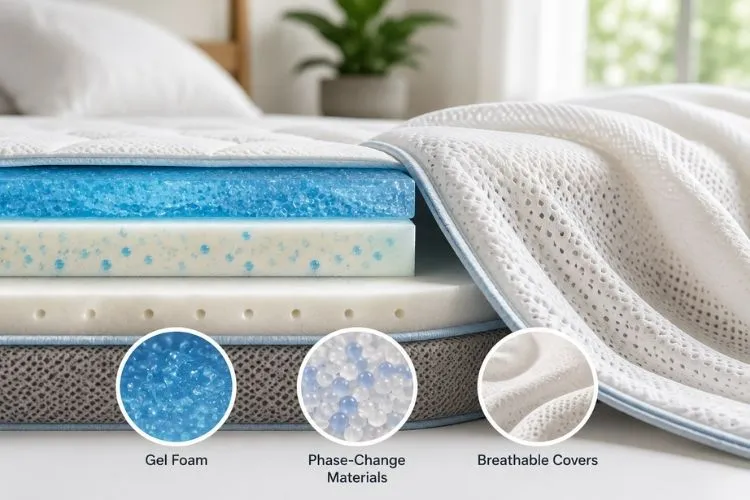
If you’d like to understand how cooling materials such as gel-infused foams, graphite, copper infusions, phase-change materials, and breathable covers actually work, see our Cooling Technologies Explained: Gel Foam, Phase-Change Materials, and Breathable Covers Without Toxic Additives guide.
If you’re specifically considering memory foam, our Cooling Memory Foam Mattress: Our Top Picks That Won’t Trap Heat guide compares several models that balance cooling performance with material quality.
Natural Latex
Natural latex is often one of the strongest choices for shoppers looking to reduce synthetic materials in the bedroom.
It naturally provides:
- Excellent airflow
- Impressive durability
- Responsive pressure relief
- Effective temperature regulation
Compared with many conventional foams, natural latex generally requires fewer synthetic additives.
However, not every mattress marketed as “latex” contains mostly natural latex. Some combine natural and synthetic latex, making independent certification especially important.
Organic Cotton and Wool
Many premium cooling mattresses use breathable natural fibers throughout the comfort layers and outer cover.
Organic cotton promotes airflow while avoiding many conventional textile treatments.
Wool also helps regulate temperature naturally by absorbing and releasing moisture throughout the night, helping many sleepers stay cooler and drier.
However, seeing phrases such as “organic cotton” or “natural wool” in product descriptions isn’t enough. Independent certifications remain the best way to verify these claims.
Which Certifications Are Actually Worth Looking For?
One of the easiest ways to narrow down your options is to focus on certifications backed by independent testing.
No certification guarantees that a mattress is completely free of every chemical. Instead, these certifications verify different aspects of product safety, emissions, and material sourcing, making it much easier to compare mattresses objectively.
CertiPUR-US®
CertiPUR-US® is one of the most widely recognized certifications for polyurethane and memory foam.
Certified foams are tested to verify they are made without:
- Ozone-depleting substances
- Certain heavy metals
- Formaldehyde
- Regulated phthalates
They must also meet limits for VOC emissions.
One important detail is that CertiPUR-US certifies the foam itself, not necessarily the finished mattress.
GREENGUARD Gold
GREENGUARD Gold evaluates the finished product rather than a single component.
It measures chemical emissions released into indoor air, making it especially valuable for products used in bedrooms, nurseries, and other indoor living spaces.
If improving indoor air quality is one of your priorities, this is one of the strongest certifications to look for.
GOLS (Global Organic Latex Standard)
For natural latex mattresses, GOLS is considered one of the highest standards available.
It verifies that certified latex meets strict organic requirements throughout production and processing.
This helps distinguish mattresses made primarily from natural latex from products marketed as “latex” that actually contain substantial amounts of synthetic latex.
GOTS (Global Organic Textile Standard)
GOTS applies to textile materials rather than foam.
It commonly covers:
- Organic cotton
- Wool
- Quilted fabric layers
Besides verifying organic sourcing, GOTS also limits many chemicals used during textile processing.
OEKO-TEX® Standard 100
OEKO-TEX Standard 100 focuses on finished textiles.
You’ll often find it on:
- Mattress covers
- Pillows
- Sheets
- Mattress protectors
Although it doesn’t certify the entire mattress, it confirms that fabrics have been tested for a broad range of potentially harmful substances.
Don’t Let Green Marketing Fool You
The mattress industry uses plenty of reassuring words that sound scientific but often have no consistent definition.
Examples include:
- Eco-friendly
- Natural
- Green
- Healthy sleep
- Toxin-free
- Chemical-free
These descriptions aren’t necessarily misleading, but they don’t prove anything by themselves.
Instead, ask one simple question:
Can the company support its claims with independent certifications and transparent material disclosures?
Manufacturers that clearly identify every foam, textile, adhesive, and certification generally deserve more confidence than those relying mostly on marketing language.
Questions Worth Asking Before You Buy
Before choosing any cooling mattress, consider asking:
- Has the complete mattress, or at least its primary components, been independently certified?
- Are the foams tested for low VOC emissions?
- Does the manufacturer clearly explain every material used?
- Is the flame barrier identified?
- Are certification documents available?
- Is there a generous in-home sleep trial?
These questions often tell you far more than advertising claims alone.
Is Bamboo Always the Better Choice?
Many cooling mattresses advertise bamboo covers because consumers associate bamboo with sustainability.
In reality, most bamboo mattress fabrics are rayon or viscose made from bamboo pulp using industrial processing.
These fabrics can certainly feel soft and breathable, but the word “bamboo” doesn’t automatically tell you how the material was manufactured or whether the finished fabric has been independently tested.
Rather than focusing on marketing terminology, prioritize verified certifications whenever possible.
Should You Avoid Memory Foam?
For most shoppers, there is no reason to automatically rule it out.
Modern memory foam has improved considerably, and many premium manufacturers now produce foams that meet strict low-emission standards while also providing excellent pressure relief and cooling performance.
Instead of judging memory foam as a category, evaluate each mattress individually.
Look for transparent material disclosures, reputable certifications, and companies with a strong reputation for quality.
If you’re comparing different foam options, our Cooling Memory Foam Mattress: Our Top Picks That Won’t Trap Heat guide reviews several of today’s strongest performers.
If you’re considering one of the most popular cooling hybrids currently available, our Nectar Premier Hybrid Review examines its cooling performance, construction, certifications, and overall value in much greater detail.
My Practical Buying Checklist
If I were choosing a cooling mattress today, these would be my priorities:
- Independent low-emission certifications
- Clear material transparency
- Breathable construction suited to my sleeping style
- Natural fibers whenever practical
- A manufacturer with a strong reputation
- A generous sleep trial and warranty
Cooling performance certainly matters, but understanding what you’re sleeping on matters just as much when creating a healthier bedroom.
Frequently Asked Questions
Do all cooling mattresses off-gas?
No. Most new mattresses release at least some VOCs when first unpacked, but the amount varies depending on the materials and manufacturing process. Mattresses with recognized low-emission certifications generally release fewer VOCs than uncertified alternatives.
How long does mattress off-gassing usually last?
The strongest odor typically fades within a few days, although small amounts of VOCs may continue to dissipate for several weeks. Placing the mattress in a well-ventilated room before sleeping on it can help reduce noticeable odors.
Which certification should I prioritize?
Each certification evaluates different aspects of a mattress, so there isn’t one universal “best” label.
Ideally, look for a combination of:
- GREENGUARD Gold
- CertiPUR-US
- GOLS
- GOTS
- OEKO-TEX Standard 100
The more transparency a manufacturer provides, the easier it becomes to evaluate the entire product.
Are natural latex mattresses completely chemical-free?
Natural latex mattresses generally contain fewer synthetic materials than many conventional foam mattresses, but they still include multiple components such as fabrics, adhesives, and fire barriers. Independent certifications remain the most reliable way to evaluate the finished product.
Conclusion
Choosing a cooling mattress isn’t simply about sleeping cooler.
It’s about understanding the materials inside the mattress, recognizing trustworthy certifications, and selecting manufacturers that are transparent about what goes into their products.
By balancing cooling performance with verified material safety, you’ll create a healthier sleep environment without sacrificing comfort.
If you’re still deciding which mattress is the best fit, compare our Best Cooling Hybrid Mattresses, explore our Best Mattress for Night Sweats, and learn how different materials manage heat in Cooling Technologies Explained: Gel Foam, Phase-Change Materials, and Breathable Covers Without Toxic Additives before making your final decision.