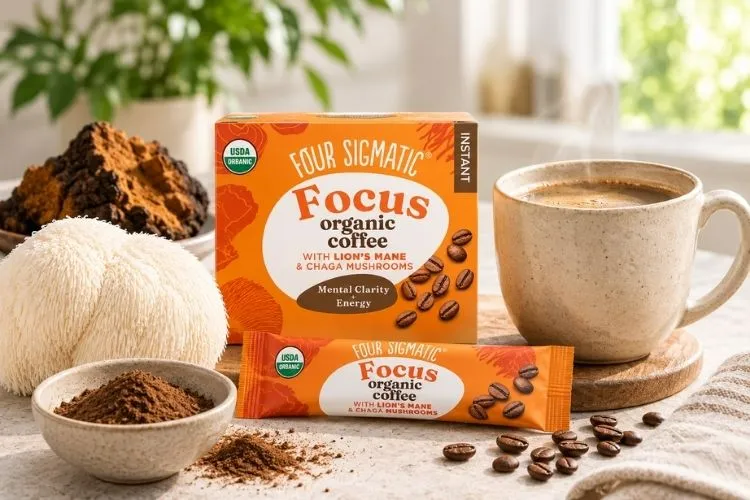
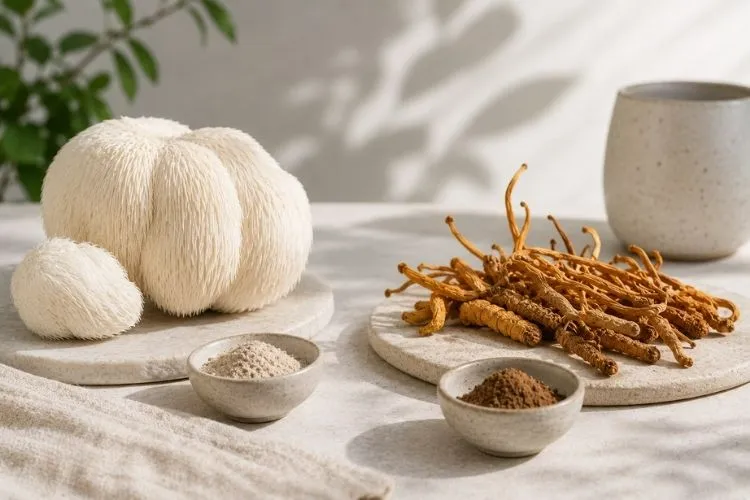
Lion’s mane and cordyceps often appear together in mushroom coffees, powders, and supplements, but they are not used for exactly the same purpose.
Lion’s mane is usually chosen for mental focus and cognitive support. Cordyceps is more closely associated with physical energy, endurance, and exercise performance.
Neither mushroom naturally contains caffeine, and neither works like an instant stimulant. Any noticeable effect is likely to be more subtle and may depend on the species, dose, extract quality, and how consistently the product is used.
Product quality also varies considerably. We prefer certified organic mushrooms where available, but organic certification should be combined with transparent sourcing, clear dose information, appropriate extraction, and independent contaminant testing.
Last updated: July 2026
Quick Answer
Choose lion’s mane when your main goal is concentration, mental clarity, or cognitive support.
Choose cordyceps when your priority is physical energy, exercise performance, or endurance.
The two can be combined when a day involves both focused work and physical activity, but there is limited human evidence showing that the combination works better than either mushroom alone.
Neither mushroom is a guaranteed solution for fatigue or poor concentration. Persistent or unexplained changes in energy deserve medical attention rather than another supplement.
Lion’s Mane vs. Cordyceps at a Glance
| Feature | Lion’s Mane | Cordyceps |
| Scientific name | Hericium erinaceus | Usually Cordyceps militaris or a cultivated Ophiocordyceps sinensis preparation |
| Best known for | Focus and cognitive support | Physical energy and endurance |
| Naturally contains caffeine | No | No |
| Works like a stimulant | No | No |
| Common use | Focused work and study | Exercise and active days |
| Main research areas | Cognition, mood, and nerve-related mechanisms | Exercise capacity, fatigue, and recovery |
| Human evidence | Promising but limited and mixed | Mixed, with some positive exercise studies |
| Main quality concern | Mushroom part, extraction, and beta-glucan transparency | Species, preparation, dose, and standardization |
What Is Lion’s Mane?
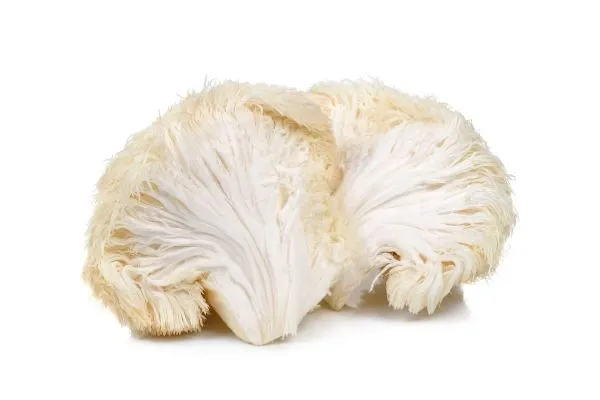
Lion’s mane is an edible white mushroom with long, hanging spines. Its scientific name is Hericium erinaceus.
It contains beta-glucans and other compounds, including hericenones and erinacines. Hericenones are mainly associated with the fruiting body, while erinacines are primarily studied in lion’s mane mycelium.
Much of the interest in lion’s mane comes from laboratory and animal research involving nerve growth factor and nerve-related mechanisms. These findings are interesting, but they do not prove that an ordinary supplement will noticeably improve concentration or prevent cognitive decline in humans.
What Does the Human Research Show?
A small study involving 30 adults with mild cognitive impairment found that participants who consumed lion’s mane powder for 16 weeks improved on a cognitive scale compared with placebo. Their scores declined again after supplementation stopped.
Because the study was small and involved people with mild cognitive impairment, it does not prove that lion’s mane will make a healthy adult more productive at work.
A small 2023 study in healthy young adults found faster performance on one cognitive task after a single dose and a possible reduction in subjective stress after 28 days. Several other cognitive and mood measurements showed no meaningful improvement.
The evidence is therefore best described as promising but preliminary.
Current research does not justify claims that lion’s mane:
- Instantly boosts brain power
- Treats ADHD
- Prevents dementia
- Repairs nerve damage
- Guarantees better memory
- Replaces adequate sleep
Lion’s Mane May Be the Better Choice When You:
- Want support for concentrated mental work
- Are more concerned with focus than physical endurance
- Prefer a naturally caffeine-free ingredient
- Are willing to use it consistently without expecting a dramatic effect
- Want a mushroom often included in focus-oriented drinks
Lion’s Mane May Not Be the Best Choice When You:
- Want an immediate stimulant effect
- Primarily need support for exercise
- Expect noticeable results after one serving
- Have a mushroom allergy
- Cannot verify the species, dose, or mushroom part used
- Are trying to treat persistent cognitive symptoms without medical advice
What Is Cordyceps?
Cordyceps refers to a group of fungi rather than one standardized supplement ingredient.
Wild Ophiocordyceps sinensis is rare, expensive, and not commonly used in ordinary commercial supplements. Most modern products use cultivated Cordyceps militaris, cultivated mycelium, or fermented preparations such as Cs-4.
This distinction matters because different species and preparations may contain different amounts of cordycepin, beta-glucans, and other constituents.
Research involving one specific preparation cannot automatically validate every product carrying the cordyceps name.
Does Cordyceps Improve Energy?
Cordyceps does not provide caffeine energy.
Human research has primarily examined whether it may influence exercise capacity, oxygen use, fatigue, and endurance.
A small placebo-controlled study involving healthy older adults found improvements in metabolic and ventilatory thresholds after 12 weeks, but maximum oxygen uptake did not improve.
Another study using a mushroom blend containing Cordyceps militaris found no significant benefit after one week. After three weeks, the supplement group showed an improvement in VO2 max compared with placebo.
Other studies have found limited or no benefit, particularly in well-trained athletes. Results may vary because studies use different species, preparations, doses, participants, and testing methods.
Cordyceps may therefore be more relevant for repeated use around physical activity than as a one-time stimulant.
Cordyceps May Be the Better Choice When You:
- Prioritize physical energy and endurance
- Want a caffeine-free addition to an active routine
- Have physically demanding days
- Are interested in exercise performance or recovery
- Choose a product that clearly identifies the species and dose
Cordyceps May Not Be the Best Choice When You:
- Mainly want memory or concentration support
- Expect an immediate caffeine-like boost
- Cannot identify the species or preparation used
- Have a mushroom allergy
- Are treating unexplained fatigue without medical advice
Which Is Better for Focus?
Lion’s mane is the more relevant choice for focus.
Its human research has concentrated more directly on cognition, mood, stress, and mental performance.
That does not mean it reliably improves productivity in every healthy adult, but its research direction is more closely aligned with focused work than cordyceps.
Lion’s mane may be the more logical option before:
- Writing
- Studying
- Reading
- Detailed computer work
- Planning
- Tasks requiring sustained attention
Which Is Better for Physical Energy?
Cordyceps is the more relevant choice for physical energy and endurance.
Some studies suggest possible improvements in exercise thresholds or oxygen-related performance, but findings are not consistent across all products or populations.
Cordyceps may be a better fit before:
- Cardio exercise
- Long walks
- Hiking
- Physically demanding work
- Endurance training
- Active days involving substantial movement
For a food-based pre-workout approach rather than a mushroom supplement, beet powder and beet juice offer a different natural strategy.
Which Is Better for Productivity?
The answer depends on what is limiting your productivity.
| Your Main Challenge | Better Starting Choice |
| Difficulty concentrating | Lion’s mane |
| Mental fatigue during detailed work | Lion’s mane |
| Low physical stamina | Cordyceps |
| Exercise or endurance support | Cordyceps |
| Mental and physical demands | Consider combining them |
| Caffeine sensitivity | Either can be caffeine-free |
| Need for immediate stimulation | Neither |
| Persistent unexplained fatigue | Medical assessment first |
Lion’s mane is the better match for cognitive productivity. Cordyceps is the better match for physical productivity.
Can You Take Lion’s Mane and Cordyceps Together?
Lion’s mane and cordyceps are often combined because they are associated with different goals.
A combination may appeal to someone who needs sustained concentration as well as energy for an active day. However, there is limited human evidence showing that taking both is more effective than using either mushroom alone.
If you are new to functional mushrooms, introduce one at a time. This makes it easier to notice how it affects your concentration, digestion, sleep, energy, or general well-being.
When Should You Take Them?
There is no firmly established best time to take lion’s mane or cordyceps.
Lion’s Mane
Lion’s mane is commonly taken in the morning or before focused work.
It does not naturally contain caffeine, but a lion’s mane drink may also contain coffee, matcha, black tea, cacao, or another stimulating ingredient.
Cordyceps
Cordyceps is often taken earlier in the day or before exercise because most research has focused on physical performance and endurance.
It should not be expected to work like an immediate pre-workout stimulant. Any effect may be subtle and may require consistent use.
Always check the entire formula. Our guide to healthy coffee alternatives compares mushroom coffee, matcha, and caffeine-free drinks by ingredients and caffeine content.
Powder, Extract, Coffee, or Capsules?
The best format depends on how you plan to use the mushroom.
Powder
Plain mushroom powder can be added to smoothies, food, or warm drinks.
Check whether it contains fruiting body, mycelium, or both. A basic powder may be less concentrated than an extract.
Extract
Extracts are processed to concentrate selected mushroom compounds.
A transparent manufacturer should identify:
- The mushroom species
- The mushroom part used
- The amount per serving
- The extraction method
- Beta-glucan content
- Relevant contaminant testing
For a closer look at a caffeine-free drink containing 1,500 mg of lion’s mane fruiting body extract, see our Four Sigmatic Lion’s Mane review.
Mushroom Coffee or Drink Mix
Drink mixes are convenient and may be easier to use consistently.
However, some contain relatively small mushroom amounts alongside coffee, creamer, flavors, sweeteners, or other ingredients.
Evaluate the complete formula rather than assuming every mushroom coffee provides the same dose or quality.
Functional mushrooms are one example of how functional foods and drinks can become part of an everyday routine.
For product-level comparisons, see our guide to the best mushroom coffees with transparent ingredients.
Capsules
Capsules avoid the earthy taste and provide a measured serving.
They may be the simplest option when you want lion’s mane or cordyceps alone rather than as part of a larger proprietary blend.
How to Choose a Quality Mushroom Product
Prioritize Certified Organic Where Available
Certified organic mushrooms are generally preferable when two products are otherwise comparable.
However, organic certification alone does not prove that a supplement contains a useful dose, a high-quality extract, or adequate contaminant testing.
Check the Species
Lion’s mane should be identified as Hericium erinaceus.
A cordyceps product should state whether it contains Cordyceps militaris, a cultivated Ophiocordyceps sinensispreparation, or another clearly identified form.
Avoid vague labels that only say “mushroom blend.”
Check Fruiting Body and Mycelium Information
The label should state whether the product contains fruiting body, mycelium, or both.
Fruiting body extracts are often preferred for beta-glucan transparency and lower grain content. However, lion’s mane mycelium is also relevant because it can contain erinacines.
The manufacturer should explain the growing medium, mushroom part, extraction method, and final composition.
Look for Beta-Glucan Disclosure
A clearly stated beta-glucan amount or percentage is more informative than a general polysaccharide claim.
Total polysaccharides can include starch from the growing medium and do not necessarily represent mushroom beta-glucans.
Look for Independent Testing
Useful testing may include:
- Heavy metals
- Pesticide residues
- Microorganisms
- Mycotoxins
- Product identity
- Potency
A batch-specific certificate of analysis is more useful than a general claim that a company tests its products.
Avoid Unnecessary Fillers
Check for added sugar, excessive sweeteners, maltodextrin, artificial flavors, creamers, and large proprietary blends.
These additions are not always inappropriate, but they should be clearly disclosed and serve a practical purpose.
Does Organic Matter?
Yes. Organic certification is a meaningful quality preference, particularly when a mushroom product is consumed regularly.
However, organic should be considered together with:
- Species identification
- Dose transparency
- Mushroom part
- Extraction information
- Beta-glucan content
- Independent testing
The strongest choice combines organic certification with transparent formulation and credible quality testing.
Safety and Possible Side Effects
Lion’s mane and cordyceps are natural ingredients, but natural products can still cause reactions or interact with medication.
Possible side effects may include:
- Digestive discomfort
- Headache
- Skin reactions
- Allergic symptoms
Stop using the product and seek appropriate medical help if you experience breathing difficulty, swelling, or a significant allergic reaction.
Cordyceps may require additional caution for people using:
- Blood-thinning medication
- Antiplatelet medication
- Blood glucose-lowering medication
- Immunosuppressive medication
Ask a qualified healthcare professional before using either mushroom if you:
- Are pregnant or breastfeeding
- Have a mushroom allergy
- Take prescription medication
- Have an autoimmune condition
- Use immune-modifying medication
- Have a bleeding disorder
- Are preparing for surgery
- Are receiving cancer treatment
- Have persistent or unexplained fatigue
Can Lion’s Mane or Cordyceps Replace Caffeine?
Neither mushroom naturally contains caffeine.
Lion’s mane may be more relevant for gradual cognitive support, while cordyceps may be more relevant for physical endurance. Neither creates the same immediate alertness as coffee.
A mushroom coffee may still contain significant caffeine from coffee, matcha, tea, or cacao.
Before buying a functional drink, check:
- Caffeine per serving
- Mushroom amount per serving
- Mushroom species and form
- Additional active ingredients
Do not assume that mushroom coffee is caffeine-free or automatically lower in caffeine than ordinary coffee.
What If Low Energy Comes From Poor Sleep?
Functional mushrooms cannot compensate for insufficient sleep, irregular sleep timing, dehydration, under-eating, excessive stress, or an underlying health condition.
Before adding another supplement, consider:
- Total sleep time
- Bedtime consistency
- Morning light exposure
- Meal timing
- Hydration
- Total caffeine intake
- Late-day caffeine
- Workload and recovery
Supporting a regular circadian rhythm is likely to have a greater effect on everyday energy than repeatedly changing supplements.
Frequently Asked Questions
Is Lion’s Mane Better Than Cordyceps?
Neither is universally better.
Lion’s mane is more relevant for mental focus and cognitive support. Cordyceps is more relevant for physical energy and endurance.
Which Is Better for Studying?
Lion’s mane is the more logical starting choice because its research is more closely connected with cognition and mental performance.
It does not provide an immediate caffeine-like effect.
Which Is Better Before a Workout?
Cordyceps is the more relevant option because most of its human research has focused on exercise, aerobic performance, and endurance.
Can You Take Lion’s Mane and Cordyceps Every Day?
Many products are designed for daily use, but there is no single dose or duration that applies to every formula.
Follow the product instructions and discuss regular use with a healthcare professional if you take medication or have a health condition.
Do Lion’s Mane and Cordyceps Contain Caffeine?
No. Neither mushroom naturally contains caffeine.
A drink containing the mushrooms may still contain caffeine from coffee, tea, matcha, or cacao.
Is Fruiting Body Always Better Than Mycelium?
No.
Fruiting body extracts are often preferred for beta-glucan transparency and lower grain content. However, lion’s mane mycelium can contain erinacines and should not automatically be dismissed.
Transparency matters more than a blanket rule.
Should Mushroom Supplements Be Organic?
Certified organic is preferable where available, particularly when two products are otherwise comparable.
It should be combined with checks for species, dose, mushroom part, beta-glucans, extraction, and contaminant testing.
Final Verdict
Choose lion’s mane when your main goal is concentration, focused mental work, or cognitive support.
Choose cordyceps when your priority is physical energy, exercise, or endurance.
The two can be combined, but evidence showing that the combination is better remains limited. Introducing one mushroom at a time makes it easier to evaluate tolerance and usefulness.
Whichever you choose, prioritize certified organic ingredients where available, clear species identification, transparent dose and mushroom-part information, beta-glucan disclosure, independent testing, and minimal fillers.
Neither mushroom replaces sleep, adequate food, hydration, recovery, or medical assessment of persistent fatigue.