Last Updated: October 2026
Best Under-Sink Water Filter in 2026 – Smart RO Living for Modern Homes
Pure water has quietly become one of the real luxuries of modern life. In 2026, the best under-sink water filters are not just hidden hardware—they are compact wellness tools that sit under your kitchen cabinet and decide what ends up in your coffee, cooking and water bottles.
If you are searching for the best under-sink water filter or “best water filter system under sink,” three smart reverse-osmosis (RO) systems stand out globally: Frizzlife PD600‑TAM3, Waterdrop G3P600 and SimPure T1‑400. Each combines high-performance filtration with safety certifications and tankless, space-saving design.
For specific contaminant issues like lead or PFAS, it is worth pairing this guide with my dedicated Best Water Filter for Lead Removal 2026 so you know exactly which technologies and NSF certifications to look for. And if you’re ready to take clean water beyond the kitchen tap, a whole house water filter can extend protection to every shower, bath and laundry load in your home.
My Honest Take as the Founder of Healthy Home Upgrade
Clean water is one of those topics I keep coming back to. After my lobectomy I became much more deliberate about what goes into my body every single day, and water is the most basic starting point. You drink it, you cook with it, you make your coffee and tea with it. If that water carries chlorine, heavy metals or PFAS residues, you are getting a small dose of something unwanted multiple times a day, every day.
I do not have an under-sink RO system yet but it is on my list for our new home. What draws me to this category specifically is the combination of simplicity and thoroughness. Once it is installed it just works quietly under the counter without taking up space or requiring you to remember anything. That matters when life is busy.
When I look at these three systems what stands out to me is the remineralization question. RO removes almost everything, which sounds ideal until you realize that stripped water can taste flat and may not be what your body expects. The Frizzlife PD600-TAM3 addresses that directly and for a family like ours where we drink a lot of water throughout the day that matters to me.
One thing I feel strongly about is how rarely young people think about water quality when they move into their first home or apartment. It is simply not on their radar. When my own children eventually move out, a good water filter will be one of the first things I talk to them about. The habits you build in your first home tend to stay with you, and starting with clean water is one of the easiest and most impactful decisions a young household can make.
If I were setting up a new kitchen today I would start with a certified tankless RO system and pair it with a shower filter. Those two changes alone would cover the water your body absorbs both inside and outside.
At a Glance / Editor’s Picks
| Model | Why it stands out | Filtration type / performance | Key certifications & safety notes | |
| Frizzlife PD600‑TAM3 RO System | High-flow, tankless RO with built-in alkaline remineralization; great if you want cleaner, lower‑TDS water that doesn’t taste too “flat” or acidic. | 3-stage RO (sediment + carbon + RO membrane) plus TAM remineralization/alkaline stage; up to 600 GPD, with pump‑assisted flow and improved waste ratio vs legacy RO. | Designed to reduce chlorine, fluoride, arsenic, lead, VOCs and more; models list NSF 58 testing plus CE/RoHS variants by region—always confirm the exact certification code for your market. | |
| Waterdrop G3P600 RO System | Smart LED faucet with real-time TDS information and filter-life monitoring; a strong everyday option for families and modern kitchens. | Tankless multi-stage reverse-osmosis filtration with up to 600 GPD capacity and an approximately 2:1 pure-to-drain ratio. | Current model information lists NSF/ANSI 42, 53, 58 and 372 certifications. Confirm that the exact listing and model carry the stated certifications before publishing. | |
| SimPure T1‑400 Under-Sink RO | Slim, compact tankless RO designed for apartments and small kitchens; tool‑free filter swaps keep maintenance simple for renters and busy families. | 4-stage system (sediment, carbon, RO membrane, polishing carbon); ~400 GPD output in a small footprint that fits tight cabinets. | CE and RoHS compliant in EU‑focused listings; ideal where space and budget matter more than Wi‑Fi and app layers—still verify local approvals and test results if you have lead/PFAS concerns. |
*Availability & pricing vary by region. EU buyers should confirm CE and RoHS compliance.
Best Picks
Best smart RO for most modern homes: Frizzlife PD600‑TAM3 — a 600 GPD tankless RO with external alkaline remineralization, real‑time TDS display and a roughly 2:1 pure‑to‑waste ratio, ideal if you want broad contaminant reduction plus water that tastes less “flat” in everyday family use.
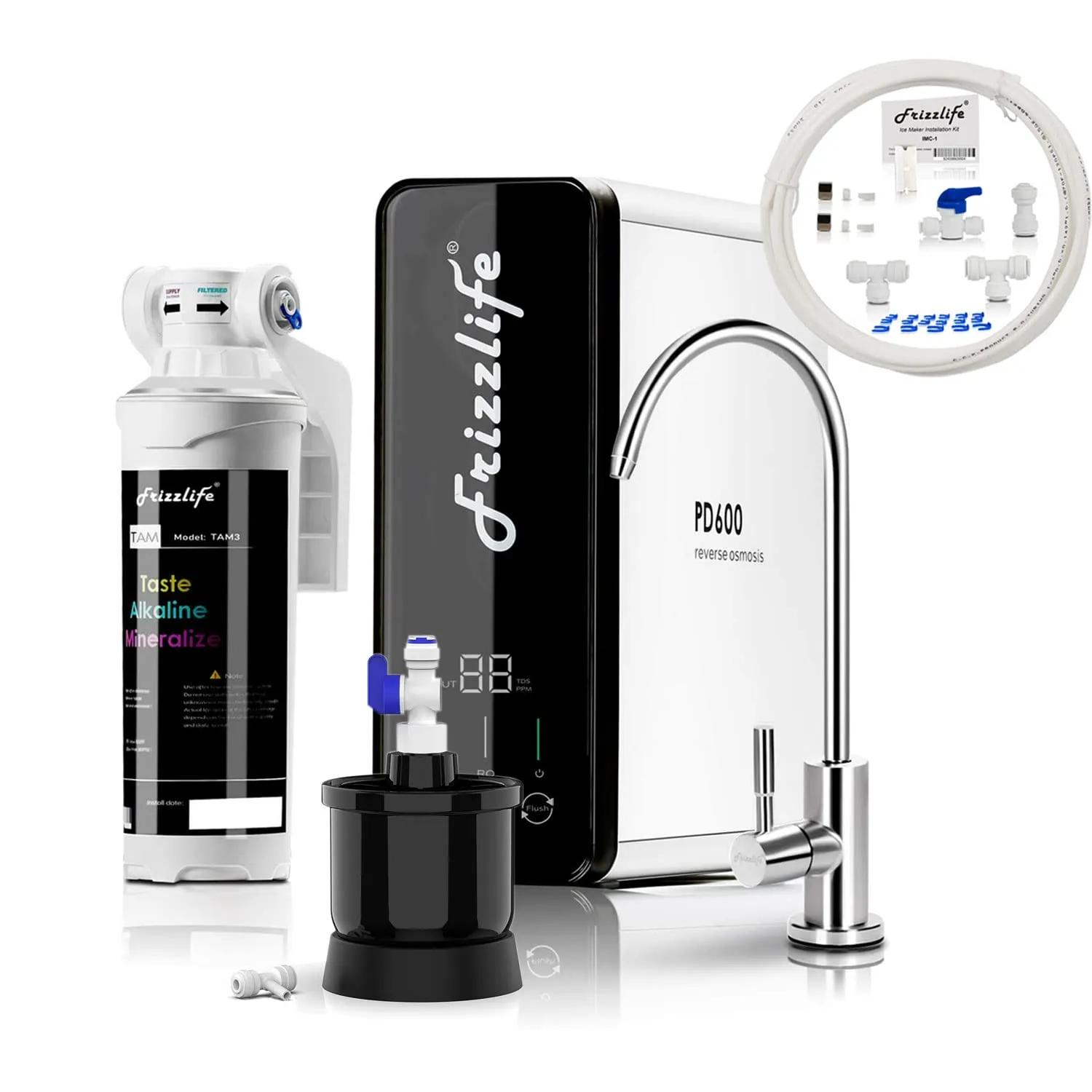
Frizzlife PD600-TAM3 (Best Compact RO System with Remineralization)
Check Frizzlife PD600-TAM3 RO System Price on Amazon
Healthy Home Upgrade Review:
A compact reverse osmosis system that combines strong filtration with remineralization, making it a practical choice for cleaner, better-tasting water in smaller kitchens.
Why it’s a good choice
The Frizzlife PD600-TAM3 uses tankless reverse osmosis filtration with a built-in remineralization stage, helping restore minerals like calcium and magnesium after filtration. Its compact design saves under-sink space while still delivering fast water flow and effective contaminant reduction, making it ideal for apartments and modern homes.
Pros
- Tankless, space-saving design
- Includes remineralization for improved taste
- Reduces lead, chlorine, and other contaminants
- Faster flow compared to many traditional RO systems
- Lower wastewater ratio than older RO units
Cons
- Higher upfront cost than basic filters
- Requires filter replacements and maintenance
- Installation may take more effort for beginners
- Not a full whole-house filtration system
Check Frizzlife PD600-TAM3 RO System Price on Amazon
Best smart tankless RO system: Waterdrop G3P600 — a 600 GPD tankless reverse-osmosis system with multi-stage filtration, a smart LED faucet, real-time TDS monitoring, filter-life indicators and an approximately 2:1 pure-to-drain ratio. It is a strong choice for families and modern kitchens that want fast filtered-water flow without a bulky storage tank.
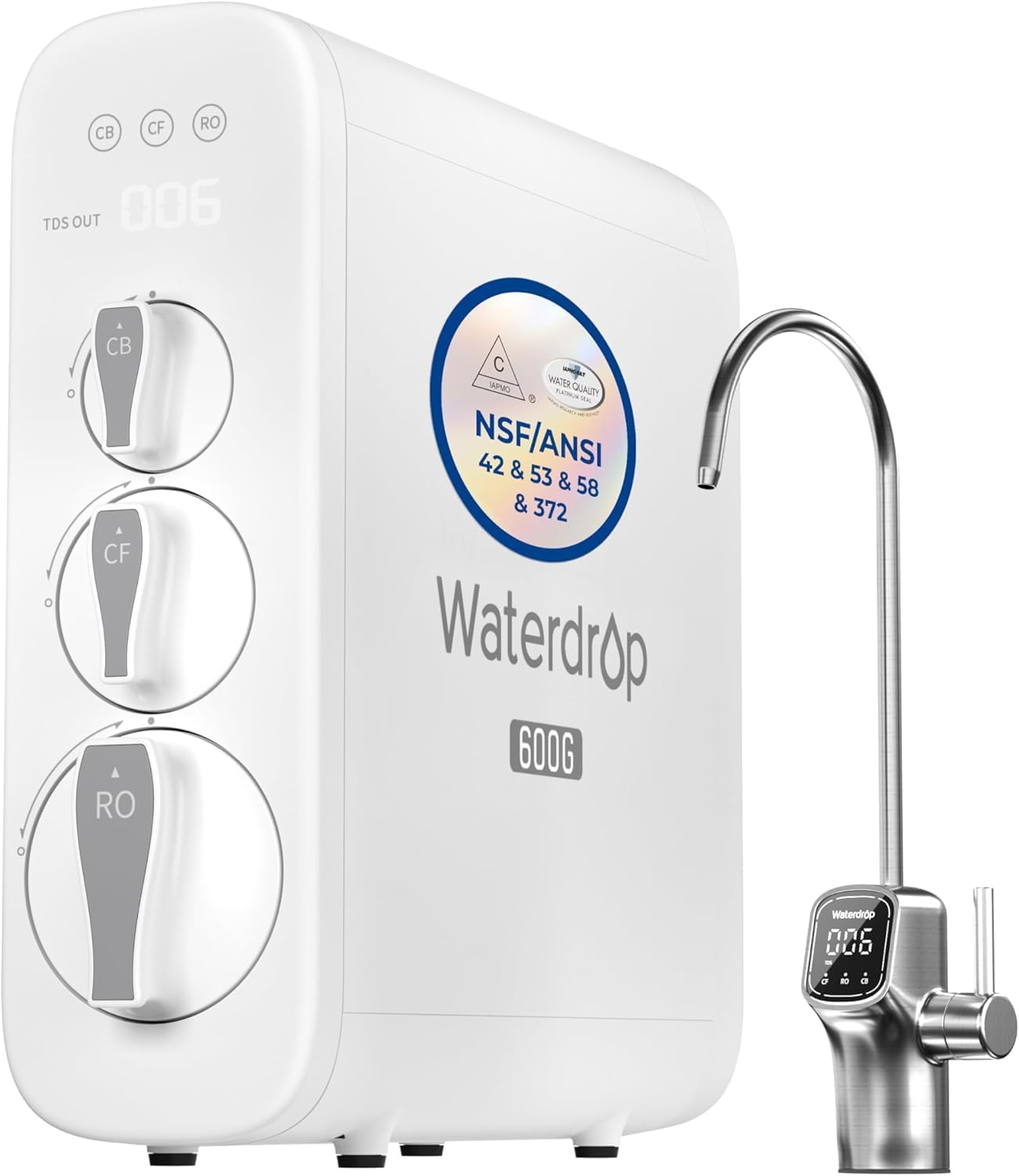
Waterdrop G3P600 (Best Smart Tankless Reverse Osmosis System)
Check Waterdrop G3P600 Price on Amazon
Healthy Home Upgrade Review:
A sleek, high-capacity tankless RO system for modern kitchens, combining smart monitoring, fast filtered-water flow and multi-stage filtration in a compact design.
Why it’s a good choice
The Waterdrop G3P600 is a strong choice for households that want high-capacity reverse-osmosis filtration without giving up valuable under-sink space to a traditional storage tank. It delivers up to 600 gallons per day for drinking, cooking and filling reusable bottles. Its smart LED faucet provides real-time TDS information and filter-life monitoring, making it easier to track system performance and know when filters need attention. The multi-stage system is designed to reduce a broad range of contaminants while achieving an approximately 2:1 pure-to-drain ratio.
Pros
- High 600 GPD capacity
- Tankless, space-saving design
- Smart faucet with TDS and filter monitoring
- Strong current certification profile
- Approximately 2:1 pure-to-drain ratio
Cons
- Higher upfront cost than basic under-sink carbon filters
- Requires electricity
- RO filtration removes naturally occurring minerals
- Replacement filters add ongoing ownership cost
Check Waterdrop G3P600 Price on Amazon
Best compact RO for small apartments and rentals: SimPure T1‑400 — a slim, 400 GPD tankless RO (often sold with 8‑stage RO+UV in some variants) that fits tight under‑sink spaces, uses quick‑connect tubing and tool‑free filter swaps, and focuses on simple, quiet operation over heavy smart features, well suited to smaller flats and first‑time RO users.
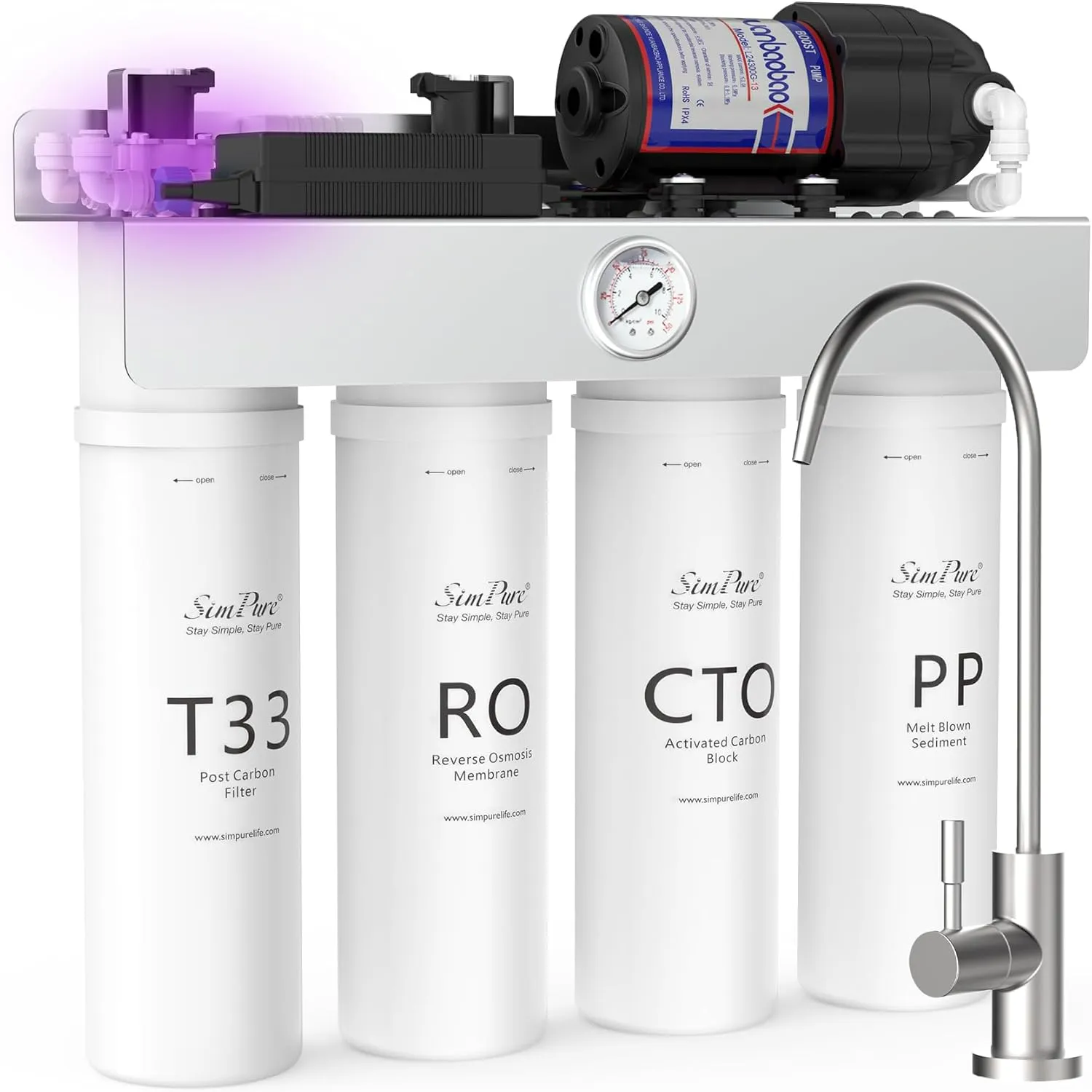
SimPure T1-400 (Best Budget-Friendly Tankless RO System)
Check SimPure T1-400 Under-Sink RO Price on Amazon
Healthy Home Upgrade Review:
A compact and affordable tankless RO system that delivers solid filtration performance for smaller households and apartments.
Why it’s a good choice
The SimPure T1-400 offers reverse osmosis filtration in a space-saving tankless design, making it a practical choice for users wanting cleaner drinking water without investing in a premium-priced system. It helps reduce common contaminants like lead, chlorine, and dissolved solids while maintaining a quieter, more modern setup.
Pros
- Compact tankless design saves space
- Affordable compared to high-end RO systems
- Reduces lead, chlorine, and TDS
- Cleaner, minimalist under-sink setup
- Lower maintenance than bulky tank systems
Cons
- Lower flow rate than larger premium models
- Limited advanced smart features
- Requires filter replacements
- Not designed for whole-house filtration
Check SimPure T1-400 Under-Sink RO Price on Amazon
Under-the-Sink Lifestyle Integration
Unlike countertop jugs or big visible dispensers, under-sink systems hide under the counter and quietly upgrade everything you do at the tap.
Modern smart RO units typically offer:
- Real-time TDS meters show purity instantly.
- Wi-Fi monitoring syncs with apps for filter-life tracking.
- Eco pumps recover wastewater with ratios as low as 1:1.
- Predictive alerts schedule replacements automatically.
This “smart RO living” reflects a broader trend in home water tech: quietly intelligent systems that support health and convenience instead of demanding attention. You can read more about that in my Future of Home Water Tech 2026 article.
If you also want a certified, non‑plumbed option for emergencies, outdoor use or minimalist kitchens, a stainless steel Berkey water filter can complement your under‑sink system for gravity‑fed drinking and cooking water.
How to Choose Wisely
- Small apartments / renters: Tankless units like SimPure T1‑400 take less space and often use quick‑connect tubing and non‑permanent mounting, which is kinder to rental kitchens.
- Families / higher daily water use: Waterdrop G3P600’s 600 GPD capacity, tankless design and approximately 2:1 pure-to-drain ratio make it a practical choice when you regularly fill bottles, cook and brew coffee throughout the day.
- Baby care / elderly users: Systems like Frizzlife PD600‑TAM3, with remineralization and stable pH, can make water taste more natural and less “stripped.”
- Renters & multi‑stage setups: If you cannot modify plumbing much, consider pairing a faucet filter or countertop system with a future under‑sink RO when you move; my Best Faucet Water Filter 2026 guide shows certified options that work in tight spaces.
Not sure what the certification numbers actually mean? Our guide to NSF/ANSI 42 vs 53 vs 58 explains the differences between taste and odor claims, health-related contaminant reduction, and reverse osmosis standards.
The single most important factor is certification:
- For RO performance and structural integrity, look for NSF/ANSI 58.
- For materials that touch water, look for NSF/ANSI 61, plus CE and RoHS for EU.
- For specific contaminants like lead and PFAS, consult my lead-removal filter guide so you pick systems that are actually tested for those, not just generically “good.”
If you want to extend your low‑tox work into the shower as well, my Best Shower Filter for Chlorine covers certified options for hair, skin and chlorine exposure reduction.
Quiet Luxury + Sustainability
New‑generation under-sink RO systems are much more sustainable than older models:
- Eco‑pumps can reduce wastewater ratios from ~1:3 or 1:4 down closer to ~1:1–1:3, depending on the model, which means less clean water going down the drain.
- Auto‑flush and sleep modes help protect the membrane while keeping energy consumption low.
- Long‑life filters (often 12–24 months for some stages) reduce plastic waste and shipping frequency.
Before upgrading to an expensive whole-home system, consider whether it’s necessary for your water quality. Our guide, Do You Really Need Whole-House RO?, explains when carbon filtration and a targeted under-sink filter may be sufficient.
For daily life, the “quiet luxury” is simple:
- Glass bottles refilled from your tap instead of disposable plastic.
- Coffee, tea and stock that taste cleaner.
- Plants and sourdough that respond better to more consistent water.
If you are building a top water kit for familities, tag this article together with your faucet, whole‑house and shower filter guides to create a clear cluster in your navigation.
Installation, Design & Low-Tox Materials Under the Sink
Installing a modern under-sink RO system feels more like putting in a compact appliance than wrestling with plumbing. You typically get:
- Color‑coded tubes and quick‑connect fittings.
- Twist‑lock filters that swap in seconds, without tools.
- Magnetic or slide‑off front panels for easy access.
From a materials and low-tox perspective, the key points are:
- Housings & cartridges: Quality systems use food‑grade plastics (often polypropylene/ABS) plus carbon and RO membranes tested under NSF 58/61. Steer clear of unbranded units with no test data; they are more likely to use lower‑grade plastics and additives.
- Tubing & seals: Prefer systems with PEX/PE tubing and silicone or EPDM O‑rings over older PVC/vinyl tubing; if you buy extra fittings, choose PEX/PE and silicone (similar to medical grade silicone used in safer gaskets and wearables) when possible.
- PFAS & coatings: The RO units themselves typically do not rely on PFAS; risk is more in non‑stick, stain‑resistant cabinet liners or sprays. Use plain trays, stainless racks or uncoated liners instead of heavily “non‑stick” shelf liners under the sink.
- EPP/EVA foams: Many systems ship with EPP/EVA foam blocks for packaging or vibration damping. They are fine for shipping, but you do not need to keep extra foam under the sink long‑term where they can trap moisture or grow mold; remove packaging after install and keep the area dry and ventilated.
Before you install, wipe down the cabinet, remove old crumbly liners or foam, let the unit sit with the cabinet doors open for a short “off‑gassing” period, and then run the recommended flush cycles.
Comparison: Pitcher vs Countertop vs Under-Sink vs Whole-House
Each filtration type serves a different purpose:
- Pitcher filters are portable but basic (carbon only).
- Countertop units add speed and visibility but take space.
- Under-sink systems deliver permanent convenience and higher flow rates —ideal for drinking and cooking.
- Whole-house systems condition all incoming water for bathing and laundry but require larger investment and maintenance.
This article focuses on under-sink RO models, the sweet spot between purity and practicality. Non-RO filters (carbon or ultrafiltration) remain good alternatives where RO is not required or space is limited.
Choosing between an under-sink, countertop, or faucet-mounted filter? Our guide to under-sink vs countertop vs faucet filters compares installation, maintenance, kitchen space, and convenience to help you find the right setup for your home.
Maintenance & Filter Management
New-generation systems simplify everything.
- LED indicators show when filters need replacement.
- Twist-lock cartridges swap out in seconds without tools.
- Self-cleaning flush cycles prevent bacteria build-up.
- App alerts remind you when to order filters or schedule service.
Cleaning takes less time than brewing coffee, which means maintenance is no longer a reason to avoid RO systems.
Which Is Better: RO vs Non-RO Under-Sink Filters?
- RO systems (like Frizzlife PD600‑TAM3, Waterdrop G3P600, SimPure T1‑400) are ideal when you want broad contaminant reduction: fluoride, many heavy metals, some PFAS, nitrates, microplastics and a long list of dissolved solids.
- Non‑RO systems (good carbon, carbon block or ultrafiltration under-sink filters) are useful when your municipal water is relatively clean, you want to preserve more minerals and you don’t want any wastewater at all.
For many households, a smart, tankless RO system under the kitchen sink offers the best everyday balance of safety, taste and convenience, especially when combined with a shower filter and, where needed, a whole‑house carbon stage.
FAQs
Are under-sink RO systems worth it?
They can be, especially in cities or wells with variable quality. Modern tankless models offer strong contaminant reduction (when properly certified) with less wastewater and simpler maintenance than older systems. Actual performance always depends on your source water and how well you maintain the filters.
Do RO filters remove healthy minerals?
Yes, RO significantly reduces total dissolved solids (TDS), including calcium and magnesium. Remineralization stages (like the TAM stage in Frizzlife PD600‑TAM3) add some minerals back mainly for taste and pH balance; you should still rely on food, not filters, for mineral intake.
How often should filters be replaced?
Most stages are replaced every 6–12 months, with RO membranes often lasting 18–24 months depending on water quality and usage. Smart systems and indicator lights make this much easier to track.
Can I install an under-sink filter myself?
Many newer systems are designed for handy DIYers: color‑coded tubing, quick‑connect fittings and clear instructions. If you are uncomfortable drilling the countertop for a separate faucet or tapping into your cold line, a plumber can do the basic work in under an hour.
What certifications should I look for?
NSF/ANSI 58 for RO performance.
NSF/ANSI 53 for specific contaminants like lead (see systems listed in my lead‑removal guide).
NSF/ANSI 61 for materials in contact with water, plus CE and RoHS for electrical and safety compliance in EU.
Is under-sink RO better than pitcher filters?
For most contaminant profiles, yes. RO removes a far broader spectrum of contaminants than a typical carbon pitcher and delivers higher flow for everyday cooking and drinking. Pitchers still have a place as portable taste‑improvers or backups, but they are not a substitute for a properly certified under-sink system.
Choosing your best under-sink water filter
If you want a balanced, remineralized RO system with strong day‑to‑day performance, start with the Frizzlife PD600‑TAM3 and check the latest specs and pricing from Frizzlife, then cross‑check it against my lead-removal filter list if you live in an older building.
If your household uses a lot of drinking and cooking water and you want smart monitoring in a compact tankless system, the Waterdrop G3P600 is a strong pick for a busy family kitchen.
If you are in a compact apartment or rental and want a slimmer chassis with simple maintenance, SimPure T1‑400 offers a solid, space‑saving RO setup at a friendlier price point.
Whichever you choose, pairing the right under-sink system with a whole‑house filter, shower filter and simple low‑tox choices under the sink can transform “just water” into one of the easiest, most powerful upgrades you can make for your home.
References & Certifications