Last Updated: October 2026
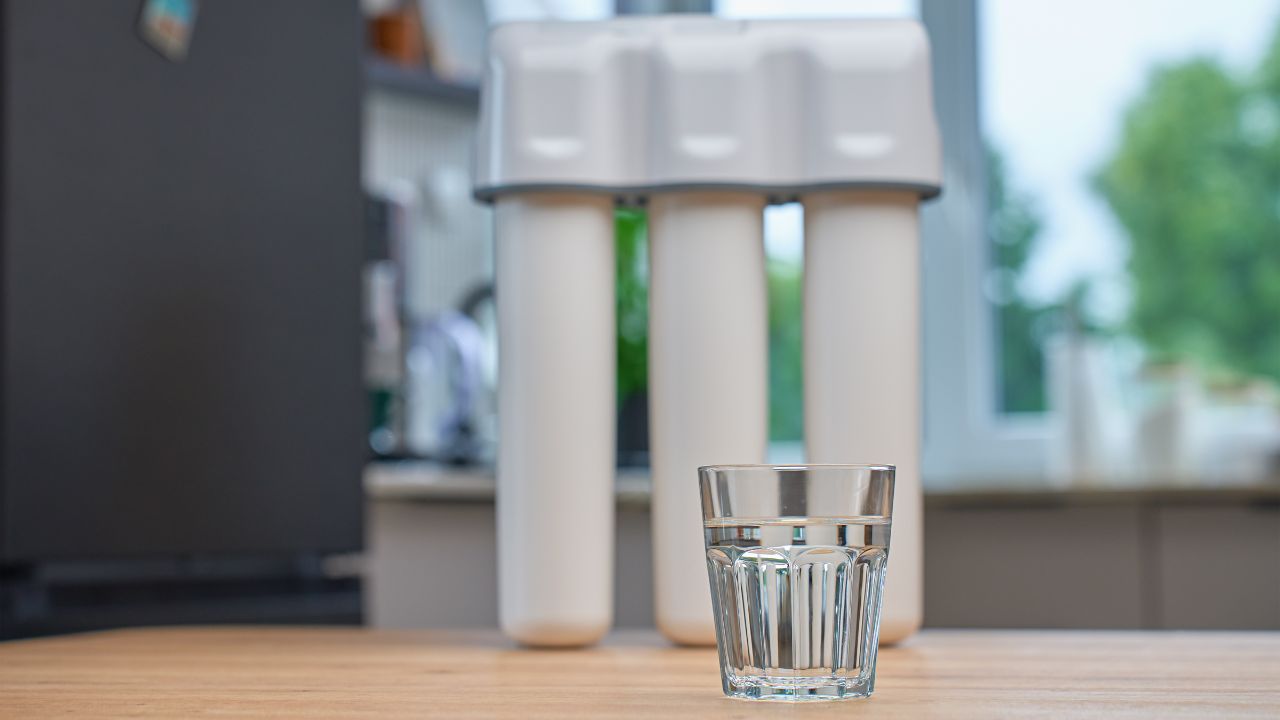
There is a particular calm in turning on any tap and getting water that smells neutral, tastes clean, and leaves less residue on skin, hair and appliances. Whole house water filter systems in 2026 are no longer just bulky tanks in the garage–they are part of a home’s health infrastructure, protecting showers, washing machines, cooking water and even indoor air quality from chlorine, VOCs and, increasingly, PFAS.
The systems highlighted here lean on certified carbon and KDF media, careful material choices (avoiding risky plastics and coatings where possible), and smart monitoring so you are not guessing when filters need service. The goal: a best whole house water filter system that matches your water source, cuts key contaminants like lead and PFAS, and uses lower‑toxin components such as certified stainless steel and medical‑grade or high‑spec plastics where unavoidable.
My Honest Take as the Founder of Healthy Home Upgrade
When I started thinking seriously about water quality in the home, I quickly realized that most people focus only on what comes out of the drinking tap. But chlorine, VOCs and other contaminants do not stay in the glass. They come out of the shower, rise as steam when you boil water, and affect the air you breathe in a hot bathroom. That is what made whole house filtration interesting to me.
I do not have a whole house system installed yet, but the more I have researched this category the more I understand why it appeals to people who think about the home as a complete environment rather than a collection of separate problems. A whole house filter is not about chasing perfect water. It is about reducing a constant low level of exposure that most people never think about.
What I look for when evaluating these systems is simple. Are the materials certified and transparent? Does the brand publish real test data or just marketing claims? And does the system actually match the water problem in the home, because a system that is too large or too complex for your situation is not better, it is just more expensive and harder to maintain.
My honest advice before buying anything in this category is to test your water first. That single step changes everything about which system makes sense for your home.
Best Whole House Water Filter Systems
- Best whole‑house filter for long‑term city water: Aquasana Rhino EQ‑1000 — a million‑gallon, carbon‑plus‑KDF system independently tested to NSF/ANSI 42 and NSF/ANSI/CAN 61, ideal if you want decade‑scale chlorine, lead and VOC reduction across the entire home with set‑and‑forget maintenance.
- Best reusable sediment prefilter combination: Culligan WH-HD200-C + iSpring WSP-50: a flexible whole-house setup that combines a clear heavy-duty cartridge housing with a reusable 50-micron spin-down prefilter. It is a practical choice for homes dealing with sand, rust, dirt and other coarse sediment, while allowing the main Culligan cartridge to be selected according to the home’s water concerns.
- Best three-stage system for heavy-metal reduction: Express Water WH300SCKS Heavy Metal System: a sediment, KDF and carbon-block system designed to reduce suspended particles, chlorine, unpleasant tastes, odors and certain heavy metals. Its pressure gauges, release buttons and stainless-steel frame make it a strong option for households wanting broader filtration and easier system monitoring.
- Best compact budget-friendly whole-house system: iSpring WGB21B 2-Stage System: a space-conscious system that combines a 5-micron sediment filter with a coconut-shell carbon block filter. It offers up to 50,000 gallons of filtration and approximately 15 GPM of flow, making it well suited to smaller households focused on sediment, chlorine, taste and odor reduction.
At a Glance / Editor’s Picks
| System | Best for | Filtration type | Key certifications* | PFAS / lead focus | Typical installed cost** |
|---|---|---|---|---|---|
| Aquasana Rhino EQ-1000 + optional add-ons | Long-term filtration for municipal water | Sediment prefilter + activated carbon + KDF; optional salt-free conditioner and UV | NSF/ANSI 42 and NSF/ANSI/CAN 61 claims apply to listed systems or components; verify the exact configuration | Standard system primarily targets chlorine, taste and odor; verify any lead or PFAS claims for the selected add-ons | Approximately $1,200 to $1,800 |
| Culligan WH-HD200-C + iSpring WSP-50 | Homes needing reusable coarse-sediment protection | 50-micron reusable spin-down prefilter + customizable cartridge housing | Culligan housing is WQA certified to NSF/ANSI 42 and 372 and CSA B483.1; certification does not apply to every possible cartridge | No dedicated PFAS or lead reduction by default; performance depends on the Culligan cartridge installed | Approximately $350 to $800 |
| Express Water WH300SCKS Heavy Metal 3-Stage System | Three-stage filtration with added heavy-metal reduction | Sediment + KDF + activated-carbon block | Listing states NSF-certified filters; verify the applicable certification and standard for each replacement cartridge | KDF media targets certain heavy metals; not presented as a dedicated PFAS system | Approximately $700 to $1,200 |
| iSpring WGB21B 2-Stage Whole House System | Compact, budget-friendly sediment and chlorine reduction | 5-micron sediment + coconut-shell carbon block | Carbon filter is listed as SGS tested; system-wide NSF certification is not clearly stated for this exact configuration | Standard model is not designed specifically for PFAS or lead reduction | Approximately $450 to $900 |
*Always confirm the exact model number against the NSF or equivalent database; listings change over time.
**Approximate ranges based on typical US pricing; EU buyers should also check CE, RoHS and local plumbing conformity.
Safety materials 101 – EPP, EVA, PFAS, coatings and silicone in whole‑house systems
Whole‑house filters combine media tanks, valves, housings, and sometimes internal linings. The filter media (carbon, KDF, resin) does the purification, but the materials around the water also matter.
PFAS & internal coatings
- Some older plumbing products and cheap housings use fluoropolymer‑based coatings or seals derived from PFAS chemistry; these are now under increasing regulatory scrutiny.
- Certified whole house systems for 2026 increasingly use NSF/ANSI 61‑tested wetted materials, which restrict leaching of metals and organics into drinking water.
What to favor:
- Tanks and housings where any liner or coating is explicitly certified to NSF/ANSI 61 and lead‑free standards, with no decorative non‑stick coatings inside the water path.
EPP (expanded polypropylene) & EVA (ethylene‑vinyl acetate)
- EPP and EVA are light plastics used in some filter housings, insulation jackets, valve covers, and shipping supports; while generally stable at room temperature, they are still petrochemical materials that can contain additives and plasticizers.
- In a whole‑house context, you want these materials outside the main water path whenever possible. When they are used for housings or cartridges, they should be part of a system that has passed NSF/ANSI 61 material safety and (for lead) NSF/ANSI 372.
What to favor:
- Systems that clearly list NSF/ANSI 61 certification for all wetted plastic parts and avoid untested EVA/EPP in direct contact with water.
Medical‑grade silicone vs generic elastomers
- Medical‑grade or food‑grade silicone is often used for O‑rings and seals; reputable brands choose formulations that pass drinking‑water approvals and temperature cycling without significant leaching.
- Generic rubber or low‑grade silicone can contain extra fillers or plasticizers that are not ideal in a long‑term water application.
What to favor:
- Replacement O‑rings and seals from the original manufacturer or third parties that explicitly state compliance with drinking‑water standards (NSF/ANSI 61 or equivalent).
Overall, the safest whole‑house filters combine stainless steel, certified composite tanks, and high‑grade silicone/rubber in their wetted parts, avoiding unnecessary PFAS‑based coatings and untested plastic foams in the water path.
Whole-House Wellness — Design That Lives With You
Ten years ago, whole-house filters looked like industrial tanks.
Today they’re part of a home’s health architecture—discreet, efficient, and built to last.
You may never see them, yet you’ll notice their effect everywhere: hair that air-dries softer, showers without the sharp smell of chlorine, kettles without scale. This is what architects call quiet luxury — comfort that comes from what you don’t notice: no odor, no residue, no chemical taste. Digital valves and pressure gauges replace guesswork with data. Smart notifications remind you when the media needs changing, so maintenance becomes mindfulness, not stress. And for drinking and cooking specifically, many homes pair these systems with a countertop gravity setup like a Berkey water filter, which adds an extra polishing step and keeps filtered water available even during plumbing work or power outages.
Product Reviews — Global Standouts
Aquasana Rhino EQ-1000 Whole House Filter

A high-capacity whole-house system that combines activated carbon and KDF media to reduce chlorine, sediment, unpleasant tastes, odors and other common contaminants in municipal water. Its one-million-gallon capacity makes it a strong choice for households seeking long-term filtration with fewer major filter changes.
Key features:
- Up to one-million-gallon capacity
- Activated-carbon and KDF filtration
- Reduces chlorine, sediment, tastes and odors
- Designed to retain beneficial minerals
- Treats water throughout the entire home
- Long-life filtration media
- Low-maintenance tank-based design
- Optional salt-free conditioner and UV add-ons
A flagship for durability and certification.
Its multi-stage layout — sediment filter, activated carbon block, and KDF metal reduction media — treats up to one million gallons.
Independent NSF 42 and 53 tests verify removal of chlorine, lead, and VOCs while keeping beneficial minerals intact.
Households using similar long-life carbon systems often report fewer issues with appliance scale and noticeably clearer drinking water.
Healthy Home Upgrade Review:
A premium, whole-house solution designed for long-term performance, ideal for homeowners prioritizing cleaner, safer water throughout the entire home.
Why it’s a good choice
The Aquasana Rhino EQ-1000 is known for its high-capacity filtration and long filter life, making it a reliable option for whole-home water treatment. It reduces chlorine, sediment, and other common contaminants while maintaining good water pressure, making it a solid upgrade for healthier daily water use.
Pros
- High filtration capacity with long lifespan
- Reduces chlorine and common contaminants
- Maintains strong water pressure
- Durable and reliable system
Cons
- Higher upfront cost
- Professional installation may be needed
- Does not remove all heavy metals or dissolved solids
Culligan WH-HD200-C Whole House Water Filtration System

A flexible whole-house combination featuring a heavy-duty Culligan filter housing and a reusable iSpring spin-down sediment prefilter. The 50-micron stainless-steel screen captures sand, rust, dirt and other large particles before they reach the main filter, plumbing or household appliances.
Key features:
- Heavy-duty Culligan clear filter housing
- Reusable 50-micron stainless-steel prefilter
- Helps capture sediment, rust, dirt and sand
- Maximum flow rate of up to 20 GPM
- Built-in shut-off, bypass and pressure-relief valve
- Battery-operated filter-change timer
- WQA-tested Culligan housing
- Lead-free brass iSpring filter head
- 1-inch plumbing connections
The Culligan WH-HD200-C is a heavy-duty whole-house filter housing designed to treat water as it enters the home. Its clear sump allows homeowners to check the cartridge’s condition without opening the housing, making filter maintenance easier to plan.
The system includes 1-inch inlet and outlet connections, a built-in bypass and shut-off valve, a pressure-relief button and a filter-life indicator. Its filtration performance depends on the compatible Culligan cartridge selected, allowing households to choose a filter based on their specific water-quality concerns.
Healthy Home Upgrade Review:
A practical two-stage whole-house setup designed to capture coarse sediment before water reaches the main filter, plumbing fixtures and household appliances.
Why it’s a good choice
The iSpring WSP-50 works as a reusable first-stage prefilter, capturing sediment larger than 50 microns before it enters the Culligan WH-HD200-C housing. The Culligan’s clear sump makes it easy to monitor the main filter, while its built-in bypass, shut-off and pressure-relief features simplify maintenance. This combination is particularly useful for homes dealing with sand, rust, silt and other visible sediment.
Pros
- Two-stage protection against sediment
- Reusable stainless-steel spin-down prefilter
- Clear Culligan housing for easy filter monitoring
- Supports water flow rates up to 20 GPM
- Built-in bypass and pressure-relief features
- Helps protect plumbing, fixtures and appliances
- Lower replacement costs for coarse-sediment filtration
Cons
- Primarily designed for sediment reduction
- Does not reduce TDS or dissolved contaminants
- Chlorine and chemical reduction depend on the Culligan cartridge selected
- Requires sufficient installation space for both components
- Professional installation may be needed
- The main Culligan cartridge requires periodic replacement
Express Water WH300SCKS 3-Stage Whole House Water Filter

A heavy-duty three-stage system that combines sediment, KDF and carbon filtration to reduce rust, chlorine, unpleasant tastes, odors and certain heavy metals throughout the home. It includes NSF-certified filters, pressure gauges and a durable stainless-steel frame for easier monitoring and maintenance.
Key features:
- Three-stage sediment, KDF and carbon filtration
- Targets certain heavy metals through KDF redox media
- Up to 100,000-gallon filter capacity
- Approximately 15 GPM maximum flow rate
- Individual pressure gauges and release buttons
- Stainless-steel mounting bracket and freestanding frame
The Express Water WH300SCKS is a three-stage whole-house filtration system that combines sediment, KDF and activated-carbon filtration. It is designed to reduce dirt, rust, chlorine, unpleasant tastes and odors before water reaches household taps and appliances.
Its heavy-duty housings, stainless-steel frame and individual pressure gauges make it easier to monitor filter performance. This system is best suited to households that want broader filtration than a basic one or two-stage cartridge system.
A comprehensive three-stage system designed to reduce sediment, chlorine, rust, odors and several common contaminants throughout the home.
Why it’s a good choice
The Express Water WH300SCKS combines separate sediment, KDF and activated-carbon filtration stages. This layered approach helps protect plumbing and appliances while improving the appearance, smell and taste of household water. The clear first-stage housing and individual pressure gauges also make it easier to monitor sediment buildup and filter performance.
Pros
- Three dedicated filtration stages
- Reduces sediment, rust, chlorine, odors and other common contaminants
- KDF stage provides additional protection against certain metals and microorganisms
- Improves water taste, smell and clarity
- Clear first-stage housing makes sediment buildup visible
- Individual pressure gauges help monitor system performance
- Suitable for whole-house water filtration
- Durable freestanding stainless-steel frame
Cons
- Large system requires adequate installation space
- Three filters increase replacement costs
- Professional installation may be preferable
- Does not reduce dissolved solids like a reverse-osmosis system
- Replacement frequency depends on water quality and household usage
- Water testing is needed to confirm whether its filter stages match your specific contaminants
iSpring WGB21B 2-Stage Whole House Water Filtration System
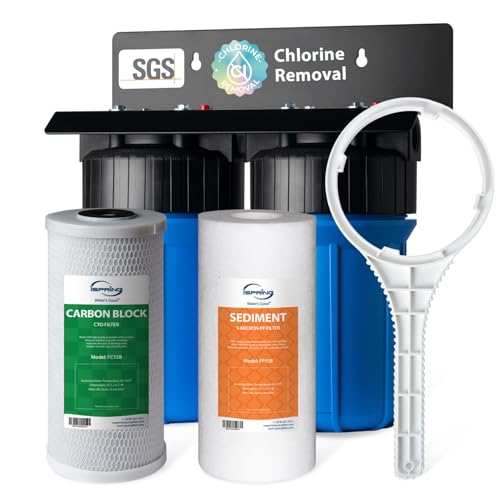
A compact whole-house system that combines a 5-micron sediment filter with a coconut-shell carbon block filter to reduce dirt, rust, sediment, chlorine, unpleasant tastes and odors. It provides up to 50,000 gallons of filtration and requires no electricity, making it a practical choice for smaller homes and limited installation spaces.
Key features:
- Two-stage sediment and carbon filtration
- 5-micron polypropylene sediment filter
- Coconut-shell carbon block filter
- Up to 50,000-gallon capacity
- Maximum flow rate of approximately 15 GPM
- 1-inch inlet and outlet connections
- Compact 10-inch filter housings
- No electricity required
The iSpring WGB21B is a compact two-stage whole-house filtration system that combines a 5-micron sediment filter with a coconut-shell carbon block filter. It helps reduce dirt, sand, rust, chlorine, unpleasant tastes and odors from the water supplied throughout the home.
With a capacity of up to 50,000 gallons and a maximum flow rate of 15 GPM, it is best suited to smaller households that want straightforward filtration without electricity or an oversized installation.
Healthy Home Upgrade Review:
A compact two-stage whole-house system designed to reduce sediment, chlorine, unpleasant tastes and odors without using electricity.
Why it’s a good choice
The iSpring WGB21B uses a 5-micron polypropylene sediment filter to capture dirt, sand, silt, rust and scale before water passes through its coconut-shell carbon block filter. The second stage targets chlorine, cloudiness, odors and unwanted tastes, making this a practical choice for smaller homes using municipally treated water. Its compact housings offer up to 50,000 gallons of filtration while taking up less space than larger 20-inch systems.
Pros
- Two-stage sediment and carbon filtration
- Reduces chlorine, cloudiness, unpleasant tastes and odors
- Captures dirt, sand, silt, rust and scale
- Up to 50,000-gallon filter capacity
- Maximum flow rate of approximately 15 GPM
- Compact design for smaller homes or limited installation space
- 1-inch inlet and outlet help maintain household water flow
- Requires no electricity
Cons
- Less filtration capacity than larger 20-inch systems
- Not designed to reduce total dissolved solids
- Standard model is not intended for dedicated lead, iron or manganese treatment
- Both cartridges require periodic replacement
- Professional installation may be needed
- Water testing is recommended to confirm that this configuration matches the home’s contaminants
Whole‑house reverse osmosis – when you really need it
For most homes, carbon‑based whole‑house systems plus a point‑of‑use RO or carbon filter at the sink give the best balance of performance and efficiency. Full whole‑house RO is generally reserved for:
- Wells with high total dissolved solids (TDS), nitrates, or specific contaminants that carbon cannot adequately handle.
- Certain medical situations require low‑TDS water throughout the home.
These systems:
- Use pre‑filtration plus large RO membranes and storage tanks.
- Can significantly reduce PFAS, nitrates, and many dissolved contaminants but produce reject water and involve more complex plumbing.
How to choose the best whole house water filter system for your home
1. Test your water first
You cannot choose the best system without knowing what you are filtering.
- For city water, request your municipality’s Consumer Confidence Report and, if needed, add a lab test that includes PFAS, lead, and disinfection byproducts.
- For wells, test for bacteria, nitrates, iron, manganese, hardness, and any local contaminants of concern.
Use How to Test Your Water Quality as a step‑by‑step starting point.
2. Match technology to contaminants
- Chlorine / taste / odor: Catalytic carbon or high‑capacity carbon blocks certified to NSF/ANSI 42.
- Lead and VOCs: Systems or cartridges tested to NSF/ANSI 53.
- PFAS: Specialized carbon or media with third‑party data for PFAS reduction; sometimes paired with RO or an additional PFAS‑rated point‑of‑use filter.
- Hardness / scale: Salt‑free conditioners (template‑assisted crystallization) for scale only, or traditional softeners where sodium exchange is acceptable.
For lead‑focused situations, cross‑link to Best Water Filter for Lead Removal for more detailed under‑sink and pitcher options.
3. Right‑size the flow rate
- A family of four typically needs at least 8 GPM continuous flow; larger homes or multiple simultaneous showers may need 12–14 GPM.
- Undersized systems cause noticeable pressure drops and increase frustration; oversizing slightly is usually safer than undersizing.
Materials, sustainability and eco‑engineering
Modern whole‑house systems try to balance performance with resource use:
- Coconut‑shell carbon is a renewable alternative to coal‑based carbon and often has strong adsorption capacity for chlorine and organic chemicals.
- Salt‑free conditioners reduce scale without brine discharge, lowering sodium pollution and water waste compared with traditional softeners.
- Backwash cycles in larger systems are optimized to use only small fractions of household water to refresh media beds.
When comparing systems, favor:
- Certified lower‑toxin plastics (NSF/ANSI 61; CE, RoHS in EU) over unverified housings made from EVA/EPP or unknown resins.
- Stainless steel or high‑grade composite tanks for long life and reduced replacement frequency.
To go further, combine your system with best faucet filters or countertop filters instead of bottled water, cutting plastic waste dramatically.
Flow Rate & Real-World Performance
Numbers on boxes matter, but comfort matters more.
An 8–10 GPM whole-house filter keeps two showers, a dishwasher, and a laundry cycle running together without noticeable pressure loss.
Smart bypass valves maintain that flow even as media ages.
| System Type | Typical Flow Rate | Everyday Scenario |
| Pitcher Filter | 0.2 GPM | Single glass filling |
| Under-Sink RO | 0.5–0.8 GPM | Cooking & drinking |
| Whole-House Carbon | 8–12 GPM | Full home supply |
| Whole-House RO | 4–6 GPM | High-purity special use |
Consistent pressure is more than a luxury—it prevents pipe shock and extends appliance life.
Many homeowners describe the difference as “a calm water flow” through their daily routine.
Maintenance & real‑world use
One of the main reasons whole‑house filters have grown in 2026 is simpler maintenance.
Typical schedule:
- Sediment pre‑filters: every 6–12 months, depending on turbidity.
- Carbon or media tanks: every 5–10 years, depending on system sizing and water usage.
- Softener/conditioner media: per manufacturer; salt‑free conditioners usually require less frequent intervention.
Smart valves or app dashboards can show estimated remaining media life and alert you to abnormal flow, making maintenance more predictable.
Eco Engineering & Sustainability
Today’s systems blend purity with planet care.
Coconut-shell carbon is a renewable resource that outperforms coal-based media.
Salt-free softeners eliminate brine discharge, reducing sodium pollution.
Automatic backwash cycles use just enough water to refresh media without waste.
Some brands now offer recycling initiatives: return spent cartridges and receive discounts on new ones.
Others use recyclable composite tanks with minimal plastic.
The result is a system that supports your family’s health and the environment.
Each filtered litre reduces bottle use and carbon emissions—sustainability in every drop.
Lifestyle Integration — How Purity Changes Daily Habits
Pure water becomes an invisible luxury woven into routine.
Morning showers feel softer on skin; fresh produce rinses clean without chemical smell; laundry stays brighter.
Even coffee and tea taste closer to their origin, since chlorine and metallic notes no longer mask flavor.
In homes designed for wellness, architects often connect hydration stations and bathrooms to the same filtered main line.
This concept — Hydration Architecture — treats water as part of interior design and self-care.
When purity flows through every tap, you don’t need to think about water anymore — you just live better with it.
Maintenance & Longevity
One reason whole-house filters have become so popular in 2026 is how little they demand.
Instead of monthly cartridge changes, most premium systems need only two quick tasks a year:
- Rinse or replace the sediment pre-filter every 6–12 months.
- Flush the carbon tank using the system’s built-in bypass valve.
A complete media replacement is usually required only every 5–10 years, depending on usage and water quality.
Smart sensors or app dashboards now show remaining filter life in real time, removing all guesswork.
Clean fittings, steady pressure, and an occasional backwash are often all that’s needed for another year of flawless service.
What Whole House Water Filters Cannot Do
A whole house filter is a meaningful upgrade for many homes but it is worth being clear about its limits before you invest.
Carbon based systems do not remove dissolved solids, fluoride or nitrates. If those are concerns in your water, you need a different or additional technology.
PFAS reduction varies significantly depending on the system, the media, and the specific PFAS compounds in your water. No whole house carbon system should be assumed to handle all PFAS without specific third party test data for your water profile.
A whole house filter does not replace the need for a dedicated drinking water filter in all situations. Many households still benefit from an additional point of use filter at the kitchen tap for extra protection on the water they actually drink and cook with.
And no filter system can compensate for corroded or damaged plumbing inside the home. If the pipes themselves are the problem, filtration is a partial solution at best.
My Final Recommendation
For most city water households, the Aquasana Rhino EQ-1000 offers the best balance of long term performance, certification, and low maintenance. It is a system you install and largely forget about for years.
If you have a larger home with high water demand, SpringWell CF1 handles flow better without pressure drop. For homes with hard water, the Pentair Pelican SmartCombo addresses both scale and filtration in one setup. And if budget is the priority, APEC gives you a certified starting point without the premium price.
Whichever system you choose, pair it with a good water test first. A system matched to your actual water problem will always outperform a more expensive system chosen based on marketing alone.
Frequently Asked Questions
Are whole house water filter systems worth it in 2026?
For many homes, yes; a well‑chosen whole‑house system can reduce chlorine, lead, PFAS and hardness at every tap, improving taste, skin comfort, appliance life and indoor air (by cutting chlorine vapor in showers)
Can a whole house filter remove PFAS?
Some whole‑house systems configured with appropriate carbon or specialty media can significantly reduce PFAS, but performance is highly model‑ and contaminant‑specific; many experts still recommend adding a PFAS‑rated under‑sink or RO filter at the kitchen tap for drinking water.
Do these systems remove PFAS and microplastics?
Some certified carbon and specialty filtration media may significantly reduce certain PFAS compounds and microplastics depending on system design, contact time, and independent testing results.
Can a filter also soften water?
Yes. Models such as the Pentair Pelican SmartCombo use salt-free conditioning media to prevent scale without adding sodium.
Is professional installation necessary?
Professional installation is strongly recommended for most whole‑house water filter systems because correct pipe sizing, pressure management, and bypass valve placement reduce leak risk and preserve warranty coverage.
How do I know when filters need replacing?
Smart valves or app notifications display real-time usage data. If your system lacks digital monitoring, follow the manufacturer’s yearly schedule.
Do whole-house filters waste water?
Carbon-based systems use minimal backwash — typically less than 2 % of total use. RO-based full-home systems consume more and are best reserved for special cases.
Can these filters improve shower air quality?
Yes. By removing chlorine and VOCs, they reduce the release of chemical vapors in hot water steam.
How long does installation take?
Most plumbers can complete a setup in two to three hours, including pressure testing and flush.
Do I need extra filters for drinking water?
Not necessarily. Many households add a small under-sink or countertop filter for taste polishing, but it’s optional when using high-grade carbon media.
Do I still need an under‑sink or fridge filter if I install a whole house system?
Not always, but many households use a whole‑house system for broad protection and a smaller under‑sink or faucet filter for extra polishing of taste and targeted lead/PFAS removal at the main drinking tap.
What materials should I avoid in whole‑house water filters?
Avoid untested plastic housings, mystery non‑stick internal coatings, and low‑grade EVA/EPP foams in direct contact with water; instead, prioritize systems whose wetted parts are certified under NSF/ANSI 61 and lead‑free standards, using stainless, quality composites and medical‑grade or food‑grade silicone seals.
References & Certifications