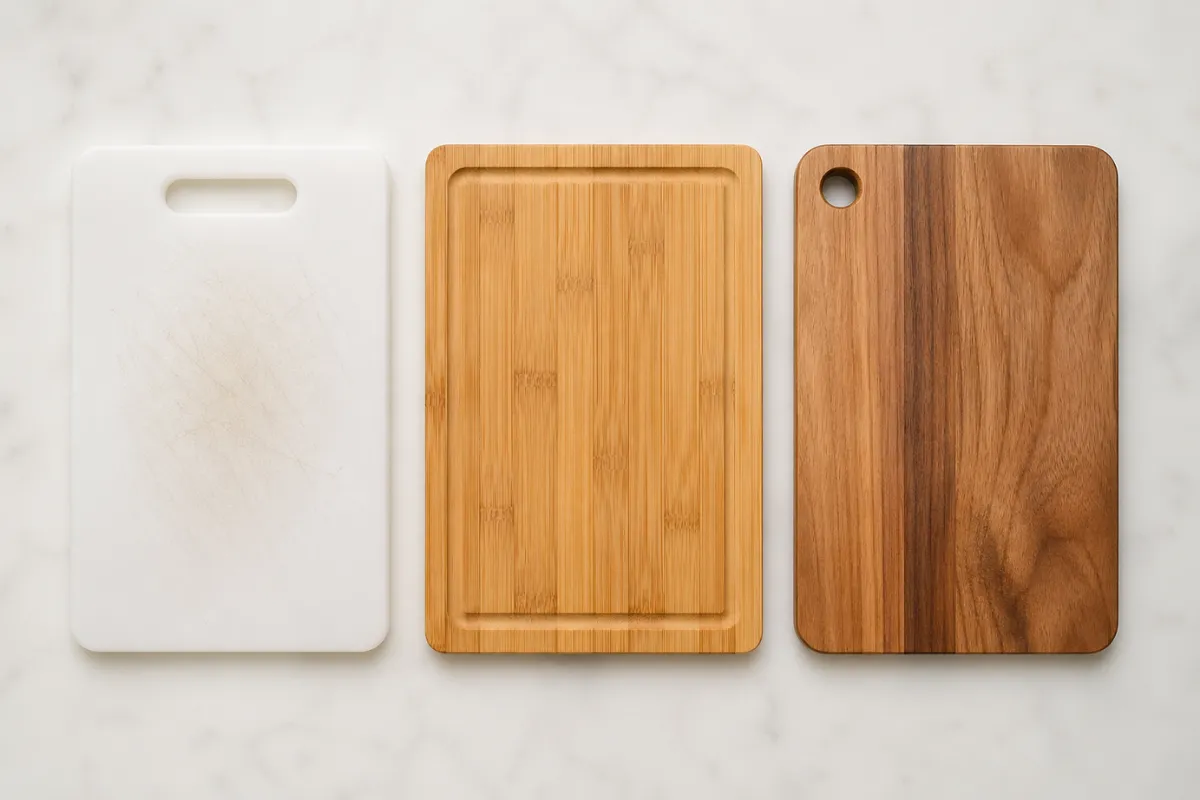
Cutting boards look simple, but the material under your knife can quietly shape both your health and how long your tools last. When you compare options, solid hardwood still stands out as the best everyday choice for most kitchens: it balances lower toxin load, durability, and knife-friendliness better than other materials. Bamboo can work, but quality varies more and it is usually harder on knives. Plastic tends to scar quickly and, once deeply scored, becomes harder to trust, especially as research raises concerns about microplastics migrating into food over time. If you want specific product ideas, this guide to the best non-toxic cutting boards walks through vetted hardwood options that are actually worth maintaining.
Quick Answer
When you compare cutting board materials, solid hardwood is still the best overall choice for most kitchens. It gives you the best balance of material safety, durability, and everyday usability. Bamboo comes second because it can work well, but quality varies more and it is usually harder on knives. Plastic ranks last for everyday use because it scars quickly, becomes harder to trust once deeply scored, and peer reviewed research suggests plastic cutting boards can be a meaningful source of microplastics in food over time. FDA also allows hard maple, or an equivalently hard, close grained wood, for cutting boards, while USDA says consumers may choose either wood or a nonporous surface such as plastic if it is properly cleaned.
I run a healthy home website, so I spend a lot of time noticing the small things most people stop seeing. One of those was how quickly plastic cutting boards started looking tired, rough, and deeply scored in daily use. I did not switch because of one dramatic moment. I switched because I realized I did not want a surface that was constantly wearing down under my knife and sitting under my food every day.
At a Glance
| Material | Best For | Material Safety | Durability | Knife Friendliness | Bottom Line |
| Solid Hardwood | Everyday prep | Best | Excellent | Excellent | Best overall choice for most homes |
| Bamboo | Budget friendly natural option | Good | Good | Fair to good | Acceptable second choice, but less dependable |
| Plastic | Dedicated raw meat board only | Weakest | Fair | Fair | Useful for one task, poor as an everyday default |
Also in This Article
- Why material matters
- How the boards were ranked
- Why hardwood comes first
- Where bamboo fits
- Why plastic falls last
- The smartest setup for most homes
- A simple hardwood recommendation
- FAQ
Why Cutting Board Material Matters More Than Most People Think
A cutting board is not just a neutral kitchen surface. It is one of the most heavily used food contact materials in the home. Every time you chop, scrape, and slice, the knife is physically wearing the board down. That is why this is not only a design choice. It is also a wear issue, a hygiene issue, and in some cases a material exposure issue. FDA notes that scratched and scored cutting surfaces may be difficult to clean and sanitize, and pathogens may build up on those surfaces.
That is the real HH lens here. The question is not which board looks most natural on a countertop. The question is what the surface becomes after months and years of real use. Does it stay stable, usable, and easy to maintain, or does it turn into a rough, damaged surface that should have been retired long ago? USDA and Extension guidance both put a lot of weight on wear, grooves, cracks, and whether a board can still be cleaned effectively.
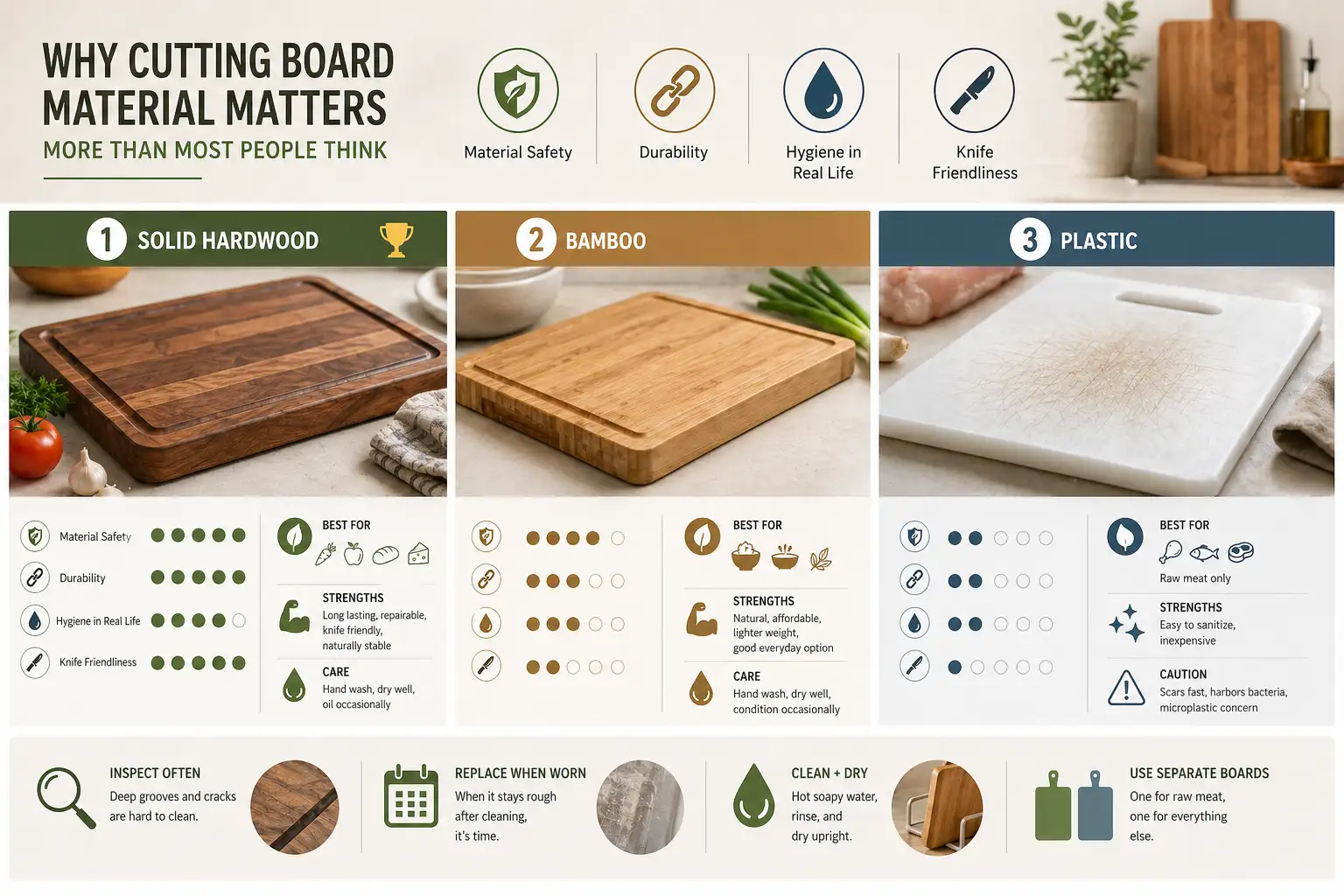
How These Materials Were Ranked
This ranking is based on four things that actually matter in a working kitchen.
1. Material Safety
Does the surface stay relatively stable over time, or does wear create more concern about particles, breakdown, or unnecessary exposure?
2. Durability
Can it handle daily chopping without becoming rough, cracked, warped, or disposable too quickly?
3. Hygiene in Real Life
How easy is it to keep clean once the surface starts showing the wear that normal kitchens create?
4. Knife Friendliness
Does the board work with your knives, or does it dull them faster than necessary?
1. Solid Hardwood Is the Clear Winner
If your goal is a healthier, lower plastic kitchen, solid hardwood is the strongest overall choice. FDA’s Food Code specifically permits hard maple, or an equivalently hard, close grained wood, for cutting boards. That matters because it confirms wood is not some fringe alternative. It is a recognized food contact material when the wood type and condition are appropriate.
Hardwood also wins because it ages better than plastic. It does not lock you into the same throwaway cycle, and when the surface starts looking tired, it can often be sanded and refreshed instead of thrown out. University of Maine Extension describes wooden boards as durable and gentle on knives, though it also notes that they require proper maintenance and are better suited to lower risk foods unless you are careful about cleaning after raw meat contact.
This is where wood fits the Zero Toxic Load mindset so well. It is simple. It is repairable. It does not depend on a soft synthetic surface that is constantly being cut apart. A solid hardwood board with a straightforward food safe oil or wax finish is easier to understand, easier to maintain, and easier to keep in service for years.
Best for
Vegetables, fruit, herbs, bread, cheese, and most everyday prep
Strengths
Best long term material safety profile, long lifespan, repairable surface, excellent knife feel
Weaknesses
Needs hand washing, needs proper drying, needs occasional oiling
Who should skip it
People who want every kitchen tool to go straight into the dishwasher
Beyond boards—build your complete best non toxic kitchen tools arsenal.
2. Bamboo Comes Second, but It Is More Mixed
Bamboo is a reasonable second choice, especially for people who want something lighter or often more affordable than hardwood. It can look clean and modern, and it does move you away from plastic.
The reason it does not take first place is consistency. University of Maine Extension notes that bamboo boards are harder than most wood, less porous with proper cleaning, and environmentally friendly, but also says they can dull knives over time and may crack if not properly cared for.
That harder surface is exactly why bamboo feels more mixed in real kitchens. Some boards hold up well and feel perfectly fine. Others feel too hard under the knife or age less gracefully than a good hardwood board. Since many bamboo boards are made from joined sections rather than a single slab, build quality matters more here than many shoppers realize. Extension guidance also says damaged boards with deep grooves, cracks, or excessive wear should be replaced when they can no longer be cleaned effectively.
Best for
Lighter daily prep, smaller kitchens, budget conscious buyers who want a non plastic option
Strengths
Natural look, often affordable, practical, easier step away from plastic
Weaknesses
Can dull knives faster, quality varies more, less dependable long term than hardwood
Who should skip it
People with expensive knives or people who want the most durable long term option
Chop safely, cook cleaner: discover safest cookware materials.
3. Plastic Is the Weakest Everyday Choice
Plastic ranks last for everyday use, even though it still has one limited role. USDA says consumers may choose either wood or a nonporous cutting board such as plastic, and Extension guidance notes that plastic boards are easy to clean, dishwasher safe, and practical for raw meats, seafood, and poultry because they can be sanitized thoroughly after use.
But the weakness of plastic shows up in the wear pattern. Plastic boards scar quickly. They develop grooves. The surface becomes rougher and harder to trust. FDA says scratched and scored cutting surfaces may be difficult to clean and sanitize, and USDA advises discarding boards once they become excessively worn or develop hard to clean grooves. University of Maine Extension also warns that plastic boards can develop knife scars where bacteria can grow. That is the biofilm problem in everyday language. Once the surface becomes a field of cuts, convenience stops being such a convincing argument.
Then there is the microplastics issue. A 2023 paper in Environmental Science & Technology identified plastic chopping boards as a substantial source of microplastics in human food and estimated very large particle release under normal chopping conditions. The study found higher release from polypropylene boards than from polyethylene in the test setup. That does not mean one plastic board creates instant harm. It does mean plastic no longer deserves a free pass as the obvious modern default in a kitchen built around reducing unnecessary exposure.
Best for
A separate raw meat board that is replaced aggressively when worn
Strengths
Easy to sanitize, inexpensive, practical for food separation
Weaknesses
Scars fast, becomes less trustworthy over time, adds microplastic concern, feels disposable sooner
Who should skip it
Anyone trying to reduce plastic contact across the kitchen overall
Safe cutting deserves safe storage: best glass food storage containers.
The Smartest Setup for Most Homes
For most households, the smartest setup is simple.
Use one solid hardwood board as your main board for vegetables, fruit, herbs, bread, cheese, and general daily prep.
If you want extra food safety separation, keep one smaller plastic board for raw meat only and treat it as a limited purpose tool, not your default board. USDA recommends using separate cutting boards for raw animal products and ready to eat foods to help reduce cross contamination, and both USDA and Extension sources emphasize replacing boards when wear makes them hard to clean.
If budget matters and you still want something more natural than plastic, bamboo is a workable middle option, but it should be chosen more carefully and with realistic expectations.
A Simple Hardwood Recommendation
If you want one straightforward hardwood option for a healthy home kitchen, a solid maple board is still the one I would start with. One example is the John Boos maple R Board, which John Boos describes as made from Northern Hard Rock Maple with an oil finish, reversible construction, and NSF certification. It fits this article’s logic well because it is simple, durable, knife friendly, and built to stay in the kitchen for years instead of feeling disposable after a short stretch of use.
Check the John Boos maple cutting board here.
The Biggest Mistake People Make
The biggest mistake is not choosing bamboo over wood or wood over plastic.
The biggest mistake is continuing to use a board long after it should have been replaced or refreshed.
A deeply scarred plastic board is no longer a smart long term surface. A cracked bamboo board is no longer a smart long term surface. A split or badly neglected wood board is no longer a smart long term surface either. Material matters, but condition matters too. USDA, FDA, and Extension guidance all point to wear and cleanability as central issues, which is why replacement and upkeep matter more than many people think.
Final Verdict
If you want the clearest recommendation, here it is:
Best overall: solid hardwood
Best budget friendly natural option: bamboo
Best for one specific task: plastic for raw meat only
For a kitchen built around Zero Toxic Load, durability, and daily satisfaction, solid hardwood is the best place to start. It is the most balanced option, the least frustrating over time, and the one most likely to stay useful for years instead of turning into another worn out plastic item you need to replace.
FAQ
Is bamboo safer than plastic?
Bamboo is usually a better fit for a lower plastic kitchen, but it is not automatically perfect. USDA and FDA both allow wood and nonporous boards like plastic when they are properly cleaned and kept in good condition, so the practical difference often comes down to wear, maintenance, and how comfortable you are with plastic as a daily food contact surface.
Do wood cutting boards harbor bacteria?
Any cutting board can become a problem if it is dirty, damaged, or hard to clean. USDA says consumers may use either wood or plastic, and the bigger issue is replacing boards once they become excessively worn or develop grooves that are hard to clean. Extension guidance also notes that wood can absorb moisture and bacteria if not properly maintained.
How often should I replace my cutting board?
There is no fixed schedule. Replace it when it becomes excessively worn, cracked, split, or develops grooves that are hard to clean. That is the clearest USDA guidance, especially for boards that see heavy daily use.
What is the safest cutting board material overall?
For most homes, solid hardwood is the strongest overall choice because FDA explicitly allows hard maple or an equivalently hard, close grained wood for cutting boards, and it tends to age better than plastic in daily use. If you want extra food safety separation, a separate plastic board for raw meat can still be practical as long as you replace it when worn. In a Zero Toxic Load kitchen, that makes hardwood the strongest default.