Most homes handle water in a slightly random way. One person drinks from the kitchen tap, someone else uses the fridge dispenser, ice comes from an old plastic tray in the freezer, and coffee is made with whatever water is closest. Sooner or later, the same question shows up: are we actually doing this in the smartest way?
That is where a whole-home hydration station starts to make sense.
Not because you need to turn your kitchen into a science project, and not because one giant, expensive filter will magically solve everything. Usually the opposite is true. The smartest setup is simple, layered, and built around how your home actually works on an ordinary Tuesday morning.
For many households, that includes a dedicated countertop filter for drinking and cooking, like the systems I cover in the full Berkey Water Filter Review, plus a background whole-house filter and a few small lower-plastic upgrades in the kitchen. One part improves the water experience across the house. One part creates a clear place for drinking water. And one part quietly cleans up the little details people usually ignore.
The real goal is not perfection. It is a water setup that finally feels intentional.
Quick answer
A good whole-home hydration station works best when each part has a clear role.
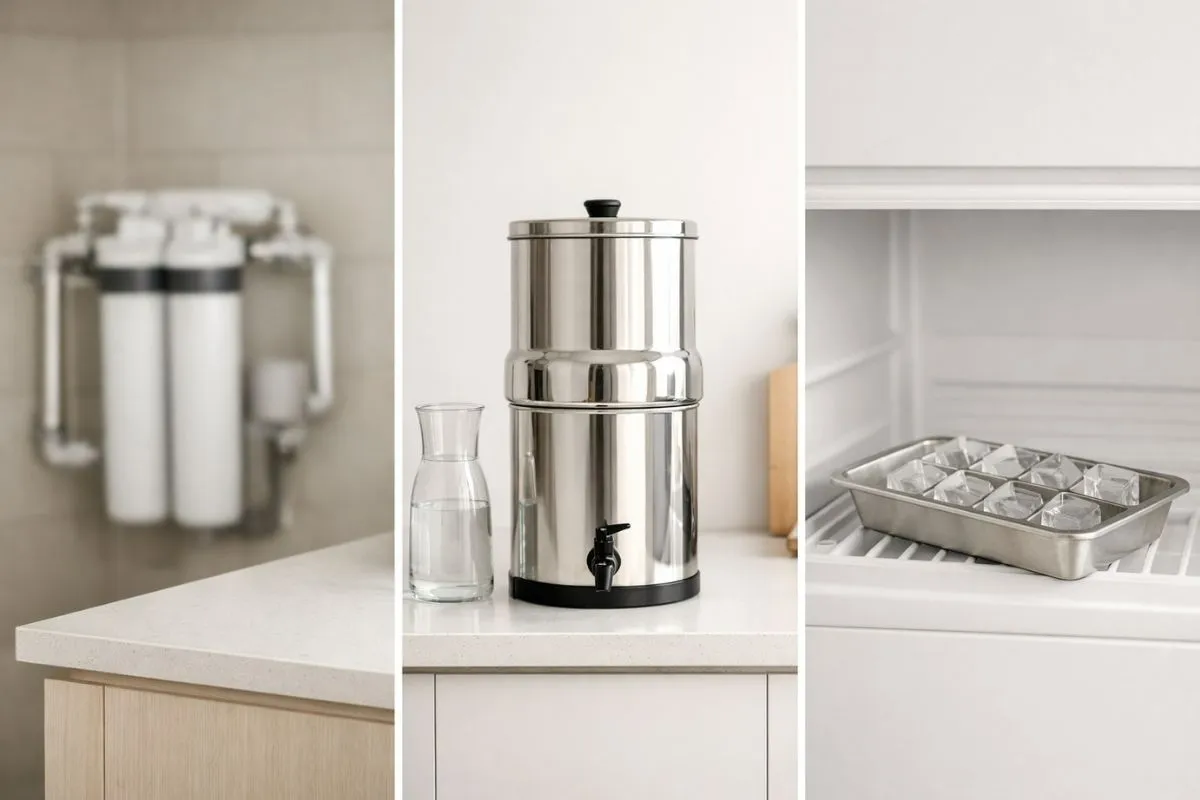
A whole-house filter helps improve the broader household water baseline. A Berkey-style countertop filter creates one dedicated place for drinking water, tea, coffee, cooking, and bottle refills. Stainless steel ice trays are a smaller finishing touch that supports the same lower-plastic kitchen logic and helps the whole routine feel more consistent.
The goal is not to buy everything at once. The goal is to stop expecting one product to do every job.
At a glance: the layered hydration setup
| Part of the setup | Main job | Why it matters |
| Whole-house filter | Improves water quality across the home | Helps with shower water, chlorine smell, and the general water baseline before water reaches daily use points |
| Berkey-style countertop filter | Creates a final drinking-water station | Gives one clear place for drinking water, tea, coffee, cooking water, and bottle refills |
| Stainless steel ice trays | Tightens the final kitchen routine | Supports a lower-plastic setup and keeps cold drinks aligned with the same cleaner kitchen logic |
Why one filter usually disappoints people
This is where a lot of homes get stuck.
A whole-house filter can be great for shower water, chlorine smell, and overall household water quality. But it does not automatically create a simple daily drinking-water habit in the kitchen.
A countertop drinking-water filter can make hydration easier and more intentional. But it does nothing for the shower, laundry, or the rest of the house.
And then there are the small details people forget. Clean water still ends up in old trays, random bottles, or a kitchen routine that feels cluttered and inconsistent.
That is why the better question is not, “What is the best filter?”
It is, “What job do I need each part of my setup to do?”
Start with source purity: our best whole house water filter picks feed Berkey perfectly.
Why a layered hydration station makes more sense than one filter alone
A lot of people assume that once water is filtered at the entry point of the house, the job is done. In real life, that is not how most homes feel.
A whole-house system improves the overall water baseline around the home, which matters for showers, sinks, and general household use. But many people still want one clear final drinking-water station in the kitchen. That is where a Berkey-style countertop setup makes sense. It creates a dedicated place for the water you actually drink, brew with, cook with, and refill from every day.
For Healthy Home Upgrade readers, that layered logic matters. It is not about chasing perfection. It is about reducing friction, reducing unnecessary plastic contact where practical, and making your cleanest daily water the easiest water to reach for.
Add kitchen precision: best under sink water filter for cooking and drinking
Start with the water that affects the whole house
A whole-house filter is the background upgrade.
You do not interact with it every hour, but you notice it in daily life. In the shower. At the bathroom sink. When the house no longer smells so strongly of chlorine. When the water around the home feels less harsh and less like an afterthought.
This kind of setup makes the most sense when your water issues affect the whole house, not just what you drink.
It can be especially useful when:
- you notice chlorine smell in the shower
- the water feels unpleasant throughout the home
- you want a better baseline before water even reaches your taps
- you want your kitchen drinking-water setup to do less heavy lifting on its own
It is not the glamorous part of the system. It is just the part that makes everything else work better.
In most homes, this system sits quietly in a utility room, garage, basement, or wherever water enters the house. You barely think about it, which is exactly the point.
Instant countertop backup: the best faucet water filter.
Create one clear place for drinking water
This is the part most people actually use and appreciate every day.
A Berkey-style countertop setup works well because it creates one obvious place for drinking water. Instead of guessing which tap is best, you have one central station for glasses, bottles, tea, coffee, and cooking water.
That changes habits more than people expect.
Suddenly it becomes easier to:
- fill a glass without thinking
- top up a reusable bottle before leaving home
- make tea and coffee from one trusted source
- fill a pot for rice, soup, or pasta without second-guessing the water
- make hydration feel simple instead of random
For most homes, the best place is wherever daily life already happens:
- near the sink
- beside the kettle or coffee machine
- on a side counter that naturally becomes a refill zone
- in a calm kitchen corner with mugs, bottles, and daily essentials nearby
The best setup is not the fanciest one. It is the one people actually use.
A good test is simple. If the filter ends up tucked into an awkward corner where no one wants to refill from it, the setup may be technically fine but practically weak.
Portable filling station for every room: Berkey vs reverse osmosis vs pitcher filters for low-waste, low-toxin kitchens.
A small home rule that makes the system work better
One of the easiest ways to make this setup feel natural is to give it one clear job:
This is the water we drink, brew, cook with, and refill from.
That one decision removes a surprising amount of kitchen friction.
No more guessing. No more filling one bottle from one tap and another from somewhere else. No more wondering which water to use for tea, soup, or a child’s cup. It becomes obvious.
In a family home, that kind of clarity can matter more than technical details.
If you have children, this can also make healthier habits feel more automatic. Put the setup where it is easy to reach, keep glasses nearby, and suddenly water becomes the easy default instead of something people forget until late afternoon.
Freeze pure water clean: best stainless steel ice cube trays in 2026.
Do not forget the small kitchen details
This is where stainless steel ice trays fit in.
They are not the main point of the article, and they do not need to be. They are simply one of those small upgrades that makes the whole hydration routine feel more coherent.
A lot of people spend serious time choosing filters, then keep freezing their clean water in old plastic trays that smell odd, crack over time, or have been living in the freezer since another decade.
That is not a disaster. It is just an easy place to tighten the routine.
If you are already trying to create a cleaner, lower-plastic kitchen setup, stainless steel ice trays are a natural finishing touch. They help reduce one more unnecessary plastic contact point and make everyday habits feel more aligned.
This is especially nice for things like:
- iced lemon water in summer
- cold herbal tea
- iced coffee made with your regular filtered water
- serving guests water that tastes clean and fresh
- filling a travel tumbler before leaving the house
This is not about pretending an ice tray is a health miracle. It is simply one of those small details that fits a cleaner kitchen logic.
Build the setup around your real home, not an imaginary perfect one
This is where people make better decisions.
The best hydration station is not built for a flawless Pinterest kitchen. It is built for the home you actually live in.
If you have a busy family kitchen, keep the drinking-water setup where people naturally gather. Keep glasses nearby. Keep reusable bottles in one drawer or basket. Make the refill process obvious.
If your kitchen is small, a side counter near the kettle or coffee area can still work beautifully. It does not need to be big. It just needs to be easy.
If you rent and cannot install a whole-house system, that does not mean you are out of options. A countertop drinking-water station plus a few lower-plastic kitchen upgrades can still create a much better daily setup.
If you are always on the go, the home station still matters. Fill one or two reusable bottles before leaving. Add clean ice if you use it. Let the home setup do the work before the outside world gets chaotic.
You do not need to travel with the whole system. You just need a home setup that makes leaving prepared easier.
The biggest hydration mistake most homes make
They try to solve everything with one purchase.
That is usually why people end up disappointed.
A whole-house filter is not the same as a daily drinking-water station. A countertop filter is not the same as improving shower water and wider household exposure. And even a good filter setup can still feel unfinished if the kitchen habits around bottles, ice, and everyday use are messy.
The better approach is much simpler.
Let each part of the setup do one clear job.
A smart way to build this without overspending
You do not need to build the full version on day one.
Start where your frustration is highest.
If your whole-home water feels harsh, chlorinated, or unpleasant in the shower and around the house, start there.
If your biggest concern is what you drink every day, start with a dedicated drinking-water station in the kitchen.
If your setup already works but still feels plastic-heavy, cluttered, or inconsistent, improve the small daily-use details.
That is how many of the best home systems are built. Not all at once. Just one useful layer at a time.
The Healthy Home Upgrade take
The most useful water setups are not the ones with the most gadgets. They are the ones that fit naturally into daily life.
A whole-house filter improves the background.
A Berkey-style setup improves the habit.
Stainless steel ice trays improve the finishing details.
That combination works because it feels realistic. It does not ask one product to be everything. It gives each part a role and makes your home water routine feel calmer, cleaner, and easier to keep.
Final thoughts
A whole-home hydration station is really just a smarter home rhythm.
Not one filter.
Not one miracle promise.
A few good layers that make daily life easier.
Water for the whole house.
Water for drinking and cooking.
Ice and refill habits that match the same lower-plastic logic.
That is what makes the setup feel intentional instead of random.
FAQ
Do I need a whole-house filter and a countertop drinking-water filter?
Not always. They solve different problems, so some homes benefit from both, while others only need one of those layers right now.
Where should I place a Berkey-style drinking-water station?
Usually wherever it is easiest to use every day, such as near the sink, beside the kettle or coffee setup, or on a side counter that naturally becomes your refill zone.
Are stainless steel ice trays necessary?
No. They are a small lower-plastic upgrade that simply fits well into a cleaner kitchen water routine.
Can renters still create a hydration station?
Yes. A renter-friendly version can begin with a countertop drinking-water setup and a few practical kitchen upgrades, even without a whole-house filter.
Does this kind of setup help with travel too?
Yes, in a practical way. A good home station makes it easier to leave the house with filled reusable bottles, filtered water, and clean ice instead of relying on random drinks on the go.
What should I start with first?
Start with the part that solves your biggest everyday frustration first. That is usually better than trying to build the whole system at once.

About the Author
Anita
Anita is the founder and writer behind Healthy Home Upgrade, where she shares her passion for transforming living spaces into foundations for smart health and wellness. Driven by her personal health journey, her goal is to provide valuable, practical articles that empower readers to use technology and design to improve their quality of life.