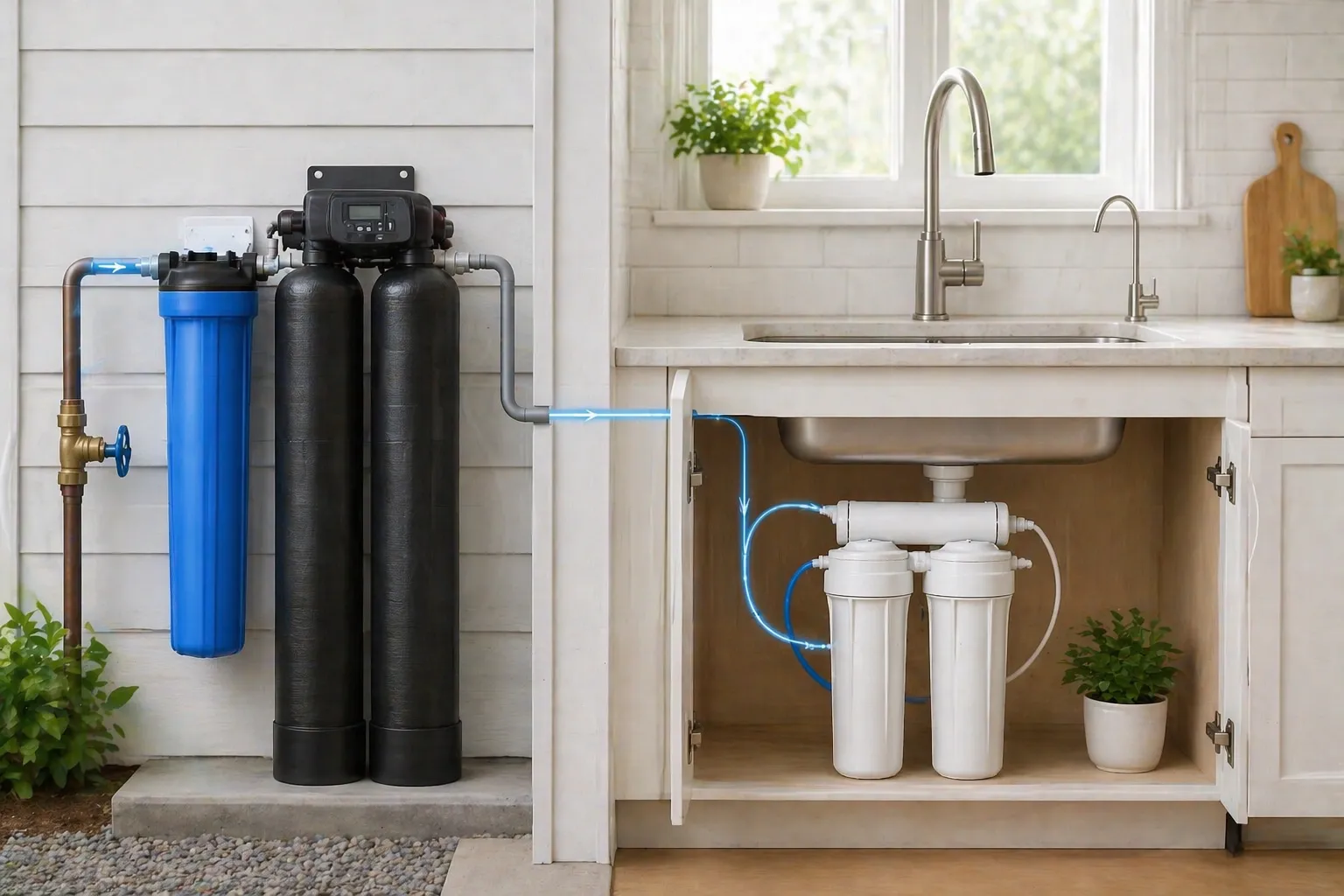
Layered water filtration simply means using different filters for different jobs instead of expecting one system to do everything. A whole-house filter can strip out chlorine and protect your skin, air, and appliances. An under-sink unit focuses on delivering clean, great-tasting drinking water right where you cook and fill bottles. A lead-specific filter becomes the final layer if you have older plumbing or known heavy metal concerns. You don’t need maximum filtration everywhere; you need the right filter in the right place. If you are comparing under-sink options, this guide to the best under-sink water filters walks through top picks and certifications.
Quick Answer
Layered water filtration means using different filters for different jobs without unnecessary overlap.
For most homes, the smartest setup is:
- Whole-house filter → reduces chlorine and protects skin, air, and appliances
- Under-sink filter → delivers clean, great-tasting drinking water
- Lead-specific filtration (if needed) → targets heavy metals from older plumbing
You don’t need maximum filtration everywhere.
You need the right filter in the right place.
At a Glance: The Smart Layering Setup
| Filter Layer | Primary Job | Where It Goes | Recommendation |
| Whole-House | Chlorine, sediment, general protection | Water entry point | Recommended if chlorine is present |
| Under-Sink | Drinking & cooking water (taste, contaminants) | Kitchen tap | Essential for most homes |
| Lead-Specific | Heavy metals (lead from pipes) | Kitchen tap | Only if risk is present |
Why Layered Filtration Matters
After my diagnosis, I became much more aware of what comes into a home through water.
When I started researching water filtration, the hardest part wasn’t finding information.
It was understanding what actually makes a difference and what is just marketing.
What I found was consistent:
Most people either under-filter or pay for systems that overlap without improving their water.
The reason is simple.
Different filters solve different problems.
- Whole-house systems protect your home environment
- Under-sink systems protect what you drink and cook with
- Lead-specific filtration targets specific risks
When combined correctly, you get:
- cleaner water throughout your home
- better taste at the tap
- protection where it actually matters
The 3 Core Layers (And What They Actually Do)
1. Whole-House Filters (Your Foundation)
Installed at the main water entry point, these systems reduce:
- chlorine
- sediment
- some VOCs
They improve:
- skin and hair exposure
- indoor air from showers
- appliance lifespan
What they don’t do well:
- remove heavy metals like lead
- provide fine filtration for drinking water
This is your foundation layer, not your final solution.
Foundation layer #1: best whole house water filters protect every tap.
2. Under-Sink Filters (Where It Really Matters)
Under-sink systems handle your drinking and cooking water.
Depending on the system, they can remove:
- chlorine and taste issues
- heavy metals
- bacteria
- microplastics
Most importantly, they act as a final barrier.
Even if water is filtered at the entry point, it still travels through your home’s internal pipes before reaching your tap.
During that journey, it can pick up contaminants.
An under-sink filter removes what the water collects inside your home.
If you only choose one system, this is usually the most impactful.
Precision layer #2: best under sink water filters perfect drinking water.
3. Lead-Specific Filtration (Only If You Need It)
Lead risk depends on:
- the age of your home
- plumbing materials
- local water conditions
If needed, look for filters certified for:
- NSF/ANSI 53 (lead reduction)
- NSF/ANSI 58 (reverse osmosis systems)
This is a targeted solution, not something every home needs.
Targeted defense: best water filters for lead removal.
How to Combine Them Without Overkill
The most common mistake is stacking filters that do the same job.
Smart Setup (For Most Homes)
- Whole-house → handles chlorine and bulk contaminants
- Under-sink → handles drinking water quality
- Lead filter → only if needed
Where People Go Wrong
- Using multiple filters with identical function
- Installing advanced filtration everywhere without purpose
- Paying for systems that don’t improve outcomes
More filtration is not better.
Smarter filtration is better.
A Note on Reverse Osmosis (RO)
Reverse osmosis systems remove almost everything from water.
That includes contaminants, but also beneficial minerals.
If you choose RO, consider:
- a remineralization stage
- or a system designed to maintain mineral balance
Do You Actually Need All Three?
Not necessarily.
Most homes benefit from:
- Under-sink filtration
You may benefit from:
- Whole-house filtration, especially with chlorine-heavy water
You only need:
- Lead-specific filtration if your situation requires it
A Simple Way to Decide
Ask yourself:
Does your water smell like chlorine?
→ Add whole-house filtration
Do you want clean, great-tasting drinking water?
→ Add under-sink filtration
Do you have older pipes or lead concerns?
→ Add lead-certified filtration
That’s your setup.
Final Thoughts
Layered filtration is not about building the most complex system.
It’s about:
- placing the right filter in the right place
- avoiding unnecessary overlap
- focusing on what actually changes your exposure
When done right, you get:
- cleaner water across your home
- better drinking water
- targeted protection where it matters
without wasting money or overcomplicating your setup.

About the Author
Anita
Anita is the founder and writer behind Healthy Home Upgrade, where she shares her passion for transforming living spaces into foundations for smart health and wellness. Driven by her personal health journey, her goal is to provide valuable, practical articles that empower readers to use technology and design to improve their quality of life.