
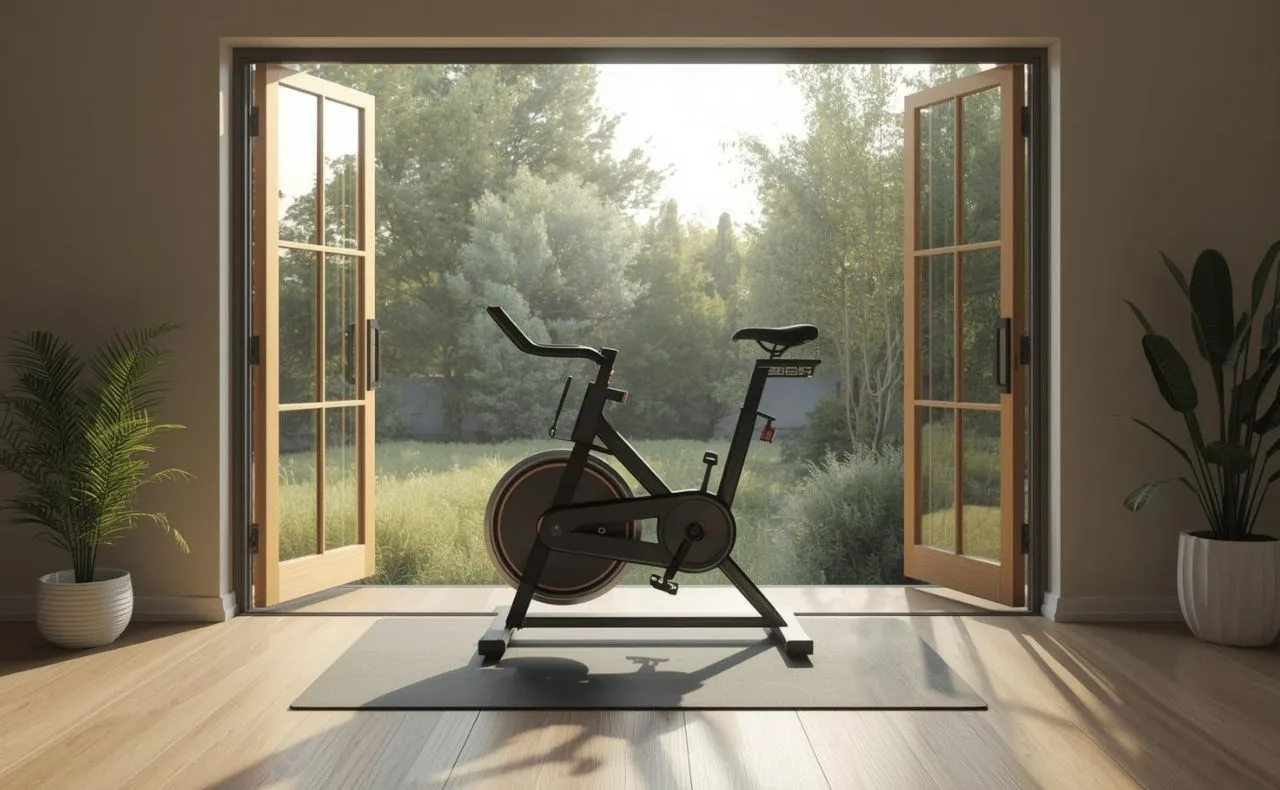
A smart bike can make home cardio far more consistent. It gives you structure, convenience, and a real reason to train even when the weather is bad or your schedule is full.
But if you are building a healthier home gym, performance is only part of the story.
The better question is this: how does a smart bike affect the room you train in every day?
Noise matters. Heat from electronics matters. Ventilation matters. Material contact matters. Most people do not need to become afraid of home fitness equipment, but they do benefit from setting it up intelligently. That is especially true if your bedroom, office, or recovery space is close to your workout area.
This guide looks at smart bikes through a Healthy Home Upgrade lens, with a practical focus on noise, EMF-related habits, off-gassing, and cleaner day-to-day use. Many connected bikes use large touchscreens, Wi-Fi, Bluetooth, and powered components, so the goal is not to avoid them entirely. It is to use them in a way that keeps your training space calmer and cleaner. Peloton’s official requirements show Wi-Fi connectivity is central to the bike experience, and NordicTrack’s S22i feature materials also highlight Wi-Fi and Bluetooth connectivity.
Quick Answer
If your main goal is quiet, lower-stress home cardio, a simpler bike with magnetic resistance and no unnecessary extras is usually the best fit.
If you want a smart bike with a large screen and connected classes, the healthiest approach is not perfection. It is smart setup:
- keep the bike out of sleeping areas if possible
- ventilate the room during and after workouts
- wipe sweat off grips and saddle after every session
- turn the machine fully off when not in use
- reduce unnecessary skin contact with synthetic grips if you are sensitive
The bike itself matters, but the room and habits around it matter just as much.
At a Glance
| Issue | Why it matters | Smart move |
| Noise | Loud equipment can make training feel more stressful and may disturb others | Choose magnetic resistance, stable frames, and a room with some sound buffering |
| Wi-Fi / Bluetooth / electronics | Connected bikes rely on wireless features and large screens | Turn the bike fully off when not in use and avoid placing it next to your bed |
| Heat and off-gassing | Electronics and plastics can release more odors and VOCs when warm | Open a window or ventilate the room during and after rides |
| Sweat + material contact | Hands and forearms stay in contact with grips during long sessions | Use a clean towel, wipe surfaces after training, and keep the bike dry |
| Small-space setup | Tight rooms trap heat, odor, and noise more easily | Use the bike in the most ventilated area you have |
Also in This Article
- What actually makes one smart bike quieter than another
- How to think about EMF without spiraling into fear
- Off-gassing, VOCs, and why ventilation matters more than most people think
- Which users should avoid certain setups
- How to build a calmer cardio corner at home
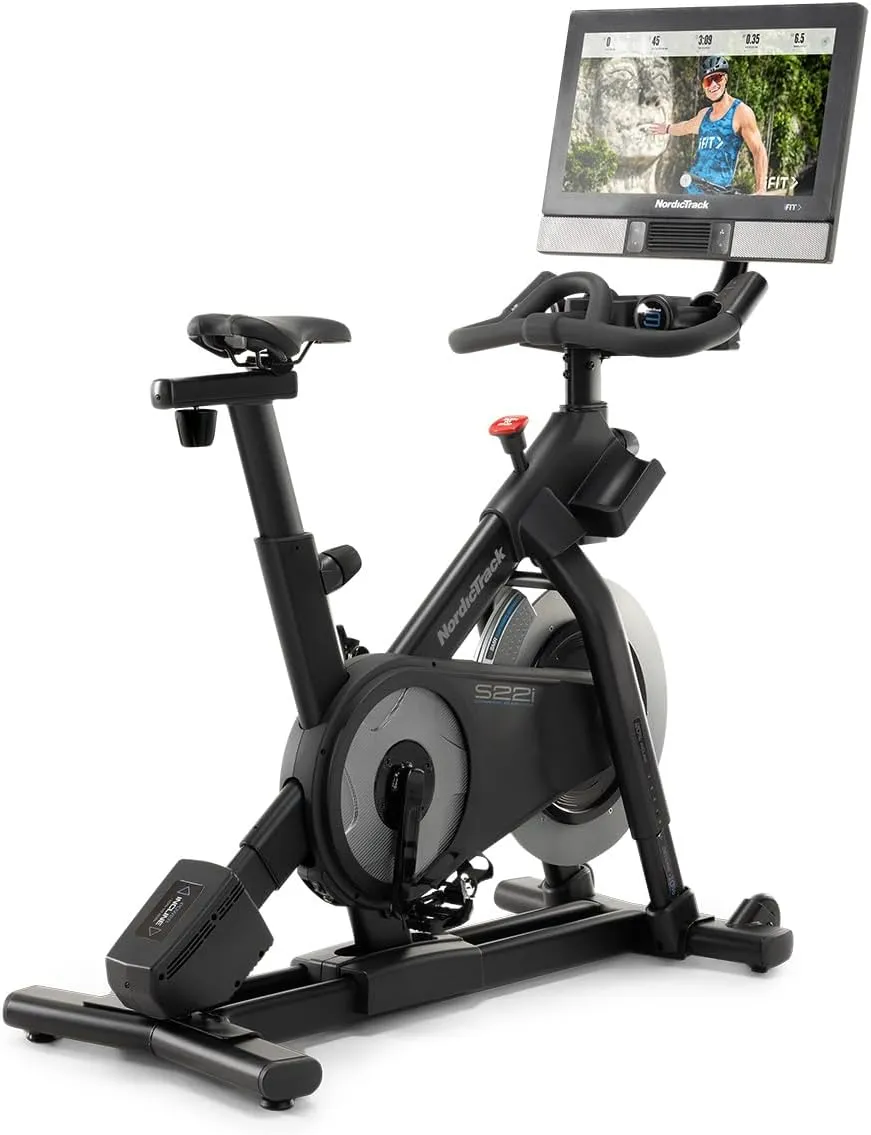
Why Smart Bikes Can Feel “Heavier” in a Room
A traditional exercise bike is mostly mechanical. A smart bike is more like a cardio machine plus a digital device.
That means you are often adding:
- a large screen
- Wi-Fi connectivity
- Bluetooth connectivity
- speakers
- processors and internal electronics
- more plastic housing and cable management
This does not automatically make smart bikes unhealthy. But it does mean they can add more heat, more electronic activity, and sometimes more odor than simpler equipment.
EPA guidance on indoor VOCs notes that indoor levels of several organic compounds often run 2 to 5 times higher indoors than outdoors, which is one reason ventilation matters any time you bring larger manufactured products into a home environment.
Noise: The First Thing Most People Notice
Noise is not only about hearing damage. It is also about how your home feels.
A cardio machine that hums, clicks, rattles, or vibrates through the floor can quietly increase friction around training. You may start skipping workouts because the machine is annoying to use early in the morning, late at night, or in a shared home.
From a health perspective, quieter equipment is usually easier to live with consistently.
NIOSH says repeated exposure to noise at or above 85 dBA can increase risk over time, and while most home bikes will not sit at industrial noise levels, the practical lesson still applies. Lower noise is usually better, especially in enclosed spaces where echoes and vibration make a machine feel louder than the spec sheet suggests.
What usually makes a bike quieter
- magnetic resistance instead of friction resistance
- heavier, more stable frame construction
- smoother flywheel behavior
- better leveling on the floor
- less plastic creaking under load
What often makes a bike seem louder
- uneven floors
- loose stabilizers or pedals
- high speaker volume
- placing the bike directly on hard flooring with no mat
- nearby walls that bounce sound back into the room
Smart use only
If your main concern is a quiet home, do not judge a bike only by the marketing. A big touchscreen and premium branding do not guarantee a calm ride. Poor setup can make even a good bike feel noisy.
Get full noise and EMF specs: NordicTrack S22i review (2026) – performance, classes & durability.
EMF and Wireless Features: A Calm, Practical View
A lot of people either dismiss this topic completely or panic about it. Neither reaction is useful.
The practical reality is simple: connected bikes are not EMF-free. Many rely on Wi-Fi to stream classes and Bluetooth for accessories such as headphones or heart-rate devices. Peloton’s official product usage requirements specify Wi-Fi needs for its bikes, and NordicTrack’s S22i materials highlight both Wi-Fi and Bluetooth connectivity.
That does not mean you need to avoid smart bikes. It means you should use common-sense placement and habits.
Best practices for lower-exposure use
- do not put your smart bike right next to your bed
- turn it fully off when your workout is done
- disable or disconnect accessories you do not use
- keep workout tech in workout space, not in sleep space
- avoid leaving the screen on standby all day
That is the HH approach. Not fear, just smarter boundaries.
Who should care most
These habits matter most if you:
- live in a studio or one-room setup
- are sensitive to light and electronics near sleep
- already have a lot of connected tech in one room
- want your home gym to feel calmer, not more stimulating
Tested for quiet operation: Hydrow rower review (2026) – the real experience & verdict.
Off-Gassing and VOCs: The Part Most Reviews Ignore
Most cardio reviews talk about screen quality, resistance levels, and class libraries. Very few talk about how the machine smells when it is new.
That smell is not “toxicity” by default. But it usually is a sign that new materials are releasing volatile compounds into the air.
EPA’s indoor air guidance notes that VOC exposure is mainly an indoor concern because people spend so much time inside and indoor air often concentrates these compounds more than outdoor air does.
Where off-gassing may come from on a smart bike
- plastic housing
- synthetic rubber grips
- foam or padded saddle materials
- adhesives
- cable coatings
- electronics and heated internal components
Heat matters
Warm electronics can make odors more noticeable. A large screen, processor, and speakers may not turn a bike into a major pollution source, but they can make a new machine smell stronger in a small, closed room.
The right response
Do not overreact. Just manage the room well.
- ventilate during the first few weeks of ownership
- open a window during and after rides when possible
- avoid putting a new bike in the room where you sleep
- let a new machine air out before daily use if the odor is obvious
Gold standard reminder
When a product uses unknown or undisclosed plastic and foam blends, the best strategy is not blind trust. It is reducing unnecessary exposure through airflow, cleaning, and reasonable contact barriers.
See full comparison rankings: NordicTrack S22i vs Hydrow vs Peloton – which smart cardio fits low-toxin gyms?
Sweat, Grips, and Skin Contact
This is a small detail, but it matters.
Smart bikes are high-contact equipment. During a hard ride, your hands stay on the grips, your forearms may brush bars and controls, and sweat sits on the surface.
Many brands do not fully disclose the exact polymer chemistry of grips, coatings, and saddle coverings on consumer product pages. That does not prove a problem. It simply means you should avoid treating every surface as inherently ideal for prolonged skin contact.
Better habits here are easy
- place a clean towel over handlebars during harder rides if you are very sweat-prone
- wipe grips and saddle after every session
- avoid letting sweat dry on porous or textured surfaces
- replace torn or degrading contact surfaces instead of ignoring them
Biofilm and odor
Sweat plus warmth plus textured materials can create odor and bacterial buildup over time. The solution is not harsh chemicals. It is consistency.
Use a gentle, non-abrasive cleaner and keep the bike dry.
Which Smart Bike Setup Is Best for a Quiet, Cleaner Home?
Best for small homes or apartments
Look for:
- magnetic resistance
- compact footprint
- stable frame
- reasonable speaker use
- easy power-down after workouts
If you are in a small apartment, the room itself matters almost as much as the bike. Hard walls and tight spaces magnify both noise and smell.
Best for shared homes
Choose a setup with:
- low operational noise
- a floor mat to reduce vibration
- room to ventilate after workouts
- some separation from bedrooms or nursery spaces
Best for sensitive users
If you are sensitive to odor, noise, or overstimulation, skip the “all-tech, all-the-time” mentality.
A quieter bike, lower speaker volume, and a room with natural airflow will usually serve you better than the flashiest machine.
Common Mistakes People Make
Putting the bike in the bedroom
This is the biggest one.
A bedroom should ideally be your recovery space, not your electronics-heavy workout corner.
Leaving it on standby
If you are done training, turn it fully off.
Ignoring the smell of new equipment
You do not need to panic about it, but you also should not pretend it means nothing. Ventilate early and well.
Cleaning only when it looks dirty
By the time grips look dirty, sweat residue has usually been sitting there a while.
Who Should Skip a Smart Bike Entirely?
A smart bike is not automatically the right answer for everyone.
You may want to skip one for now if:
- your only workout space is your sleep space
- you are highly sensitive to new-product odors
- you hate subscriptions and screen-based exercise
- you know you prefer simple, unplugged cardio
In those cases, a simpler magnetic bike without a large screen may actually be the healthier choice for your home and your habits.
How We Think About “Healthy Home Cardio” at HH
At Healthy Home Upgrade, the goal is not to make people afraid of modern products.
It is to help you use them more intelligently.
A smart bike can absolutely fit a low-toxin, recovery-supportive home. But the healthiest setup usually comes from a few quiet choices:
- the right room
- good airflow
- lower noise
- cleaner contact surfaces
- less unnecessary standby electronics
That is what makes a cardio corner feel sustainable instead of intrusive.
FAQs
Are smart bikes EMF-free?
No. Most connected smart bikes rely on Wi-Fi, and some support Bluetooth accessories as well. The practical move is to turn them fully off when not in use and avoid placing them right next to your bed.
Do smart bikes off-gas?
Some new machines may release noticeable odors from plastics, rubber, foam, adhesives, or electronic components, especially early on. This is one reason ventilation is helpful during the first few weeks. EPA guidance supports the broader point that indoor VOC levels can be significantly higher than outdoor levels.
Is noise really a health issue in a home gym?
It can be. Even when noise is below occupational-risk levels, a loud or vibration-heavy machine can increase stress, disturb others, and make consistent training harder. NIOSH’s guidance is a useful reminder that lower noise exposure is generally better.
What is the cleanest setup for home cardio?
Usually a well-ventilated room, a bike with magnetic resistance, a floor mat, low speaker volume, and a habit of wiping down grips and saddle after every ride.
Final Verdict
Quiet home cardio is not only about buying the right smart bike. It is about creating the right environment around it.
If your priority is a calmer, cleaner home gym, focus on:
- lower operational noise
- better room ventilation
- less standby electronics
- cleaner contact surfaces
- keeping workout equipment out of sleep spaces when possible
That approach will usually do more for your daily experience than obsessing over marketing claims.
A smart bike can be a fantastic tool. Just make sure it serves your home, instead of quietly taking it over.