If limescale keeps returning to your taps, the right softener can make cleaning easier and protect your appliances. Among these systems, SpringWell SS is the strongest all-round choice for households that want hardness removal and several capacity options.
SoftPro Elite suits you if lower salt use is the priority. An AFWFilters Fleck 5600SXT–based system makes sense if you value straightforward controls and serviceable parts.
Start with your water hardness and daily demand, then choose the system that fits both.
Whole house water softeners at a glance
These three salt-based options remove hardness minerals instead of simply changing how scale forms.
| System | Best for | Key media | Main trade-off |
|---|---|---|---|
| SpringWell SS | Households that need a choice of capacities and flow rates | Ion-exchange resin | Premium price and regular salt upkeep |
| SoftPro Elite | Households that want to reduce salt use | Ion-exchange resin | Salt savings depend on water hardness and usage |
| AFWFilters Fleck 5600SXT | Buyers who want serviceable controls | Ion-exchange resin | Complete packages vary by supplier |
For substantial hardness, choose one of these salt-based systems. Salt-free conditioning is a separate option if your goal is scale control without brine discharge.
SpringWell SS: best for flexible household sizing
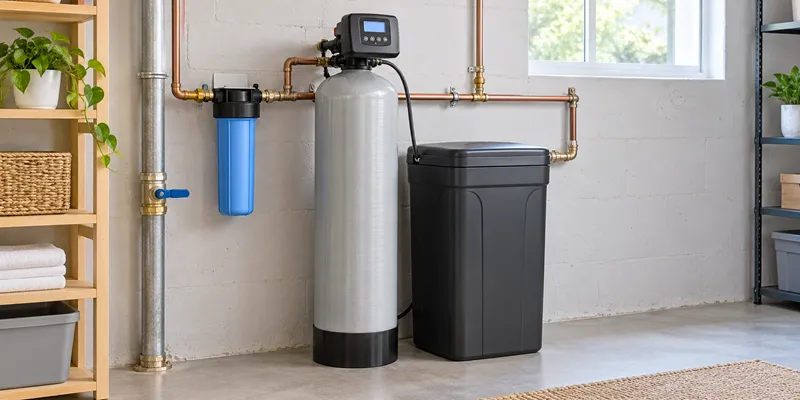
SpringWell SS is a strong starting point if you want softened water throughout your home. Its three configurations make it easier to match treatment capacity and flow to household demand.
Why it earns the top spot
As an ion-exchange softener, SpringWell SS removes calcium and magnesium rather than just changing how scale forms, so you get the full benefit of softened water.
SS1 offers 32,000 grains and a listed 11 GPM flow rate. SS4 increases those figures to 48,000 grains and 13 GPM. SS+ offers 80,000 grains and 20 GPM.
Capacity determines how much hardness the system can handle between regenerations. Flow matters when showers, laundry and kitchen taps run at the same time.
For daily life, the benefits are practical: better soap lather and less hardness-related scale in water heaters, dishwashers and washing machines. Those benefits matter more than a long feature list.
Who should choose it, and who should skip it?
Choose SpringWell SS if you own your home, have measured hard water and can accommodate a resin tank and brine tank.
The brine tank holds up to 200 pounds of salt. That provides substantial storage, but you still need to monitor salt levels. Resin replacement is listed at about eight years, so include it in your long-term budget.
Skip it if you can’t accommodate regeneration drainage or don’t want salt maintenance. Renters without permission to alter the incoming supply should avoid a permanent whole-home installation.
Choose SS1, SS4 or SS+ according to your calculated demand, rather than buying the largest model by default.
SoftPro Elite and AFWFilters Fleck 5600SXT: two practical alternatives
These options suit different priorities. SoftPro focuses on regeneration efficiency, while Fleck-based packages appeal to buyers who want familiar, serviceable controls.
The SoftPro Elite is a high-efficiency, salt-based whole-house water softener designed to reduce calcium and magnesium minerals responsible for hard water. Its upflow regeneration system and precision brining technology help reduce unnecessary salt and water consumption while maintaining consistent soft water throughout the home.
Available in multiple grain capacities, it is a practical option for households dealing with scale buildup, water spots, and poor soap performance.
SoftPro Elite: best when salt use matters
Choose SoftPro Elite if you want salt-based softening with an upflow regeneration design. SoftPro lists up to 50% lower salt use than a standard system and estimates about three bags annually. Treat those figures as usage-dependent estimates. A household with very hard water and heavy laundry demand will use more salt than a smaller, lower-use household.
SoftPro lists its resin as lasting up to 20 years. That may reduce maintenance needs, though incoming water conditions still affect resin life.
Why We Recommend It at Healthy Home Upgrade
We recommend the SoftPro Elite for homeowners who want reliable hard-water treatment with an emphasis on long-term efficiency. Its demand-based regeneration, high-capacity resin, and adjustable settings make it a strong alternative to basic timer-controlled systems.

Specifications
- Type: Whole-house salt-based water softener
- Capacity: 32,000 grains
- Softening method: Ion exchange
- Regeneration: High-efficiency upflow regeneration
- Control: Digital metered control valve with LCD display
- Valve size: 1-inch full-flow valve
- Resin: Fine-mesh ion-exchange resin
- Included: Large brine tank, safety float, bypass valve, and protective tank jacket
- Special features: Precision brining, automatic reserve, quick recharge, vacation mode, and automatic system refresh after seven days without use
- Power backup: Maintains the date and time for at least 48 hours; settings remain stored
- Warranty: Lifetime tank warranty and 10-year control-valve warranty
- Installation: Whole-house installation; suitable for DIY installation or a professional plumber
It is particularly worth considering for households with significant hardness levels and regular water use, where reducing salt and regeneration water consumption can make a difference over time.
Pros
- Efficient regeneration designed to conserve salt and water
- Multiple sizes for different household needs
- Demand-based controls reduce unnecessary regeneration
- Durable resin and comprehensive warranty coverage
Cons
- Higher upfront cost than basic water softeners
- Requires regular salt refills and a suitable drain
- Installation may require professional plumbing assistance
- Does not replace a dedicated drinking-water filtration system
SoftPro is a mid-range alternative to SpringWell. It fits households willing to manage salt but keen to reduce routine consumption.
Skip it if eliminating salt and regeneration wastewater is your main goal. Its efficiency features reduce those demands rather than removing them.
Compare SoftPro Elite and Fleck flow performance if simultaneous showers and appliance use are central to your decision.
AFWFilters Fleck 5600SXT: best for straightforward servicing
The AFWFilters Fleck 5600SXT is a salt-based whole-house water softener designed for reliable hard-water treatment and straightforward maintenance. Its electronic metered control valve monitors water usage and schedules regeneration based on demand, helping avoid unnecessary salt and water consumption.
Built around an established valve design with documented replacement components, it is a practical option for homeowners who value long-term serviceability over advanced smart features.
Why We Recommend It at Healthy Home Upgrade
We recommend the AFWFilters Fleck 5600SXT for homeowners who want an effective, serviceable water softener without unnecessary complexity.
One of its biggest advantages is its documented repair process. Pentair provides detailed servicing instructions and parts diagrams for components such as pistons, seals, spacers, and injectors. This makes it a sensible choice for homeowners planning to maintain their system with help from a qualified water-treatment technician.
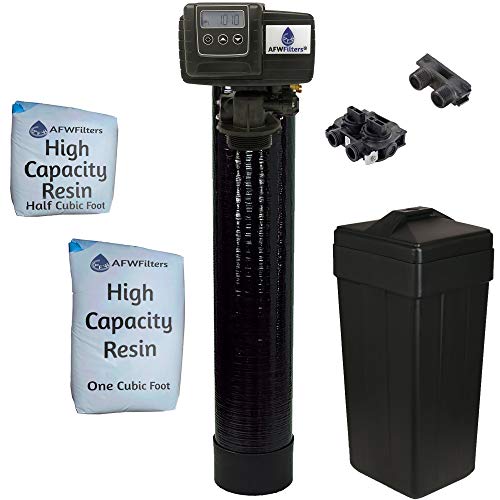 AFWFilters Built Fleck 48,000 Water Softener System with 5600sxt Digital metered Valve 1 Yoke
Specifications:
- Type: Salt-based ion-exchange water softener
- Control Valve: Fleck 5600SXT electronic metered valve
- Capacity: Multiple resin tank sizes and capacities available
- Regeneration: Metered, demand-based regeneration with programmable settings
- Display: Digital LCD with regeneration and water usage information
- Serviceability: Documented replacement parts and maintenance procedures
- Power Backup: Retains programming during power interruptions
Its demand-based regeneration and programmable digital controls also make everyday operation relatively simple.
Pros
- Established valve design with documented replacement components
- Detailed manufacturer service manuals simplify troubleshooting
- Metered regeneration helps reduce unnecessary salt and water use
- Straightforward digital programming
- Multiple system sizes available for different household needs
Cons
- Lacks Wi-Fi monitoring and advanced smart-home features
- Requires regular salt refills and periodic maintenance
- Repairs may still require a qualified technician
- Warranty, included components, and local parts availability vary by supplier
The Fleck 5600SXT prioritizes practical servicing and dependable operation over premium automation. It is a good fit for homeowners who prefer a conventional, repairable system and have access to a technician familiar with Fleck valves.
Choose a Fleck 5600SXT-based system if you want a metered control valve with widely available service support. Metered regeneration responds to water use rather than running only on a fixed calendar.
The listed warranty terms are 10 years for the tank and five years for the valve.
Skip it if your home has very high peak water use. Choose a larger capacity or the SpringWell SS+ instead. Complete packages can include different tanks, resin quantities, and accessories, so the valve name alone doesn’t describe the whole system.
Choose a complete metered Fleck 5600SXT package sized to your hardness load, rather than choosing on the valve name alone.
How we chose
We prioritized hardness removal, demand-based regeneration, useful flow rates and long-term maintenance. Product specifications and published performance results informed our choices, along with installation needs.
Other good options
Kind E-2000 is a compact, cartridge-based TAC conditioner, but it doesn’t remove hardness.
NuvoH2O is another cartridge-based scale-control option. Its cartridge typically needs replacement about every six months.
Salt-based or salt-free: choose by the result you want
The difference is straightforward: salt-based softeners remove hardness, while salt-free conditioners leave the minerals in your water.
Choose ion exchange for hardness removal
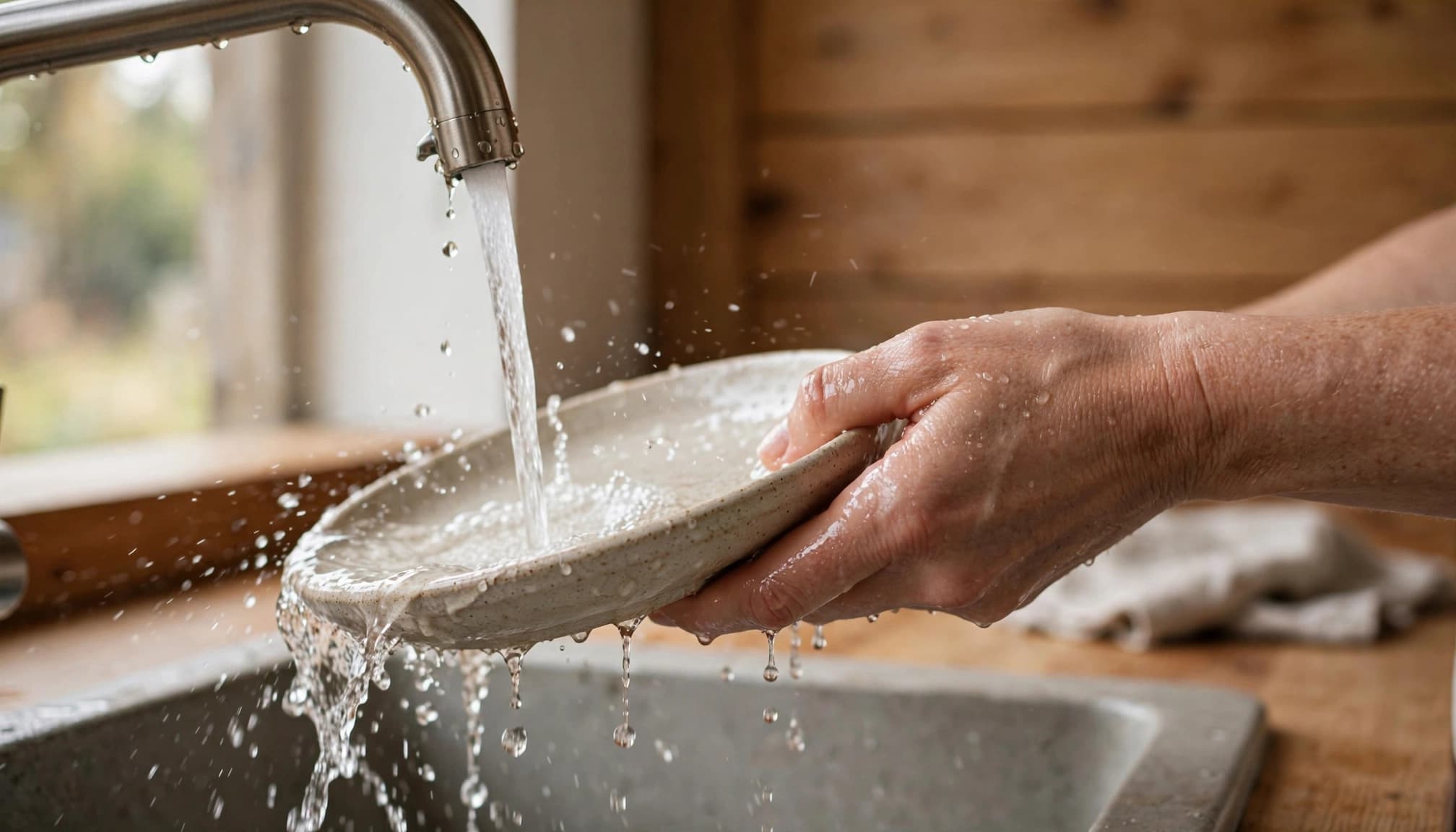
Ion-exchange resin captures calcium and magnesium and exchanges them for sodium or potassium ions. During regeneration, brine washes the resin and flushes the accumulated minerals down the drain.
The US Geological Survey classifies water above about 7 GPG (121 mg/L) as hard, and above about 10.5 GPG (180 mg/L) as very hard. If hardness causes persistent scale and poor soap performance, salt-based treatment is the more direct solution.
NSF/ANSI 44 requirements cover residential cation-exchange softeners. This standard applies to softeners, not drinking-water purification.
TAC, or template-assisted crystallization, changes how hardness minerals form deposits. It doesn’t remove calcium and magnesium, so hardness readings remain high. Choose TAC for scale management without salt, but skip it if you expect the lather and feel of softened water.
Sodium and softened water
Salt-based softeners add a small amount of sodium to your water. For every grain per gallon of hardness removed, softened water gains roughly 8 mg of sodium per liter. If you follow a low-sodium diet, talk to your doctor, use potassium chloride instead of salt in the brine tank, or keep an unsoftened cold-water line or a reverse osmosis filter at the kitchen tap for drinking and cooking.
Keep drinking-water filtration separate
A softener isn’t a purifier. It isn’t designed to remove chlorine, bacteria, PFAS, lead or VOCs.
Whole-home carbon filtration can address chlorine-related taste and odor when designed for that purpose. Under-sink reverse osmosis can provide targeted drinking-water treatment when matched to the contaminants present.
Our whole-house water filter recommendations explain the filtration side of that decision.
A softener plus targeted drinking-water filtration can solve two different problems without requiring whole-house reverse osmosis.
Ordinary shower filters and carbon pitchers don’t remove hardness throughout the home. Their usefulness depends on the contaminants they’re designed to reduce.
Size the system and plan its ongoing upkeep
Whole house water softeners need enough capacity between regenerations and sufficient flow during busy periods. Bigger equipment isn’t automatically better.
Calculate grains per day first
Multiply daily water use in US gallons by hardness in GPG to find the daily hardness load in grains.
For a four-person household using 75 gallons per person at 10 GPG:
- Daily water use is 4 × 75, or 300 gallons.
- The daily hardness load is 300 × 10, or 3,000 grains.
- Seven days require 21,000 grains. Add one day’s reserve for a target of 24,000 grains.
A 32,000-grain model is a reasonable starting size, as long as its working capacity at the selected salt setting covers that load. Common residential capacities range from 32,000 to 64,000 grains.
For international water reports, Health Canada’s hardness guidance gives the conversion: one GPG equals 17.1 mg/L as calcium carbonate.
Peak flow is a separate requirement. Adequate capacity won’t prevent pressure loss if the system is undersized.
Allow space, drainage and maintenance access
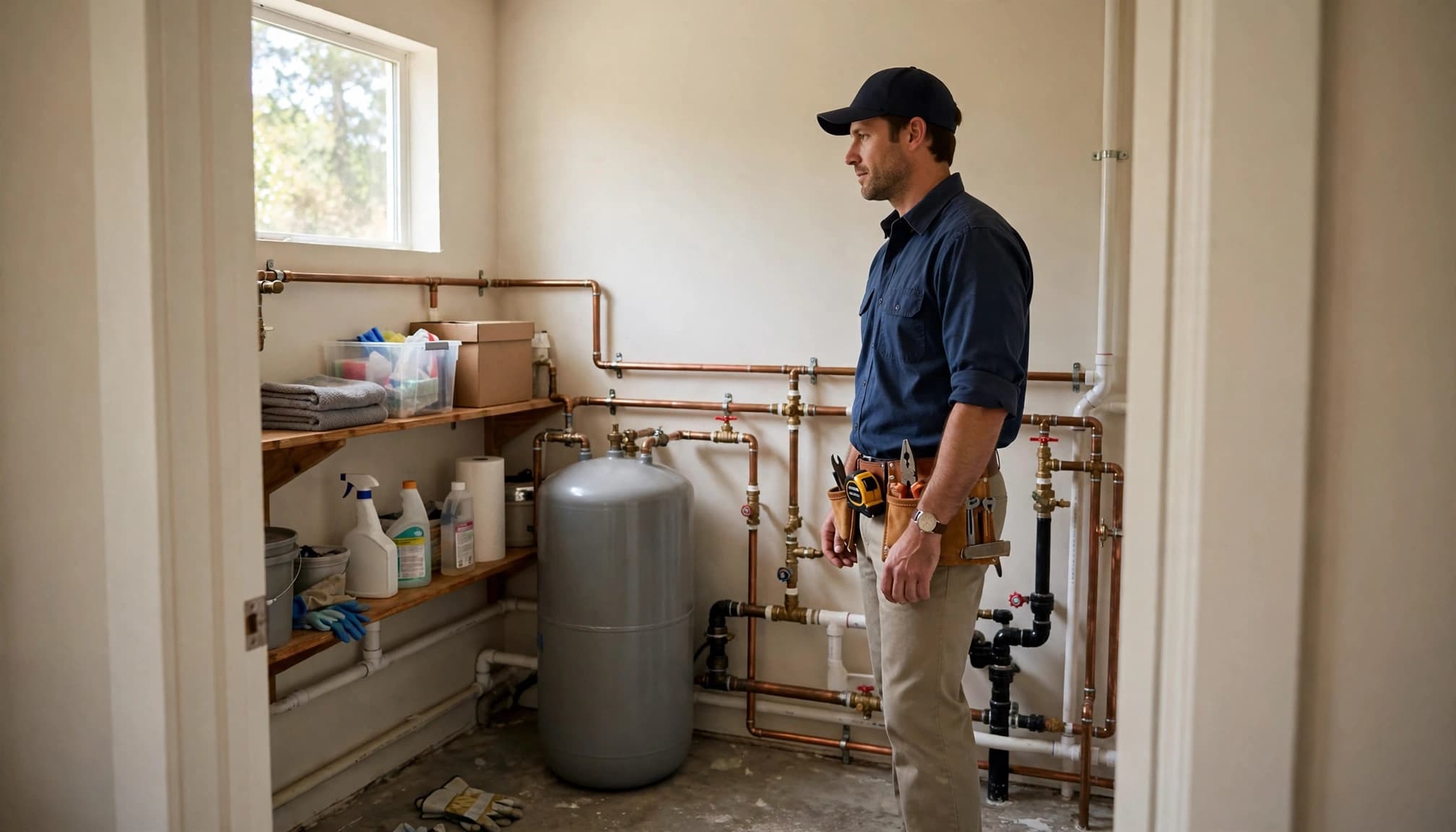
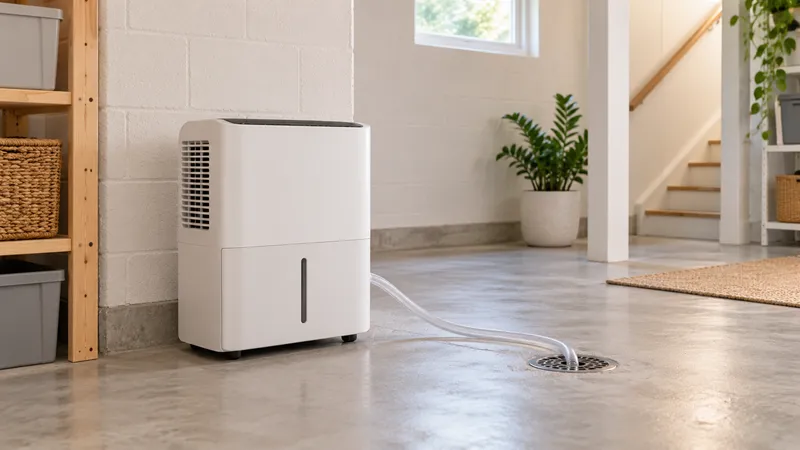
Installation requires access to the incoming supply, bypass plumbing, power for electronic controls and a suitable drain for regeneration.
Professional installation makes sense when pipes need rerouting or drain arrangements are unclear. DIY installation suits experienced homeowners with suitable existing connections.
Budget for equipment, labor, plumbing changes and ongoing salt or cartridge costs. Our whole-home filtration installation cost guide explains these cost categories.
Regeneration creates salty wastewater, so check local discharge rules. Salt-free conditioning avoids brine but may require replacement media or cartridges.
Frequently asked questions
How often should you add salt?
Inspect the brine tank monthly, then refill according to its remaining salt and your system’s instructions. There isn’t one refill interval for every household. Hardness, water use, regeneration settings and tank size all affect consumption. A large tank extends storage without removing the need for inspections.
Why does softened water feel slippery?
Removing hardness changes how soap behaves, so washing can feel smoother or more slippery. You’ll often need less soap or shampoo. If you dislike that sensation and mainly want scale control, a salt-free conditioner may suit you better, although the water will remain hard.
Is a softener worth it if drinking water tastes fine?
Yes, if measured hardness is causing scale or poor soap performance. Taste doesn’t reliably tell you how much calcium and magnesium your water contains. The value comes from appliance protection and easier household cleaning, rather than a promise of purer drinking water.
Choose the softener that solves your hardness problem
SpringWell SS is the strongest starting point for flexible capacity and flow. Choose SoftPro Elite for lower-salt regeneration, or the AFWFilters Fleck 5600SXT for straightforward servicing.
Match capacity and peak flow to your household, without adding treatment you don’t need.
If drinking-water quality is also a priority, our comparison of whole-house and point-of-use reverse osmosis explains when targeted kitchen filtration makes more sense than treating every tap.
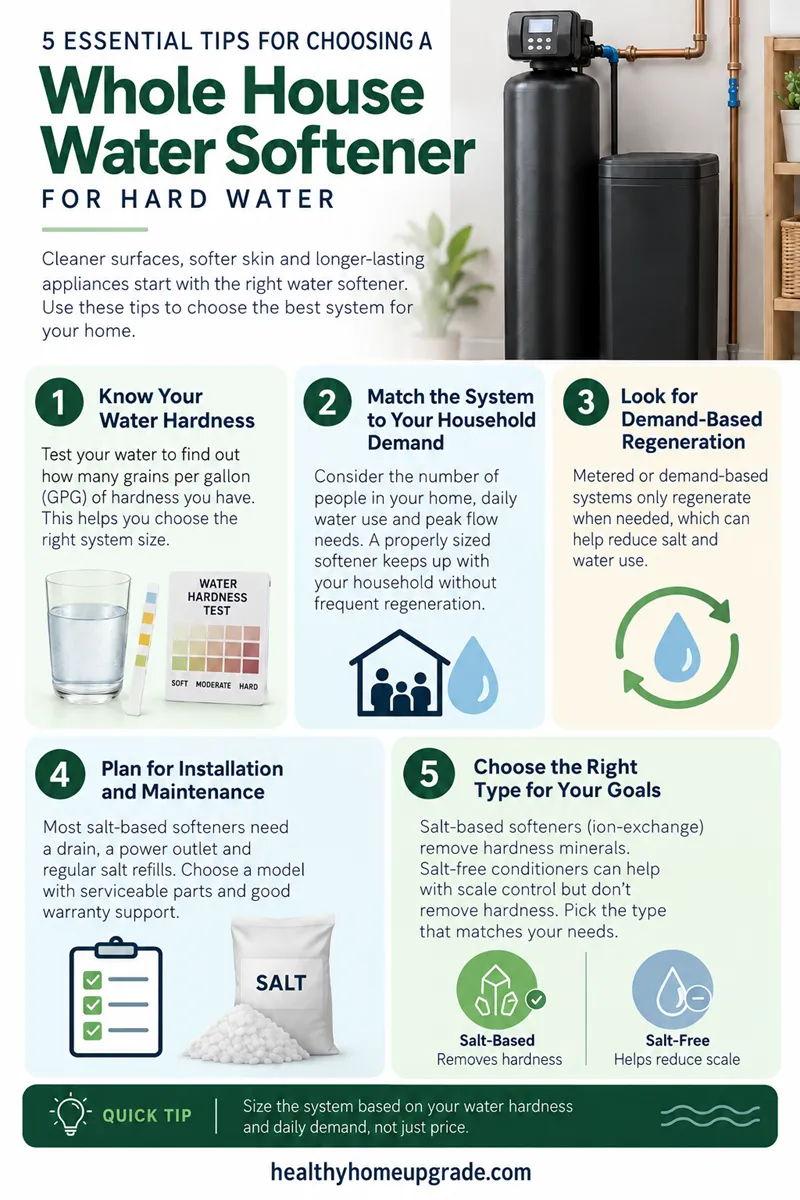
Save These 5 Water Softener Tips for Later!
Choosing the right whole-house water softener starts with understanding your home’s water hardness, daily water usage, and maintenance needs.
We’ve put together this quick infographic with 5 essential tips to help you choose the right water softener for hard water, from proper sizing to understanding salt-based and salt-free systems.
Planning a water softener upgrade? Save this infographic to your Pinterest home improvement board so you can easily refer to it before making a purchase.
📌 Pin It Now, Use It Later!