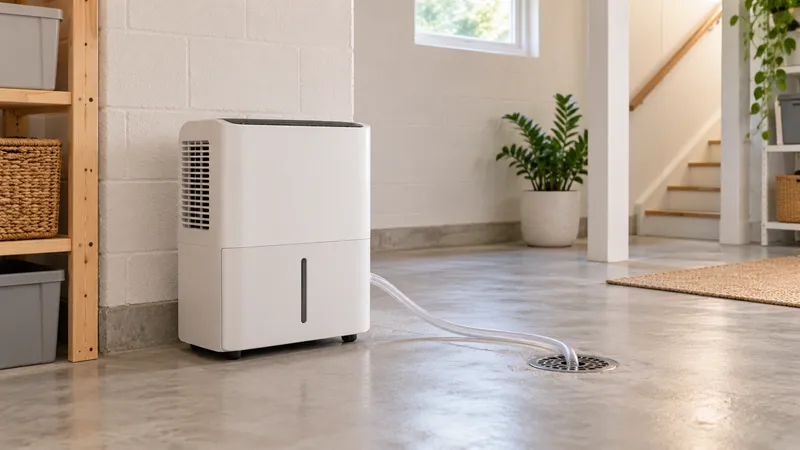
A basement dehumidifier only earns its place if you can stop thinking about it. Continuous drainage gets you there: instead of emptying a bucket every day, the collected water runs straight to a floor drain, sump or sink.
The quick answer: for most basements, the Midea Cube 50-Pint with Pump is the best all-round choice. It drains by gravity or by pump, and it’s the most efficient of our picks. If you want a traditional upright unit that pumps water up to a sink, choose the GE 50-Pint APYR50LC. For a large, cold or persistently damp basement with a floor drain, the AprilAire E070 is the heavy-duty option.
The most important buying decision comes before the brand: where will the water go?
At a glance: the best basement dehumidifiers with continuous drain
| Product | Best for | Drainage | Main trade-off | Price |
| Midea Cube 50-Pint with Pump (MAD50PS1QWT-A) | Most basements | Gravity or built-in pump | Relatively loud on high fan | $249.99 |
| GE 50-Pint with Built-In Pump (APYR50LC) | Pumping water up to a sink or window | Built-in pump, up to 16 ft | Less efficient than the Midea | $293.99 |
| AprilAire E070 | Large, cold or very damp basements | Gravity only | Premium price, no pump | $1769.99 |
If your drain sits below the unit, any of the three will work. If the water has to travel upward, choose the Midea or the GE.
Midea Cube 50-Pint with Pump: best overall

The Midea Cube (MAD50PS1QWT-A) is the easiest recommendation for most basements because it handles both drainage routes. Use gravity drainage when a floor drain sits below the unit, and switch to the built-in pump when the water needs to reach a sink or laundry tub.
It’s also the most efficient dehumidifier on this list. ENERGY STAR lists it with an Integrated Energy Factor of 2.01 liters per kilowatt-hour and a rated capacity of just under 50 pints a day. Midea rates it for spaces up to 4,500 square feet, and the stacked cube design packs down for storage when the dry season arrives.
- Best for: most basements, especially if you haven’t settled on a drain route yet.
- Skip it if: it will sit next to a bedroom or home office. Independent testing found it relatively loud at higher fan speeds.
- Main trade-off: you pay for pump hardware even if gravity drainage turns out to be enough.
GE 50-Pint with Built-In Pump: best for pumping to a sink
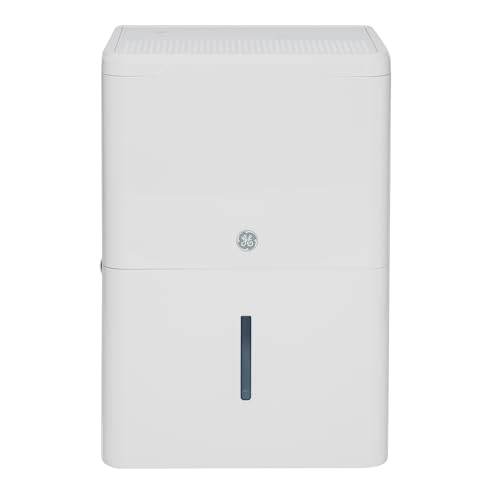
The GE APYR50LC is a straightforward upright dehumidifier with a built-in pump and an included hose that moves water to a drain up to 16 feet away. That makes it a practical choice when your nearest outlet is a utility sink, a standpipe or a basement window.
It’s ENERGY STAR certified and rated at 50 pints a day. Its Smart Dry function adjusts the fan speed to the room’s humidity, automatic defrost helps in cooler basements, and wheels with pocket handles make it easy to move.
- Best for: basements where the only suitable drain is higher than the unit.
- Skip it if: running costs are your top priority. Its efficiency of 1.8 L/kWh is good but below the Midea’s.
- Main trade-off: a more conventional design with fewer setup options than the Midea.
AprilAire E070: best for large, cold or very damp basements
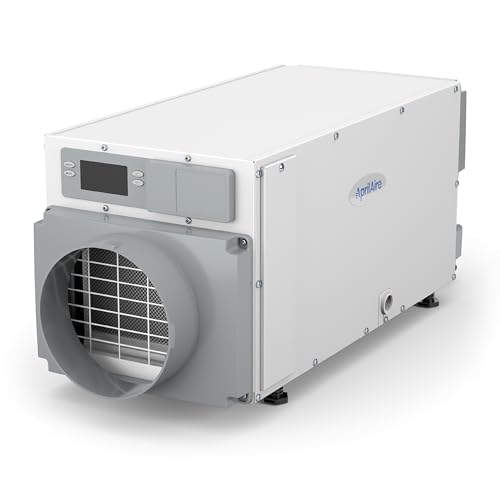
The AprilAire E070 is a different class of machine: a compact, professional-grade dehumidifier built for basements and crawl spaces. It removes up to 70 pints a day under standard AHAM test conditions and is rated for spaces up to 2,200 square feet.
It handles cool conditions better than typical portable units, operating down to 41°F with automatic defrost. It drains by gravity through an included 10-foot hose, can be ducted to reach separate areas, uses a washable MERV 8 filter and comes with a 5-year warranty. A Wi-Fi version, the E070W, adds app alerts.
- Best for: large unfinished basements, cold basements and homes with a floor drain where dampness is a year-round problem.
- Skip it if: your drain is above the unit. The E070 has no built-in pump.
- Main trade-off: a premium price, and AprilAire recommends professional installation.
Gravity drain or built-in pump: which do you need?
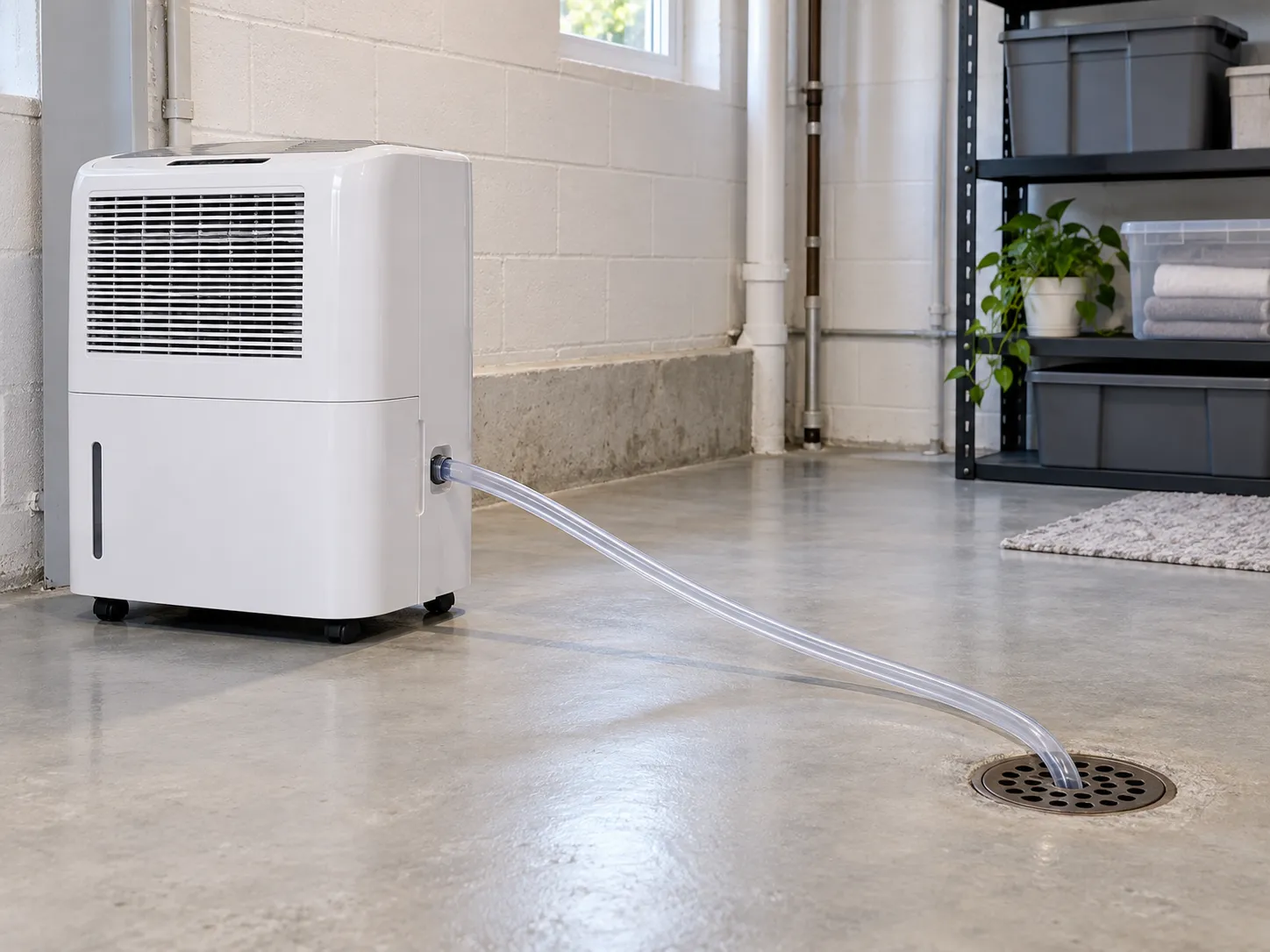
Gravity drainage
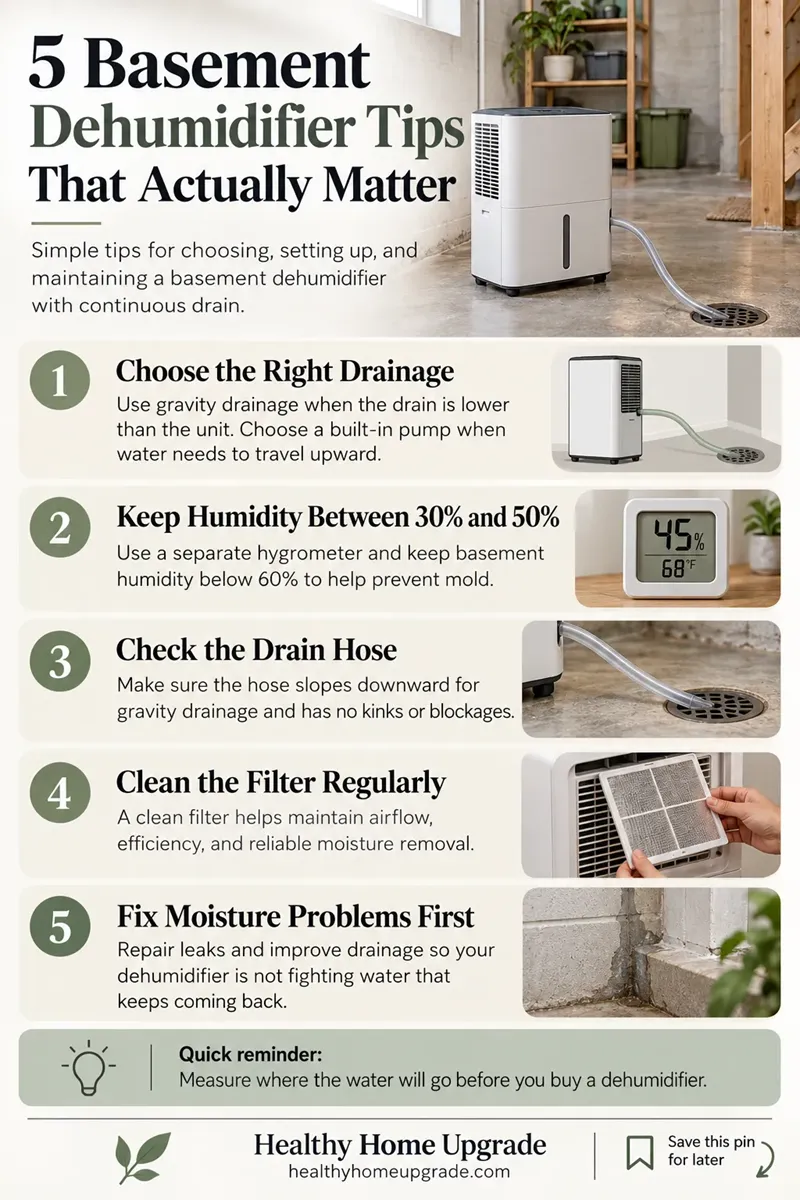
Gravity drainage works when your drain sits lower than the dehumidifier’s outlet and the hose can slope downward the whole way. It’s the simplest setup, with nothing extra to maintain. A hose that has to rise over a threshold or into a sink won’t drain by gravity.
Built-in pump
A pump is the answer when the only suitable outlet is higher than the unit, such as a utility sink, standpipe or window. Before buying, measure the height and distance to your drain and compare them with the model’s pump specifications. A pump is one more component to keep clean, so check the hose and connections every few weeks.
Tip: measure the highest point the hose has to pass over, not just the height of the drain itself.
How to size a basement dehumidifier
Capacity is measured in pints per day under standard test conditions. A cool basement removes less moisture than the label suggests, so it makes sense to size up when your space is cold or very damp.
- Moderately damp basement: a 50-pint unit such as the Midea or GE is usually the right size.
- Large, wet, cold or multi-room basement: step up to a 70-pint unit such as the AprilAire E070.
Keep interior doors open so air can reach the unit. And fix the source of the water first: the EPA’s moisture-control guidance recommends repairing leaks and improving drainage, so your dehumidifier isn’t fighting water that keeps coming back.
Set it up for reliable continuous drainage
Place the dehumidifier on a level surface with clear space around the air intake and outlet. Connect the drain hose securely, route it away from foot traffic, and run the unit while you’re home to confirm that water reaches the drain without leaking or pooling. Check the route again whenever you move the unit or rearrange storage nearby.
For humidity, the EPA recommends keeping indoor humidity below 60%, ideally between 30% and 50%. A separate hygrometer placed away from the unit gives you a more accurate picture of the whole basement. Our guide to tracking home humidity levels with smart devices shows how to spot patterns over time.
Clean the filter on the schedule in your manual. A clogged filter reduces airflow and makes the unit work harder.
Compare running costs with IEF
Integrated Energy Factor (IEF) tells you how many liters of water a dehumidifier removes per kilowatt-hour of electricity. A higher number means lower running costs. Among our picks, the Midea Cube leads at 2.01 L/kWh, ahead of the GE at 1.8 L/kWh. In a basement where the unit runs for much of the year, that difference adds up.
Frequently asked questions
Does a basement dehumidifier need a floor drain for continuous drainage?
Not necessarily. Gravity drainage needs a drain below the unit, but a model with a built-in pump, like the Midea Cube or the GE APYR50LC, can move water up to a sink, standpipe or window.
Is a 50-pint dehumidifier enough for a basement?
For most moderately damp basements, yes. For large, cold or persistently wet basements, a 70-pint unit such as the AprilAire E070 is the safer choice.
What humidity should I set in my basement?
Aim for 30% to 50% relative humidity and stay below 60%, in line with EPA guidance. Check with a separate hygrometer rather than relying only on the unit’s built-in reading.
Does continuous drain mean the dehumidifier runs nonstop?
No. Continuous drain describes where the water goes. The humidistat still switches moisture removal on and off to hold your target humidity.
Which dehumidifier should you buy?
If you’re unsure, start with the Midea Cube 50-Pint with Pump: it works with either drain route and costs the least to run. Choose the GE APYR50LC if you need a simple pump model to reach a sink, and the AprilAire E070 if your basement is large, cold or damp all year and has a floor drain.
Your next step: measure the route from where the dehumidifier will stand to your drain, then check the current price of the pick that matches it in the table above.
Save These Basement Dehumidifier Tips for Later!
Planning to tackle basement moisture? Keep these 5 essential dehumidifier tips handy!
From choosing the right drainage system to maintaining healthy humidity levels, this quick infographic makes it easy to remember what matters most.
Love these tips? Save this infographic to your Pinterest board so you can revisit it whenever you need it.
📌 Pin It Now, Use It Later!