Quick Verdict
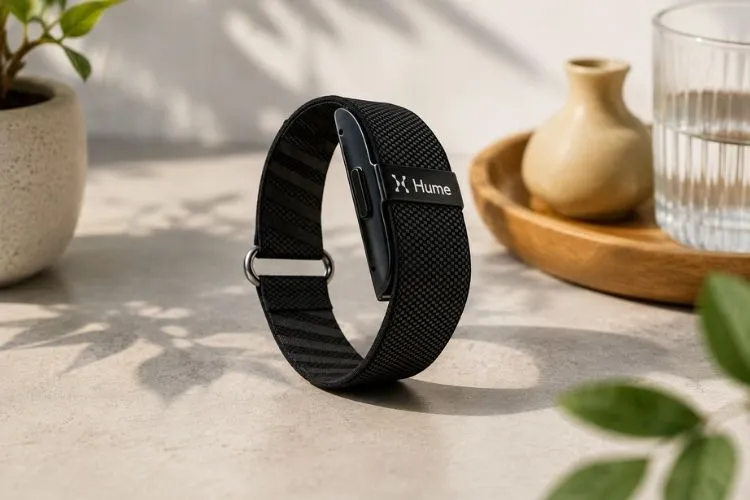
I ordered the Hume Band 2.0 because I do not really need more health data. I need better help deciding what to do with the data I already collect.
I use an Oura Ring 4 and Apple Watch, and my husband recently bought a WHOOP 5.0. I also walk around 6–7 km most days and am planning to add more strength training and HIIT.
So my question is simple:
Can Hume help me decide when to push, when to recover, and whether my sleep and everyday activity are actually affecting my readiness?
I have ordered the Band but have not tested it yet, so this is my researched first review. I will update it with genuine hands-on experience after I have worn it through everyday life, sleep, and training.
Best for: People who want screen-free sleep, recovery, and health tracking without a mandatory subscription.
Skip it if: Your current wearable already gives you everything you need, or you mainly want smartwatch functions or advanced live sports data.

Check HUME BAND 2.0 price on Amazon
Why Hume Interested Me
A normal morning is where I think a wearable should prove itself.
Imagine I wake after sleeping badly. I had planned HIIT, but I have already walked 6–7 km for several days and done a strength session.
I do not need another app simply telling me:
“Your recovery score is low.”
I want enough useful context to decide:
- Do I do HIIT anyway?
- Switch to weights?
- Take my normal walk?
- Or make today a recovery day?
That is how I intend to judge Hume.
The Band tracks signals including heart rate, HRV, SpO₂, skin temperature, sleep stages, strain, and recovery. Hume also provides broader proprietary health and longevity-style scores.
Those scores sound interesting, but they only become valuable to me if they change something I actually do.
My Real-Life Test
My daily walks give Hume a useful baseline. HIIT and increasing strength training should then create noticeably different levels of load.
What I want to see is whether Hume recognizes that real life accumulates.
A walk is not just a walk if it comes after several active days, poor sleep, and a hard workout.
And the morning after HIIT may tell me much more about Hume than the workout itself:
- Does its recovery guidance match how I actually feel?
- Does it notice when several active days begin to add up?
- Does it ever tell me something useful enough that I genuinely change my plan?
If yes, Hume becomes interesting.
If it simply gives me another collection of numbers, probably not.
The Features That Matter Most to Me
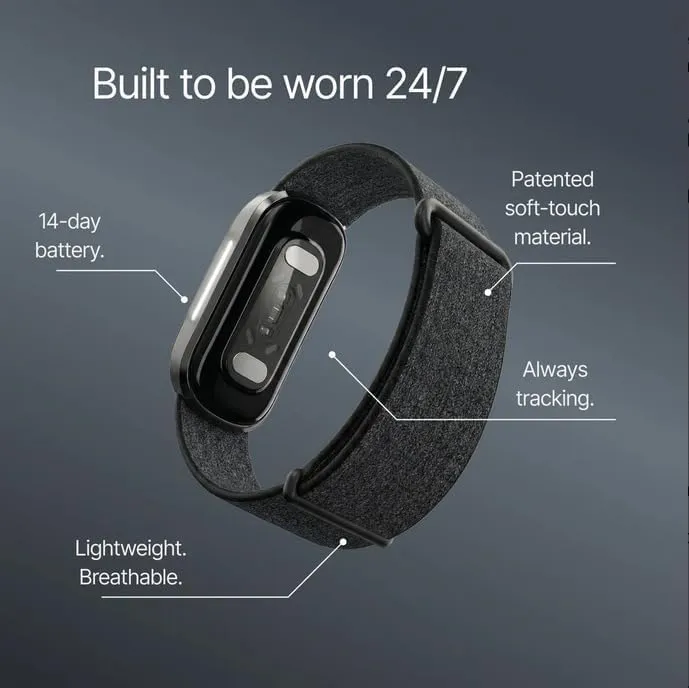
Up to 14 Days of Battery Life
Hume advertises up to 14 days of battery life, which could be a surprisingly important advantage.
A wearable cannot track my sleep or recovery while it is constantly sitting on a charger.
Hume says actual battery life can vary with use and syncing, so this is something I will test rather than simply accepting the headline figure.
No Mandatory Core Subscription
The other major attraction is the subscription model.
Hume says the Band and its raw/core data can be used without a mandatory subscription. Premium AI coaching and deeper analysis are optional paid extras.
I like that.
I have no objection to paying for something genuinely useful, but I prefer buying hardware that does not suddenly become much less useful if I stop another monthly membership.
One Feature I Would Treat Carefully: Blood Pressure Insights
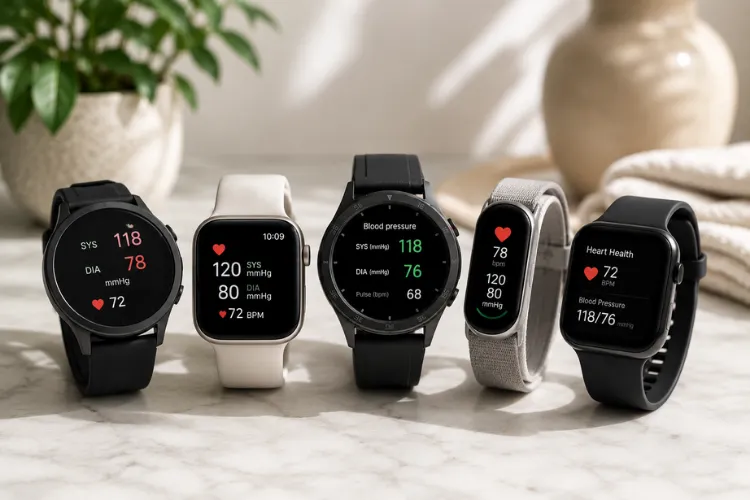
Hume also offers Blood Pressure Insights.
This sounds more medical than it actually is.
Hume itself states that these are directional trends, not a cuff replacement and not a medical diagnosis.
So if Hume showed me an unusual pattern, I would interpret it as:
“Perhaps I should check this properly.”
I would not use it as a replacement for a validated blood-pressure monitor.
Hume vs Oura vs WHOOP vs Apple Watch
I do not think these four products need to be judged as if they are identical.
| Device | What I See as Its Strongest Role |
|---|---|
| Hume Band 2.0 | Broader health trends, sleep, and recovery without a mandatory core subscription |
| Oura Ring 4 | Sleep and readiness |
| WHOOP 5.0 | Training load, strain, and recovery |
| Apple Watch | Fitness plus full smartwatch functionality |
For Hume, the biggest challenge in my case is probably Oura.
If I wake after a bad night and both devices simply tell me that I slept badly, I did not need two trackers to discover that.
Hume earns its place only if it gives me a different or more useful view of how sleep, activity, and recovery fit together.
That is why I am not calling Hume “better than Oura” or “better than WHOOP” yet.
I need to live with it first.
What Could Make Me Send It Back?
There are three obvious possibilities.
1. Duplication
If Hume mostly repackages information I already receive from Oura and Apple Watch, I may not need it.
2. Proprietary Scores That Sound Better Than They Perform
Terms around biological aging and longevity are fascinating, but I care far more about whether they help me make practical decisions.
3. The Screen-Free Design
I like the idea of less distraction, but someone who wants to watch live workout information, maps, messages, or heart rate directly on the wrist will probably prefer a smartwatch.
Those are not minor details. They are exactly what will determine whether Hume becomes something I continue wearing.
Check HUME BAND 2.0 price on Amazon
Final Verdict: Is Hume Band 2.0 Worth It?
It looks different and useful enough that I bought one myself.
The combination that attracted me is straightforward:
Screen-free design + sleep and recovery + everyday activity + long advertised battery life + no mandatory core subscription.
But the real review begins when it reaches my wrist.
A 6–7 km walk.
A poor night’s sleep.
HIIT.
Strength training.
And those mornings when the device tells me one thing while my body tells me another.
If Hume helps me make better decisions in those moments, it may earn a permanent place in my routine.
If it simply gives me more numbers to check, it probably will not.
I will update this review after I have actually tested it.