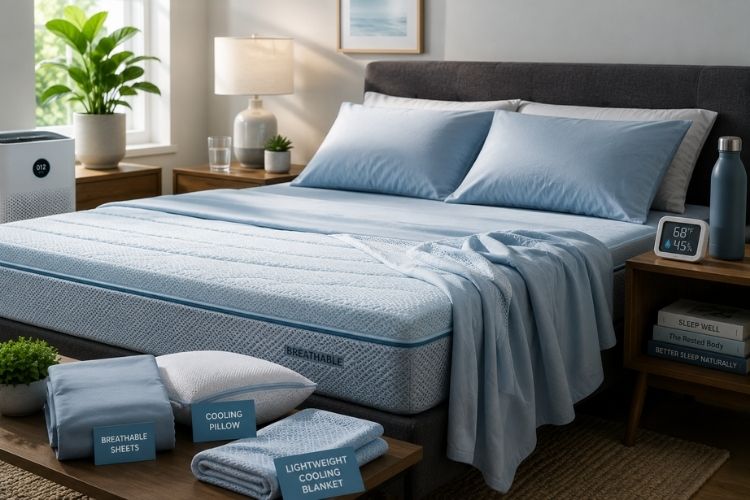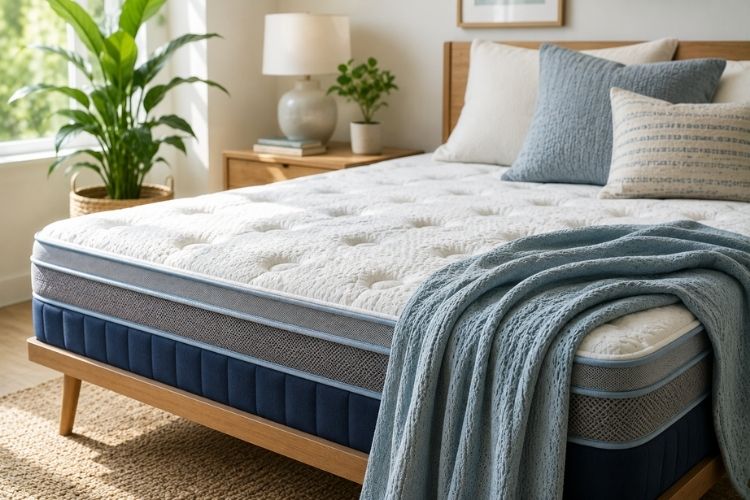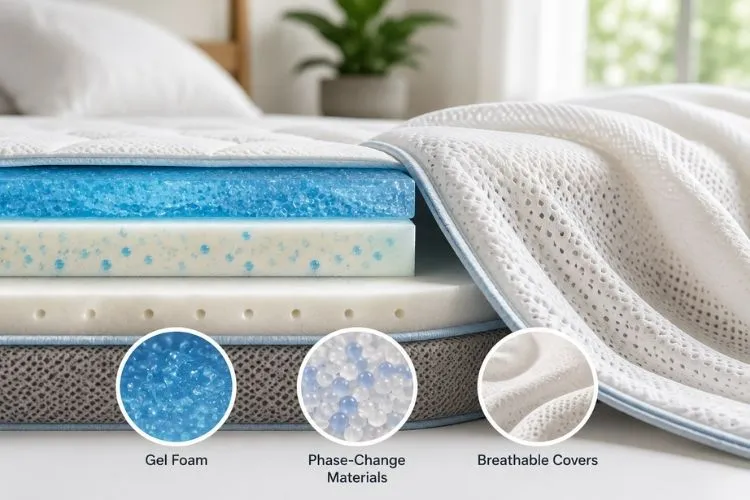
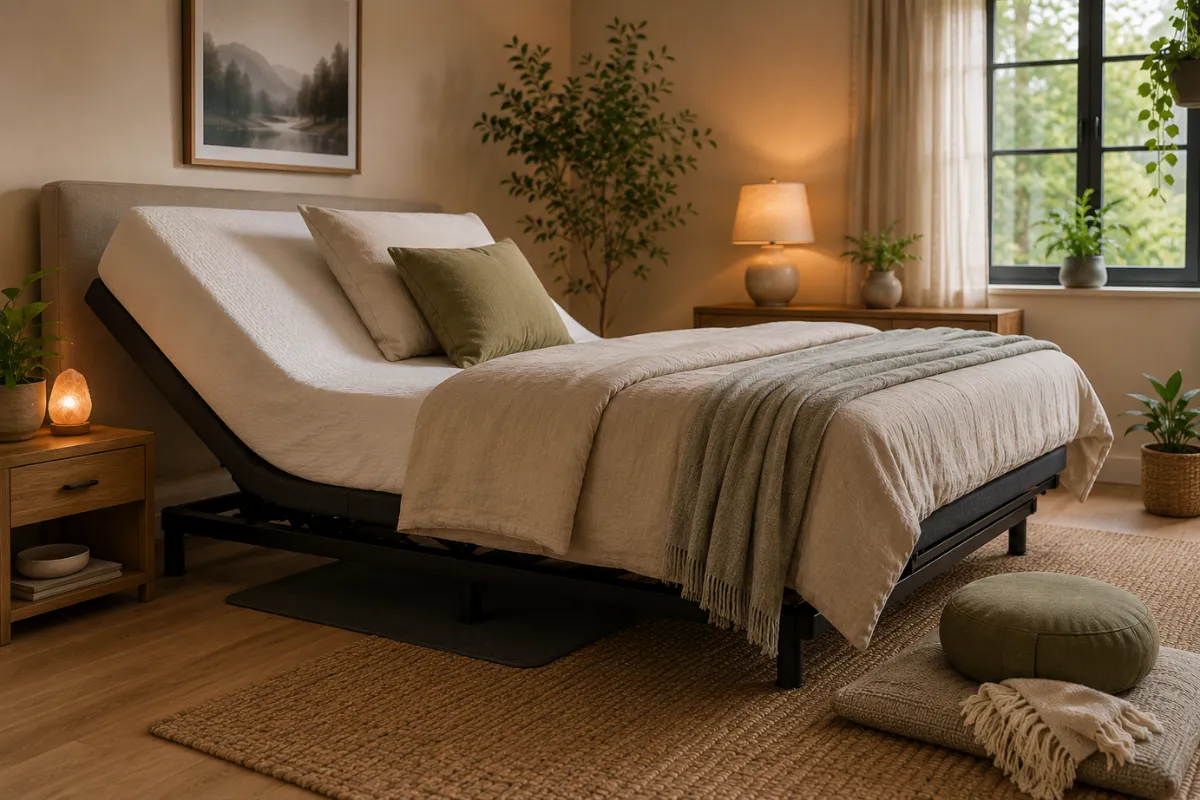
A healthier sleep setup is not one single product.
It is a stack.
Your bed base affects position. Your mattress affects pressure, temperature, airflow and material exposure. Your bedding affects heat and skin contact. Your bedroom affects light, air, noise and nervous-system safety. And grounding, for some people, may become one more gentle layer in the routine.
That does not mean you need to turn your bedroom into a biohacking lab.
Through a Zero Toxic Load lens, the best sleep recovery setup is not the most complicated one. It is the one that helps your body rest with fewer barriers: less pressure, less heat, fewer strong odors, fewer unnecessary electronics, softer light, cleaner air and a calmer evening rhythm.
This guide explains how to combine an adjustable base, a non-toxic mattress and grounding in a practical, balanced way — without overbuying, overclaiming or making your bedroom feel like a showroom.
If you are still choosing your base, start with our guide to the best adjustable bed base. If mattress compatibility is your main question, read our guide to the best mattress for an adjustable base first.
Anita’s Take
After my lung surgery, I started seeing the bedroom very differently.
I no longer think of sleep as just “going to bed.” I think of it as a recovery environment. The room, the light, the air, the materials, the mattress, the position, the electronics and the evening ritual all matter.
For me, the ideal sleep setup is not extreme. It is not about buying every gadget or chasing every new biohack. It is about creating a room where my body has fewer things to fight against.
That is also why I am interested in adjustable bases, non-toxic mattresses and grounding as a stack. Not because any one of them is a magic fix, but because each one addresses a different layer.
The adjustable base helps with position.
The mattress helps with support, temperature and material exposure.
Grounding may help some people feel more connected, calmer or physically settled, although the science is still emerging and should not be overstated.
And then there is the part I personally never skip: meditation. I meditate every evening, using different forms over time, and I stay patient with each method. I am also working on a meditation guide with an audio file because I believe a calm evening rhythm is one of the most powerful sleep tools we can build.
That is the lens behind this article: not perfection, not fear, but a practical recovery stack that feels calm, clean and sustainable.
Quick Answer: What Is the Best Sleep Recovery Stack?
A strong sleep recovery stack combines:
- a stable adjustable base for positioning
- a compatible, low-odor mattress with better material transparency
- breathable bedding to reduce heat
- optional grounding if you want to test it gently and safely
- low light and fewer electronics at night
- a simple evening routine such as meditation, breathwork or yoga nidra
Start with the basics first: mattress comfort, materials, temperature, air and light. Then add an adjustable base if position matters. Grounding should be treated as optional and experimental, not as a cure or guaranteed sleep solution.
The EPA explains that VOCs can be emitted as gases from certain solids or liquids, and that concentrations of many VOCs are consistently higher indoors than outdoors. That is why low-odor materials and ventilation matter in a bedroom.
Also in This Article
- What a sleep recovery stack really means
- Adjustable base layer: position and pressure
- Non-toxic mattress layer: materials, airflow and support
- Grounding layer: what to know before adding it
- Meditation, breath and yoga nidra
- How to combine the layers without overcomplicating the bedroom
- Soft bedroom tools that may support the routine
- What not to claim about grounding or recovery
- FAQ
Sleep Recovery Stack at a Glance
| Layer | Main Purpose | What to Look For | What to Avoid |
| Adjustable base | Position, elevation and pressure relief | Quiet motor, stable frame, simple remote | Too many lights, apps or unnecessary features |
| Non-toxic mattress | Support, comfort, airflow and material exposure | Low-odor materials, credible certifications, compatibility | Strong smell, vague “eco” claims, poor airflow |
| Breathable bedding | Temperature and skin-contact comfort | Cotton, linen, wool, TENCEL or other breathable options | Heavy synthetic layers if you sleep hot |
| Grounding | Optional calm/connection layer | Safe setup, tested outlet, transparent materials | Treating it as a cure or using unsafe wiring |
| Sleep ritual | Nervous-system downshift | Meditation, yoga nidra, slow breathing, dim light | Intense exercise, bright screens, stressful apps |
| Bedroom environment | Air, light, heat and noise control | Cooler room, clean air, low light, fewer devices | Hot, bright, cluttered, electronic-heavy room |
What a Sleep Recovery Stack Really Means
A “stack” sounds technical, but the concept is simple.
It means each part of the sleep environment has a job.
The adjustable base helps your body find a better position.
The mattress supports your spine, joints and temperature regulation.
The bedding affects heat, skin feel and breathability.
Grounding may be an optional layer for people who want to test a more earth-connected sleep routine.
Meditation, slow breathing and gentle yoga help create a calmer transition into sleep.
None of these pieces should be treated as a miracle. But together, they can create a bedroom that feels more supportive, lower-toxin and easier to relax into.
Layer 1: The Adjustable Base
The adjustable base is the positioning layer.
It can help you raise the head, lift the legs, test a soft zero gravity position, read comfortably, or find a more supported angle if flat sleeping feels restrictive.
This does not mean an adjustable base treats reflux, back pain, snoring or sleep apnea. It is a comfort and positioning tool.
For position-specific guidance, read our article on the best positions for reflux, back pain and snoring on adjustable bases.
What to Look For
Choose an adjustable base with:
- a stable frame
- quiet movement
- simple remote control
- smooth head and leg elevation
- no unnecessary app dependency
- mattress compatibility
- clear warranty and return terms
- minimal lights or easy light shutoff
The best adjustable base for a recovery bedroom is not necessarily the one with the most features. It is the one that helps you rest without adding complexity.
How to Use It in a Recovery Stack
Use the base to create gentle support.
For example:
- slight head elevation for comfort
- light leg elevation after a long day
- soft zero gravity mode for reading or relaxation
- flatter position if that is what your body prefers
- side-sleeping support with a compatible mattress
The goal is not to keep adjusting all night. The goal is to find one or two settings that help your body settle.
Layer 2: The Non-Toxic Mattress
The mattress is the material and support layer.
This is where many people make the biggest mistake. They buy a beautiful adjustable base, then place it under a mattress that traps heat, smells strongly, does not flex properly, or contains materials they do not understand.
A mattress used on an adjustable base should be:
- flexible enough to bend
- supportive enough to maintain alignment
- breathable enough for your sleep temperature
- low-odor after airing out
- transparent about foam, latex, textiles and fire barriers
- compatible with the base
If this is your main question, read our best mattress for an adjustable base guide.
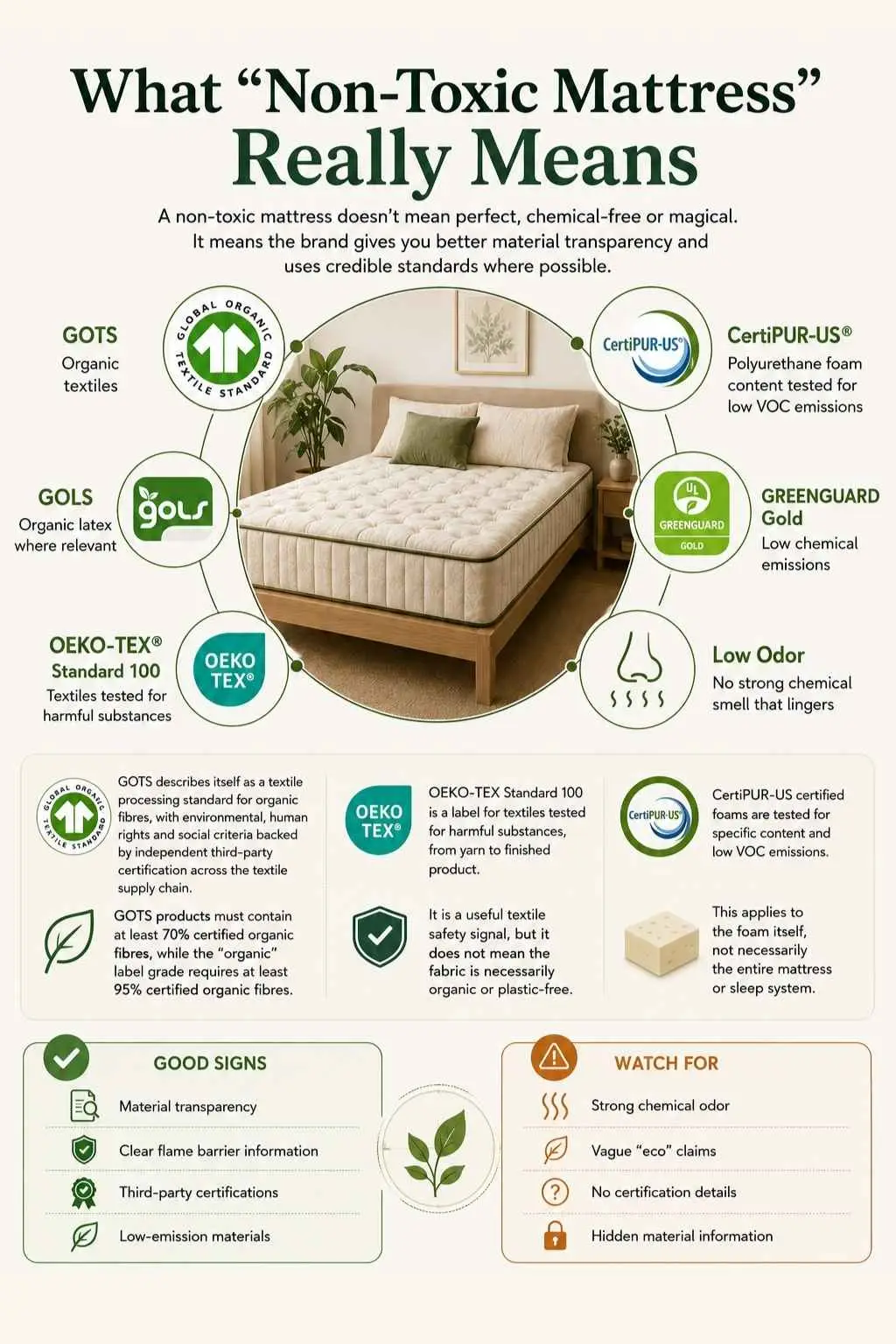
What “Non-Toxic Mattress” Should Mean
A non-toxic mattress does not mean perfect, chemical-free or magical.
It means the brand gives you better material transparency and uses credible standards where possible.
Helpful signals include:
- GOTS for organic textiles
- GOLS for organic latex where relevant
- OEKO-TEX Standard 100 for textiles tested for harmful substances
- CertiPUR-US for polyurethane foam content and low VOC emissions
- GREENGUARD Gold for low chemical emissions
- clear information about flame barriers
- no strong chemical smell that lingers
GOTS describes itself as a textile processing standard for organic fibres, with environmental, human rights and social criteria backed by independent third-party certification across the textile supply chain. A GOTS product must contain at least 70% certified organic fibres, while the “organic” label grade requires at least 95% certified organic fibres.
OEKO-TEX Standard 100 is a label for textiles tested for harmful substances, from yarn to finished product. It is a useful textile safety signal, but it does not mean the fabric is necessarily organic or plastic-free.
CertiPUR-US certified foams are tested for specific content and low VOC emissions, but this applies to the foam itself, not necessarily the entire mattress or sleep system.
What to Watch For
Be careful with vague claims like:
- “eco mattress”
- “green foam”
- “clean sleep”
- “plant-based comfort”
- “natural feel”
- “chemical-free”
These phrases may be marketing unless the brand explains the materials and backs them with credible certifications or test details.
The FTC says “eco-friendly” and “green” claims must be truthful and that its Green Guides help businesses comply with the law when making environmental claims.
Layer 3: Breathable Bedding
Bedding is the skin-contact layer.
Even if your mattress and base are excellent, heavy synthetic bedding can trap heat and make the body feel restless at night.
This matters especially if you are sensitive to heat, hormones, stress, night sweats or temperature swings.
Better Bedding Choices
Look for:
- organic cotton if you like crisp sheets
- linen if you want airflow and texture
- wool if you want natural temperature regulation
- breathable mattress protectors
- washable layers
- low-odor textiles
- OEKO-TEX or GOTS where available
The goal is to let the mattress breathe and keep the body from overheating.
If heat is one of your biggest sleep struggles, read our guide to a cooling memory foam mattress and cooling sleep setups.
Layer 4: Grounding as an Optional Support Layer
Grounding, also called earthing, means connecting the body to the electrical potential of the Earth. This can happen naturally outdoors through bare feet on grass, soil or sand, or indoors through grounding mats, sheets or other products connected to a grounded outlet or ground rod.
This is where we need to be honest.
Grounding is interesting. Many people love it. I personally understand why it appeals to people who want a more natural, body-connected sleep environment.
But it should not be oversold.
The research base is still emerging. Some studies and reviews suggest potential effects on sleep, stress, inflammation or recovery, but many studies are small, pilot-level, or not enough to make strong medical claims.
My Balanced Grounding View
I like grounding best when it is framed simply:
- spending time barefoot outside when safe
- walking on natural ground
- using grounding as part of a calm ritual
- testing a grounding mat or sheet gently if you are curious
- paying attention to how your body responds
- not expecting it to fix medical problems
I would not use grounding to replace medical care, sleep apnea treatment, reflux care, pain management or mental health support.
Grounding Safety Matters
If you use grounding products indoors, safety comes first.
Do not plug grounding products into outlets unless you understand the setup and have confirmed the outlet is properly grounded. Use a proper outlet checker, follow the manufacturer’s instructions, and consult an electrician if there is any doubt.
Also, be cautious if:
- you are medically complex
- you use electrical medical devices
- you are sensitive to skin-contact materials
- you notice worse sleep or discomfort
- you are unsure whether your outlet is safe
Grounding should feel simple and supportive. If it creates worry, skip it.
For a deeper product-level discussion, read our guide to the best grounding products and our article on grounding shoes and sheets.
Layer 5: Meditation, Breath and Yoga Nidra
This is the nervous-system layer.
An adjustable base can position the body. A non-toxic mattress can reduce material concerns. Grounding can be an optional experiment.
But if your nervous system is still racing, your body may not receive any of it as restful.
That is why I include meditation in the sleep stack.
I meditate every evening. Sometimes it is breath-based. Sometimes it is guided. Sometimes it is more body-based. I change methods over time, but I stay patient with each one.
For me, meditation is not about perfection. It is about telling the body: we are done now. We can stop pushing. We can let the day end.
Mayo Clinic describes meditation as a mind-body practice that can include a quiet setting, comfortable position, focused attention and openness to the thoughts that arise. Mayo Clinic also notes that meditation may help with relaxation, sleep, mood, stress and tiredness.
NCCIH describes yoga as a practice that often includes postures, breathing techniques and meditation, and says research suggests yoga may help with general wellness, stress management, sleep and mental or emotional health. It also notes that yoga is generally safe for healthy people when practiced properly, but injuries can occur, and people with health conditions should adapt practices carefully.
Simple Evening Reset
Try:
- dimmer light
- phone away from the bed
- slow breathing
- yoga nidra
- gentle stretching
- soft body scan
- legs supported comfortably
- sleep mask if light keeps you alert
- no intense yoga or forceful breathwork before bed
This is not a treatment plan. It is a calming ritual.
How to Combine the Stack Without Overcomplicating It
The safest way to build a sleep recovery stack is to add one layer at a time.
Do not buy everything at once. Do not change everything in one week. Do not assume more tools means better sleep.
Step 1: Start With the Mattress
Ask:
- Does it support my body?
- Does it bend on an adjustable base?
- Does it sleep too hot?
- Does it smell strong?
- Are the materials disclosed?
- Are the certifications meaningful?
If the mattress is wrong, the rest of the stack will struggle.
Step 2: Add the Adjustable Base
Use the base for:
- gentle head elevation
- leg support
- reading or recovery position
- soft zero gravity mode
- less pressure from lying completely flat
Avoid turning the base into a constant adjustment habit. Find your calmest setting and repeat it.
Step 3: Simplify Electronics
A smart bed should not make the bedroom feel busier.
Choose:
- simple remote
- no required app control
- no unnecessary lights
- cords away from the pillow area
- no phone charging next to your head
- minimal wireless features if you are sensitive
For more detail, read our guide to EMF, motors and remote controls in smart beds.
Step 4: Add Grounding Only If It Fits
If grounding interests you, test it gently.
Start with outdoor grounding first if possible: barefoot time on grass, soil or sand when safe.
If you use an indoor product, choose:
- transparent materials
- clear safety instructions
- outlet testing
- no exaggerated health claims
- easy return policy
- a setup that does not make you anxious
Step 5: Anchor It With an Evening Ritual
This is the part most people underestimate.
A sleep stack works better when the body recognizes the routine.
Try the same simple pattern:
- dim light
- tidy bed area
- short meditation
- gentle breath
- supported position
- no scrolling in bed
- cool room
- sleep
The repetition matters more than the complexity.
My Zero Toxic Load Recovery Stack Formula
If I were building this stack from scratch, I would keep it simple.
Foundation
A low-odor, supportive mattress that works with an adjustable base.
Position
A stable adjustable base with quiet movement and simple controls.
Temperature
Breathable bedding, cooler room and no unnecessary heat-trapping layers.
Calm
Dim lighting, meditation, slow breathing and no phone beside the head.
Optional Layer
Grounding, only if it feels supportive and is set up safely.
Safety Filter
No product should be allowed into the bedroom just because it sounds advanced. It has to earn its place.
What This Stack Can Support
A well-built sleep recovery stack may support:
- a calmer bedroom environment
- better sleep position comfort
- less heat buildup
- better evening consistency
- fewer material concerns
- a more grounded bedtime routine
- easier wind-down
- more awareness of what helps your body
Notice the language: support, not cure.
What This Stack Cannot Do
This stack cannot:
- cure insomnia
- treat sleep apnea
- cure reflux
- treat chronic pain
- replace medical advice
- make unsafe grounding products safe
- turn poor materials into clean ones
- compensate for a hot, bright or stressful bedroom
- guarantee better sleep if your body needs medical support
This is where HH has to stay honest.
A better bedroom can support recovery. It cannot replace proper care.
Best Stack Examples
Simple Low-Toxin Sleep Stack
Best for: beginners.
- adjustable-compatible mattress
- simple bed frame or adjustable base
- breathable sheets
- dim evening lighting
- no phone beside bed
- short meditation
Adjustable Base Recovery Stack
Best for: people who need positioning.
- adjustable base
- compatible mattress
- knee pillow or body pillow
- soft zero gravity or slight incline
- low electronics setup
- calm evening routine
Grounding-Curious Stack
Best for: people who want to test grounding carefully.
- outdoor barefoot time first
- grounding mat or sheet only if safely set up
- outlet checker
- simple bedding
- no exaggerated expectations
- sleep tracker or journal to observe response
Holistic Sleep Recovery Stack
Best for: sensitive nervous systems.
- non-toxic mattress
- adjustable base
- breathable bedding
- sleep mask
- yoga nidra
- meditation cushion or bolster
- no bright light
- optional grounding if calming
Where This Article Fits in Your Sleep Setup
| If You Are Asking | Read This Next |
| Which base should I buy? | Best adjustable bed base |
| What materials should I check first? | Adjustable bed base materials |
| Which positions help with reflux, back pain or snoring? | Best positions for reflux, back pain and snoring |
| Will my mattress work with a base? | Best mattress for adjustable base |
| Is Nectar worth considering? | Nectar adjustable base review |
| Are smart beds too much electronics? | EMF, motors and remote controls in smart beds |
| Which grounding tools are worth considering? | Best grounding products |
| Do grounding mats actually make sense? | Do grounding mats really work? |
Soft Bedroom Tools That Fit This Article
You do not need all of these.
But depending on your sleep setup, a few simple tools may support the routine:
- adjustable base
- compatible non-toxic mattress
- organic or breathable sheets
- cooling mattress protector
- grounding mat or grounding sheet
- outlet checker for grounding safety
- sleep mask
- knee pillow
- body pillow
- wedge pillow
- meditation cushion
- yoga bolster
- non-toxic yoga mat
The rule is simple:
If it makes the bedroom calmer, more supportive and easier to repeat, it may belong.
If it creates clutter, stress or more decisions, skip it.
My Final Recommendation
If I were combining an adjustable base, non-toxic mattress and grounding for sleep recovery, I would not start with grounding.
I would start with the mattress.
Then I would add the adjustable base if positioning truly matters.
Then I would simplify the bedroom: cooler air, softer light, breathable bedding, fewer electronics, no phone beside the head.
Then I would build the evening ritual: meditation, slow breathing, gentle stretching or yoga nidra.
Only after that would I test grounding.
That is the order I trust most.
Because the best sleep stack is not the most expensive one. It is the one that helps your body feel supported, safe, cool, calm and ready to let go.
The real upgrade is not one product.
It is the whole recovery environment.
FAQ: Adjustable Bases, Non-Toxic Mattresses and Grounding
Can I use a non-toxic mattress on an adjustable base?
Yes, if the mattress is compatible with adjustable movement. Many latex, foam and hybrid mattresses can work, but rigid innerspring mattresses may not bend properly. Always check the mattress brand’s compatibility guidance before buying.
What mattress materials are best for a low-toxin sleep setup?
Look for transparent materials, low-odor construction and credible certifications. Organic cotton, wool and natural latex can be good options, while CertiPUR-US foam may be a better choice if you choose polyurethane foam. GOTS, OEKO-TEX, CertiPUR-US and GREENGUARD Gold all mean different things, so do not treat one label as the whole answer.
Is grounding proven to improve sleep?
The evidence is still emerging. Some grounding studies have investigated sleep, stress or recovery, but the research is not strong enough to make broad medical claims. Treat grounding as an optional wellness experiment, not a proven treatment.
Can grounding replace an adjustable base or mattress upgrade?
No. Grounding does not replace proper support, mattress compatibility, good sleep posture, breathable bedding or a safe bedroom environment. If your mattress is uncomfortable or your room is too hot, start there first.
Is a grounding mat safe to use in bed?
Only if it is set up correctly and the outlet or ground connection is safe. Use an outlet checker, follow the manufacturer’s instructions and consult an electrician if you are unsure. Do not use grounding products if they create anxiety or if you are unsure about electrical safety.
Should I ground while sleeping or only before bed?
If you are grounding-curious, start gently. Outdoor barefoot time or short evening use may be a simpler first step than sleeping grounded all night. Pay attention to your body and stop if sleep worsens or the setup feels uncomfortable.
Do adjustable bases help with sleep recovery?
They may support recovery by making it easier to find a comfortable position, elevate the legs, raise the upper body or reduce the feeling of lying completely flat. But they do not treat medical conditions or guarantee better sleep.
What should I buy first: mattress, base or grounding mat?
Start with the mattress if your current bed is uncomfortable, hot, sagging or strongly off-gassing. Add an adjustable base if position is a real issue. Treat grounding as optional and secondary.
Can meditation be part of a sleep recovery stack?
Yes. Meditation can be a simple, low-cost way to help the nervous system transition toward rest. Mayo Clinic describes meditation as a mind-body practice that may help with relaxation, sleep, mood, stress and tiredness.
Is yoga nidra good before sleep?
Yoga nidra or gentle yoga can be part of a calming bedtime routine. NCCIH notes that yoga may support sleep and stress management, but it should be practiced safely and adapted for the individual.
How do I keep the bedroom from becoming too gadget-heavy?
Use the fewest tools that give the most benefit. Choose simple controls, turn off unnecessary lights, keep the phone away from the head, avoid app dependency and remove anything that makes the room feel busy.
Final Thoughts
A real sleep recovery stack is not about collecting more products.
It is about removing friction.
A better base can support your position.
A better mattress can support your body and reduce material concerns.
Better bedding can support temperature.
Grounding may be an optional layer if it feels calming and is set up safely.
Meditation and breath can help the nervous system understand that the day is done.
Through a Zero Toxic Load lens, this is the real goal: a bedroom that feels safe, clean, quiet, breathable and simple enough for the body to let go.
Not perfect.
Just supportive enough to return to every night.

Anita is the founder and writer behind Healthy Home Upgrade, where she shares her passion for transforming living spaces into foundations for smart health and wellness. Driven by her personal health journey, her goal is to provide valuable, practical articles that empower readers to use technology and design to improve their quality of life.