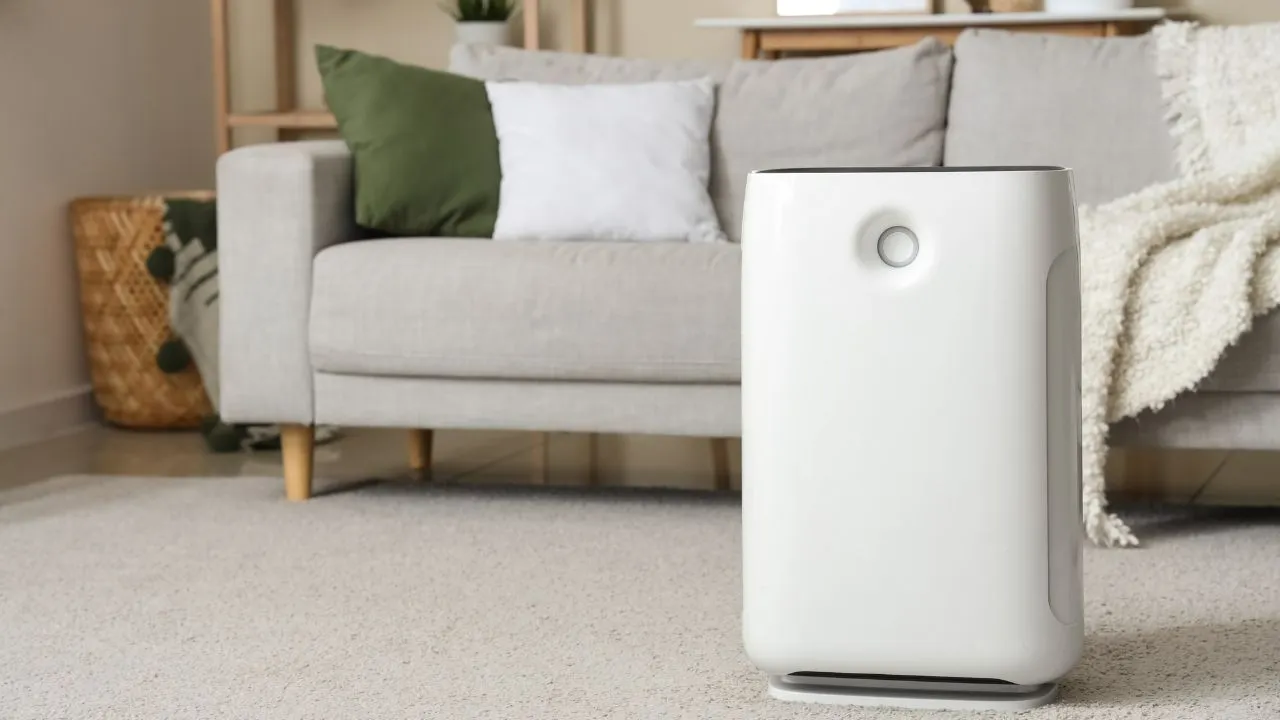
Clean air is invisible — but when your home breathes better, you feel it.
Welcome to your complete, friendly guide to choosing a HEPA + carbon air purifier in 2026.
This is written for real homes, real families, and anyone who simply wants to breathe cleaner, fresher air — without getting lost in technical jargon.
Why HEPA + Carbon Matters
HEPA filters trap fine particles such as dust, pollen, pet dander, mold spores, and smoke.
A “True HEPA” or H13/H14 filter removes about 99.97% of particles 0.3 microns and larger — meaning you’ll notice fewer allergens and visible dust.
But HEPA alone can’t handle odors, fumes, or gases from cleaning products, furniture, paint, or cooking.
That’s the job of activated carbon filters. The carbon’s porous structure absorbs volatile organic compounds (VOCs), chemicals, and smells.
When the two work together, they form the gold standard for clean indoor air — particles and odors handled in one system.
Just remember: carbon quality matters. Deep carbon beds with granular pellets perform far better than thin coated sheets.
The Metrics That Matter
Clean Air Delivery Rate (CADR)
CADR measures how much clean air your purifier can deliver each minute.
A higher CADR means faster purification.
As a rule of thumb, pick a unit with a smoke-CADR rating at least two-thirds of your room’s square footage.
Air Changes Per Hour (ACH)
ACH tells you how many times per hour all the air in your room passes through the filters.
If you live with allergies or city pollution, aim for 4–6 air changes each hour.
Room Size
Manufacturers often exaggerate room coverage, so choose a unit rated 20–30% larger than your actual space.
If you have high ceilings or open-plan rooms, you may need a more powerful model.
Noise & Efficiency
A purifier that’s too loud will end up switched off.
Look for one that runs below 50 dB on medium and under 30 dB in “sleep mode.”
Energy-efficient units let you keep them on all day without worrying about your power bill.
Filter Cost & Maintenance
Check how often you’ll need to replace filters — HEPA filters last 6–18 months, carbon filters 3–9 months.
Washable pre-filters help extend the life of both and reduce costs over time.
Real-Life Fit: Noise, Placement & Design
- Keep at least 10–20 cm of space around the unit for airflow.
- Don’t place it behind furniture or directly next to a wall.
- Put it where you spend the most time — living room, office, or bedroom.
- Run it in “sleep mode” at night to keep sound low.
- Choose a design that matches your interior style and is easy to move or open for cleaning.
Filters & Durability
The essential layers
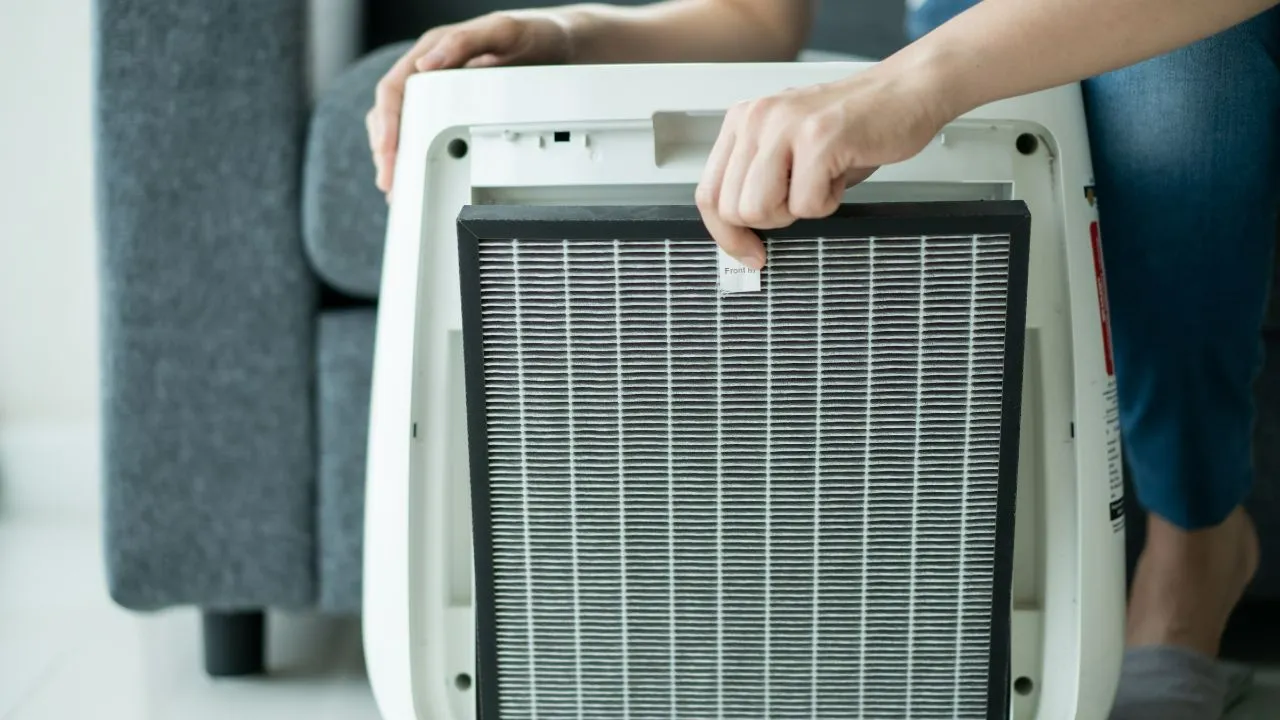
- Pre-filter – traps hair and dust.
- Activated carbon filter – absorbs odors and gases.
- True HEPA filter (H13 or H14) – removes fine particles and allergens.
Some purifiers add extras like UV lights or ionizers, but those are optional — focus on solid HEPA and carbon quality first.
Durability
Look for sealed construction, easy filter access, and a warranty of at least three years.
The longer the warranty, the better the manufacturer’s confidence in their product.
Features Worth Having
- Auto or sensor mode – adjusts speed based on air quality.
- App control or Wi-Fi – helpful if you want remote monitoring.
- Filter status indicator – prevents you from guessing when it’s time to replace.
- Night mode – dims lights and reduces fan noise.
- Sealed system design – ensures all air passes through the filters rather than leaking around them.
Avoid extras that add cost but little real benefit — like ozone or plasma modules.
Choosing for Your Home
If you live in a city or near traffic:
Choose a purifier with a strong activated carbon filter to remove fumes, smoke, and VOCs.
If you have allergies or asthma:
Prioritize high ACH and True HEPA filters. You’ll want the unit running most of the day.
If you want peace and quiet:
Select one with a “sleep mode” under 25 dB and long-life filters to minimize maintenance.
If your home is large:
Two medium purifiers can be more effective than one oversized model.
Best HEPA + Carbon Air Purifiers for 2026
If you’re looking for one air purifier that can handle both airborne particles and common household odors, a model that combines True HEPA filtration with activated carbon is one of the best investments you can make. This combination helps capture fine particles like dust, pollen, pet dander, and smoke while also reducing volatile organic compounds (VOCs), cooking smells, and other household odors.
While no air purifier can remove every indoor pollutant, choosing a model with both filtration technologies provides broader protection than a HEPA-only unit. It’s also important to select a purifier that’s appropriately sized for your room, as clean air delivery rate (CADR), noise levels, and ongoing filter costs all play a role in long-term performance.
Here are eight highly rated air purifiers that combine True HEPA and activated carbon filtration, making them excellent choices for creating a healthier indoor environment in 2026. Whether you’re shopping for a bedroom, home office, or large open-concept living area, there’s an option to fit a variety of spaces and budgets.
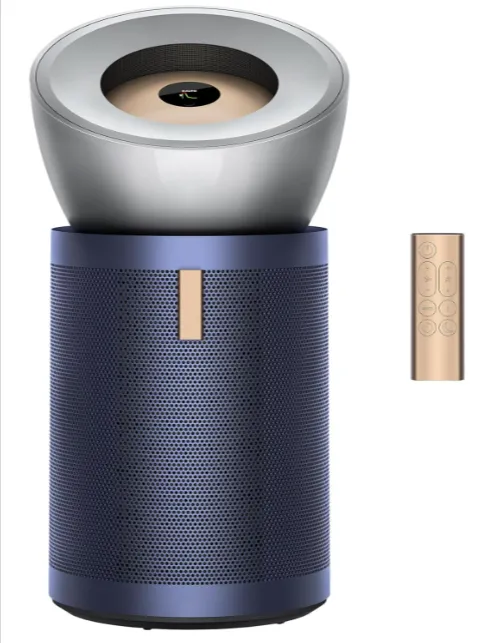
Dyson Purifier Big + Quiet Formaldehyde
A premium model designed for large rooms.
It removes ultrafine particles, odors, and formaldehyde, while remaining exceptionally quiet.
Why Healthy Home Upgrade Recommends It
We recommend the Dyson Purifier Big + Quiet Formaldehyde BP03 for large homes that need powerful air cleaning with minimal noise. Its fully sealed HEPA H13 filtration captures ultrafine particles, while the catalytic filter continuously destroys formaldehyde rather than simply trapping it. It’s an excellent choice for open-plan homes, renovations, or anyone concerned about indoor air quality.
Pros
- Excellent for large rooms
- HEPA H13 filtration
- Catalytic formaldehyde destruction
- Extremely quiet operation
- Smart app and voice control
- Premium build quality
Cons
- Premium price
- Replacement filters are expensive
- Larger footprint than standard purifiers
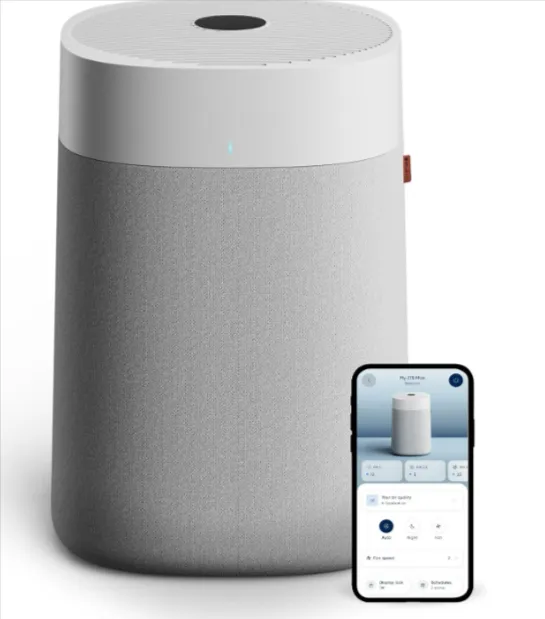
Blueair Blue Pure 211i Max
Clean Scandinavian design with high CADR performance.
Great for living areas up to about 80 m² and easy to operate with one-button simplicity.
Why Healthy Home Upgrade Recommends It
The Blueair Blue Pure 211i Max delivers outstanding airflow and efficient particle removal while remaining remarkably quiet. It’s ideal for large family rooms where high clean air delivery and simple operation are priorities.
Pros
- High CADR for large spaces
- Very quiet
- Energy efficient
- Easy filter replacement
- Washable fabric pre-filter
- Smart app support
Cons
- Limited activated carbon compared to premium models
- Replacement filters can be costly
- No formaldehyde-specific filter
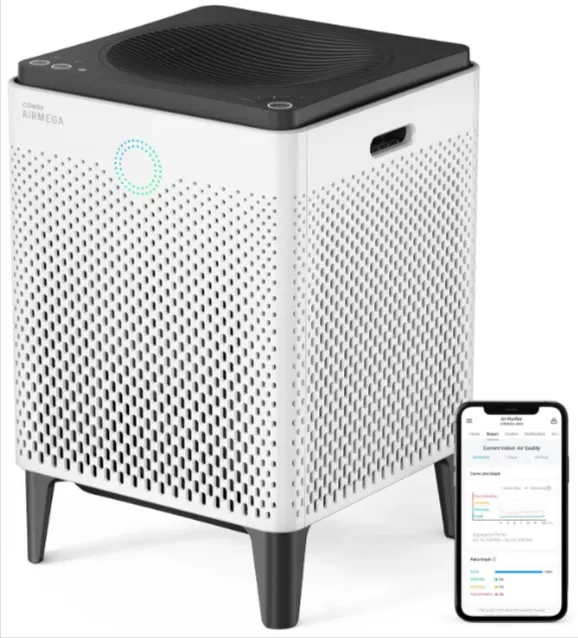
Coway Airmega 400S
Dual-intake filtration for faster cleaning, plus smart sensors that adjust speed automatically.
Trusted for long-term reliability and balanced noise levels.
Why Healthy Home Upgrade Recommends It
We like the Airmega 400S because it combines excellent filtration performance with intelligent automation. The dual air intake cleans large spaces quickly, while smart sensors automatically adjust fan speed based on indoor air quality.
Pros
- Excellent coverage for large homes
- Dual HEPA filtration
- Auto mode
- Wi-Fi connectivity
- Quiet at lower fan speeds
- Reliable long-term performance
Cons
- Large physical size
- Premium replacement filters
- Higher upfront investment
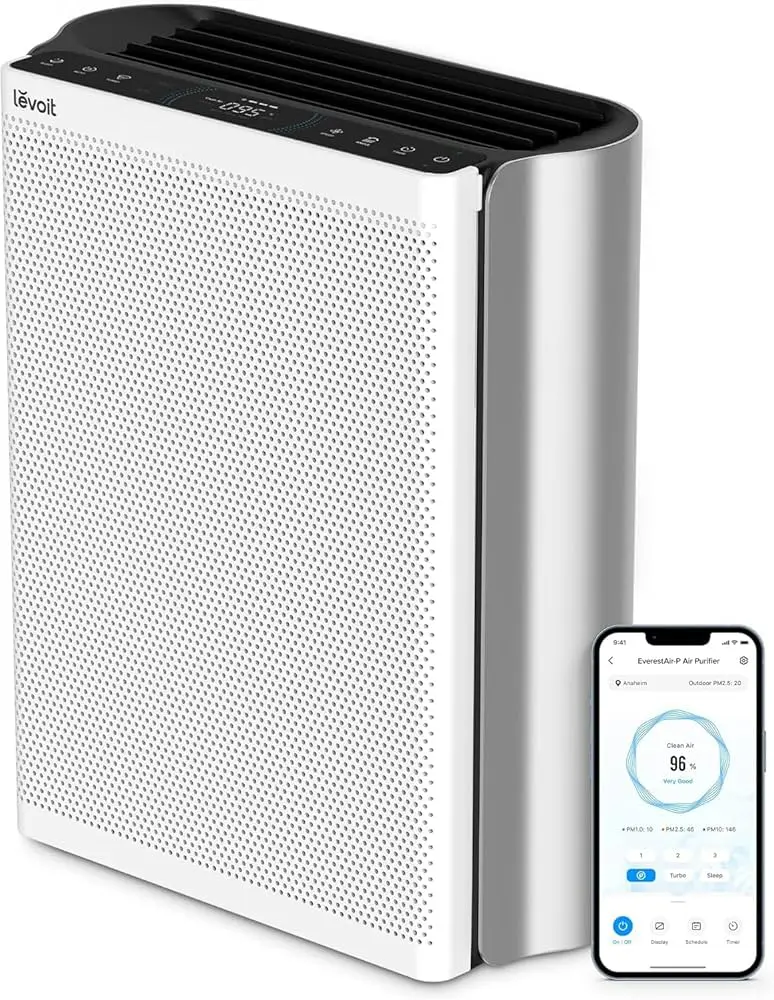
Levoit EverestAir
Powerful True HEPA H13 filter and thick activated carbon.
Smart app control and sleek design make it a favorite for modern homes.
Why Healthy Home Upgrade Recommends It
The LEVOIT EverestAir offers an excellent balance of filtration performance, smart features, and modern design. Its HEPA H13 filter and thick activated carbon layer make it especially useful for homes dealing with allergens, smoke, or pet odors.
Pros
- True HEPA H13 filter
- Thick activated carbon filter
- Excellent smart app
- Quiet Sleep Mode
- Modern design
- Easy setup
Cons
- Replacement filters are proprietary
- Larger than compact purifiers
- Premium pricing
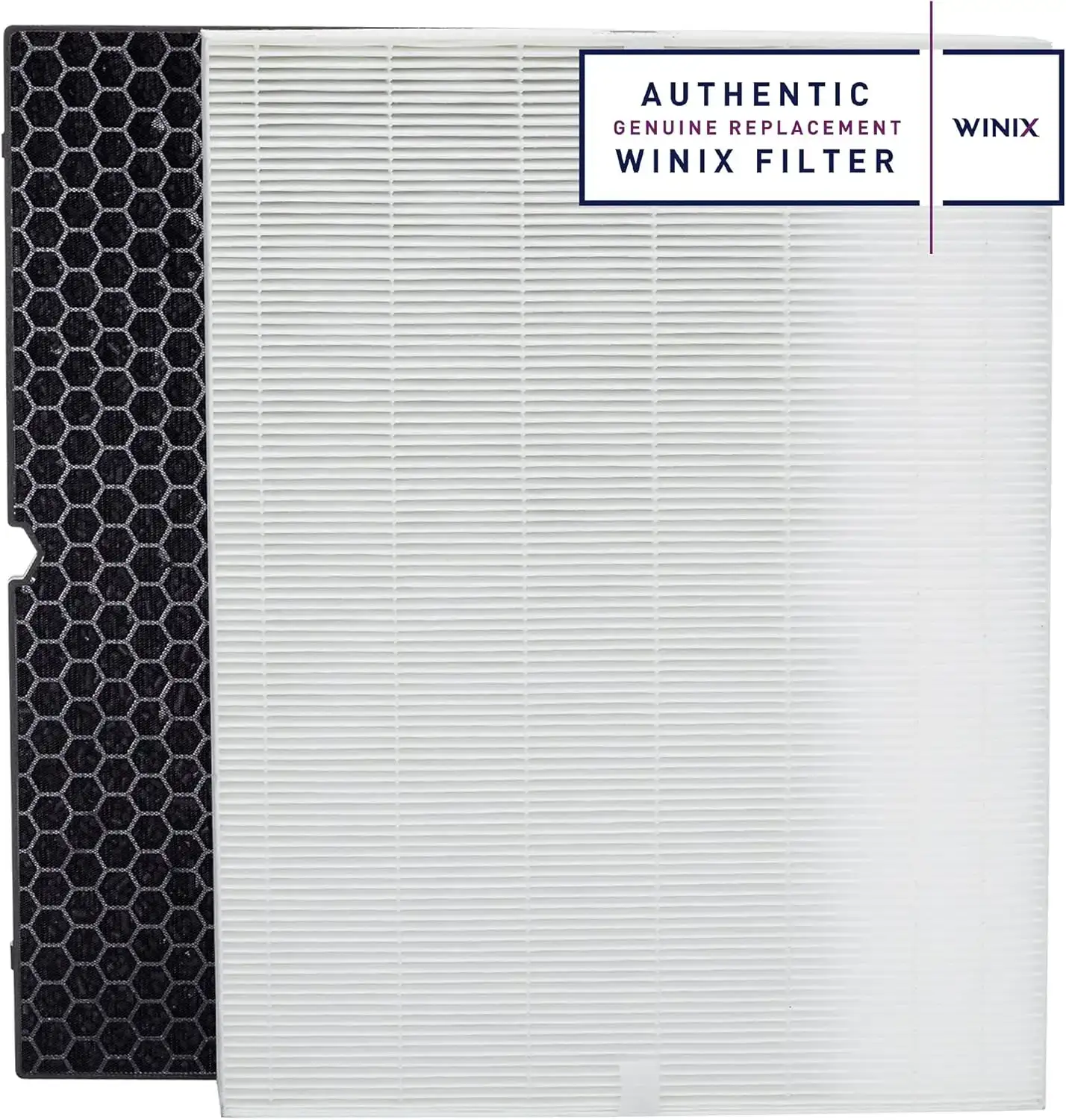
Winix 5500-2
A strong mid-range choice.
Washable pre-filter, genuine carbon filter, and auto mode make it practical for everyday use.
Why Healthy Home Upgrade Recommends It
The Winix 5500-2 remains one of the best-value air purifiers available. Its combination of a washable pre-filter, True HEPA filter, and activated carbon filter delivers dependable everyday performance without a premium price tag.
Pros
- Excellent value
- Washable pre-filter
- True HEPA filtration
- Activated carbon filter
- Auto mode
- Easy maintenance
Cons
- Better suited for medium rooms
- Older design
- App connectivity not available
Philips PureProtect 3200
A dependable European brand with quiet operation, night mode, and auto-adjusting sensor.
Well-suited for bedrooms and apartments.
Xiaomi Smart Air Purifier Elite
Compact, smart-controlled, and efficient.
Ideal for smaller rooms or offices, offering solid HEPA and carbon filtration.
Shark HP300
Simple digital display, good sensor response, and quick filter replacement.
An excellent “plug and play” option for families.
Daily Use & Care
- Run your purifier on auto or medium throughout the day.
- Increase speed during cooking or cleaning.
- Use sleep mode overnight.
- Vacuum or rinse pre-filters every 1–2 weeks.
- Replace filters as soon as odors return or the indicator warns you.
- After painting, renovations, or wildfires, run on high for several hours.
Common Mistakes to Avoid
- Assuming a higher price always means better filtration.
- Believing a “carbon-coated HEPA” equals a full carbon filter.
- Using one small purifier for multiple rooms.
- Ignoring filter replacement costs.
- Expecting a purifier to fix CO₂ or humidity issues.
- Using ionizers that may generate ozone.
- Waiting too long to change filters.
Quick Buyer Checklist
- Check CADR and ACH ratings match your room size.
- Choose True HEPA (H13 or H14).
- Ensure the purifier includes a deep activated-carbon filter.
- Verify noise levels — under 30 dB for bedrooms.
- Compare yearly filter costs.
- Look for sealed design and simple maintenance.
- Select brands with reliable parts and 3–5 year warranties.
Closing Thoughts
Indoor air quality quietly shapes how we feel — our sleep, focus, and even our immune system.
A good HEPA + carbon air purifier doesn’t just trap dust; it removes invisible pollutants that build up from daily life.
Whether you choose a premium Dyson or a budget-friendly Xiaomi, the goal is the same: breathe cleaner, calmer air and feel the difference every day.
If you start with one room, you’ll notice it — the stillness, the freshness, the way your lungs seem to relax.
That’s when you know your home finally breathes with you.
Follow us on social Facebook
Also know About:
Top Benefits of Using HEPA and Carbon Filters Together
Misconceptions About HEPA Filters — What They Really Do and Don’t
Beginner’s Guide: Smart Air Monitors and Purifiers for a Healthier Home