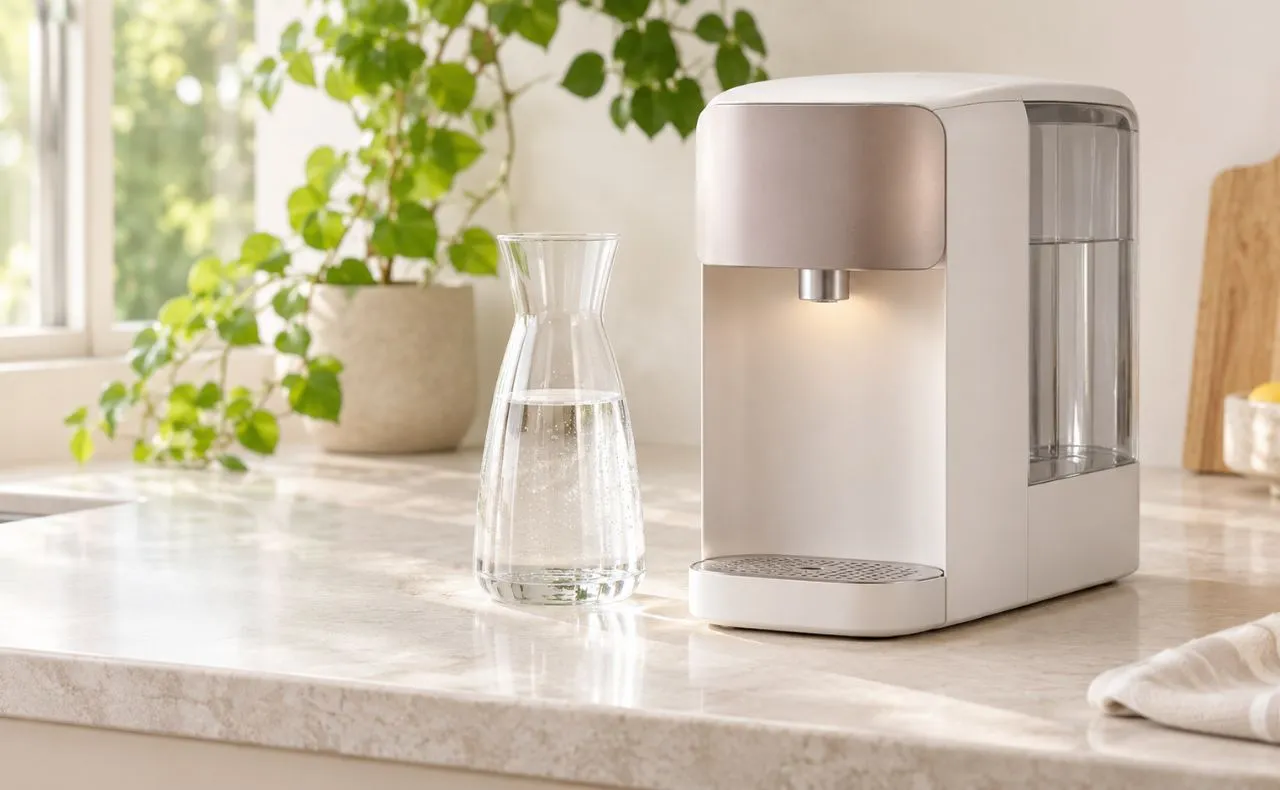
A countertop reverse osmosis system gives you RO-filtered drinking water without plumbing, drilling or a drain connection, so it works in any kitchen, including rentals.
AquaTru Classic is the clearest choice for certified RO performance. Waterdrop K19-SFK is a strong installation-free option if you want remineralization and a more efficient 3:1 pure-to-drain ratio. Bluevua RO100ROPOT suits buyers who prefer glass-carafe serving with remineralization. ZeroWater’s 40-Cup dispenser is the budget alternative when you want simpler filtration rather than reverse osmosis.
Start with what your water needs, then choose the appliance you’ll be comfortable refilling, cleaning, and maintaining.
Countertop filtration picks at a glance
These three options serve different needs. The first two are RO systems; ZeroWater is not.
| Product | Best for | Key certification or material | Main trade-off |
|---|---|---|---|
| AquaTru Classic | Renters prioritizing certified RO performance | IAPMO certified to NSF/ANSI 42, 53, 58 and 401, plus NSF P473 | Requires counter space and manual tank refilling |
| Waterdrop K19-SFK | Installation-free RO with remineralization | NSF/ANSI 58 certification; 3:1 pure-to-drain ratio | Requires electricity and manual tank refilling |
| Bluevua RO100ROPOT | Glass-carafe serving and remineralization | Glass serving carafe; NSF/ANSI/CAN 372 lead-content certification | Mineral cartridges add maintenance |
| ZeroWater 40-Cup Ready-Pour Dispenser | Budget buyers who do not need reverse osmosis | NSF/ANSI 53 certification for lead and chromium reduction | Cartridge life depends strongly on incoming water quality |
Choose AquaTru when contaminant-specific filtration is your main reason for buying. Bluevua’s glass serving container and mineral-filter options are useful conveniences, but certification numbers have different meanings.
For taste alone, RO may be more equipment than you need. Our comparison of RO and pitcher filtration helps separate those needs.
Availability, electrical voltage, and replacement-filter distribution vary by country.
Why Countertop RO Is So Popular Right Now
Reverse osmosis pushes water through a membrane with pores far smaller than most contaminants, which is why it is one of the most effective home methods for reducing PFAS (‘forever chemicals’), lead, nitrates and many microplastic particles. Under-sink RO has done this for years, but it needs plumbing and a drain. A countertop RO system gives you the same type of filtration in a plug-in appliance you fill by hand, with no installation and nothing to undo when you move. Look for certification to NSF/ANSI 58 for RO performance, and NSF/ANSI 53 or P473 for specific claims such as lead and PFAS.
AquaTru Classic: Best Countertop Reverse Osmosis System Overall
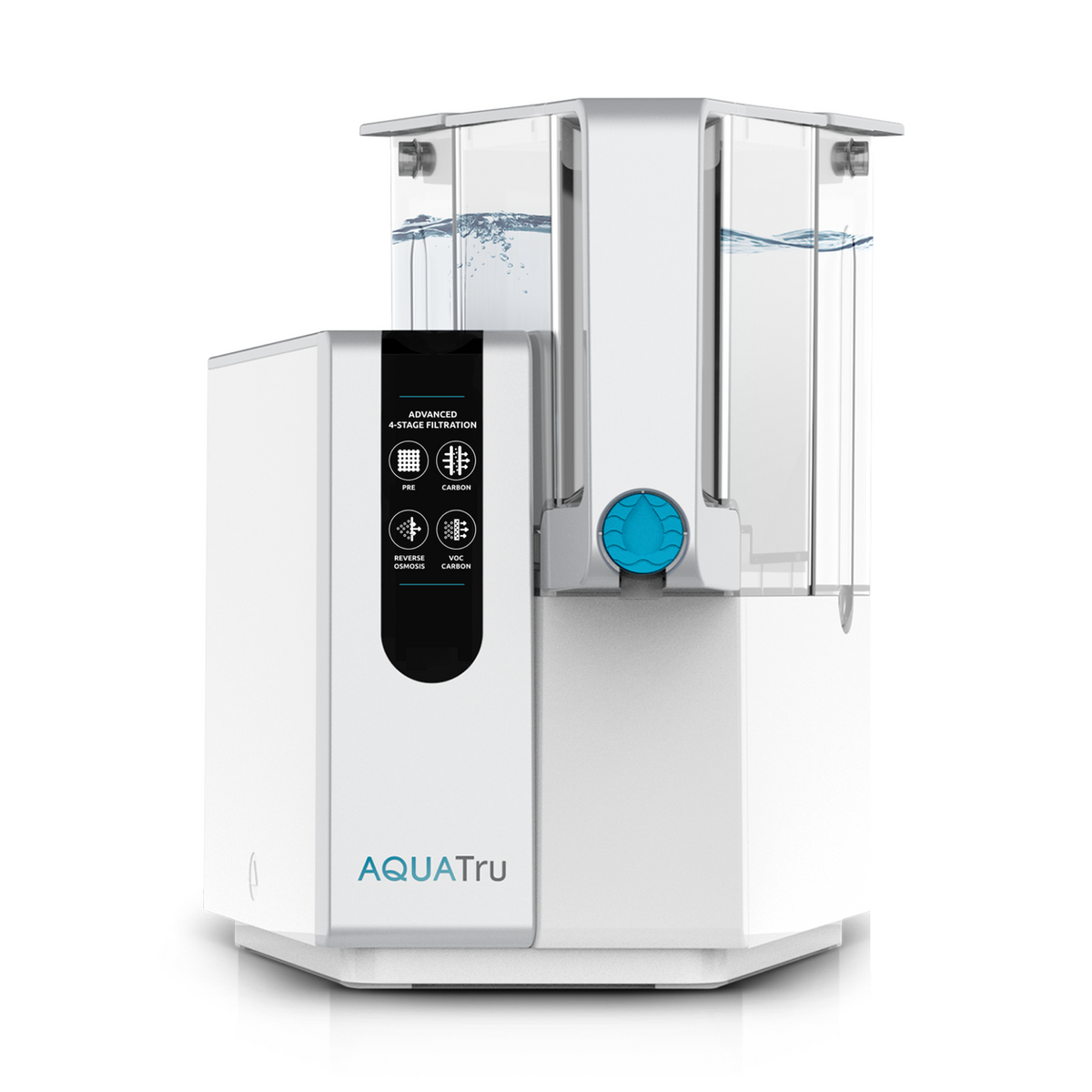
AquaTru Classic is a premium countertop option for renters who want clear filtration credentials without plumbing work. Its four stages combine mechanical prefiltration, carbon, an RO membrane, and a final VOC carbon filter.
AquaTru lists reduction of 84 contaminants, including lead and PFAS. Its independent certification information identifies IAPMO certification to NSF/ANSI 42, 53, 58, 401 and P473.
Why it earns the first recommendation
Choose Classic when you want countertop reverse osmosis for more than improved taste. Its certification covers several treatment standards rather than relying on a low TDS reading.
NSF/ANSI 42 addresses aesthetic concerns such as chlorine taste and odor. NSF/ANSI 53 addresses listed health-related contaminants, while 58 covers RO systems. The specific reduction claims still matter.
This also brings a material-safety angle: NSF/ANSI 58 includes requirements for materials and structural integrity. That is useful assurance for an appliance with prolonged drinking-water contact, without implying that every wetted part is plastic-free.
The maintenance commitment
AquaTru’s manufacturer-published schedule gives the combined pre-carbon cartridge six months, the RO membrane two years, and the final VOC cartridge one year. Rated water volumes can trigger replacement earlier.
That means maintenance involves three replacement schedules, not one annual filter purchase. Keep those intervals in your household calendar rather than relying on taste.
Skip Classic if losing a section of counter would make everyday cooking frustrating. Its main compromise is the refill-and-empty routine.
Check current AquaTru Classic pricing if certified RO performance is your priority.
Waterdrop K19: Best Countertop RO with Remineralization
The Waterdrop K19-SFK is a practical choice for households that want reverse osmosis filtration without plumbing installation. Its seven-stage system adds calcium, magnesium, potassium and sodium after filtration, helping improve taste and raise the water’s pH.

Waterdrop lists the system as certified to NSF/ANSI 58 and says it reduces contaminants including lead, fluoride, arsenic, nitrate and chromium VI. Its 3:1 pure-to-drain ratio means it produces about three cups of filtered water for every cup sent to drain. The countertop design includes a 170-ounce feed tank, touch controls and a filter rated for up to 12 months. Choose the K19-HG instead if instant hot water is a priority.
Check the latest price of Waterdrop K19
Bluevua RO100ROPOT: Best Countertop RO with a Glass Carafe
Bluevua ROPOT is a mid-range countertop RO option with a glass serving carafe. Choose it when you prefer storing and pouring finished water in glass.
Bluevua also offers replacement mineral filters for the ROPOT line. These add a finishing stage after RO, which can help if you find low-mineral water flat. Its Wellness Filter Set includes two mineral filters alongside replacement filtration cartridges.

The ROPOT family’s NSF/ANSI/CAN 372 certification concerns lead content in materials. That standard addresses a different question from NSF/ANSI 58, which covers RO performance.
Skip ROPOT if your buying decision centers on AquaTru’s contaminant-specific certification package. Bluevua’s main appeal here is the serving format and mineral-filter option.
Explore the Bluevua countertop range for the RO100ROPOT’s glass-carafe setup.
Availability: Available in the US only through Bluevua’s official store.
Bluevua’s official shipping policy says it does not currently support international shipping. European import listings exist, but they may have voltage, warranty, customs, and replacement-filter limitations, so I would not link to them.
How we chose and other good options
How we chose
We prioritize model-specific certification, drinking-water contact materials, replacement-filter access, and a manageable daily routine. The comparison separates RO performance from taste improvement and material certifications, because those labels answer different questions.
For renters, installation is part of the decision. A refillable countertop appliance travels with you when you move, while an under-sink system needs a water connection, drain connection, and suitable dispensing arrangement.
The number of stages isn’t a useful ranking by itself. Four stages with relevant certified claims can be a better fit than a longer filter chain built around features you won’t use.
NSF’s water-treatment standards explain the distinction. Our guide to reading NSF certification labels connects those standards to buying decisions.
Other good options
Waterdrop K19-SFK is worth considering if you want an installation-free countertop reverse osmosis system with remineralization. Its seven-stage filtration adds calcium, magnesium, potassium and sodium after filtration to improve taste and raise pH. Waterdrop lists NSF/ANSI 58 certification and a 3:1 pure-to-drain ratio, meaning it produces about three cups of purified water for every cup sent to drain. The 170-ounce feed tank, touch controls and 12-month filter life suit everyday household use. Choose the K19-HG instead if instant hot water matters more. The European K19-HG combines remineralization and instant heating and is certified to NSF/ANSI 58 and 372.
Choose ZeroWater’s 40-Cup Ready-Pour dispenser when you want a roomy, electricity-free dispenser at a budget price. Its five-stage filtration includes activated carbon and ion exchange rather than an RO membrane. It reduces dissolved solids and carries NSF/ANSI 53 certification for lead and chromium reduction. Those are specific claims, not a promise to handle every drinking-water concern.The honest trade-off is replacement frequency. Water with more dissolved solids uses the ion-exchange cartridge faster, so a low purchase price doesn’t guarantee low upkeep.
Skip it when you need an RO system with a broader certified reduction package. If lead is your main concern, our guide to lead-reducing water filters compares that need more directly. Choose the ZeroWater 40-Cup for simple dispensing rather than an RO upgrade.
AquaTru Carafe is worth considering when a smaller serving format suits your kitchen better; Classic remains the main pick here for its larger household setup.
- Availability: Available in Europe at AquaTru Europe. UK customers can order through AquaTru UK. AquaTru has an official European store based in the Netherlands and ships throughout the EU.
Waterdrop G3P800 suits households ready for an installed under-sink RO system; it isn’t a substitute for a refillable, no-plumbing countertop appliance.
The Carafe makes sense when size matters most. The Waterdrop changes the installation category entirely.
If your only complaint is chlorine taste, a certified carbon filter can be a simpler purchase. Our home filtration setup comparison explains when a pitcher, under-sink filter, or broader system fits.
Plan for refills, wastewater, and ongoing cost
Allow space for the whole routine
Refillable countertop RO systems collect finished water in a container rather than an under-sink pressurized storage tank. You fill the feed tank, run a treatment cycle, and discard the concentrated reject water.
The membrane, maintenance, incoming water, and certified claims determine performance.
Leave room above the appliance to remove its tank. You also need space to pour finished water and clean the containers. A machine that fits beneath a cupboard can still be awkward to refill there.
For morning coffee, prepare water before you need it. A separate clean carafe makes the wait less disruptive.
Empty reject water according to the appliance instructions. Repeatedly topping it up concentrates dissolved substances in the feed tank.
Compare ownership cost, not just cartridge prices
A pure-to-drain ratio describes water produced versus water rejected. For example, 2:1 means two volumes of finished water for one volume of reject water. Higher production relative to reject water means less waste.
Annual cost includes replacement cartridges, water used, electricity, and part of the purchase cost. Under-sink RO adds installation; bottled water adds repeat purchases and transport.
For cost per gallon, divide that annual total by the gallons you drink and cook with. In liters, use the same calculation.
Long rated filter life matters only alongside replacement intervals. Low-use households may reach a time limit before a volume limit.
Frequently asked questions
Can you install countertop RO without drilling?
Yes. Refillable appliances such as AquaTru Classic and Bluevua ROPOT don’t require a dedicated faucet or permanent sink connection. They need electricity and manual filling.
Some products described as countertop RO connect to a faucet, so the refillable design is the relevant distinction for renters. You can take that appliance with you without undoing plumbing work.
Does zero TDS mean your water is safe?
No. TDS measures dissolved solids, including minerals such as calcium and magnesium. It doesn’t identify individual contaminants or show whether every health concern has been addressed.
A TDS reading can help track membrane or cartridge performance. It cannot replace contaminant-specific testing or certification. NSF/ANSI 58 requirements include TDS reduction, while other reduction claims are assessed separately.
Do you need remineralization after RO?
It’s optional. Remineralization can add calcium and magnesium and improve taste, but it isn’t your main strategy for meeting nutritional needs.
Food supplies most dietary minerals. Remineralization also doesn’t automatically restore fluoride removed during RO treatment.
Choose a mineral stage because you prefer the finished water, not because alkaline-water language promises extra health benefits.
Does countertop reverse osmosis remove PFAS?
A certified RO system can reduce PFAS significantly. Check the exact model’s certification: AquaTru Classic is certified for PFOA/PFOS reduction under NSF/ANSI P473. A low TDS reading alone doesn’t prove PFAS removal.
Does reverse osmosis remove microplastics?
RO membranes have pores much smaller than microplastic particles, so RO is one of the most effective home methods for reducing them. Few products are certified for microplastics specifically, so check the manufacturer’s test data.
How much water does a countertop RO system waste?
“Less than older under-sink systems. Look at the pure-to-drain ratio: a 3:1 ratio means three glasses of filtered water for every one glass of reject water. You can reuse reject water for cleaning or plants.”
Choose the system you’ll maintain comfortably
AquaTru Classic is the strongest starting point when certified RO performance drives your decision. Bluevua ROPOT puts more emphasis on glass serving and mineral-adjusted taste. ZeroWater offers a simpler budget route without RO.
Choose the filtration category first. Then make room for refilling, cleaning, and replacements.
If AquaTru’s certified reduction package matches your water needs, start with Classic. If taste alone is the issue, keep the setup simpler rather than paying for treatment you don’t need.