Whole-House Filter vs Under-Sink vs Pitcher: Which Setup Is Safest for Your Family?
When you start looking at safer drinking water for your home, the choices can feel confusing fast.
Should you install a whole-house water filter?
Is an under-sink filter enough?
Can a simple pitcher filter protect your family?
And what if you have kids, pets, old plumbing, hard water, lead concerns, PFAS worries, or well water?
The honest answer is that there is no single perfect water filter for every home. The safest setup depends on your water source, your pipes, your budget, your home layout, and what you are trying to remove.
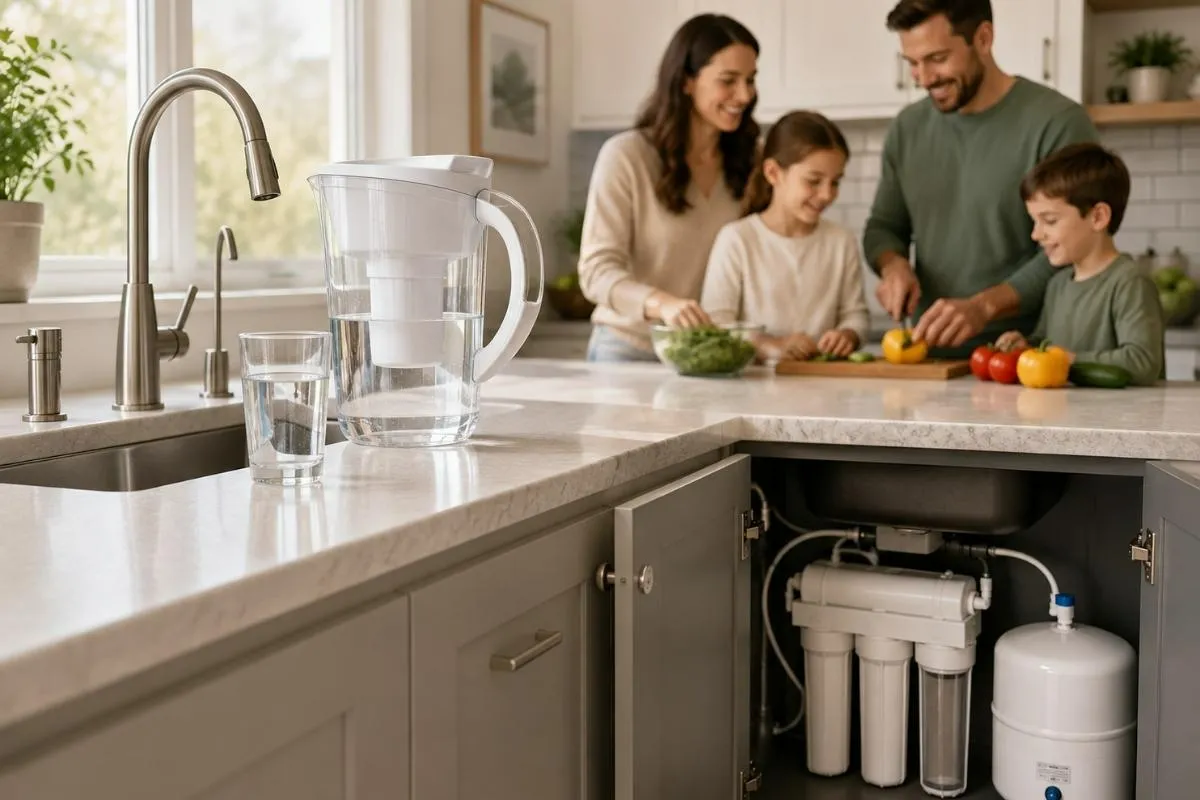
A whole-house filter protects water before it spreads through the home. An under-sink filter focuses on the water you drink and cook with. A pitcher filter is the easiest entry point, but it is usually the most limited option.
For many families, the best answer is not choosing one system. It is layering the right systems in the right places.
Author Note
We have just sold our home in Denmark and are now preparing to rent a home for the next few years. That means this question is not theoretical for me.
I will also need to decide what kind of water filter setup makes sense in a rental home, where a full permanent whole-house installation may not be realistic right away. As I compare the options and eventually choose a system for our own home, I plan to update this guide with what I selected, why I chose it, and what I learned from using it in real life.
For now, this guide is written from that exact perspective: what is safest, what is realistic, and what makes sense when you want cleaner water without overbuying the wrong system.
Quick Answer
For most families, an under-sink filter is the best first upgrade because it targets the water used for drinking, cooking, coffee, tea, baby formula, and pet bowls.
A whole-house filter makes sense if you want cleaner water at every tap, especially for chlorine, sediment, hard water issues, or broader whole-home protection.
A pitcher filter is useful for renters, travel, backup, or very small budgets, but it should not be treated as the strongest long-term solution for serious contamination concerns.
If you are worried about lead, PFAS, VOCs, bacteria, or well water, do not guess. Test your water first, then choose a filter certified for the specific contaminants you need to reduce.
At a Glance: Whole-House vs Under-Sink vs Pitcher Filters
| Setup | Best for | Installation | Main strength | Main limitation | Best user |
| Whole-house filter | Whole-home water, showers, laundry, sediment, chlorine, hard water issues | Professional or advanced DIY | Treats water before it reaches taps, showers, and appliances | Higher cost, may not target every drinking-water contaminant | Homeowners, families staying long term, homes with chlorine, sediment, or hard water |
| Under-sink filter | Drinking water, cooking, baby formula, coffee, tea, pet bowls | Moderate DIY or plumber | Strong targeted filtration at the kitchen tap | Usually protects only one faucet | Families, renters with permission, older homes, lead or PFAS concerns |
| Pitcher filter | Small budgets, renters, backup, travel, temporary housing | None | Easy, portable, low upfront cost | Small capacity, slower flow, more hygiene maintenance | Renters, students, temporary homes, backup use |
For most families, I would start with the water that goes into the body first: drinking and cooking water. That usually makes an under-sink or countertop drinking-water system the most practical first step, especially if a full whole-house installation is not realistic yet.
Also in This Article
- What each water filter setup actually does
- When a whole-house filter makes sense
- When an under-sink filter is the smarter choice
- When a pitcher filter is enough
- Which setup is best for babies, families, renters, and older homes
- How to layer filters without overbuying
- What certifications and materials to look for before you buy
Whole-House vs Under-Sink vs Pitcher: The Simple Difference
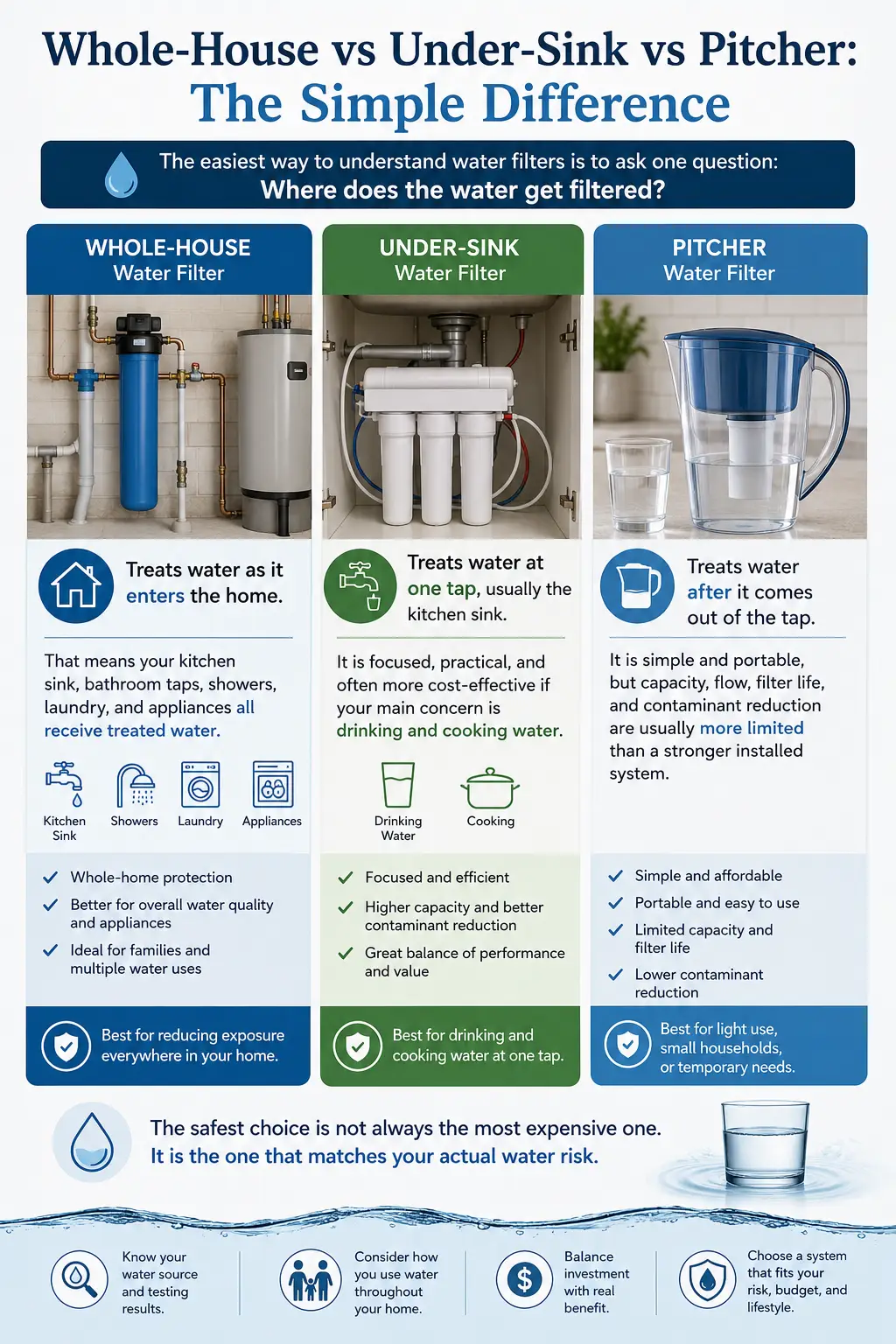
The easiest way to understand water filters is to ask one question:
Where does the water get filtered?
A whole-house water filter treats water as it enters the home. That means your kitchen sink, bathroom taps, showers, laundry, and appliances all receive treated water.
An under-sink filter treats water at one tap, usually the kitchen sink. It is focused, practical, and often more cost-effective if your main concern is drinking and cooking water.
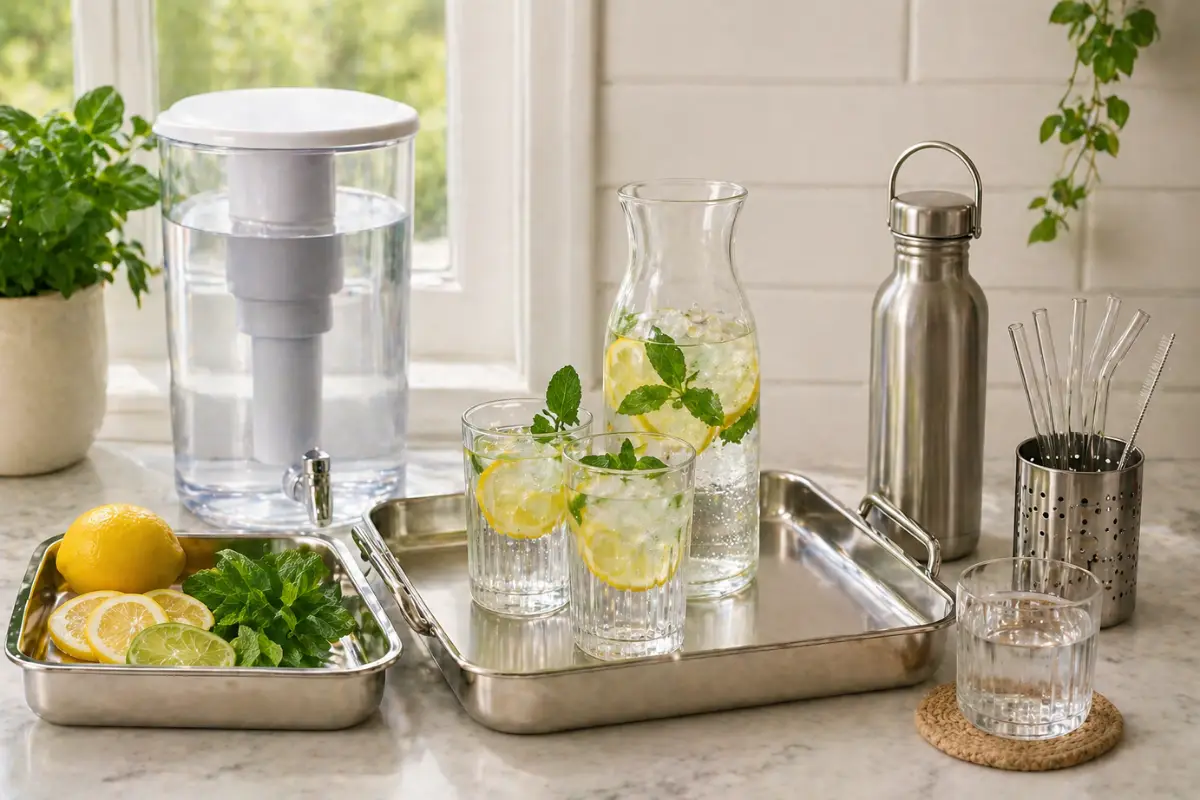
A pitcher filter treats water after it comes out of the tap. It is simple and portable, but capacity, flow, filter life, and contaminant reduction are usually more limited than a stronger installed system.
The safest choice is not always the most expensive one. It is the one that matches your actual water risk.
What a Whole-House Filter Does Best
A whole-house filter is installed where water enters the home. This is why it is often called a point-of-entry system.
Its biggest strength is coverage.
Instead of only filtering the water you drink, it can improve the water you shower in, wash clothes with, clean with, and send through appliances.
A whole-house filter can be especially useful if your home has:
- Noticeable chlorine smell
- Sediment
- Hard water issues
- Staining
- Old plumbing
- Multiple bathrooms
- Kids using different taps
- Sensitive skin
- A desire to reduce contaminants beyond the kitchen
For families, the emotional appeal is obvious. You do not have to think about which tap is safer. The whole home feels more protected.
But there is one important warning.
A whole-house filter is not automatically the best solution for every contaminant. Some whole-house systems are excellent for sediment, chlorine, and taste. Others are designed for more advanced contaminant reduction. You must match the system to the water problem.
If your biggest concern is lead at the kitchen tap, a certified under-sink system may be more targeted. If your concern is whole-home chlorine exposure, a whole-house carbon system may be more relevant.
This is why I like to think of whole-house filtration as a home environment upgrade, not always the first drinking-water upgrade.
For a product-focused guide, see our full guide to the best whole-house water filter systems.
If whole-home coverage is your priority, our guide to Best Whole House Water Filter System breaks down the safest options for chlorine, sediment, hard water, and long-term family use.
What an Under-Sink Filter Does Best
An under-sink filter is often the smartest first serious upgrade for families.
Why?
Because most of your direct water exposure comes from drinking and cooking.
That includes:
- Plain drinking water
- Tea and coffee
- Soups
- Rice
- Pasta
- Vegetables
- Baby formula
- Pet water
- Smoothies
- Homemade broths
If your budget is limited, it often makes more sense to filter the water going into your body before worrying about every shower and laundry load.
Under-sink filters are also easier to match to specific concerns. You can choose systems certified for lead, chlorine, VOCs, PFAS, or reverse osmosis reduction, depending on the model.
For families with older plumbing, children, or lead concerns, certification details matter. EPA and CDC state that there is no known safe level of lead in a child’s blood, which is why lead in drinking water should be treated seriously.
If lead is your concern, do not just buy a filter that “improves taste.” Choose one certified for lead reduction.
For product comparisons, our best under-sink water filter guide is the natural next step.
If your focus is cleaner water for drinking, cooking, and everyday kitchen use, see our guide to the Best Under-Sink Water Filter for certified options that work well for families.
What a Pitcher Filter Does Best
A pitcher filter is not useless. It has a place.
In fact, for many people, it is the first step away from unfiltered tap water.
Pitcher filters are good for:
- Renters
- Students
- Travel
- Temporary housing
- Small apartments
- Backup water
- People who cannot install anything
- Families starting on a very small budget
The problem is that a pitcher filter can create a false sense of security.
Some pitchers are mainly designed to improve taste and reduce chlorine. Others may reduce certain metals or contaminants, depending on the filter and certification. But not all pitchers are equal, and many people never check what the filter is actually certified to reduce.
A pitcher can be part of a low-toxin home, but it should not be treated as a guaranteed solution for serious contamination unless the product is clearly certified for that contaminant.
For example, if you are worried about lead, PFAS, bacteria, or well water contamination, a basic pitcher may not be enough.
This is also why I see pitcher filters as useful, but limited. They are often better than doing nothing, but they should not be confused with a carefully chosen filtration strategy.
The Standing-Water Problem with Pitcher Filters
One thing I do not love about pitcher filters is the standing-water issue.
With a pitcher, filtered water often sits in a reservoir for hours or even days. If the pitcher is not cleaned regularly, if the filter is overdue for replacement, or if the water is left warm on the counter, the system can become less hygienic than people realize.
This is not a reason to panic. It is simply a reason to use pitcher filters properly.
If you use a pitcher filter:
- Keep it clean
- Change the filter on schedule
- Store it in the refrigerator when possible
- Do not leave filtered water sitting for too long
- Wash the reservoir regularly
- Replace cracked, cloudy, or old plastic parts
This is one reason I see pitcher filters as a useful entry-level or backup option, but not always the strongest long-term solution for a family that uses a lot of water every day.
Which Setup Is Safest for Babies and Young Children?
For babies and young children, I would prioritize the water used for drinking, formula, food prep, and cooking.
That usually means starting with a strong under-sink filter or reverse osmosis system at the kitchen tap.
Why?
Because a baby’s direct water exposure is concentrated. Formula, purees, bottles, oatmeal, soups, and rinsed foods all come through the kitchen.
If you live in an older home, have lead service line concerns, or do not know what is in your water, testing matters before choosing a filter. Lead is especially important because children are more vulnerable to its effects.
A whole-house filter can still be useful for bathing, skin comfort, and overall home water quality. But for baby safety, the kitchen tap should usually be the first priority.
Best first step:
Test your water.
Then choose a certified under-sink system for the contaminants found.
Then consider whole-house filtration if your budget and home setup allow it.
Which Setup Is Best for Older Homes?
Older homes can have extra water concerns because plumbing materials, solder, fixtures, and service lines may be part of the exposure picture.
For older homes, I would think in layers.
First, test the water.
Second, protect the kitchen tap.
Third, consider whole-house filtration if the home has chlorine, sediment, rust, hard water, or aging pipes.
An under-sink filter is often the most urgent first move because it protects the water you drink and cook with. But a whole-house sediment or carbon system may also help protect appliances, fixtures, showers, and general water quality.
If lead is a concern, our best water filter for lead removal guide should be your next step.
If lead is one of your biggest concerns, especially in older homes, our Best Water Filter for Lead Removal guide compares filters specifically chosen for targeted lead reduction.
Which Setup Is Best for Renters?
Renters usually need solutions that are removable, affordable, and landlord-friendly.
This is especially relevant to me right now because we are moving from owning a home in Denmark to renting for the next few years. In a rental home, I may not be able to install a permanent whole-house system immediately, even if I would love the idea of treating all the water coming into the house.
The best renter-friendly options are usually:
- Pitcher filter
- Countertop filter
- Faucet-mounted filter
- Under-sink filter, if allowed
- Portable gravity filter
A renter may not be able to install a whole-house system. That is why a pitcher or countertop system can be a realistic starting point.
But again, the key question is certification.
If the filter only improves taste, it may not solve the real problem. If you are worried about lead, PFAS, or VOCs, look for specific reduction claims and certifications.
A Berkey-style countertop system can also be part of this conversation, especially for renters, backup water, and off-grid situations. This is where our Berkey water filter review is a useful next read.
For my own rental situation, I will likely think in this order:
First, what protects drinking and cooking water best?
Second, what can be installed without permanent changes?
Third, what can come with us if we move again?
Fourth, what is worth upgrading later if we buy or settle long term?
If you prefer a portable countertop option, our Berkey Water Filter Review looks at whether this popular gravity-fed system makes sense for renters, backup water, and everyday home use.
Which Setup Is Best for Well Water?
Well water is different.
If your home uses private well water, do not choose a filter based only on taste or general internet advice. Test first.
Well water problems can include bacteria, nitrates, arsenic, iron, manganese, hardness, sulfur odor, pesticides, or other local contaminants.
For well water, a pitcher filter is rarely the full answer.
A more realistic setup may include:
- Sediment pre-filter
- Whole-house treatment
- UV treatment if bacteria is a concern
- Under-sink reverse osmosis for drinking water
- Periodic lab testing
For well water families, the safest setup is usually test-based and layered.
For homes needing broader contaminant reduction beyond standard carbon filtration, our guide to Best Whole House Reverse Osmosis Systems explains when a full-home RO setup may be worth considering.
Whole-House Filter vs Under-Sink Filter
If you are choosing between whole-house and under-sink, ask this:
Do I want to improve all water in the house, or do I mainly want safer drinking and cooking water?
Choose a whole-house filter if:
- You own the home
- You want every tap treated
- Chlorine smell bothers you
- Showers irritate your skin
- Your appliances suffer from sediment or hard water
- You want a whole-home upgrade
- Your budget allows installation
Choose an under-sink filter if:
- You want the most targeted drinking water upgrade
- You cook a lot
- You have kids
- You make baby formula
- You are worried about lead
- You want a lower-cost first step
- You want strong filtration at one tap
For many families, the ideal setup is both:
Whole-house filtration for general home water, plus an under-sink drinking water system for deeper filtration at the kitchen tap.
But if you are renting, moving soon, or trying to avoid permanent installation, an under-sink, countertop, or gravity-fed option may be the smarter first move.
Under-Sink Filter vs Pitcher Filter
This is usually a question of convenience, cost, and seriousness.
A pitcher filter is easier.
An under-sink filter is stronger and more practical long term.
Choose a pitcher if:
- You rent
- You need a temporary solution
- You cannot install anything
- You are testing the habit of filtered water
- You need backup
Choose under-sink if:
- You use filtered water daily
- You cook at home
- You want better flow
- You want less refilling
- You want a more permanent solution
- You need stronger contaminant reduction
If your family drinks a lot of water, a pitcher can become annoying fast. Refilling, filter changes, slow flow, and small capacity can turn it into a short-term solution.
That does not make pitchers bad. It just means they should be matched to the right situation.
Still deciding between filtering the whole home or just your kitchen tap? Our Whole House RO vs Point-of-Use RO guide helps compare both setups side by side.
Pitcher Filter vs Whole-House Filter
This is the biggest gap.
A pitcher filter treats a small amount of water after it leaves the tap.
A whole-house system treats water before it enters your home’s plumbing network.
A pitcher is a starting point.
A whole-house filter is infrastructure.
That does not mean every family needs a whole-house system immediately. But it does mean they solve very different problems.
A pitcher helps with drinking water convenience.
A whole-house system helps with the home environment.
If you rent, a pitcher or countertop filter may be the practical option. If you own your home and want broad water improvement across showers, taps, laundry, and appliances, a whole-house system may make more sense.
The Best Setup for Most Families
For most families, I would build in this order.
Step 1: Test Your Water
Before buying anything expensive, find out what you are actually dealing with.
City water and well water are not the same. Old pipes and newer plumbing are not the same. A hard water problem and a lead problem are not the same.
Testing helps you avoid two mistakes:
Buying too little protection.
Buying an expensive system that does not solve your actual problem.
For many families, the smartest approach is layering protection, and our guide to Layered Water Filtration explains how whole-home and point-of-use systems can work together without overbuying.
Step 2: Protect the Kitchen Tap First
Start with the water you drink and cook with.
For most families, that means a certified under-sink filter or under-sink reverse osmosis system.
This is also the approach I am considering for our own next home. Because we will be renting for a while, I am looking at what gives the strongest protection for drinking and cooking water first, before considering anything more permanent.
Step 3: Add Whole-House Filtration If Needed
Once drinking water is protected, consider whether you also need whole-home filtration for chlorine, sediment, hard water, skin, laundry, showers, or appliances.
A whole-house system is especially appealing if you own the home or plan to stay there long term.
Step 4: Use a Pitcher as Backup, Not the Whole Plan
A pitcher is useful, but it should not be the only plan if you have serious contaminant concerns.
It can still be helpful for:
- Guest rooms
- Travel
- Temporary housing
- Backup water
- Small rental kitchens
- Starting before you choose a bigger system
And before investing in a full-home reverse osmosis system, it helps to read Do You Really Need Whole-House RO? to see when it makes sense and when a simpler setup may be enough.
What Certifications Should You Look For?
The exact certification depends on the contaminant.
Here are some of the most common standards you may see when comparing water filters.
NSF/ANSI 42: Often connected to aesthetic effects such as chlorine taste and odor.
NSF/ANSI 53: Used for certain health-related contaminant reduction claims, depending on the specific product claim.
NSF/ANSI 58: Used for reverse osmosis drinking water treatment systems.
NSF/ANSI 401: Used for certain emerging compounds and incidental contaminants.
NSF/ANSI 372: Used for lead content in plumbing-related products.
Do not just look for the letters “NSF” on a product page. Check what the product is certified for.
A filter certified for chlorine taste and odor is not automatically certified for lead, PFAS, bacteria, nitrates, or VOCs.
That is one of the biggest mistakes people make when buying water filters.
Budget matters too, and our Whole House Water Filter Installation Cost guide walks through typical price ranges before you commit to a full-home setup.
The Material Side Most Buyers Miss
Water filtration is not only about what the filter removes. It is also about what the water touches after it has been filtered.
This is one of the places where I think many buyers overlook the Zero Toxic Load side of water filters.
A filter can reduce chlorine, lead, or certain contaminants, but the housing, tubing, faucet, storage tank, pitcher, or plastic reservoir still matters. If water sits in low-quality plastic for hours, or moves through cheap fittings, that may not match the clean-home goal you were trying to achieve in the first place.
When comparing filters, I look for:
- BPA-free materials
- Lead-free faucets and fittings
- Food-contact safe plastics when plastic is unavoidable
- Stainless steel, glass, or higher-quality housing materials where practical
- Clear certification claims, not vague marketing language
- Replacement filters that are easy to buy and change on schedule
This does not mean every plastic part is automatically unsafe. Many certified systems use plastic components. But for a low-toxin home, the material quality still deserves attention.
A cheap pitcher that improves taste but stores water in thin plastic may not be the same kind of upgrade as a well-certified under-sink system with a dedicated lead-free faucet and properly tested components.
The best water filter is not only the one with the longest contaminant list. It is the one that matches your water test, your home, your daily habits, and the materials you are comfortable bringing into your kitchen.
Not sure what’s actually in your tap water? Our step-by-step guide on How to Test Your Water Quality can help you identify what to check before choosing a filter.
My Practical Recommendation
If I were building a safer water setup for a family, I would not start with the most expensive system first.
I would start with the most important water exposure:
The kitchen tap.
That means drinking, cooking, formula, coffee, tea, pet bowls, soups, smoothies, and food prep.
This is also how I am thinking about our own next home. Because we will be renting for a while, I am looking at what gives the strongest protection for drinking and cooking water first, before considering anything more permanent.
From there, I would add whole-house filtration if the home has chlorine smell, hard water, sediment, sensitive skin issues, old plumbing, or multiple family members using different taps.
A pitcher filter can still stay in the home as backup, travel support, or a renter-friendly option.
The safest setup is not always the most expensive one. It is the one that matches your actual water risk.
Final Verdict: Which Setup Is Safest?
The safest setup for your family depends on your home, but here is the simplest answer.
For drinking and cooking water, choose a strong certified under-sink filter.
For whole-home comfort and broader exposure reduction, choose a whole-house filter.
For renters, backup, or small budgets, use a pitcher filter, but know its limits.
If your home has children, old pipes, well water, lead concerns, PFAS worries, or unknown water quality, do not rely on guesswork.
Test first.
Filter second.
Layer only where needed.
That is the cleanest way to build a safer, lower-toxin water system without overbuying.
And as we move into a rental home ourselves, this is exactly the kind of practical, real-world decision I will be making too. Once I know which system we choose and how it works in daily life, I will update this guide with that experience.
Opinion and Grade
This is a strong support article for the Healthy Home Upgrade water filtration cluster. It adds real-life E-E-A-T through the rental-home angle, gives readers a practical decision path, and naturally supports several important money pages without feeling overly commercial.
Grade: 9/10