Last Updated: Septmeber 2026
Quick Answer
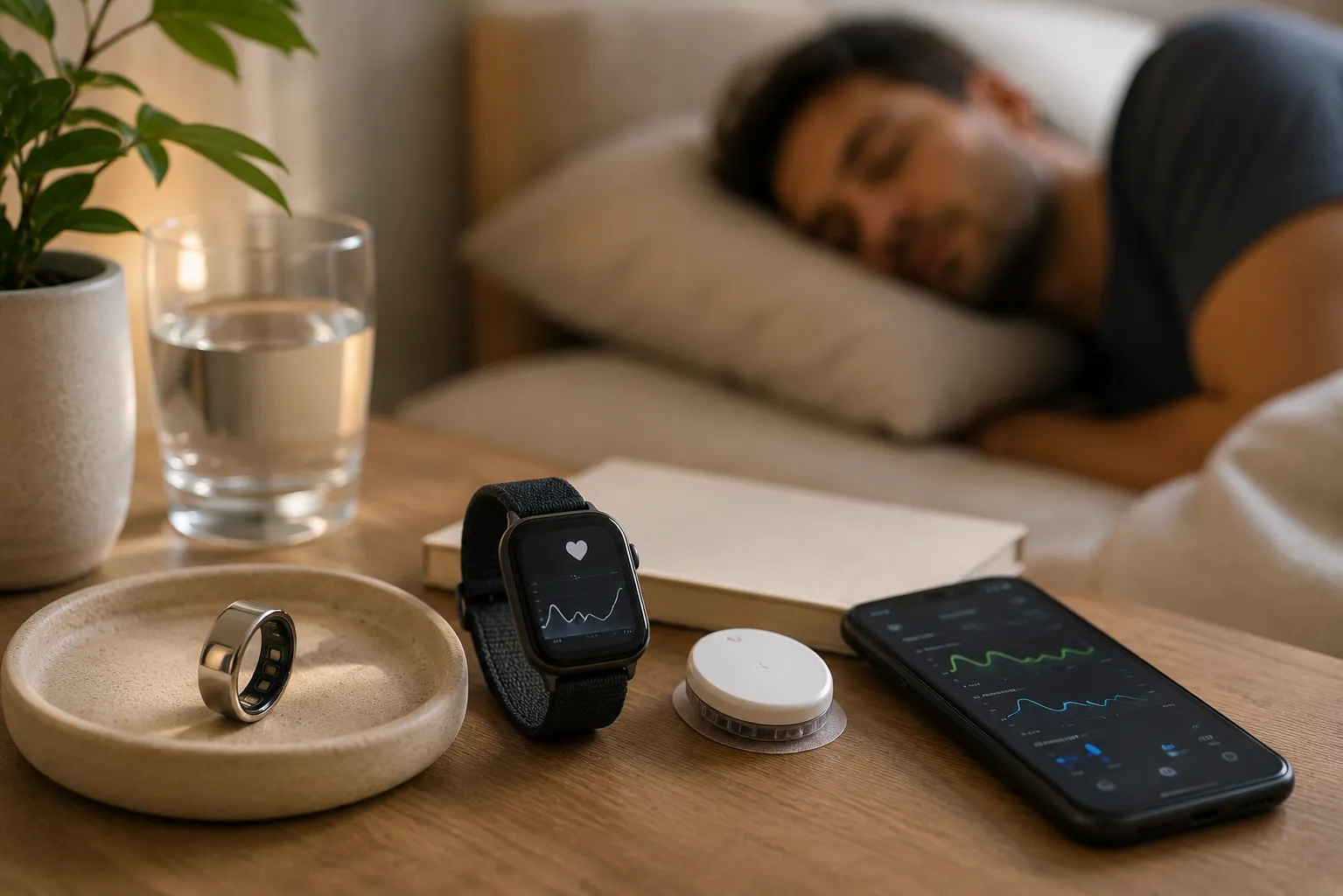
A sleep ring, a CGM, and HRV tracking can work together as a useful longevity stack — but only if you use the data gently and look for patterns, not perfection.
A sleep ring can show how your body recovers overnight through sleep timing, HRV, resting heart rate, temperature trends, respiration, and sleep consistency.
A CGM, or continuous glucose monitor, can show how meals, stress, sleep, exercise, and timing may affect glucose patterns across the day and night.
An HRV tool can help you understand whether your nervous system is recovering, under stress, or adapting well to your routine.
I personally use Oura Ring 4 as my sleep and HRV layer, but I have not personally tested a CGM yet. What interests me about CGMs is what I have read from official sources and research: they may help people see how food, stress, sleep, movement, and timing influence glucose patterns.
For now, I would treat CGM data as an optional learning tool — not something everyone needs, and not something to use obsessively.
Used together carefully, these tools can help you ask better questions:
- Did late eating affect my glucose and sleep?
- Did a post-meal walk flatten my glucose curve and improve recovery?
- Did poor sleep make my glucose more reactive the next day?
- Did stress lower HRV and raise overnight glucose?
- Did calmer evenings improve both sleep and metabolic stability?
This is not about turning your body into a spreadsheet. It is about using wearable data to make better real-life decisions.
Consumer sleep trackers and wellness CGMs can be helpful trend tools, but they are not replacements for medical care. The FDA cleared Dexcom Stelo in 2024 as the first over-the-counter CGM for adults 18 and older who do not use insulin, including people without diabetes who want to understand how diet and exercise may affect blood sugar. The FDA has also warned that smartwatches and smart rings should not be used to measure blood glucose on their own because no smartwatch or smart ring has been authorized, cleared, or approved for that purpose.
Also in This Article
- What full-stack longevity tracking actually means
- Why I use Oura Ring 4 as the sleep and HRV layer
- What I have read about CGMs, without claiming personal CGM testing
- How sleep, glucose, HRV, stress, and timing connect
- What a sleep ring can and cannot tell you
- What a CGM can and cannot tell you
- Why smart rings do not replace CGMs
- The best metrics to track without becoming obsessive
- A simple 14-day experiment
- What not to do with this data
- When to speak with a professional
- Which HH guides to read next
What “Full-Stack Longevity Tracking” Means
Full-stack longevity tracking does not mean tracking everything all the time.
It means combining a few useful signals so you can see how your daily choices affect recovery, energy, metabolic rhythm, and long-term health habits.
A simple stack might include:
- a sleep ring for sleep and recovery trends
- a CGM for glucose patterns
- HRV tracking for nervous system recovery
- simple notes about meals, exercise, stress, light, and timing
The goal is not to collect more numbers.
The goal is to connect cause and effect.
For example, one number alone may not tell you much.
A low HRV night could be stress, late food, alcohol, poor sleep, heat, illness, or overtraining.
A glucose spike could be the meal itself, lack of movement, stress, poor sleep the night before, or meal timing.
A low sleep score could be late eating, alcohol, light exposure, temperature, anxiety, or a noisy room.
But when you look at these data points together, patterns become easier to see.
That is where the stack becomes useful.
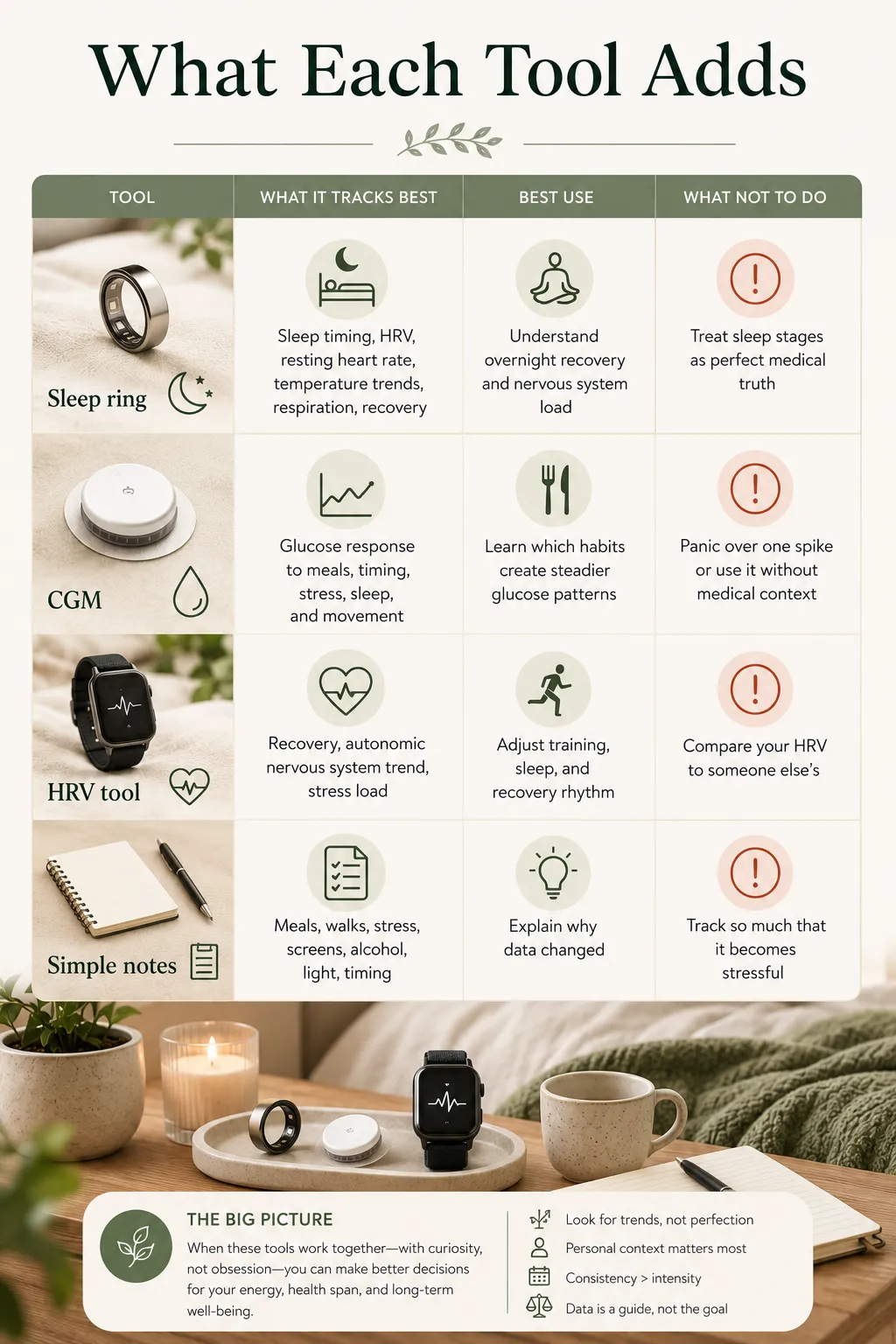
At a Glance: What Each Tool Adds
| Tool | What It Tracks Best | Best Use | What Not to Do |
| Sleep ring | Sleep timing, HRV, resting heart rate, temperature trends, respiration, recovery | Understand overnight recovery and nervous system load | Treat sleep stages as perfect medical truth |
| CGM | Glucose response to meals, timing, stress, sleep, and movement | Learn which habits create steadier glucose patterns | Panic over one spike or use it without medical context |
| HRV tool | Recovery, autonomic nervous system trend, stress load | Adjust training, sleep, and recovery rhythm | Compare your HRV to someone else’s |
| Simple notes | Meals, walks, stress, screens, alcohol, light, timing | Explain why data changed | Track so much that it becomes stressful |
Still choosing your sleep device? Start with our Best Sleep Tracker guide.
My Healthy Home Upgrade View: Track Less, Learn More
At Healthy Home Upgrade, I do not believe the goal is to become more dependent on technology.
The goal is to use technology carefully, so it supports your body instead of taking over your attention.
I personally use my Oura Ring 4 as a calm sleep and HRV layer. It helps me understand how my body responds to stress, training, late meals, screen time, and recovery routines.
But I do not use a CGM personally yet, and I do not want this article to sound as if I have tested one.
What I have read about CGMs is interesting because they may help people see glucose patterns that are otherwise invisible: how meals, walking, stress, sleep, and timing may affect the body. But that is different from claiming personal experience.
So the honest distinction is:
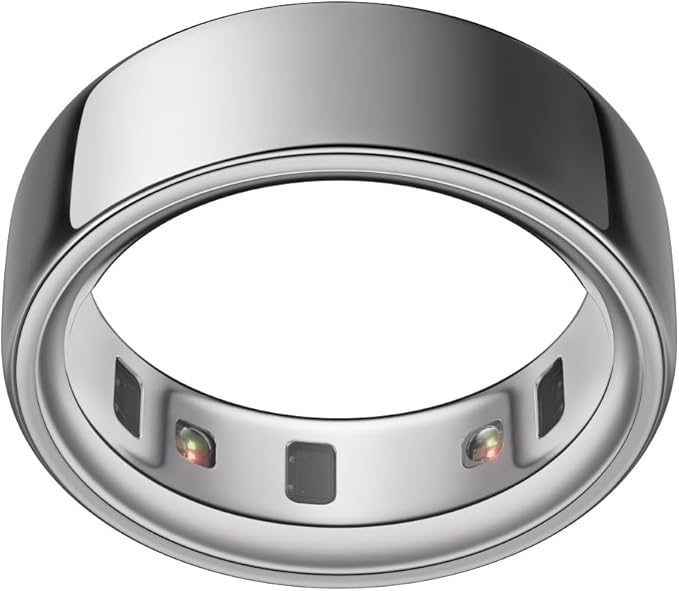
Oura Ring 4 is my real personal sleep and HRV tool.
CGM tracking is a research-based tool I am interested in, but have not personally tested yet.
That distinction matters for trust.
More data is not always better.
Better interpretation is better.
Layer 1: The Sleep Ring
A sleep ring is usually the calmest wearable layer for overnight tracking because it has no screen on the device and can collect data quietly in the background.
For Oura Ring 4, Oura states that the ring uses Smart Sensing and sensors for blood oxygen during sleep, heart rate, HRV, respiration rate, skin temperature variations, movement, and activity. Oura describes Smart Sensing as adapting to the structure and skin tone of the finger and current activity to collect continuous data day and night.
The most useful sleep ring metrics for a longevity-style stack are:
- sleep timing
- total sleep
- sleep regularity
- HRV trend
- resting heart rate
- temperature trend
- respiration trend
- recovery or readiness trend
These metrics do not tell you everything.
But they help you ask better questions.
Did I recover after that workout?
Did late eating raise my resting heart rate?
Did a stressful day lower my HRV?
Did better darkness and cooler room temperature improve sleep efficiency?
Did my body look more recovered after a lighter dinner?
That is how a sleep ring becomes useful.
Layer 2: The CGM
A CGM, or continuous glucose monitor, measures glucose through a small body-worn sensor and sends glucose readings or trends to an app. The American Diabetes Association describes CGMs as devices attached to the body that continually monitor blood glucose and provide real-time updates.
Because I have not personally used a CGM yet, I would not present this as my own lived experience.
Instead, I would use the research and official guidance carefully: CGMs can show glucose trends, but they should be interpreted with context, especially for people with diabetes, insulin use, glucose medications, hypoglycemia risk, pregnancy, or a history of disordered eating.
For wellness and longevity tracking, a CGM may help someone understand how their body responds to:
- breakfast
- late meals
- high carbohydrate meals
- protein and fiber
- meal order
- walking after meals
- stress
- poor sleep
- alcohol
- exercise timing
- fasting windows
- late-night snacks
In 2024, the FDA cleared Dexcom Stelo as the first over-the-counter integrated CGM. The FDA said Stelo is intended for adults 18 and older who do not use insulin, including people without diabetes who want to better understand how diet and exercise may affect blood sugar.
Abbott also announced FDA clearance for Lingo and Libre Rio as over-the-counter CGM systems in 2024. Abbott positioned Lingo for people 18 and older who are not on insulin and want to understand glucose patterns and lifestyle effects.
That does not mean everyone needs a CGM.
It means CGMs are becoming more accessible as insight tools.
The important part is using the data responsibly.
Important: A Smart Ring Is Not a Glucose Monitor
This is critical.
A smart ring can track sleep, HRV, heart rate, temperature trends, movement, and recovery metrics.
It cannot replace a CGM for glucose.
The FDA has warned people not to use smartwatches or smart rings that claim to measure blood glucose without piercing the skin. The FDA stated that it has not authorized, cleared, or approved any smartwatch or smart ring that is intended to measure or estimate blood glucose values on its own.
So if you want glucose data, use an actual cleared CGM system.
Do not rely on a ring or watch that claims non-invasive glucose readings.
This is especially important for people with diabetes, hypoglycemia risk, insulin use, medication use, or medically significant glucose swings.
Layer 3: HRV Tools
HRV stands for heart rate variability. It reflects tiny variations in timing between heartbeats and is often used as a recovery and nervous system trend marker.
In a full-stack tracking system, HRV helps answer a different question than glucose.
CGM asks:
How did my body handle fuel and timing?
HRV asks:
How well did my nervous system recover?
Sleep tracking asks:
Did my body get enough quality recovery time?
Together, they give a fuller picture.
For example:
If glucose was stable but HRV was low, the issue may be stress, training load, poor sleep, illness, heat, or emotional overload.
If HRV was good but glucose spiked after late food, the issue may be meal timing or food composition.
If both glucose and HRV looked worse after a late dinner and short sleep, that pattern is worth noticing.
The goal is not to become perfect.
The goal is to learn your own patterns.
The Three-Way Pattern: Glucose, HRV, and Sleep
The most useful part of pairing a sleep ring with a CGM is not looking at each app separately.
It is looking at how the patterns interact.
Pattern 1: Late Eating
Late eating can affect sleep through digestion, reflux, body temperature, glucose patterns, and resting heart rate.
A late heavy meal may show up as:
- higher evening or overnight glucose
- higher resting heart rate
- lower HRV
- more wake-ups
- longer sleep latency
- worse readiness or recovery score
If that pattern repeats, the first test is simple.
Move the heavy meal earlier.
Do not change everything else.
Then compare glucose, HRV, resting heart rate, sleep latency, wake-ups, and how you feel.
Pattern 2: Post-Meal Movement
A CGM can make one thing very visible: movement after meals often changes the glucose curve.
Physical activity helps manage blood sugar. The CDC describes physical activity as a foundation of diabetes management because it helps manage blood sugar levels, and the American Diabetes Association notes that physical activity can lower blood glucose for 24 hours or more by making the body more sensitive to insulin.
For a practical longevity-style test, try:
- 10 to 20 minutes of easy walking after a higher carbohydrate meal
- no intense workout needed
- compare the glucose curve with a similar meal and no walk
- check whether sleep and HRV are calmer that night
This is not about punishment.
It is about helping the body use glucose.
Pattern 3: Poor Sleep and Next-Day Glucose
Poor sleep can change how your body handles the next day.
If your sleep ring shows short sleep, higher resting heart rate, lower HRV, or fragmented sleep, you may notice that your CGM response the next day is different.
A meal that usually feels fine may create a bigger glucose rise.
A craving pattern may look stronger.
Stress tolerance may be lower.
Training may feel harder.
This is one reason sleep data and CGM data should not be separated.
Metabolic health and recovery are connected.
Pattern 4: Stress Without Food
A CGM can also show that glucose is not only about food.
Stress, poor sleep, illness, intense exercise, and emotional activation may affect glucose patterns.
If glucose rises without a meal and HRV is low, that may be a stress physiology pattern rather than a food problem.
This is where a ring plus CGM can protect you from blaming the wrong thing.
Not every glucose change means you ate the wrong food.
Sometimes your body is responding to stress.
Pattern 5: Training Load
Exercise can improve glucose control, but intense training can also temporarily raise stress signals in some people.
A full-stack view may show:
- glucose improves after regular walking
- HRV dips after intense intervals
- sleep improves after moderate movement
- recovery worsens when hard training is too close to bed
- glucose looks steadier on days with more easy movement
This is why the stack should include both metabolic and recovery data.
CGM alone might say movement helped.
HRV and sleep may tell you whether the dose was right.
The Full-Stack Longevity Dashboard
You do not need 50 metrics.
A simple dashboard is enough.
| Category | Metric | What to Look For |
| Sleep | Sleep duration | Did you get enough time in bed? |
| Sleep | Sleep timing | Was bedtime and wake time consistent? |
| Recovery | HRV trend | Is your nervous system recovering? |
| Recovery | Resting heart rate | Is it higher than your normal? |
| Metabolic | Glucose after meals | Which meals create bigger rises? |
| Metabolic | Overnight glucose | Does late food affect the night? |
| Behavior | Meal timing | Did you eat too late? |
| Behavior | Movement | Did you walk after meals? |
| Environment | Light and bedroom | Did the room support sleep? |
| Stress | Emotional load | Was the day unusually intense? |
That is enough.
You do not need to track every possible number.
What to Write in Your Notes
The simplest notes are often the most useful:
- late dinner
- poor sleep
- stressful day
- post-meal walk
- alcohol
- high sugar meal
- hard workout
- sauna
- travel
- sick or inflamed
- good wind-down
- early dinner
- dark room
- calm evening
The notes explain the data.
Without notes, you may stare at numbers without understanding why they changed.
A Simple 14-Day Full-Stack Experiment
Do not start by optimizing everything.
Start by observing.
Days 1 to 3: Baseline
Do not change much.
Track:
- sleep timing
- sleep duration
- HRV
- resting heart rate
- glucose response after meals
- meal timing
- movement
- stress level
- how you feel
The goal is to learn your normal.
Days 4 to 6: Move Dinner Earlier
Keep meals similar, but move dinner earlier.
Watch:
- overnight glucose
- resting heart rate
- HRV
- sleep latency
- wake-ups
- morning energy
If several metrics improve, late eating may have been part of the problem.
Days 7 to 9: Walk After Meals
Add easy walking after one or two meals.
Watch:
- post-meal glucose curve
- afternoon energy
- cravings
- evening recovery
- sleep quality
This can be one of the simplest glucose experiments.
Days 10 to 12: Calm the Evening
Reduce screens, bright light, work messages, late stress, and heavy stimulation.
Watch:
- sleep latency
- HRV
- resting heart rate
- overnight glucose
- wake-ups
This test helps separate food effects from nervous system effects.
Days 13 to 14: Compare, Do Not Judge
Look at your patterns.
Ask:
- What improved glucose the most?
- What improved HRV the most?
- What improved sleep the most?
- What made all three worse?
- What habit felt easiest to keep?
Keep only the habits that are realistic.
Longevity tracking only works if it supports your real life.
Food Experiments That Pair Well With a CGM
A CGM can help personalize food choices, but the goal is not to create fear around carbohydrates.
The goal is to learn how your body responds.
Simple experiments:
- oatmeal alone vs oatmeal with protein and nuts
- fruit alone vs fruit after a meal
- white rice vs rice plus vegetables and protein
- late dessert vs earlier dessert
- meal without a walk vs meal followed by a walk
- high-stress meal day vs calm meal day
- early dinner vs late dinner
The pattern matters more than one response.
A single glucose spike is not a moral failure.
It is information.
Sleep Experiments That Pair Well With a CGM
Sleep changes can also affect glucose patterns.
Try comparing:
- short sleep vs longer sleep
- late bedtime vs consistent bedtime
- bright evening light vs dim evening light
- phone in bed vs phone away from bed
- hot bedroom vs cooler bedroom
- late meal vs earlier meal
- stressful evening vs calm evening
Then look at glucose the next day.
You may discover that “food problems” are sometimes sleep problems.
HRV Experiments That Pair Well With a CGM
HRV gives context to glucose.
Try tracking:
- hard workout day vs recovery day
- meditation night vs no wind-down
- sauna day vs no sauna
- late work stress vs calm evening
- high caffeine day vs lower caffeine day
- social or emotional stress vs normal day
- active recovery vs full rest
Then compare HRV, glucose, and sleep.
The best longevity habits usually support all three.
What Not to Do With Full-Stack Tracking
Do not use this stack to punish yourself.
Do not label normal glucose variation as failure.
Do not chase perfect HRV.
Do not panic over one poor night.
Do not wear more devices than your nervous system can tolerate.
Do not use a smartwatch or smart ring as a glucose monitor.
Do not make medical decisions from wellness data without professional guidance.
Do not claim personal product experience if you have only read about the product.
Do not keep tracking if it makes you more anxious, obsessive, or disconnected from your body.
This should make you freer, not more controlled.
Who Should Be Careful With CGM Tracking?
CGMs can be useful, but they are not emotionally neutral for everyone.
Be careful if you:
- become anxious about numbers
- start fearing normal foods
- have a history of disordered eating
- over-restrict because of glucose curves
- interpret every rise as dangerous
- use the data without understanding context
- have diabetes, hypoglycemia, medication use, or insulin use and are not working with a clinician
For people with diabetes or medication-related glucose risk, CGM data should be interpreted with medical guidance.
For wellness users, it should be treated as an educational tool.
The Healthy Home Upgrade Full-Stack Rule
Here is the HH rule:
If a tool helps you sleep better, move better, eat more calmly, and understand your body with less fear, it may be useful.
If it makes you anxious, rigid, or obsessed, simplify the stack.
A full-stack longevity system should not make your life smaller.
It should help you see which habits actually help.
Best Internal Next Reads
If you are still choosing a sleep device, start with our Best Sleep Tracker guide.
If you want a quieter night wearable, read our Best Sleep Tracking Ring guide.
If you are comparing recovery wearables, see WHOOP vs Oura.
If you already know Oura is the right fit, check our Oura Ring Coupon Code page.
If sleep data makes you anxious, read Best Sleep Tracker Settings for Sensitive Nervous Systems.
If you want to understand ring versus watch comfort, read Smart Rings vs Wrist Trackers.
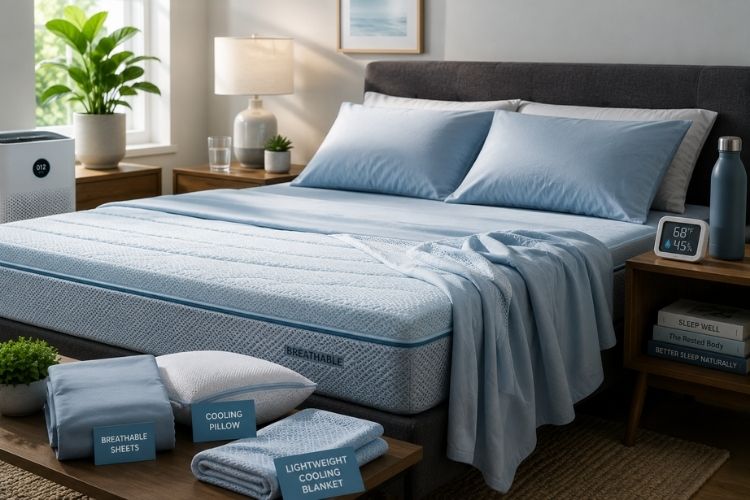
If your bedroom environment may be affecting your recovery, read From Sleep Score to Bedroom Upgrades.
If you want a calmer, lower-exposure bedroom setup, read EMF, Motors, and Remote Controls and Adjustable Bases, Cooling Mattresses and Sleep Trackers.
FAQ
Can a smart ring track glucose?
No. A smart ring should not be used as a glucose monitor. The FDA has warned that it has not authorized, cleared, or approved any smartwatch or smart ring that measures or estimates blood glucose on its own. Use an actual cleared CGM if you want glucose data.
Have I personally tested a CGM?
No. I have not personally tested a CGM yet. In this article, I discuss CGMs from a research-based and official-source perspective: what they may show, why the glucose/sleep/HRV connection is interesting, and why the data needs context.
Can I pair Oura Ring with a CGM?
You can use Oura Ring data alongside CGM data by comparing sleep, HRV, resting heart rate, glucose, meals, exercise, stress, and timing. The value is in reading patterns across tools, not assuming one app explains everything.
Are over-the-counter CGMs available for wellness tracking?
Yes, in the U.S. the FDA cleared Dexcom Stelo as the first over-the-counter integrated CGM in 2024 for people 18 and older who do not use insulin. Abbott also announced FDA clearance for Lingo and Libre Rio OTC CGM systems in 2024.
Is a CGM necessary for longevity?
No. A CGM is optional. Many people can improve metabolic health through basic habits: enough sleep, regular movement, strength training, balanced meals, protein, fiber, earlier dinners, and less ultra-processed food. A CGM can make patterns more visible, but it is not required.
What is the best first experiment with a CGM?
A simple first experiment is comparing the same meal with and without a post-meal walk. Another useful test is earlier dinner versus late dinner, then comparing glucose, HRV, resting heart rate, and sleep quality.
Can poor sleep affect glucose?
Poor sleep can affect appetite, stress physiology, energy, and how your body responds the next day. A sleep ring and CGM together can help you notice whether short or fragmented sleep changes your glucose response after similar meals.
Can stress raise glucose even if I do not eat?
Glucose patterns can be influenced by stress, illness, intense exercise, sleep loss, and hormones. If glucose rises without food and HRV is low, stress load may be part of the pattern.
How long should I use a CGM for insight?
For many wellness users, a short learning period, such as 10 to 14 days, may be enough to identify useful patterns. People with diabetes or medical glucose concerns should follow professional guidance.
Should I track HRV, sleep, and glucose every day forever?
Not necessarily. Tracking can be seasonal. You may use it for a focused experiment, then simplify. The goal is to learn habits you can live with, not to monitor yourself forever.
What if the data makes me anxious?
Simplify immediately. Check less often, reduce metrics, turn off unnecessary alerts, or take a break. If data tracking increases food fear, sleep anxiety, or obsessive behavior, it is not helping.
Final Thoughts
Pairing a sleep ring with a CGM and HRV tools can be powerful.
But the power is not in the devices.
It is in the questions they help you ask.
Did I sleep enough?
Did I eat too late?
Did I move after meals?
Did stress change my body?
Did my glucose, HRV, and sleep all improve when my evening was calmer?
That is useful longevity tracking.
Not because it promises immortality.
But because it helps you notice what supports your real body in real life.
I personally use Oura Ring 4 as my sleep and HRV layer.
I have not personally tested a CGM yet.
So for now, I see CGMs as an interesting research-based tool for understanding glucose patterns — not as something I can review from personal experience.
Use the stack gently.
Track patterns, not perfection.
Let the data teach you.
Then turn the data into habits you can actually keep.