Smart rings are one of the most comfortable ways to track sleep, recovery, heart rate variability, temperature trends, and overnight stress patterns. Unlike a smartwatch, a ring does not light up your wrist, vibrate beside your face, or feel like another screen in bed.
But there is one detail many people overlook before buying a sleep tracking ring:
The ring touches your skin for hours every night.
That means sizing, metal quality, inner surface materials, coatings, sensor design, sweat, soap residue, and cleaning habits matter more than most reviews admit.
A sleep tracking ring may look like a small piece of jewelry, but it is also a skin-contact wearable. It has sensors, charging contact points, coatings, inner materials, and a fit that must be close enough to collect data without becoming a pressure point.
If you have sensitive skin, nickel allergy, eczema, swelling, contact dermatitis, or irritation from jewelry, the best sleep tracking ring is not automatically the one with the most features. It is the one your body can tolerate calmly, night after night.
Quick Answer
The least reactive sleep tracking ring is usually one with a smooth titanium or titanium-lined interior, recessed sensors, clear material disclosure, and a fit that allows for natural overnight finger swelling. Oura Ring 4 is a strong example from a material perspective because Oura describes it as using non-allergenic titanium on the inner and outer surfaces, with a seamless titanium interior and recessed sensors. Oura Ring 4 Ceramic has a zirconia ceramic exterior but still uses a seamless titanium interior.
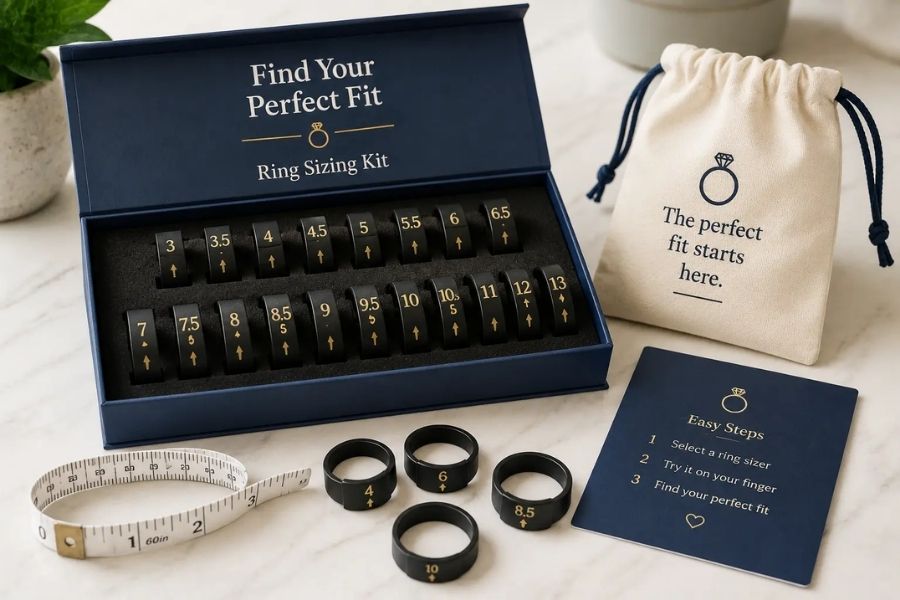
For sensitive skin, sizing is as important as material. Use the official sizing kit for at least 24 hours, including overnight, and test it on a day when your fingers may be more swollen, such as after salty food, heat, travel, or exercise.
Check the latest price on Amazon
At a Glance: Smart Ring Material and Comfort Comparison
| Material Type | Skin Contact Risk | Best For | Watch Out For |
| Titanium interior | Low for many users | Sensitive skin, long wear, nickel concerns | Still check coatings, sizing, and pressure |
| Ceramic exterior with titanium interior | Low to moderate | People who prefer a jewelry-like exterior | The inside may still be titanium, not ceramic |
| Epoxy or resin interior | Moderate | Lightweight sensor sealing | Can feel warmer and may trap moisture for some users |
| Unknown alloy | Higher uncertainty | Budget options only if fully disclosed | Nickel risk, coating wear, unclear safety |
| Plated or coated metal | Variable | Style-focused users | Coatings can scratch, wear, or hide base metals |
Also in This Article
- Titanium vs ceramic vs resin interiors
- Why overnight finger swelling matters
- Nickel allergy vs irritant contact dermatitis
- How biofilm can build up under a smart ring
- Why the sizing kit should be worn for 24 hours
- How to clean a sleep tracking ring for sensitive skin
- When a smartwatch may be better than a ring
Why Ring Material Matters More for Sleep Than Daytime Wear
A normal ring may be worn loosely during the day. You move your hands, wash them, remove the ring, and notice discomfort quickly.
A sleep tracking ring is different.
It is often worn overnight while your body temperature, circulation, and fluid balance naturally change. Many people experience mild finger swelling during sleep, especially after salty meals, alcohol, hormonal changes, heat, travel, inflammation, or a hard workout.
That means a ring that feels perfect at 3 p.m. can feel too tight at 3 a.m.
When the ring is too tight, it can trap sweat, soap residue, skin oils, moisturizer, sunscreen, sanitizer, or cleaning products against the skin. That trapped layer can create friction and irritation even if the metal itself is not the main problem.
This is why the healthiest smart ring choice is not only about sensors. It is about skin compatibility, airflow, cleaning, fit, and material honesty.
Titanium, Ceramic, or Resin: What Is Actually Touching Your Skin?
Most premium smart rings use titanium because it is lightweight, strong, and often better tolerated than cheaper jewelry metals.
But the most important question is not only what the outer ring is made from.
It is this:
What touches your skin?
A smart ring may include:
- A titanium outer shell
- A PVD or DLC coating on the outside
- A ceramic exterior
- A titanium inner shell
- Epoxy or resin around the sensors
- Charging contacts
- Adhesives or sealing materials
- Different finishes depending on color
For sensitive users, the inner surface matters most because that is what rests against your finger all night.
The Oura Ring 4 Material Advantage
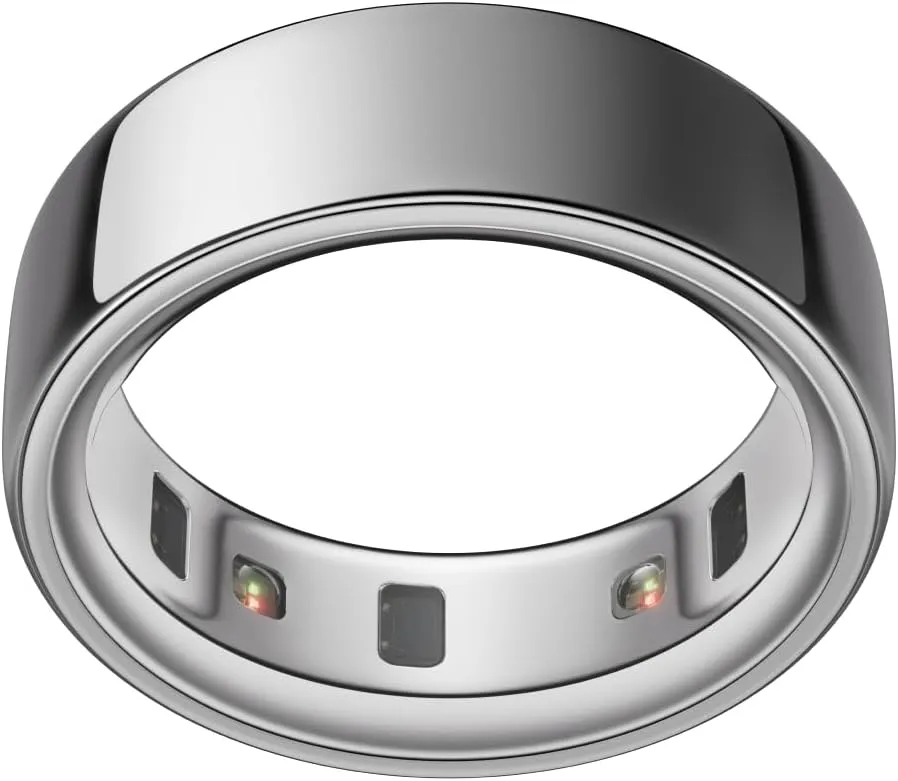
From a Healthy Home Upgrade perspective, Oura Ring 4 has one of the strongest material stories because Oura describes it as fully titanium, made of lightweight titanium inside and out, with a fully round interior and recessed sensors. Oura’s technical specifications also list non-allergenic titanium on the inner and outer surfaces, a seamless titanium interior, and water resistance up to 100 meters.
This matters because older or cheaper smart ring designs often rely more heavily on inner resin or raised sensor structures. Those may still be safe and comfortable for many users, but from a Zero Toxic Load point of view, fewer skin-contact layers is usually preferable.
The cleaner the inner surface, the lower the chance of friction points, trapped residue, or mystery material exposure.
Check the latest price on Amazon
What About Oura Ring 4 Ceramic?
Oura Ring 4 Ceramic is a little different. It uses a high-performance zirconia ceramic exterior, but the inner surface is still listed as a seamless titanium interior.
That means it is not a fully ceramic ring against the skin.
For most buyers, that is not a problem. It may even be an advantage because titanium is smooth, durable, and well suited to sensor contact. But if someone is specifically looking for a completely metal-free ring, they should not assume Oura Ceramic is metal-free on the inside.
This is exactly why smart ring material claims need to be read carefully.
Epoxy and Resin Interiors: Not Automatically Bad, But Worth Understanding
Ultrahuman describes the Ring AIR as having an outer shell made from fighter jet grade titanium reinforced with a tungsten carbide carbon coating, while the inner part of the ring is coated with medical-grade hypoallergenic epoxy resin. Ultrahuman also says its sizing kit is recommended because Ring AIR sizes may differ slightly from standard US ring sizes.
That does not mean the ring is unsafe. “Medical-grade” materials can be well tolerated by many people.
But in a Zero Toxic Load framework, there is a difference between an inert metal or ceramic surface and a resin-based inner layer. Resin may feel warmer, may interact differently with sweat and soap residue, and may be less ideal for people who already react to plastics, adhesives, skincare products, or occlusive materials.
For a sensitive user, this does not mean “avoid all resin.” It means:
Read the material disclosure.
Use the sizing kit.
Keep the ring clean and dry.
Watch your skin response during the first week.
RingConn and Samsung Galaxy Ring: Material Notes
RingConn Gen 2 lists aerospace grade titanium as its material and 10 to 12 days of battery life in its product specifications.
Samsung Galaxy Ring is sold in Titanium Black, Titanium Silver, and Titanium Gold. Samsung recommends using its Galaxy Ring sizing kit because Galaxy Ring sizes may differ from regular ring sizes, and Samsung’s guidance says to wear the sample ring for more than a full day to confirm comfort.
These are useful material signals, but they do not replace skin testing. A ring can be made from a premium material and still irritate the skin if the size is wrong, moisture is trapped, or the inner shape creates pressure.
Check the latest prices for the RingConn Gen 2 and Samsung Galaxy Ring prices on Amazon
Nickel Allergy: What You Need to Know
Nickel allergy is one of the most common reasons people react to jewelry. Mayo Clinic describes nickel allergy as an immune reaction that often causes an itchy rash where nickel touches the skin, and notes that nickel can be found in jewelry, clothing fasteners, electronics, and other everyday objects.
Signs of possible metal allergy can include:
- Itching under the ring
- Redness
- Burning or stinging
- Dry, scaly, or cracked skin
- Small bumps
- Swelling
- A rash shaped like the ring
- Skin that improves after removing the ring
But not every ring rash is a metal allergy.
That is where this article gets important.
Irritant Contact Dermatitis: The Rash That Looks Like Allergy
The American Academy of Dermatology explains that contact dermatitis can happen either when something irritates the skin or when something triggers an allergic reaction. Irritant contact dermatitis can be caused by things like soaps, hand sanitizers, disinfectants, detergents, and other irritants.
Under a ring, that distinction matters.
A person may think, “I am allergic to the ring.”
But the real trigger may be:
- Soap trapped under the ring
- Moisture after handwashing
- Sweat during sleep
- Hand sanitizer residue
- Skincare residue
- Friction from a tight fit
- Dead skin cells under the ring
- A warm, sealed microclimate
Cleveland Clinic notes that heat and moisture can intensify friction-related skin irritation, and that trapped moisture can increase skin damage and inflammation.
This is why sizing and drying are not small details. They are skin health details.
HH Deep Dive: Biofilm Under the Ring
A smart ring creates a small covered zone on the finger.
That zone can become warm, slightly damp, and low airflow, especially if the ring is worn after handwashing, exercise, skincare, or sleep sweating.
Over time, a microscopic layer of sweat, skin cells, soap residue, oils, and microbes can collect under the ring. In everyday language, this is the kind of “film” that can make the skin feel itchy, irritated, or inflamed.
This does not mean the ring is dirty or dangerous. It means that continuous skin contact needs a cleaning rhythm.
For sensitive users, the rash is often not about the metal alone. It is about the environment under the ring.
Think of it like this:
A good ring material lowers the reaction risk.
A good fit lowers pressure.
Good drying lowers moisture.
Good cleaning lowers residue.
All four matter.
The Physiology of Overnight Finger Swelling
Your fingers are not the same size all day.
They can swell with:
- Heat
- Salt
- Alcohol
- Hard training
- Travel
- Hormonal shifts
- Poor sleep
- Inflammation
- Dehydration
- Long walks
- Sauna or hot baths
That is why a sizing ring should not only be tested while sitting still in the afternoon.
The real test is whether it still feels good when your body is warm, tired, or slightly swollen.
A sleep ring that is “perfectly snug” during the day can become too tight overnight. When that happens, it can press into the skin, trap moisture, reduce comfort, and make you more aware of the device.
That is not recovery-friendly.
The 24-Hour Sizing Rule
Do not test a sizing ring for five minutes.
Wear it for at least 24 hours.
Even better, test it:
- During sleep
- After a normal meal
- After a salty meal
- After exercise
- After a warm shower
- While typing
- While walking
- When your hands are cold
- When your hands are warm
- First thing in the morning
The best size is not the tightest size that stays on.
The best size is the one that stays stable enough for tracking while still allowing your finger to feel normal in the morning.
How a Sleep Tracking Ring Should Fit
A good fit should feel:
- Snug but not tight
- Stable but not clamped
- Easy to remove with mild resistance
- Comfortable when your hands are warm
- Comfortable after sleep
- Free from deep marks
- Free from throbbing or pressure
A poor fit may feel:
- Tight in the morning
- Hard to remove
- Itchy underneath
- Hot or damp
- Painful around the knuckle
- Like it leaves a deep line
- Like you want to take it off during the night
If you are between two sizes, sensitive users should usually be careful about choosing the smaller size. A slightly more comfortable size may be better long term, as long as the ring still tracks properly.
Raised Sensors vs Recessed Sensors
Sensor design matters.
A ring with raised sensor bumps may create small pressure points on the skin. For some people, this is not a problem. For others, especially sensitive sleepers, those bumps can become noticeable at night.
Recessed or smoother sensor designs usually feel calmer because the pressure is more evenly distributed.
This is one reason Oura Ring 4’s recessed sensor design is worth highlighting. Oura specifically describes the ring as having a fully round interior with recessed sensors.
For sleep, comfort is not a luxury feature. It is part of whether you will actually wear the ring long enough to get useful data.
My Experience With Sleep Wearables
I personally use an Oura Ring 4 and an Apple Watch, and the biggest difference during sleep is not only the data. It is the feeling of wearing the device overnight.
A watch gives more functionality, especially during the day, but it can feel more present on the body at night.
A ring feels smaller, quieter, and less screen-connected. But that only works if the size and material are right.
This is why I would not choose a sleep tracking ring based only on features. For sensitive users, comfort is part of accuracy. If the ring makes you aware of it all night, irritates your skin, or makes you anxious about the data, it is no longer supporting recovery in the way it should.
The Zero Toxic Load View
At Healthy Home Upgrade, we look at sleep technology through a Zero Toxic Load lens.
That does not mean every wearable is toxic. It means the best product should reduce friction in your life, not add more stress to your skin, sleep, or nervous system.
For a sleep tracking ring, that means asking:
- What touches my skin?
- Is the inner surface disclosed clearly?
- Is the material inert, coated, resin-based, or unknown?
- Are the sensors smooth or raised?
- Does the ring trap moisture?
- Can I clean and dry it easily?
- Does it feel calm enough to sleep with?
- Does the data help me recover, or does it make me obsess?
A good sleep ring should feel like a quiet tool. Not a pressure point. Not a skin irritant. Not another thing your nervous system has to tolerate.
Coatings: Stealth, Gold, Silver, and Why the Inside Matters Most
Smart rings often come in several finishes, including silver, black, stealth, gold, rose gold, matte, or brushed versions.
These finishes may involve coatings on the outer surface. Oura, for example, lists PVD coating for several Oura Ring 4 finishes and DLC coating for Stealth, while also listing a non-allergenic titanium inner shell.
For most sensitive users, the outside coating is less important than the material touching the finger.
Still, coatings matter because they can scratch, wear, or change how the ring ages. If your skin is highly reactive, choose the finish with the clearest material disclosure and the smoothest, most durable inner surface.
Do not choose a finish only because it looks beautiful.
Choose the ring your skin can live with.
How to Prevent Ring Rash and Irritation
The simplest prevention strategy is boring but powerful:
Keep the skin dry.
Keep the ring clean.
Do not wear it too tight.
Do not ignore early redness.
A good routine:
- Remove the ring before applying thick hand cream or oils
- Dry your finger fully after washing hands
- Dry the inside of the ring before putting it back on
- Rinse the ring if sweat, soap, or residue builds up
- Avoid harsh cleaners unless the brand allows them
- Switch fingers for a day if redness appears
- Give your skin short breaks
- Never wear the ring over broken or irritated skin
If irritation repeats, stop wearing the ring and speak with a dermatologist, especially if you have known allergies, eczema, psoriasis, or recurring dermatitis.
Who Should Be Extra Careful?
Be more careful before buying a sleep tracking ring if you:
- Have nickel allergy
- Have eczema
- React to jewelry
- React to watches
- Get hand dermatitis
- Use hand sanitizer often
- Wash your hands constantly for work
- Use strong cleaning products
- Sleep hot
- Experience finger swelling
- Have circulation issues
- Are pregnant or postpartum
- Use irritating skincare on your hands
- Have autoimmune skin sensitivity
These do not mean you cannot use a smart ring.
They mean you should be stricter about sizing, materials, cleaning, and return options.
When a Smartwatch May Be Better Than a Ring
A smart ring is not always the best choice.
A smartwatch may be better if:
- Your fingers swell significantly overnight
- You cannot tolerate rings
- You want a looser wearable
- You need workout controls on the device
- You want a screen
- You want alerts, calls, or messages
- You need easier removal
- You react to pressure around your fingers
- You prefer wearing devices on your wrist
For many people, the best setup is a ring for sleep and recovery, and a watch for workouts and daily activity.
Smart Ring Buying Checklist for Sensitive Skin
Before choosing a sleep tracking ring, check:
- Does the brand disclose the inner material?
- Does the brand disclose the outer material?
- Is the skin-contact surface titanium, ceramic, resin, or unknown?
- Are sensors recessed or raised?
- Is there a sizing kit?
- Can you wear the sizing kit overnight?
- Does the ring fit when your hands are warm?
- Can you remove it easily in the morning?
- Does the ring trap moisture?
- Is the return or exchange policy clear?
- Are approved affiliate links available for the exact product?
- Will the ring help your recovery, or make you more stressed?
Check the latest price on Amazon
Best Internal Links to Read Next
If you are choosing a sleep tracking ring mainly for sleep, recovery, and nervous system awareness, read these next:
- Best Sleep Tracking Ring
- Best Sleep Tracker
- WHOOP vs Oura
- Oura Ring Coupon Code
- Best Sleep Tracker Settings for Sensitive Nervous Systems
- Apollo Neuro Review
These guides help you compare rings, watches, bands, and nervous system support tools from a more complete sleep and recovery perspective.
Final Thoughts
The best sleep tracking ring is not just the one with the most advanced sensors. It is the one you can wear comfortably, safely, and consistently.
For sensitive users, the smartest choice is usually a ring with clear material disclosure, a smooth titanium or titanium-lined inner surface, recessed sensors, a proper sizing kit, and enough room for natural overnight finger swelling.
Do not rush sizing. Do not ignore itching. Do not assume every “hypoallergenic” claim means your skin will tolerate it.
A sleep tracking ring should help you understand your recovery, not create a new stressor.
Choose the ring your body can live with quietly, night after night.
References and Further Reading
- Oura Ring 4 material, sizing, sensors, and titanium interior information.
- Oura Ring 4 Ceramic material information.
- Ultrahuman Ring AIR material and sizing information.
- RingConn Gen 2 material specifications.
- Samsung Galaxy Ring sizing guidance and product information.
- American Academy of Dermatology contact dermatitis guidance.
- Mayo Clinic nickel allergy guidance.
- Cleveland Clinic information on heat, moisture, friction, and skin irritation.