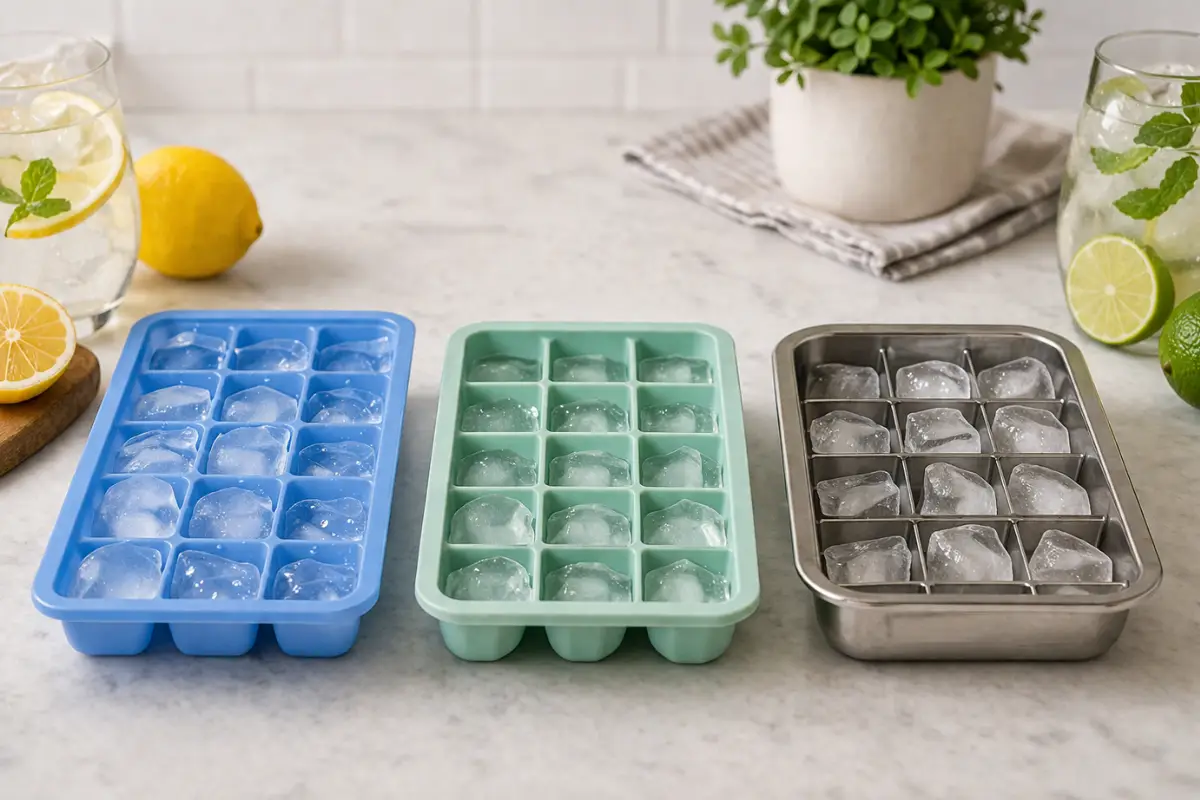
Ice trays are one of those kitchen tools almost nobody thinks about replacing. They sit quietly in the freezer, touch your water for hours, and then that ice goes straight into your glass, bottle, smoothie, or child’s drink. There is no drama, just a small daily contact point that matters more once you start paying attention to plastics, microplastics, and what actually touches your food. If you are rethinking this part of your kitchen, upgrading to stainless steel or other low-toxin trays is one of the easiest swaps to make. This guide to the best stainless steel ice cube trays walks through options that freeze cleanly without adding more plastic to your routine.
Quick Answer
If you want the simplest, lowest-toxin ice tray material for daily use, stainless steel is usually the cleanest choice. It does not rely on plasticizers, dyes, softening agents, or flexible coatings, and it holds up well over time.
Silicone can be a better option than cheap plastic, especially if it is food-grade and used carefully, but it can still hold odors, absorb flavors, and vary in quality. Plastic ice trays are convenient and inexpensive, but they are the material I would be most cautious about, especially when they become scratched, cloudy, brittle, or strongly scented.
For a low-waste, low-toxin kitchen, my personal hierarchy is simple:
Best overall: stainless steel
Acceptable with care: high-quality food-grade silicone
Least ideal: plastic, especially old or soft plastic trays
If you are already trying to reduce plastic in your kitchen, ice trays are one of the easiest swaps to make.
Why Ice Tray Material Matters More Than It Seems
Ice trays look harmless. They sit in the freezer, hold water, and make something as simple as ice.
But in a healthy kitchen, small repeated exposures matter. The tray touches water for hours. That water freezes, expands, and then goes straight into your glass, smoothie, bottle, or baby food cube.
And unlike something you notice every day, a plastic ice tray can easily sit in the freezer for two or three years without anyone thinking about replacing it. That is exactly the kind of quiet, repeated exposure the Zero Toxic Load approach is meant to reduce.
I do not think we need to be afraid of every object in the kitchen. But I do think the tools we use every day should be as simple and stable as possible.
That is why I look at ice trays through the same lens I use for non-toxic cutting boards, cookware, water filters, and food storage:
What is the material? Does it degrade? Does it absorb odors? Does it shed, stain, scratch, or soften over time?
That is where plastic, silicone, and stainless steel start to look very different.
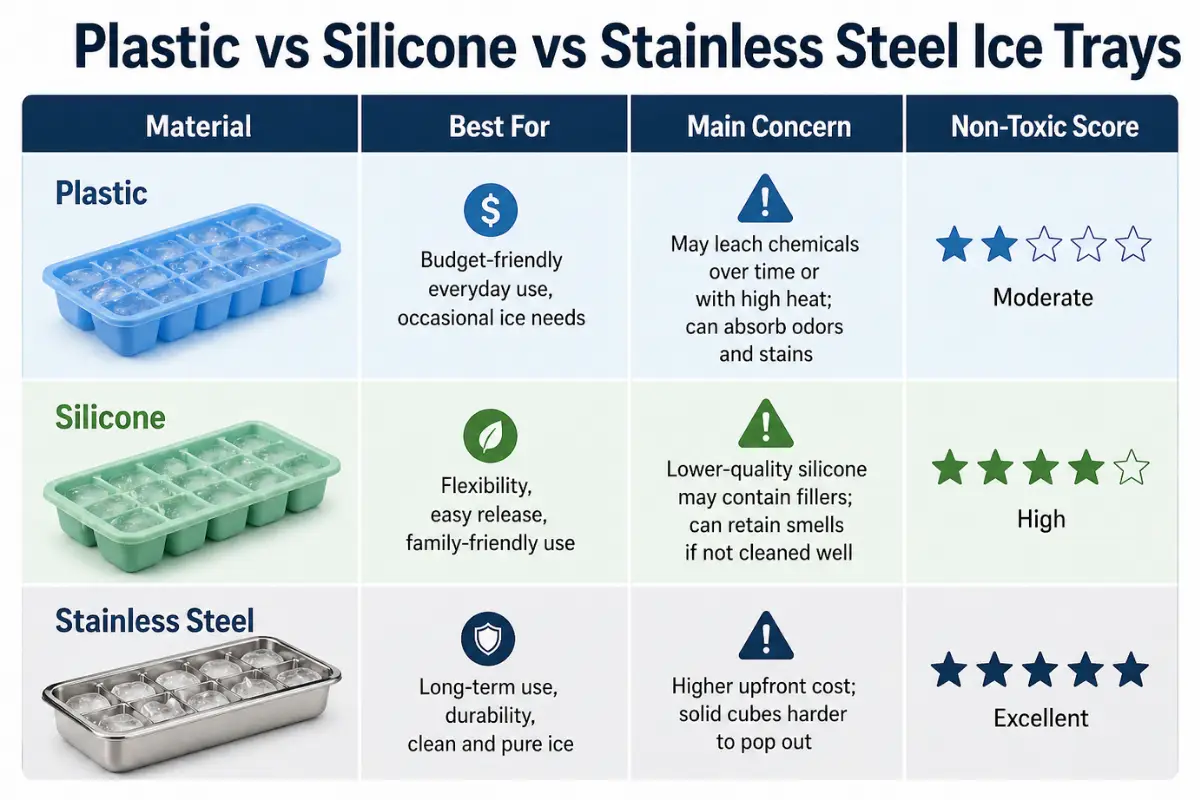
At a Glance: Plastic vs Silicone vs Stainless Steel Ice Trays
| Material | Best For | Main Strength | Main Concern | My Take |
| Plastic | Low-cost, occasional use | Cheap and easy to find | Scratching, odor, aging, possible microplastic shedding | I would replace it first |
| Silicone | Flexible trays, baby food, herbs, broth cubes | Easy release and versatile | Odor absorption, quality differences, fillers | Good if truly high-quality |
| Stainless Steel | Daily ice, low-toxin kitchens, long-term use | Durable, non-porous, plastic-free | Less flexible, usually higher price | Best long-term choice |
Plastic Ice Trays: Cheap, Convenient, but Not My Favorite
Plastic ice trays are the standard option in many homes because they are cheap, light, and easy to replace.
But from a non-toxic kitchen perspective, plastic has the most question marks.
Plastic can become scratched, cloudy, brittle, or warped over time. Once that happens, the surface is no longer as smooth and stable as it was when new. It may also hold freezer odors, absorb food smells, or release tiny fragments as it ages.
This is where microplastics become part of the conversation. Not as a reason to panic over one ice cube, but as a practical reason to replace worn plastic trays before they keep shedding, scratching, and aging inside your freezer.
The problem is not that one plastic ice cube tray will ruin your health. That is not how I think about it. The issue is that plastic is already everywhere in the modern kitchen. If I can remove it from something simple and repetitive, I usually do.
Ice trays are an easy place to start.
Packing lunch for work? Explore our top picks for stainless steel lunch boxes.
When Plastic Ice Trays Are Most Worth Replacing
I would replace plastic ice trays if they are:
- cloudy or scratched
- bent or brittle
- stained
- strongly scented
- very old
- made from unknown plastic
- used for baby food, broth, lemon cubes, herbs, or anything fatty or acidic
Plain water is one thing. But once you start freezing lemon juice, broth, herbs in oil, baby food, or smoothie cubes, the material matters more.
Looking beyond ice trays? These plastic-light food storage swaps include reusable beeswax wraps.
Silicone Ice Trays: Better Than Plastic, but Not Automatically Perfect
Silicone has become the “clean kitchen” default for many people. And in some ways, I understand why.
It is flexible, easy to pop cubes out of, heat-resistant, freezer-safe, and very useful for freezing herbs, broth, baby food, sauces, and smoothie portions.
But silicone is not automatically perfect just because it is not plastic.
The quality varies a lot. Some silicone products feel oily, smell strongly, stain quickly, or hold food odors even after washing. If a cheap silicone tray smells chemical when it is new, or still smells like garlic, broth, or freezer food weeks later, that is a real sign that silicone quality differences matter.
Low-quality silicone may contain fillers, dyes, or additives that you would not choose if you knew more about the material.
That is why I see silicone as a middle option.
Better than old plastic? Often yes.
As clean and durable as stainless steel? Not usually.
When Silicone Makes Sense
Silicone can be useful when you need:
- flexible release
- large cubes
- baby food portions
- herb cubes
- broth cubes
- smoothie prep
- easy stacking
If you already use silicone bags or flexible food storage, this also fits naturally with my guide to Stasher alternatives, where I look at reusable silicone storage through the same low-toxin, low-waste lens.
But I would only choose silicone that is clearly food-grade, odor-free, sturdy, and made by a brand that gives real material information.
If a silicone tray smells chemical when new, feels sticky or oily, or keeps holding odors after washing, I would not keep using it.
Stainless Steel Ice Trays: The Cleanest Long-Term Choice
Stainless steel is the material I trust most for daily ice. If you want the lowest-toxin everyday option, this is where I would start, and I have a full guide to the best stainless steel ice cube trays if you want specific options.
It is hard, non-porous, durable, and naturally plastic-free. It does not rely on softeners, flexible polymers, dyes, or coatings. It does not absorb odors the way silicone can, and it does not become scratched and cloudy like plastic.
That is why stainless steel fits the Healthy Home Upgrade idea so well.
It is not about chasing a perfect product. It is about choosing materials that are simple, stable, and less likely to become another hidden source of unnecessary exposure.
For daily water ice, stainless steel is my first choice.
The Trade-Off
Stainless steel is not as flexible as silicone. You may need to let the tray sit for a moment or use the release handle if it has one. It can also cost more upfront.
But if the tray lasts for years and replaces repeated plastic purchases, the long-term value is strong.
This is exactly why I see stainless steel ice trays as a small but meaningful zero-waste kitchen swap.
Which Material Is Best for Different Uses?
For Daily Drinking Water Ice
Choose stainless steel.
This is the cleanest, simplest option for everyday use. If you are already filtering your water, it makes sense not to freeze that clean water in old plastic.
For Baby Food Cubes
Choose high-quality silicone or stainless steel, depending on the design.
Silicone is easier for portioning and popping out soft foods. But I would be strict about quality here. No strong smell, no mystery brand, no sticky texture, no colored silicone that feels cheap.
For Lemon, Ginger, Herbs, or Broth Cubes
Choose stainless steel when possible.
Acidic, oily, and strongly flavored foods can be harder on materials. Silicone can hold odors, and plastic is not my favorite for acidic or fatty foods.
For Smoothie Cubes
Choose silicone if convenience matters, or stainless steel if material purity matters more.
Smoothie cubes can be sticky and hard to release, so silicone is practical. But if your goal is the lowest-toxin setup, stainless steel still wins.
For larger prep portions, I would also pair this with glass food storage containers instead of plastic tubs, especially for acidic fruit blends or anything you store for more than a day.
My Ranking: Which Ice Tray Material Is Truly Non-Toxic?
1. Stainless Steel
Best for long-term daily use.
Why I like it:
- plastic-free
- non-porous
- durable
- does not hold odors easily
- low-waste
- stable for freezer use
The only downside is convenience. It is not as bendy as silicone. But from a material safety perspective, it is my top pick.
2. High-Quality Silicone
Good, but choose carefully.
Why I like it:
- flexible
- useful for prep cubes
- better than old plastic
- easy to use
Why I am cautious:
- can absorb smells
- can vary in quality
- may contain fillers
- can stain
- not all silicone is equal
Silicone is a practical material, not a perfect one.
3. Plastic
The one I would phase out first.
Why people use it:
- cheap
- lightweight
- easy to find
Why I avoid it:
- scratches
- ages poorly
- may hold odors
- can become brittle
- adds more plastic contact to daily food and drinks
If you are reducing plastic in your kitchen, ice trays are one of the simplest swaps.
A Simple Rule I Use in My Own Kitchen
For anything that touches food or water every day, I ask:
Can I choose a simpler material?
With ice trays, the answer is usually yes.
Plastic is the cheapest.
Silicone is convenient.
Stainless steel is the cleanest long-term material.
This is not about creating a perfect kitchen from day one. Most of us have to change things gradually, and that is completely fine. The point is to start where the swap is easy, where the cost is reasonable, and where the item touches food or water again and again.
Ice trays are one of those easy places to start.
Final Verdict
If you want the most non-toxic ice tray material, choose stainless steel.
If you need flexibility for baby food, herbs, broth, or smoothie cubes, choose a high-quality food-grade silicone tray and be picky about smell, texture, and brand transparency.
If you still use plastic ice trays, do not panic. Just replace them when they are scratched, cloudy, old, or scented.
For me, the best low-waste kitchen swaps are the ones you only have to make once. A good stainless steel ice tray fits that perfectly.
If you want to see which stainless steel trays I actually use and recommend, I have put together a full review here: Best Stainless Steel Ice Cube Trays