
Choose a range hood that vents outdoors, covers your cooktop and stays comfortable to use during everyday cooking. Those three details matter more than buying the biggest fan.
For most kitchens, 300 to 600 CFM is a sensible starting range. Your cooking habits, hood depth and ductwork determine whether you need more. Start by comparing kitchen range hoods that suit your layout, then narrow your airflow requirements.
Range hood options at a glance
These three models suit different installation needs.
| Product | Best for | Key feature | Main trade-off | |
|---|---|---|---|---|
| Cosmo 63175S | Wall-mounted ventilation for frequent cooking | 650 maximum blower CFM | Working-speed noise isn’t maximum-speed noise | |
| Whirlpool WVU37UC0FS | A compact under-cabinet range hood | Full-width grease filter coverage | Its 265-CFM motor class suits lighter cooking | |
| Cosmo 668ICS750 | A 36-inch island installation | Clean Air Sensors | Ceiling installation needs more planning |
Prioritize outdoor exhaust where possible. The EPA’s cooking-particle guidance recommends it to reduce exposure to cooking particles. Electric and induction cooking still produce emissions from food and oil.
Why a Range Hood Matters for Your Health
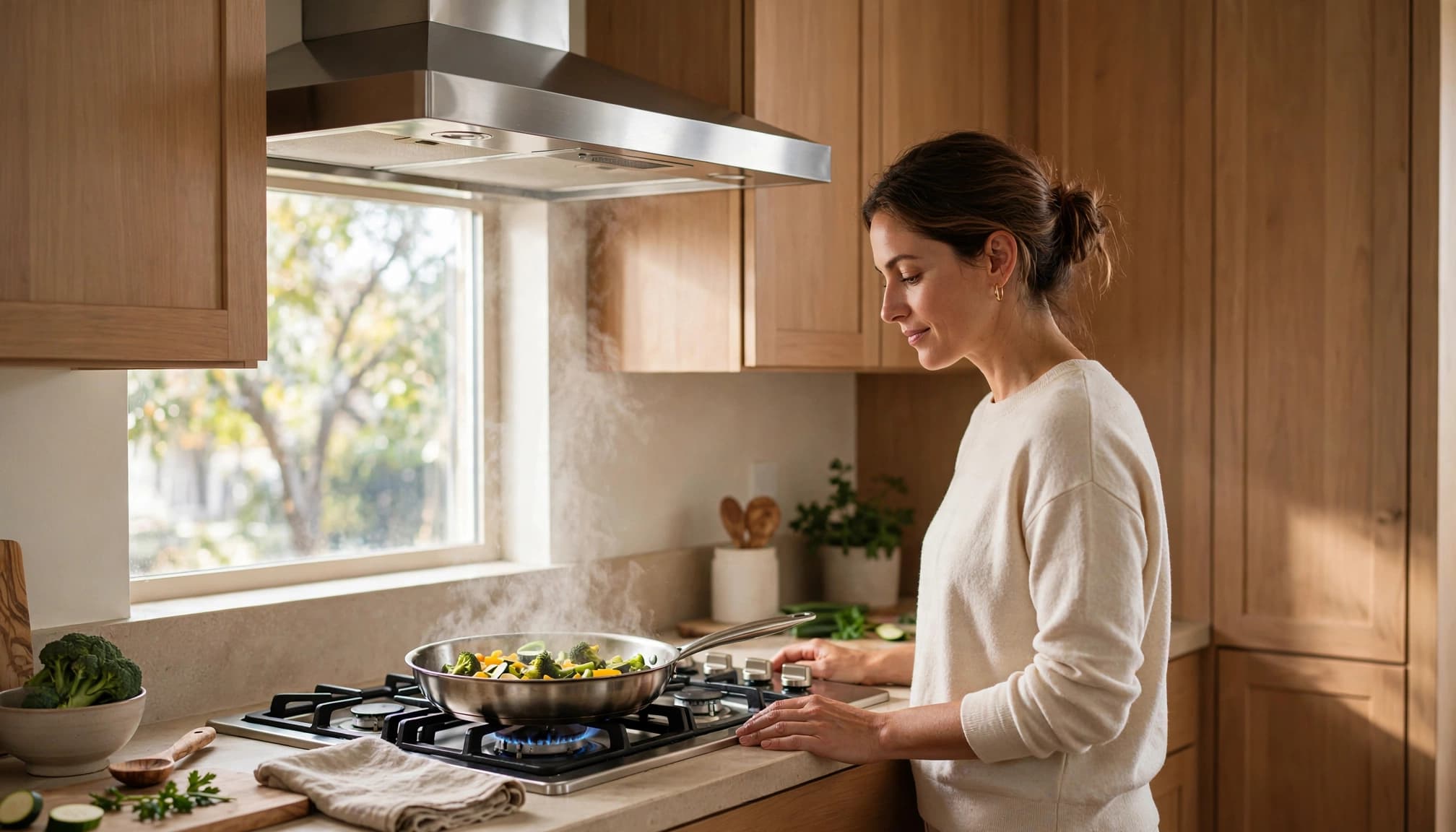
Cooking is one of the biggest sources of indoor air pollution. Gas burners release nitrogen dioxide (NO₂), a respiratory irritant, and all cooking, including electric and induction, produces fine particles from food and oil. In a Lawrence Berkeley National Laboratory study of nine California homes, four had kitchen NO₂ levels above the US outdoor air standard during gas cooking, while a well-designed hood with a large capture area cut pollutant concentrations by 80–95%. The catch: a hood only helps if it vents outdoors and you actually turn it on. Consumer Reports found that fewer than 20% of gas stove owners use their hood every time they cook.
Cosmo 63175S: Best Overall Wall-Mount Range Hood
The Cosmo 63175S is a 30-inch stainless-steel wall-mount range hood with three fan speeds and up to 380 CFM of airflow. It is designed for ducted installation, allowing smoke, grease and cooking pollutants to vent outdoors. It can also be converted to recirculating operation with a separately purchased carbon-filter kit.

Its two dishwasher-safe stainless-steel baffle filters capture grease, while soft-touch controls and LED lights keep operation straightforward. Cosmo lists a maximum noise level of approximately 65 dB.
Choose it for a standard wall installation when you want practical outdoor ventilation at a mid-range price. Skip it if your kitchen cannot accommodate a chimney-style hood or exterior ductwork.
Main trade-off: The 380 CFM blower is suitable for many everyday kitchens, but high-output gas ranges may require stronger ventilation.
Whirlpool WVU37UC0FS: Best Under-Cabinet Range Hood for Small Kitchens
The Whirlpool WVU37UC0FS is a 30-inch under-cabinet range hood with full-width grease filters and a 265 CFM Motor Class. It’s the practical option here when preserving upper cabinets matters more than adding a large canopy.
Choose it for lighter cooking in a compact kitchen. Skip it for frequent searing, wok cooking or a high-output professional range.
A straightforward choice for lighter meals
If your usual dinner involves simmering sauce, boiling vegetables and occasional pan cooking, this capacity class deserves consideration. Heavy frying asks more of the ventilation system.
A common buying-guide starting point is at least 350 CFM for heavy cooking. The Whirlpool’s lower rating makes its intended role clearer: compact everyday ventilation rather than high-output extraction.
Full-width grease filters are a useful practical feature. They give you an accessible maintenance task rather than something hidden behind decorative panels.
Cabinet fit should include front-burner coverage
Your hood should match or exceed the cooktop’s width. A 30-inch hood therefore belongs over a cooktop no wider than 30 inches.
Depth matters too. A shallow hood can leave front burners outside its capture area, even when the widths match. Compare the canopy’s reach with where you normally place your largest pans.
Choose the WVU37UC0FS when cabinet compatibility and lighter cooking are the priorities. Its main trade-off is airflow capacity, so don’t choose it simply because it fits an existing opening.
Cosmo 668ICS750: Best Island Range Hood
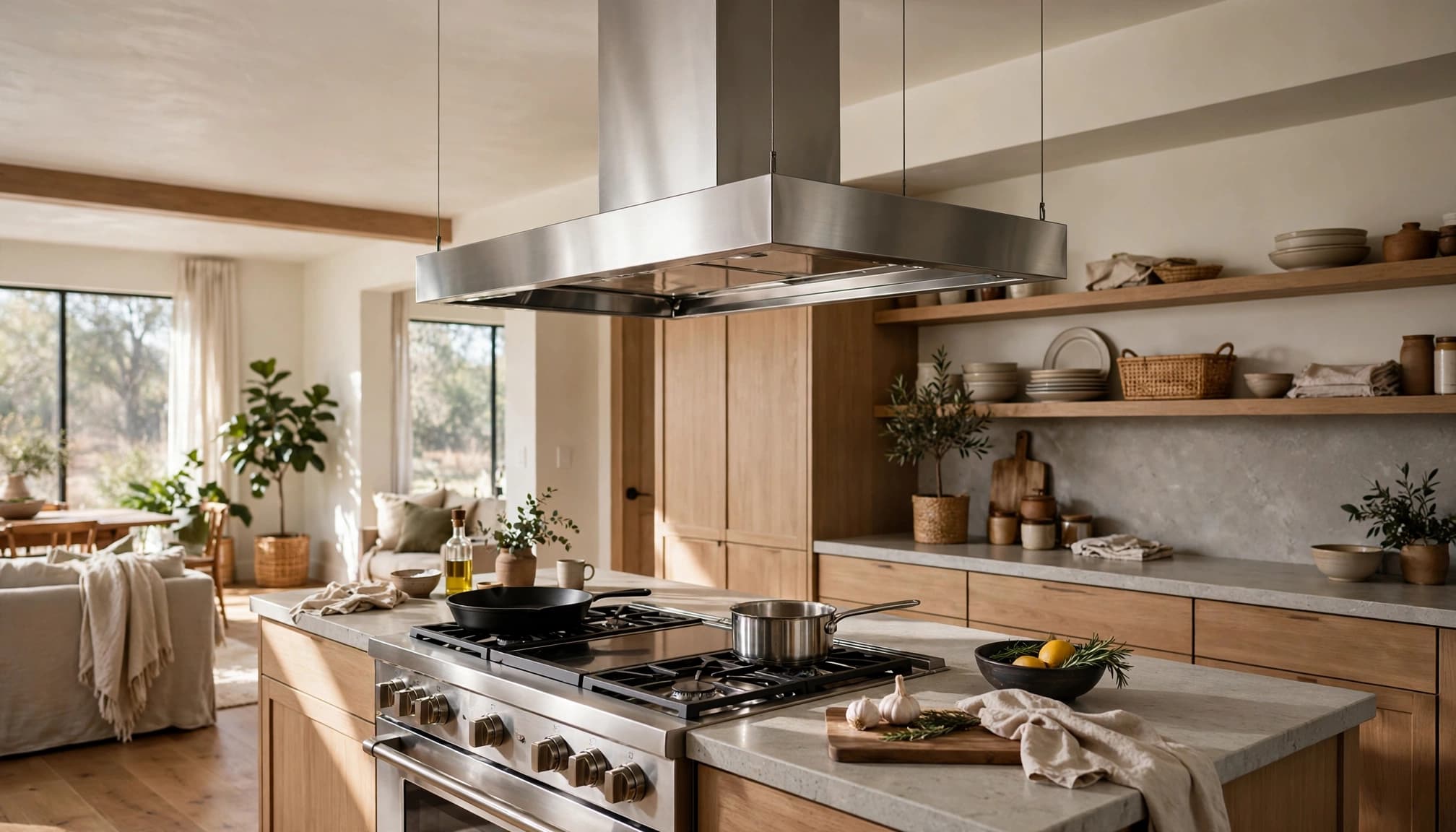
The Cosmo 668ICS750 is a 30-inch island-mount range hood with a curved glass canopy, three fan speeds and up to 380 CFM of airflow. It installs above a cooktop positioned away from a wall and can vent cooking emissions outdoors through ceiling ductwork.
The hood includes permanent dishwasher-safe stainless-steel baffle filters, soft-touch digital controls and LED lighting. Cosmo lists noise as low as approximately 45 dB on the lowest setting. Its stainless-steel body and tempered-glass canopy provide a lighter visual profile than a fully enclosed metal hood.

Choose it for an island cooktop with a planned ceiling exhaust route. Skip it if you need under-cabinet ventilation or cannot install secure ceiling support and outdoor ducting.
Main trade-off: Its 30-inch width may provide limited capture around a 30-inch island cooktop. A wider hood generally captures rising emissions more effectively.
For Readers in the UK and Europe
The hoods above are US models built for 120 V and US cabinet sizes, so they won’t suit most European kitchens. If you live in the UK or Europe, look at the Bosch Serie 4 DWB96DM50B instead. It is a 90 cm stainless steel chimney hood with up to 580 m³/h extraction, a noise level of around 60 dB and washable aluminium grease filters. Most importantly for air quality, it can be installed ducted, which means it vents cooking fumes outdoors. If you have a 60 cm hob, the same hood comes in a 60 cm version: Bosch DWB66DM50B.
Honest trade-off: it can also run in recirculation mode, but then it only filters grease and smells, not the gases from cooking. Choose ducted whenever your kitchen allows it.
Selection criteria and other good options
How we chose
These picks prioritize clear installation roles, published manufacturer specifications and practical everyday use. You get an under-cabinet option, a higher-capacity wall hood and an island model without treating every kitchen as the same installation.
No decorative finish guarantees a healthier kitchen. Capturing emissions and exhausting them outdoors are the health-related priorities.
Other good options
The Broan-NuTone EBS1244SS is a 24-inch slide-out hood with 400 maximum blower CFM. Its narrower format makes it an alternative for compact cooktops rather than a substitute for these wider models.
The Whirlpool WVW91330KS offers a 30-inch canopy format, 400 CFM and LED task lighting. It suits a moderate-capacity wall installation rather than the under-cabinet role covered here.
Match airflow, venting and mounting height
Treat CFM rules as starting points
For high-output gas cooking, one common sizing rule is 1 CFM per 100 BTU of rated input. A 45,000-BTU range suggests 450 CFM before considering capture and installation.
Proline’s recommendations are higher: 550 to 900 CFM for light cooking, 900 to 1,200 for frequent or high-heat cooking, and 1,200-plus for grills, woks or outdoor use. These recommendations reflect different cooking demands, not universal minimums.
Compare actual operating airflow and canopy coverage before increasing capacity. For international specifications, 1 CFM is approximately 1.7 m³/h. Range hood CFM isn’t interchangeable with an air purifier’s CADR.
Choose the exhaust route before the finish
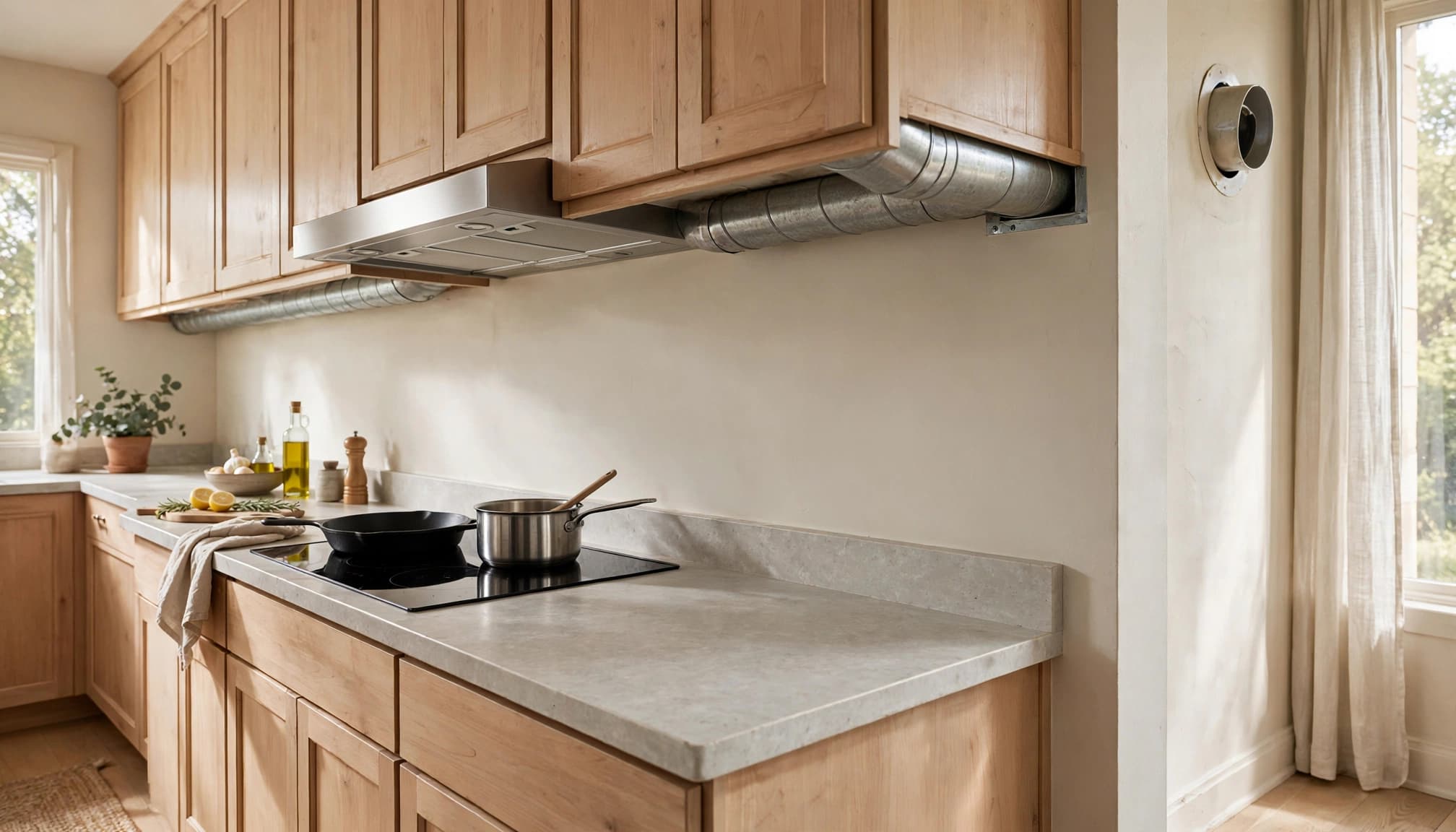
A ducted range hood exhausts outdoors and is the strongest choice for removing cooking emissions, heat and moisture. A ductless range hood recirculates air through grease and charcoal filters; it can reduce odors but doesn’t exhaust heat or steam. Convertible models support either configuration with the appropriate installation.
Use short, straight, smooth rigid metal ductwork. The Home Ventilating Institute’s ventilation guidance favors smooth metal over flexible ducting.
Never terminate kitchen exhaust inside an attic, basement, crawl space, wall cavity or garage. A backdraft damper limits outside air returning through the duct.
Common mounting ranges are 24 to 30 inches above an electric cooktop and 28 to 36 inches above gas, approximately 61 to 76 cm and 71 to 91 cm. Appliance installation requirements take priority. Powerful exhaust may need professionally designed make-up air to prevent depressurization and combustion-appliance backdrafting.
Frequently asked questions
How do you find a quiet range hood?
Compare sones at the speed you’ll use, rather than pairing low-speed noise with maximum airflow.
For rough context, buying guides compare one sone with a refrigerator, four with conversation and eight with light traffic. These are approximate listening references.
A comfortably usable medium setting matters more than an impressive maximum setting you avoid.
Is a ductless range hood worth it?
A ductless hood filters grease and some odors through charcoal, then blows the air back into your kitchen. It doesn’t remove heat, moisture or nitrogen dioxide from gas cooking. Choose ductless only when venting outdoors is impossible, for example in a rental, and open a window or run another exhaust fan while you cook.
Do range hoods remove gas stove pollution?
Yes, when they vent outdoors and cover the burners. A hood with a large capture area can reduce cooking pollutants by most of the way, but it works best on the back burners and when you start it before you cook and leave it running for 10 to 20 minutes afterward.
How often should you clean or replace filters?
Wash dishwasher-safe aluminum mesh grease filters about monthly, or sooner with frequent frying. Only wash filters identified as washable.
A conventional charcoal filter isn’t washable and generally needs replacement every few months. They address odors rather than replacing outdoor ventilation. Our guide to carbon filtration for household odors explains that distinction.
Why does smoke escape with the fan running?
Common causes include greasy filters, restricted ducts, insufficient canopy depth and front-burner cooking outside the capture area.
Start the hood before cooking. The EPA’s cooking ventilation advice recommends using back burners when possible and leaving the hood running for 10 to 20 minutes afterward.
If you’re tracking cooking-related changes, our guide to smart air monitors helps put readings in context.
Choose the hood you’ll use every day
The strongest choice combines good capture, outdoor exhaust and tolerable noise. More CFM helps only when the canopy and ductwork support it.
Start with the Cosmo 63175S for wall-mounted capacity, the Whirlpool WVU37UC0FS for lighter under-cabinet cooking, or the Cosmo 668ICS750 for an island. Match that shortlist to your cooktop dimensions and exhaust route before choosing the finish.