The Best Cold Press Juicers for Home Use: Maximize Nutrients and Yield
Quick Answer
The best cold press juicer for most homes is the Nama J2 Cold Press Juicer because it offers the strongest balance of juice quality, hands-free convenience, premium build and realistic daily usability.
If cleaning and batch juicing matter more to you, the Hurom H400 Easy Clean Slow Juicer may be the better choice, especially if you juice for two people or like making enough for two to three days.
The Hurom H70FT is the compact Easy Clean model I use in my own kitchen. It works well for regular vegetable-heavy juices, but because we often make juice for both my husband and me, I can see why the H400 may be the more practical upgrade.
If you want a large hopper for bigger family batches, the Kuvings AUTO10 is the strongest high-capacity option. If you care most about serious extraction and leafy greens, the Tribest Greenstar Elite is the specialist pick.
For most people, the best cold press juicer is not only the one that makes beautiful juice. It is the one you will actually use several times per week without dreading the prep, cleanup or counter space.
Why This Guide Exists
A cold press juicer can be one of the most useful healthy kitchen upgrades, especially if you want an easier way to get more vegetables, herbs, ginger, lemon and deeply colored produce into your day.
But juicers can also become expensive clutter.
Some are too hard to clean. Some take too much prep. Some are better for one glass, while others are built for couples, families or batch juicing. Some feel premium but still raise questions for people trying to build a lower-toxin kitchen routine, especially around plastic contact, cleaning and long-term use.
That is why this guide looks at cold press juicers through a Healthy Home Upgrade lens:
- juice quality
- ease of use
- cleaning friction
- batch capacity
- materials and food-contact design
- countertop practicality
- whether the machine supports a real habit
- who should avoid each model
The goal is not to make juicing feel complicated or extreme. The goal is to help you choose a juicer that fits your kitchen, your routine and your health priorities.
Anita’s Take
I use the Hurom H70FT in my own kitchen, and that has shaped how I think about cold press juicers.
Before this model, I had an older Hurom with traditional metal strainers. It made good juice, but the cleaning process made juicing feel like more of a project. The H70FT is part of Hurom’s newer Easy Clean direction, and for me, that difference matters because it makes the habit much easier to keep.
I usually juice for both my husband and me, and we often make enough for two to three days at a time. My typical juice is vegetable-heavy, with ingredients like carrots, celery, beetroot, lemon, turmeric, ginger and either apple or grapefruit.

The H70FT works well for that kind of routine when you want a compact, easier-clean slow juicer. But because we often make batches, I can also see why I may eventually upgrade to the Hurom H400. It is better suited to people who want more capacity while still staying in Hurom’s Easy Clean family.
That is why I do not think the best juicer is only about maximum yield or the most impressive specs. For a real home kitchen, the best juicer is the one that makes a healthy routine easier to repeat.
If you juice for one or two people and want something compact, the H70FT makes a lot of sense. If you regularly juice for several days or more than one person, the H400 may be the more practical upgrade.
Top Picks: Best Cold Press Juicers for Home Use
Best Overall for Most Homes: Nama J2 Cold Press Juicer
The Nama J2 is still the strongest overall pick for many homes because it combines hands-free loading, strong juice quality and routine-friendly design.
Best for: people who want a premium, self-feeding cold press juicer and do not want to stand over the machine feeding every ingredient one piece at a time.
Best Easy-Clean Batch Upgrade: Hurom H400 Easy Clean Slow Juicer
The Hurom H400 is the model I would look at first if you like Hurom’s Easy Clean direction but want more capacity than a compact juicer. It is especially relevant if you make juice for two people or like preparing enough for two to three days.
Best for: people who want an easier-clean cold press juicer with more batch capacity.
Best Founder-Used Compact Pick: Hurom H70FT
The Hurom H70FT is the compact Easy Clean model I use in my own kitchen. It is a strong fit if you want a premium slow juicer for one or two people and care a lot about cleaning being simple enough to keep the habit going.
Best for: people who want a compact, easier-clean cold press juicer for regular vegetable-heavy juices.
Best Large-Batch Juicer: Kuvings AUTO10
The Kuvings AUTO10 is the strongest high-capacity pick for families, bigger batches and people who want a large hopper.
Best for: households that juice for several people or prefer fewer, larger juicing sessions.
Best Compact Premium Alternative: Nama J3 Cold Press Juicer
The Nama J3 is a strong option if you like Nama’s premium approach but want something smaller than the J2.
Best for: singles, couples, apartments and smaller kitchens.
Best for Serious Extraction: Tribest Greenstar Elite
The Tribest Greenstar Elite is the specialist choice for serious juicing enthusiasts who care about extraction, leafy greens and twin-gear performance.
Best for: people who do not mind a more involved process in exchange for serious juice extraction.
Best Cold Press Juicers at a Glance
| Juicer | Best For | Why It Stands Out | Main Trade-Off |
| Nama J2 Cold Press Juicer | Best overall | Hands-free loading, premium feel and strong daily usability | Expensive and still needs cleaning after each use |
| Hurom H400 Easy Clean Slow Juicer | Best easy-clean batch upgrade | More practical for couples, batch juicing and easier cleaning | Premium price and larger vertical footprint |
| Hurom H70FT | Best founder-used compact pick | Compact Easy Clean Hurom model I use in my own kitchen | Smaller capacity than H400 or Kuvings AUTO10 |
| Kuvings AUTO10 | Best large-batch juicer | Large hopper and strong capacity for families or batch prep | Bulky for small kitchens |
| Nama J3 Cold Press Juicer | Best compact premium alternative | Smaller footprint with a premium cold press experience | Less ideal for large-batch juicing |
| Tribest Greenstar Elite | Best for serious extraction | Twin-gear design for dedicated juicers and leafy greens | More involved setup and cleanup |
Jump to Review
Nama J2 Cold Press Juicer
Hurom H400 Easy Clean Slow Juicer
Hurom H70FT
Kuvings AUTO10
Nama J3 Cold Press Juicer
Tribest Greenstar Elite
How to Read This Guide
If you are brand new to juicing, start with the Nama J2, Hurom H400 or Hurom H70FT, depending on whether you want overall convenience, batch capacity or a compact founder-used option.
If you have a family or want to make several servings at once, look first at the Kuvings AUTO10 or Hurom H400.
If you are mainly juicing for one person and want something smaller, compare the Hurom H70FT and Nama J3.
If you already juice often and want a more serious extraction machine, look at the Tribest Greenstar Elite.
This guide is not about detox promises or miracle claims. Cold press juice can be a helpful way to add more plant foods to your routine, but it does not replace whole vegetables, fiber, balanced meals or medical care.
Use juicing as a practical tool, not a health shortcut.
Product Reviews: The Best Cold Press Juicers for Home Use
Before we get into each model, one important note: I personally use the Hurom H70FT in my own kitchen. I have not personally tested every juicer in this guide. For the other models, this guide is based on product specifications, brand information, use case, design features and how each juicer fits into a healthier home kitchen routine.
1. Nama J2 Cold Press Juicer
Best overall for most homes
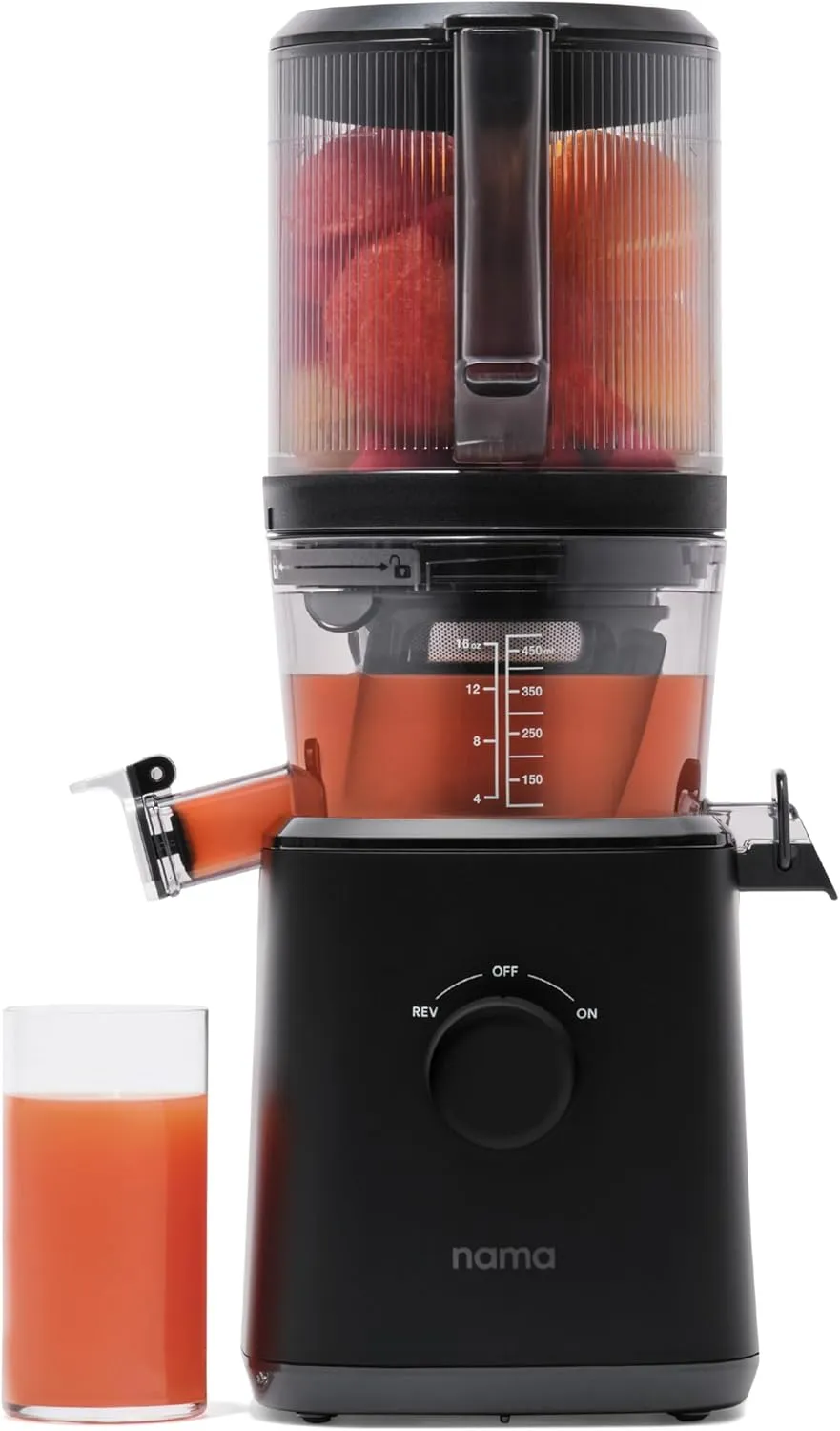
The Nama J2 Cold Press Juicer is the best overall pick for many homes because it solves one of the biggest problems with traditional juicing: standing over the machine and feeding ingredients one piece at a time.
The J2 has a hands-free loading design, which makes the process feel much easier. You can add produce to the hopper, start the machine and let it work through the ingredients. For people who want juicing to become a routine, that matters.
This is especially useful if you make green juice, ginger shots, carrot juice, citrus blends or vegetable-heavy juices several times per week.
Why It Is Included
The Nama J2 is included because it offers one of the strongest combinations of convenience, juice quality, premium design and routine-friendly use.
For many people, the hardest part of juicing is not the juice itself. It is the prep, the feeding, the cleanup and the feeling that the whole process takes too long. The J2 reduces some of that friction.
Pros
Self-feeding design makes juicing easier
Good choice for people who juice several times per week
Premium design and strong brand reputation
Works well for a wide range of produce
Helpful for people who want a juicing habit, not just an occasional appliance
Long warranty compared with many kitchen appliances
Cons
Expensive
Still requires cleaning after every use
May be more machine than you need if you only juice occasionally
Takes up more counter space than a very compact juicer
Not the cheapest way to start juicing
Material and Safety Notes
Nama lists the J2 as made with food-safe, BPA-free materials, including a SAN hopper, Tritan chamber, Ultem PEI auger and stainless steel plus Ultem strainers.
From a lower-toxin kitchen perspective, that is a better material profile than older appliances made with unclear food-contact plastics. But it is still not a plastic-free juicer. The juice still touches engineered plastic parts, so the most realistic approach is to choose reputable materials, clean the machine promptly and avoid letting acidic juice sit in the chamber longer than needed.
As with any juicer, rinse the parts soon after use, especially after strong ingredients like beetroot, ginger, turmeric and celery.
Best For
The Nama J2 is best for people who want a premium cold press juicer that makes regular juicing easier.
It is a strong fit if you:
juice several times per week
want hands-free loading
make vegetable-heavy juices
want a premium countertop appliance
prefer convenience over the lowest possible price
Who Should Avoid It
Avoid the Nama J2 if you want the cheapest juicer, if you have very limited counter space or if you know you will only juice once in a while.
If you mostly want one small glass at a time, a smaller model may be enough.
2. Hurom H400 Easy Clean Slow Juicer
Best easy-clean batch upgrade
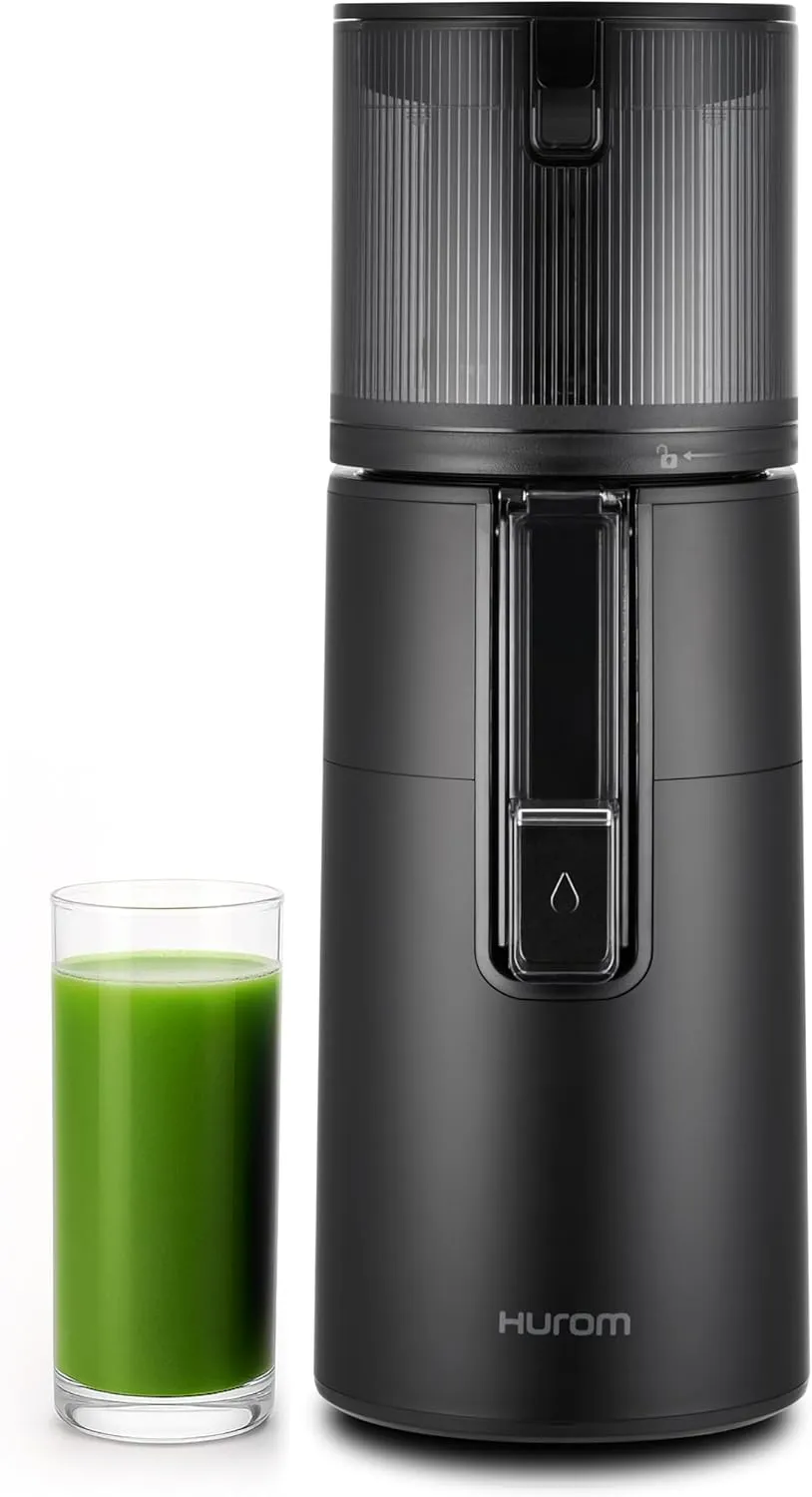
The Hurom H400 Easy Clean Slow Juicer is the model I would look at first if you like Hurom’s Easy Clean direction but want more capacity than a compact juicer.
This is especially relevant for the way we juice in my own home. I usually make juice for both my husband and me, and we often prepare enough for two to three days. My current Hurom H70FT works well, but if I upgrade, it will most likely be because I want more batch capacity while staying with Hurom’s easier-clean design.
That is where the H400 makes sense.
Why It Is Included
The H400 is included because it focuses on two things that matter in real kitchens: easier cleaning and more practical capacity.
A juicer can be technically impressive, but if you avoid using it because the parts are annoying to clean, it will not support your daily routine. The H400 is designed to make that process less frustrating.
Pros
Strong easy-clean focus
Better suited to batch juicing than smaller compact models
Good fit for couples or households making juice for more than one day
Premium Hurom design
Useful if cleaning is your biggest barrier to juicing
Good option if you want to upgrade from a smaller Hurom
Cons
Premium price
Larger than compact models
May be more than you need for single servings
Still requires proper cleaning and drying
May feel bulky in a small kitchen
Material and Safety Notes
Hurom describes the H400 as 100% BPA-free, with materials that include an ABS body, Tritan chamber and Ultem squeezing screw.
For a Healthy Home Upgrade setup, the practical benefit is not that this makes the machine “toxin-free.” It means the brand is using common higher-end juicer materials and is more transparent than many generic appliances.
The bigger advantage for real life is the Easy Clean design. If a juicer is easier to clean, you are more likely to clean it properly, dry it fully and keep using it consistently.
This matters when you juice ingredients like celery, carrot, beetroot, turmeric and ginger, which can leave strong color, fibers and residue.
Best For
The Hurom H400 is best for people who want a premium, easier-clean cold press juicer with more batch capacity.
It is a strong fit if you:
- juice for two people
- make enough for two to three days
- want easier cleaning
- like Hurom’s Easy Clean direction
- want to upgrade from a smaller slow juicer
- prefer a vertical juicer over a twin-gear machine
Who Should Avoid It
Avoid the H400 if you have a very small kitchen, want the lowest-cost juicer or only make one small juice occasionally.
If you juice only for yourself and want something more compact, the Hurom H70FT or Nama J3 may be a better fit.
3. Hurom H70FT
Best founder-used compact pick
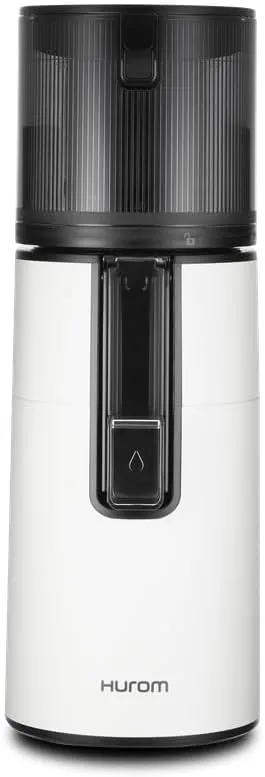
The Hurom H70FT is the compact Easy Clean model I use in my own kitchen.
I chose it because I wanted a slow juicer that felt easier to clean than my older Hurom with traditional metal strainers. That older model made good juice, but the cleaning was more annoying. With the H70FT, juicing feels more realistic as a regular habit.
My typical juice is vegetable-heavy. I often use carrots, celery, beetroot, lemon, turmeric, ginger and either apple or grapefruit. It is not a sweet juice in the dessert sense. It is more of a strong, colorful wellness routine.
For that kind of juice, the H70FT works well. It is compact, modern and easier to clean than the older-style juicers I have used before.
Why It Is Included
The H70FT is included because it is not just a product I researched. It is the one I actually use.
That makes it useful as a real-world compact pick for people who want a premium slow juicer without choosing the largest machine.
It is especially relevant if you want to juice for one or two people and care about cleanup.
Pros
I use it in my own kitchen
Compact compared with larger batch juicers
Easier to clean than older Hurom models with traditional metal strainers
Works well for vegetable-heavy juices
Good for regular juicing for one or two people
A realistic option for smaller kitchens
Cons
Not the best choice for large batches
May require more rounds if you juice for several days
Still needs immediate cleaning after use
Smaller capacity than H400 or Kuvings AUTO10
Premium price compared with basic juicers
Material and Safety Notes
Hurom Europe describes the H70-FT as made from BPA-free materials and highlights Tritan, stainless steel and Ultem among the food-contact materials used in the line.
One reason I prefer this newer Hurom Easy Clean direction is that cleaning feels more achievable. For me, that is part of a lower-toxin kitchen routine too, because a product that is easy to clean is more likely to be cleaned properly.
With my own juices, I rinse and clean the machine after use because beetroot, turmeric and ginger can stain and leave residue. I would not leave pulp sitting in the juicer.
This is not a plastic-free appliance, but the combination of BPA-free materials, easier cleaning and compact daily usability makes it a practical option for people who want a healthier routine without making the kitchen feel complicated.
Best For
The Hurom H70FT is best for people who want a compact premium juicer for regular vegetable-heavy juice.
It is a strong fit if you:
- juice for one or two people
- want a smaller Hurom
- care about easier cleaning
- make strong vegetable juices
- do not want a huge appliance on the counter
- want something more realistic than an older hard-to-clean model
Who Should Avoid It
Avoid the H70FT if you regularly make large batches for several people or want to prep juice for many days at once.
If you often juice for two people and want enough for two to three days, the H400 may be a more practical upgrade.
4. Kuvings AUTO10
Best large-batch juicer
The Kuvings AUTO10 is the best large-batch pick in this guide. It is built for people who want to load more produce at once and let the juicer do more of the work.
This makes it a strong option for families, larger households or anyone who likes making several servings at a time.
If your main problem with juicing is repeated prep and reloading, the AUTO10 is worth looking at.
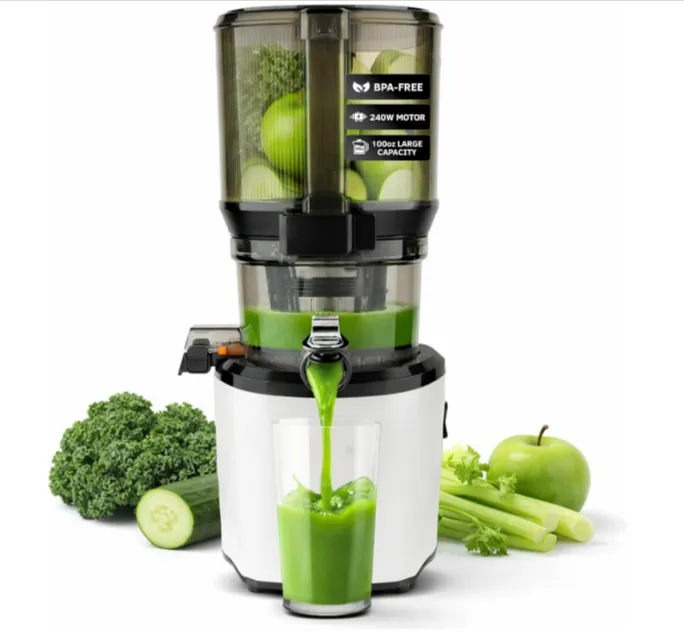
Why It Is Included
The Kuvings AUTO10 is included because capacity is a real issue for many people.
A smaller juicer can be excellent, but if you are juicing for two or more people, or making enough for more than one day, a larger hopper can change the whole experience.
This is the model I would compare closely against the Hurom H400 if batch juicing is your main priority.
Pros
Large hopper for batch juicing
Good fit for families or two-person households
Reduces repeated loading and prep friction
Hands-free style operation
Strong choice for people who juice a lot at once
Useful for carrots, celery, apples, citrus and mixed produce
Cons
Large appliance
May feel too bulky for small kitchens
More capacity also means more parts to handle
Premium price
May be more machine than you need for single servings
Material and Safety Notes
Kuvings highlights Ultem and Tritan as key materials across its juicer range, and the brand positions these materials as durable, food-contact choices.
For the AUTO10 specifically, the main reason to consider it is capacity. A bigger hopper can reduce repeated loading, but it also means you need enough sink space and drying space after use.
From a lower-toxin kitchen perspective, the same rule applies: do not assume “BPA-free” means plastic-free or risk-free. Look for transparent materials, clean the parts promptly and avoid letting juice or pulp sit in the machine.
If you juice colorful or fibrous ingredients like beetroot, turmeric, ginger, celery and greens, clean the parts soon after use to reduce residue and staining.
Best For
The Kuvings AUTO10 is best for people who want large-batch juicing and less repeated loading.
It is a strong fit if you:
- juice for a family
- make several servings at once
- want a large hopper
- prefer fewer juicing sessions per week
- have enough counter or storage space
- want a batch-focused premium juicer
Who Should Avoid It
Avoid the Kuvings AUTO10 if you have a small kitchen, only juice for yourself or dislike cleaning larger appliances.
If your biggest concern is easy cleaning rather than maximum capacity, the Hurom H400 may be a better fit.
5. Nama J3 Cold Press Juicer
Best compact premium alternative
The Nama J3 Cold Press Juicer is a compact premium option for people who like the Nama brand but want a smaller machine than the J2.
It is a good fit for apartments, smaller kitchens, singles and couples who do not need large-batch capacity.
The J3 makes sense if you want a premium juicing experience, but you know a large machine will annoy you or take up too much space.
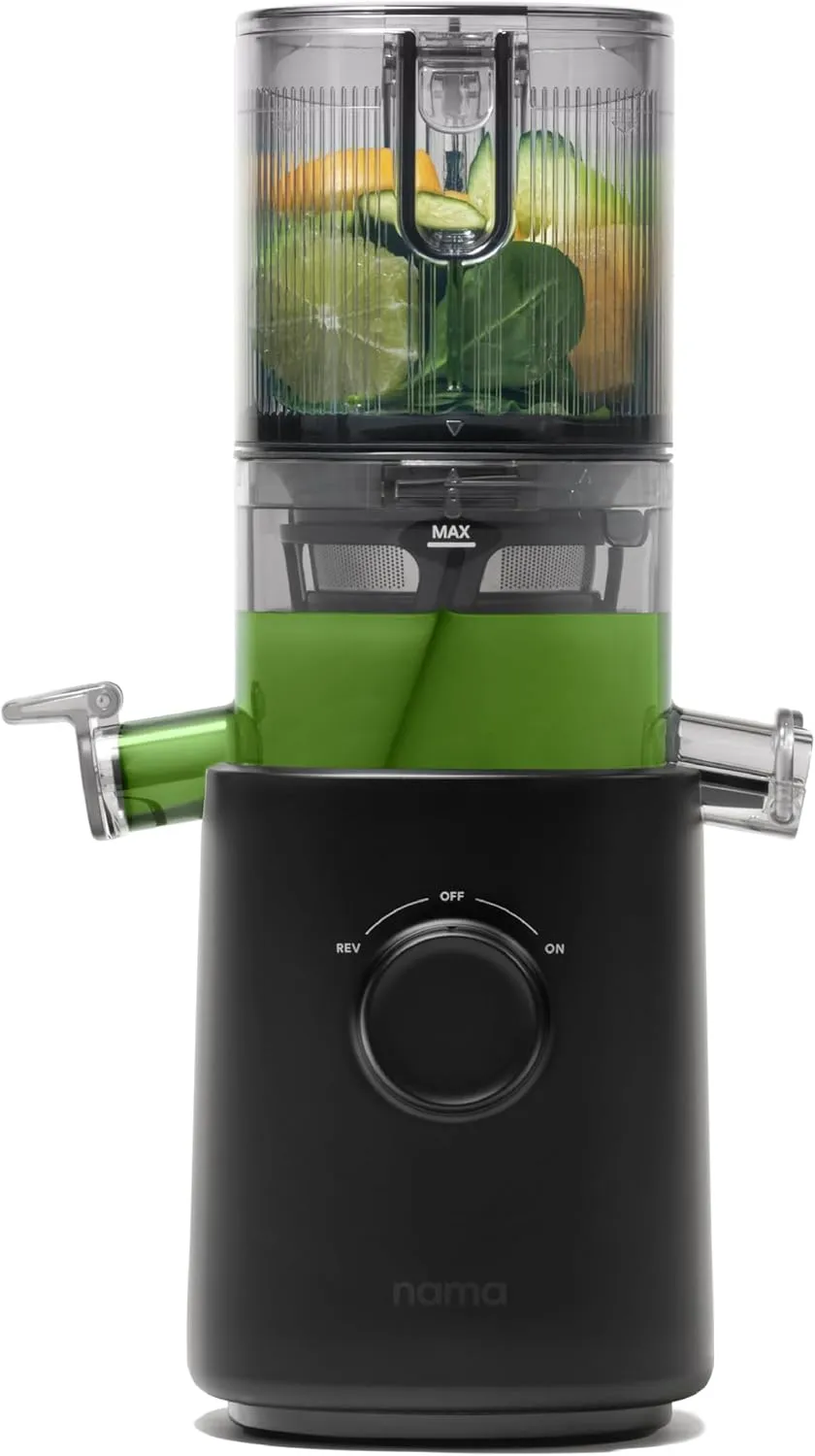
Why It Is Included
The Nama J3 is included because not everyone needs a full-size premium juicer.
For many people, the best juicer is the one that stays accessible on the counter and does not feel too big for daily life. The J3 is designed for that smaller-space use case.
Pros
More compact than many premium juicers
Good choice for small kitchens
Premium Nama design
Better for one or two people than large households
Long warranty compared with many appliances
Good fit for people who want smaller daily juices
Cons
Not ideal for larger batches
Smaller capacity than the Nama J2, Hurom H400 or Kuvings AUTO10
Still expensive compared with basic juicers
May not be the best choice if you want to prep juice for several days
Material and Safety Notes
Nama lists the J3 as made with food-safe, BPA-free materials, including an Ultem auger, Tritan chamber, ABS hopper, stainless steel and Ultem strainers, ABS containers and an ABS base.
This is a transparent material list, which I like. But it also shows why “non-toxic juicer” should be used carefully. The J3 is not plastic-free. It uses several engineered plastics, including ABS and Tritan, alongside Ultem and stainless steel.
For a lower-toxin kitchen, that does not automatically make it a bad choice. It simply means you should understand what you are buying: a compact premium juicer with disclosed BPA-free materials, not a completely plastic-free appliance.
Best For
The Nama J3 is best for people who want a compact premium cold press juicer.
It is a strong fit if you:
- juice for one person
- have a small kitchen
- want a premium brand
- do not need large-batch capacity
- prefer a smaller countertop appliance
- want a simpler daily routine
Who Should Avoid It
Avoid the Nama J3 if you make juice for a family, want large batches or prefer the larger self-feeding experience of the Nama J2.
If you juice for two people and like making enough for two to three days, you may prefer the Hurom H400 or Kuvings AUTO10.
6. Tribest Greenstar Elite
Best for serious extraction
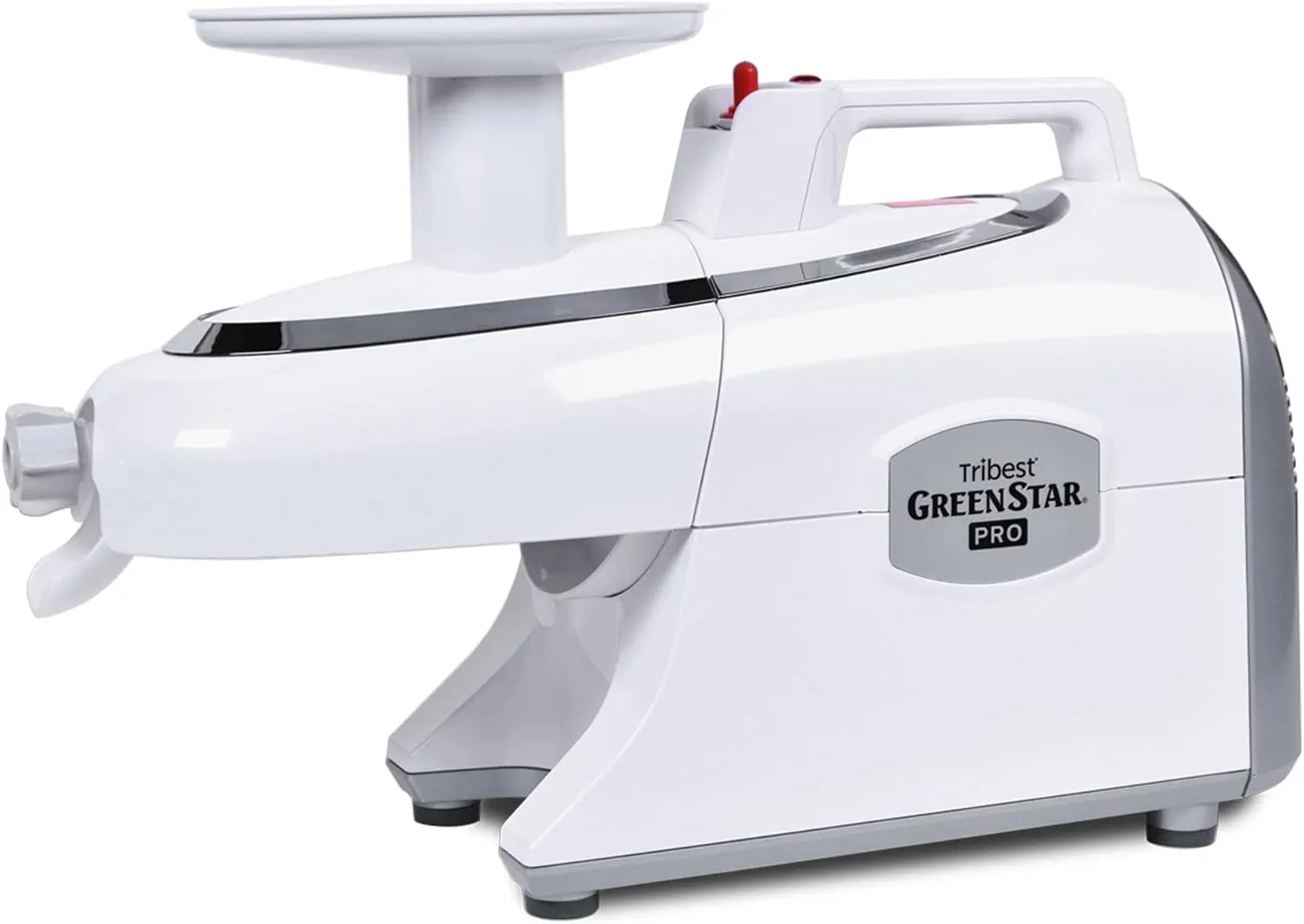
The Tribest Greenstar Elite is the specialist choice in this guide. It uses a horizontal twin-gear masticating design and is aimed more at serious juicing enthusiasts than casual beginners.
This is not the easiest juicer for everyone, but it can make sense if you care deeply about extraction, leafy greens and a more traditional slow juicing process.
Why It Is Included
The Greenstar Elite is included because it represents a different type of juicer than the vertical self-feeding models.
Instead of focusing mainly on convenience and hopper capacity, it focuses more on serious mastication and extraction. That can be appealing if you juice a lot of leafy greens or want a more dedicated machine.
Pros
Twin-gear masticating design
Strong option for serious juicing enthusiasts
Good fit for leafy greens and fibrous produce
Built for people who care about extraction
More specialized than casual vertical juicers
Long-standing model with a dedicated following
Cons
More involved to use
More involved to clean
Not the most beginner-friendly option
Larger and heavier than compact juicers
Less convenient for quick daily juicing
May be too much work for many home kitchens
Food-contact material transparency is less front-and-center than some newer vertical juicer brands
Material and Safety Notes
Tribest lists the Greenstar Elite as a horizontal twin-gear masticating slow juicer with a 110 RPM speed and a 12-year household warranty.
The strength of this model is its extraction style, not easy-clean convenience. It includes multiple accessories and parts, which can be useful for serious juicers but may feel like too much work for casual users.
From a lower-toxin kitchen perspective, I would not make strong material claims about the Greenstar Elite unless the current manual or manufacturer page clearly confirms every food-contact component. For now, I would treat the more involved parts and less obvious material transparency as a practical limitation, not as proof of a specific safety problem.
Best For
The Tribest Greenstar Elite is best for serious juicing enthusiasts.
It is a strong fit if you:
- juice often
- care about leafy greens
- want twin-gear extraction
- do not mind cleaning more parts
- prefer performance over convenience
- already know you enjoy juicing
Who Should Avoid It
Avoid the Greenstar Elite if you want a simple, easy-clean, beginner-friendly juicer.
If your main goal is to make vegetable-heavy juice a few times per week without making the kitchen feel like a project, the Hurom H70FT, Hurom H400 or Nama J2 will probably feel easier.
Avoid it also if you want the most transparent, easy-to-compare modern material profile without needing to dig into manuals and replacement parts.
How to Choose the Best Cold Press Juicer for Your Home
Choosing a cold press juicer is not only about motor power or juice yield. The best choice depends on how you will actually use it.
A juicer that works beautifully for one person may be too small for a couple. A large batch juicer may be perfect for a family but annoying in a small kitchen. A serious twin-gear juicer may extract well, but if the cleaning feels like a project, it may not support a real routine.
Here is what I would look at before choosing.
1. Capacity: One Glass or Two to Three Days?
This is one of the most important questions.
If you only want one fresh juice at a time, a compact model like the Hurom H70FT or Nama J3 may be enough.
If you juice for two people, or you like making enough for two to three days, a larger model like the Hurom H400, Nama J2 or Kuvings AUTO10 may be more practical.
This is exactly why I may eventually upgrade from my Hurom H70FT to the H400. I like my H70FT, but because we often juice for both my husband and me, batch capacity matters.
Choose a compact juicer if:
You juice for one person
You have a small kitchen
You want easy storage
You prefer fresh juice in smaller amounts
You do not want a large appliance on the counter
Choose a larger batch juicer if:
You juice for two or more people
You want to make enough for two to three days
You use lots of carrots, celery, beetroot and greens
You want fewer juicing sessions per week
You do not mind a larger machine
2. Cleaning: The Habit Maker or Habit Breaker
Cleaning is one of the biggest reasons people stop juicing.
A juicer can make excellent juice, but if it takes too long to clean, most people slowly stop using it. This is why I care so much about Hurom’s Easy Clean direction.
My older Hurom made good juice, but the traditional metal strainers made cleaning feel more involved. My H70FT is much easier for me to keep using because cleanup feels more realistic.
If you are busy, or you know you do not want complicated cleanup, prioritize an easy-clean design over tiny performance differences.
This also matters if you are building a lower-toxin meal prep setup. A juicer that is easy to clean is more likely to be cleaned properly, dried properly and used consistently.
3. Ingredients: What Do You Actually Juice?
Your ingredient style matters.
My own juice is usually vegetable-heavy, with ingredients like:
carrots
celery
beetroot
lemon
turmeric
ginger
apple or grapefruit
That kind of juice needs a machine that can handle firm roots, fibrous celery, citrus and staining ingredients like beetroot and turmeric.
If you mostly juice leafy greens, a serious extraction machine like the Tribest Greenstar Elite may be worth considering.
If you mostly juice mixed produce for daily wellness, a vertical slow juicer like the Hurom H70FT, Hurom H400, Nama J2 or Kuvings AUTO10 will usually feel more convenient.
If you use a lot of fresh herbs, turmeric or ginger, a simple non-toxic herb toolkit can also make the prep side feel easier.
4. Counter Space and Storage
A juicer you can keep accessible is often a juicer you will use more.
If your kitchen is small, a compact model may be better than the technically “best” large model. If you have to drag the juicer out of a cupboard every time, your habit has more friction.
For smaller kitchens, look at:
Hurom H70FT
Nama J3
For larger kitchens or batch juicing, look at:
Hurom H400
Nama J2
Kuvings AUTO10
5. Plastic Contact and Food-Contact Materials
Most modern juicers include some plastic food-contact parts. That does not automatically make them a bad choice, but it is worth paying attention to.
For a lower-toxin kitchen routine, I would look for:
clear material lists
BPA-free claims from the brand
Tritan, Ultem, stainless steel or similarly disclosed food-contact materials
replaceable parts
easy cleaning
smooth surfaces that do not trap residue
no strong plastic smell
no need for harsh cleaning chemicals
parts that dry properly between uses
I would not call any juicer completely “non-toxic” unless the brand provides unusually strong and specific material documentation. A more responsible way to think about it is this:
Choose a juicer from a reputable brand, look for transparent food-contact materials, clean it promptly, avoid letting juice sit in the machine, and pay attention to the parts that touch your juice.
BPA-free is useful information, but it does not mean plastic-free. Tritan, Ultem, ABS and SAN are still engineered materials. Stainless steel parts can be a plus, but the full appliance design matters too.
If you are already building a safer food prep setup, your juicer should fit alongside tools like non-toxic cutting boards, glass storage containers and a low-toxin meal prep station.
6. Juice Storage: Fresh Is Best, but Real Life Matters
Fresh juice is usually best soon after making it. But real life is not always perfect.
In my home, we often make enough juice for two to three days. That makes juicing more realistic because we do not have to clean the machine every single day.
If you store juice, I would keep it simple:
Use clean glass bottles or jars
Fill them close to the top to reduce air space
Store them in the refrigerator right away
Keep them tightly sealed
Shake before drinking
Use your senses before drinking older juice
Do not keep juice if it smells off, tastes fermented or looks wrong
Vegetable-heavy juices with lemon and ginger can hold up reasonably well for short-term storage, but the taste, color and freshness can change over time.
If you want maximum freshness, drink it the same day. If you want a realistic routine, making enough for the next day or two can still be a useful compromise.
What to Juice Most Often
The best everyday juices are usually vegetable-heavy, not fruit-heavy.
Good ingredients include:
- cucumber
- celery
- carrot
- beetroot
- lemon
- ginger
- turmeric
- parsley
- cilantro
- romaine
- spinach
- green apple
- grapefruit
- fennel
A good rule is to use fruit as flavor, not as the base of the whole juice.
For example, I like using apple or grapefruit to balance stronger ingredients, but I do not want the juice to become mostly fruit sugar.
What to Be Careful With
Cold press juicing can be a helpful healthy kitchen habit, but it should stay grounded.
Juice removes much of the fiber from whole fruits and vegetables.
Fruit-heavy juices can contain a lot of sugar.
Juice should not replace whole vegetables.
Juice does not replace balanced meals.
Juice does not detox your body in a magical way.
Large amounts of grapefruit may interact with certain medications.
Very green juices may not be suitable for everyone, especially people on certain medications.
If you have blood sugar issues, be careful with fruit-heavy juices.
The healthiest way to use a juicer is as a tool for adding more plant foods, not as a replacement for normal food or medical care.
Cold Press vs. Centrifugal Juicer
A centrifugal juicer is usually faster and cheaper. It shreds produce at high speed and separates juice from pulp quickly.
A cold press juicer works more slowly by crushing and pressing ingredients. It usually creates less foam and often works better for leafy greens and dense produce.
For occasional orange or apple juice, a centrifugal juicer may be enough.
For regular vegetable-heavy juicing, ginger shots, green juice and a quieter routine, I would usually choose a cold press juicer.
Which Juicer Should You Choose?
Choose the Nama J2 if:
You want the best overall balance
You want hands-free loading
You juice several times per week
You want a premium experience
You do not want a tiny compact model
Choose the Hurom H400 if:
You want easier cleaning
You juice for two people
You make enough for two to three days
You want more capacity than a compact Hurom
You like Hurom’s Easy Clean direction
Choose the Hurom H70FT if:
You want a compact Hurom
You juice for one or two people
You care about easier cleaning
You make vegetable-heavy juices
You want the model I use in my own kitchen
Choose the Kuvings AUTO10 if:
You want large batch capacity
You juice for a family
You want a large hopper
You prefer fewer juicing sessions
You have enough kitchen space
Choose the Nama J3 if:
You want a compact premium juicer
You have a smaller kitchen
You juice for one person
You like the Nama brand
You do not need large batches
Choose the Tribest Greenstar Elite if:
You are a serious juicing enthusiast
You juice lots of leafy greens
You care about twin-gear extraction
You do not mind more cleaning
You want performance over convenience
Best Overall Recommendation
For most people, I would choose the Nama J2 as the best overall cold press juicer because it combines juice quality, convenience and a routine-friendly self-feeding design.
But if I were choosing specifically from my own real-life routine, the decision would look a little different.
I use the Hurom H70FT and like it as a compact, easier-clean juicer. It works well for my vegetable-heavy juices with carrot, celery, beetroot, lemon, turmeric, ginger and apple or grapefruit.
But because we often juice for both my husband and me and make enough for two to three days, the Hurom H400 is the model I would look at as a practical upgrade.
So my honest recommendation is this:
Choose the Nama J2 if you want the strongest overall premium juicer for most homes.
Choose the Hurom H400 if you want an easier-clean batch juicer for two people or several days of juice.
Choose the Hurom H70FT if you want the compact Hurom I personally use.
Choose the Kuvings AUTO10 if batch size is your top priority.
Choose the Tribest Greenstar Elite only if you are serious enough about extraction to accept more cleaning.
The best cold press juicer is the one that makes it easier for you to repeat a healthy routine without turning your kitchen into a project.
FAQ
What is the best cold press juicer for home use?
The best cold press juicer for most homes is the Nama J2 because it balances juice quality, convenience and hands-free loading. If easy cleaning and batch juicing matter most, the Hurom H400 is also a strong choice.
Is the Hurom H70FT worth it?
The Hurom H70FT is worth considering if you want a compact, easier-clean slow juicer for one or two people. I use it in my own kitchen and like it for vegetable-heavy juices, but I would consider the Hurom H400 if you want more batch capacity.
Is the Hurom H400 better than the H70FT?
The Hurom H400 is likely better if you want more capacity and regularly make juice for two people or several days. The H70FT is better if you want a more compact juicer for smaller routines.
Is cold press juice healthier than normal juice?
Cold press juice can be a helpful way to add more plant foods to your routine, especially vegetables, herbs, ginger and lemon. But juice still removes much of the fiber from whole produce, so it should not replace whole fruits and vegetables.
Can I make juice for two to three days?
Yes, many people make juice ahead for one to three days, but fresh is usually best. Store juice in clean glass bottles, refrigerate it right away, keep it tightly sealed and do not drink it if it smells or tastes off.
What is the easiest cold press juicer to clean?
The Hurom H400 is one of the strongest easy-clean options in this guide. The Hurom H70FT is also easier to clean than older Hurom models with traditional metal strainers, based on my own experience.
What is the best cold press juicer for beginners?
The Nama J2 is a strong beginner-friendly premium option because the self-feeding design makes the process easier. If you want something smaller, the Hurom H70FT or Nama J3 may be better.
Is a twin-gear juicer better?
A twin-gear juicer like the Tribest Greenstar Elite can be excellent for serious extraction and leafy greens, but it is usually more involved to use and clean. It is best for dedicated juicing enthusiasts, not casual beginners.
Should I juice every day?
You can juice daily if it fits your routine, but you do not have to. For many people, juicing two to three times per week is more realistic. A vegetable-heavy juice routine is usually better than drinking large amounts of fruit-heavy juice.
What should I juice for a lower-sugar green juice?
A lower-sugar green juice can include cucumber, celery, lemon, ginger, parsley, cilantro, romaine or spinach, with a small amount of green apple or grapefruit for taste.
Final Thoughts
A cold press juicer can be a beautiful addition to a healthier kitchen, but only if it fits the way you actually live.
If you want the strongest overall pick for most homes, start with the Nama J2.
If you want an easier-clean batch juicer and you often make juice for two people or several days, look at the Hurom H400.
If you want a compact model with real founder experience behind it, the Hurom H70FT is the one I use myself.
If you want large-batch capacity, compare the Kuvings AUTO10.
And if you are already serious about juicing and want twin-gear extraction, the Tribest Greenstar Elite may be worth the extra work.
For me, juicing is not about perfection. It is about making it easier to get more plants, more color and more healthy rituals into a normal week.
That is the kind of kitchen upgrade that actually lasts.