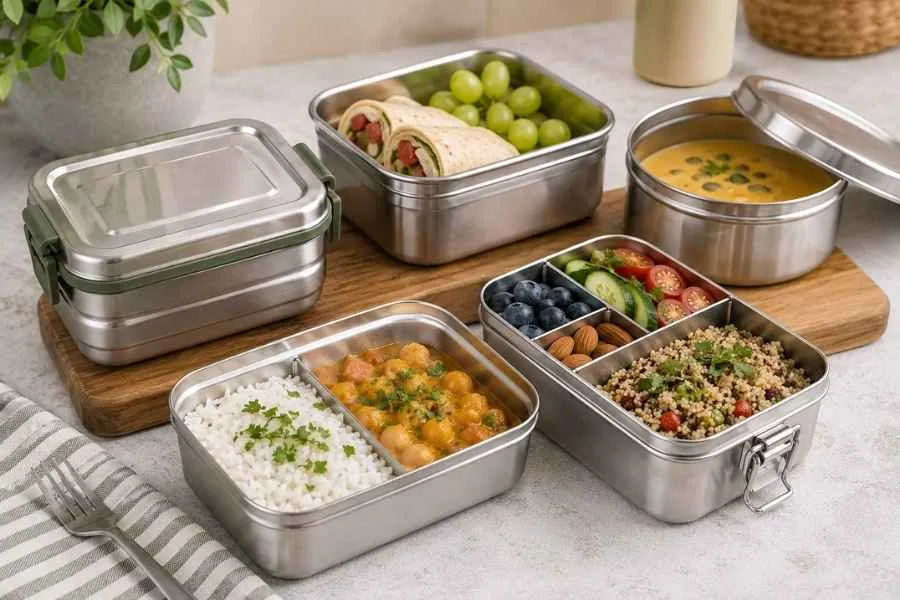
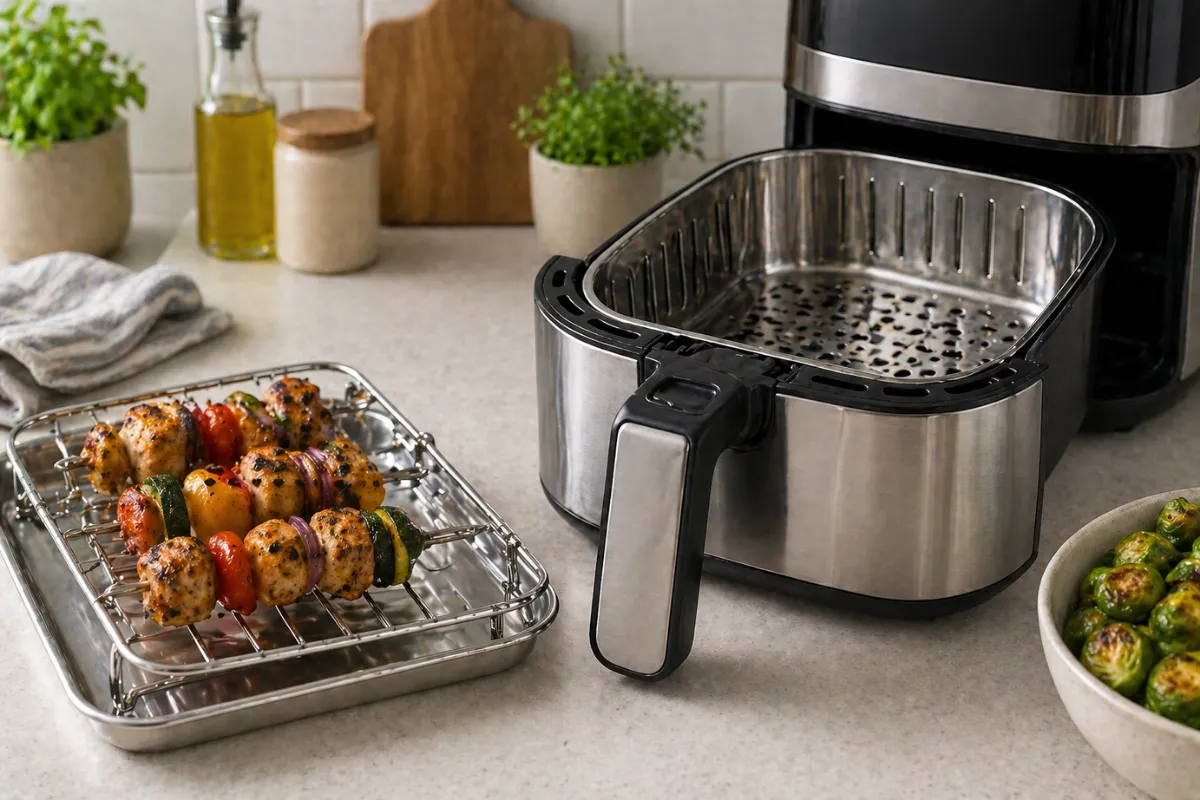
For most homes, stainless steel air fryers are one of the better low-tox choices, but the honest answer is not “perfect” or “magic.” The real strength of stainless is that it gives you a simple, durable, easy-to-clean food-contact surface instead of a coating that becomes the main story over time. Iowa State Extension describes stainless steel as non-reactive, non-toxic, easy to sanitize, long-lasting, and inert with food, while FDA’s Food Code says food-contact surfaces should be safe, durable, corrosion-resistant, smooth, easily cleanable, and resistant to scratching, scoring, chipping, and decomposition. I run a healthy home website, so I notice when a product gets marketed as “non-toxic” in a way that sounds cleaner than the reality. Stainless steel air fryers are a good example. They are often a stronger choice, but that does not mean every stainless claim deserves a free pass. In a Zero Toxic Load kitchen, the better question is not “Is this totally pure?” It is “Is this the simplest, most stable, most honest food-contact surface for daily use?” If you already know you want the simplest basket material, start with Safest Air Fryers with Stainless Steel Baskets before comparing anything else.
At a Glance
| Myth | Material Truth | What It Means in Real Life |
| Stainless steel means completely non-toxic in every sense | Stainless is one of the better defaults, not a perfect fantasy material | Better than many coated surfaces for most people, but still worth understanding honestly |
| PFAS-free automatically means problem solved | PFAS-free removes one concern, but materials still have to be durable and cleanable | Simpler surfaces still matter more than labels alone |
| Stainless never releases anything into food | Studies have found nickel and chromium release can happen, especially with acidic foods and newer cookware | For most people this is not the main issue, but nickel-sensitive users should pay attention |
| Any stainless air fryer is automatically the right choice | The actual food-contact surface still matters more than vague marketing language | Basket, tray, rack, and accessories matter more than buzzwords |
| Stainless is harder to live with than coated baskets | Stainless is often easier to clean honestly over time because there is no coating to preserve | Daily-use trust is one of its biggest strengths |
Also in This Article
- What “non-toxic” should really mean here
- The biggest myths about stainless steel air fryers
- Where stainless is genuinely better
- Nickel allergy and stainless steel cookware
- What stainless still does not solve
- Product recommendation
- FAQ
What “Non-Toxic” Should Really Mean Here
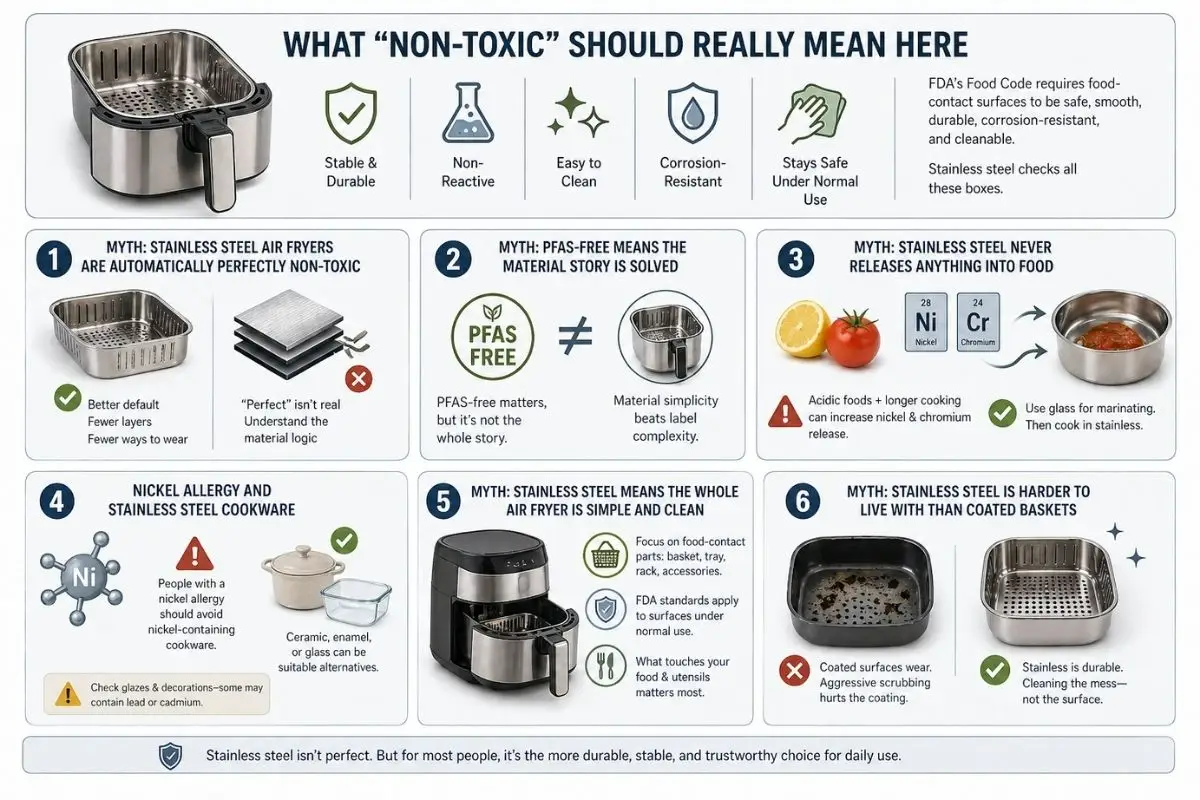
“Non-toxic” is not a scientific material category. It is a consumer shortcut. In practice, what matters more is whether the food-contact surface is stable, durable, non-reactive, easy to clean, and less likely to degrade into a problem under normal use. FDA’s Food Code focuses on exactly those qualities by requiring food-contact surfaces to remain safe, smooth, durable, corrosion-resistant, and cleanable. That is also why stainless steel tends to perform well in this conversation. It is not because the word “stainless” is magical. It is because the material logic is usually cleaner than a coated alternative. Iowa State Extension’s summary of glass, stainless steel, and ceramic as non-reactive, non-toxic, easily sanitized, and long-lasting supports that practical framing.
Myth 1: Stainless Steel Air Fryers Are Automatically Perfectly Non-Toxic
This is the first myth to throw out. Stainless steel is usually a better default, but “better” is not the same thing as “perfect.” Iowa State Extension describes stainless as non-reactive, non-toxic, long-lasting, inert with food, and easy to sanitize. That is a very strong material profile for something you use often. But the point is not to turn stainless into a religion. The point is to understand why it is usually the stronger daily-use choice. In a real kitchen, the safer option is often the one with fewer layers, fewer coatings, and fewer ways to wear badly over time.
Myth busted in action: safest air fryers with stainless steel baskets real leaching tests revealed.
Myth 2: PFAS-Free Means the Material Story Is Solved
PFAS-free matters, but it is not the whole story. FDA says PFAS have been authorized in some food-contact uses, including certain nonstick applications, and also says studies show negligible migration from polymerized nonstick cookware coatings under authorized use conditions. That is important because it means this is not a cartoon story where every coated product is automatically toxic. But for Healthy Home Upgrade, that still does not make coatings my first choice. The cleaner logic is simpler: if an uncoated stainless basket can do the job, you remove the coating question from the center of the decision. That is why stainless keeps winning in this cluster. Material simplicity still beats label complexity.
Stainless vs ceramic truth: stainless basket vs ceramic-coated air fryers, which actually lasts toxin-free?
Myth 3: Stainless Steel Never Releases Anything Into Food
This is the myth most “clean cookware” content gets wrong by oversimplifying. Published research has found that stainless steel cookware can release nickel and chromium into food, especially with acidic foods, longer cooking times, and newer cookware. One study found that after six hours of cooking tomato sauce, nickel and chromium concentrations increased substantially depending on the stainless steel grade used. That does not mean stainless suddenly becomes a bad choice. It means the honest version is better than the myth. For most people, stainless is still a strong option. But if you want a practical way to reduce migration, do not marinate food in large amounts of lemon juice, vinegar, or other strongly acidic liquids directly in the stainless basket or tray any longer than needed. Use a glass container for the acidic marinade first, then move the food to the basket for cooking. That advice follows directly from the evidence that acidic conditions increase nickel and chromium release.
Complete the safe system: best stainless steel air fryer accessories PFAS-free from top to bottom.
Nickel Allergy and Stainless Steel Cookware
This is the nuance most affiliate content never mentions. Health Canada says stainless steel cookware is commonly made from iron, chromium, and nickel, and explicitly advises people with a nickel allergy not to use cookware containing nickel. So if you have a significant nickel allergy, the honest answer may be that stainless is not your best default, even if it is a good choice for most other people. Health Canada also notes that ceramic, enamel, and glass cookware can be suitable alternatives, while warning that ceramic or glass foodware may raise concerns if glazes or decorations contain lead or cadmium. That means the alternative path for nickel-sensitive users is not “grab anything that is not stainless.” It is “be more selective, and think carefully about the actual food-contact material.”
Air fryer meets perfect pans: safest cookware materials, no compromises.
Myth 4: Stainless Steel Means the Whole Air Fryer Is Simple and Clean
The right question is not just “Does the product page say stainless steel?” The right question is what food-contact parts are actually stainless, and what will your food and utensils touch every day? FDA’s material criteria apply to surfaces under normal use, which is why the basket, tray, rack, and accessories matter more than vague lifestyle marketing. That is also why I keep pushing readers toward the basket surface itself. A stainless basket is a material choice. A “healthy” story around the whole machine is not.
Myth 5: Stainless Steel Is Harder to Live With Than Coated Baskets
This depends on what people mean by “easier.” A fresh coated basket may release food more easily at first. But daily-use ease is not only about slipperiness. It is also about whether the surface keeps making sense after repeated heating, grease buildup, and cleaning. This is where stainless has a real advantage. Burnt-on residue is just a cleaning problem, not a coating-preservation problem. With a coated basket, every aggressive scrub raises the same tension: are you cleaning the mess, or wearing down the surface? With stainless, the cleaning logic is more direct because there is no thin nonstick layer sitting at the center of the discussion. FDA’s cleanability and durability criteria are exactly why that matters for long-term use. So yes, stainless may need smarter preheating or slightly better cleanup habits. But it is often easier to trust over time, and that matters more in a real kitchen than the first two weeks of easy release.
What Stainless Steel Still Does Not Solve
Stainless is not a cure-all. It does not automatically make a bad design good. It does not fix poor airflow. It does not make a cramped basket larger. It does not remove the need to clean properly. And it does not mean every accessory you buy afterward will match the same standard. That is why HH keeps coming back to systems, not isolated materials. A stainless basket only helps if the rest of the setup still makes sense. Basket, accessories, cleaning habits, and actual usage all matter.
A Simple Product Recommendation
If you want the simplest daily-use option, I would start with a stainless basket air fryer instead of a coated one. The real advantage is not a perfect promise. It is the material simplicity: a more straightforward food-contact surface, clearer cleaning logic, and fewer layers to second-guess over time. In a healthy home kitchen, that kind of honesty matters more than glossy “non-toxic” marketing. You can check a stainless basket air fryer here.
What I Would Choose for a Healthy Home Kitchen
If I were choosing for a Healthy Home Upgrade kitchen, I would still choose stainless basket first almost every time. Not because stainless is a perfect fantasy material. Because it is simpler. It is easier to understand, easier to clean honestly, easier to trust over time, and less dependent on a coating staying pristine through daily use. Iowa State Extension’s description of stainless as non-reactive, non-toxic, inert, and long-lasting is exactly why it stays near the top of my list. That is the HH position in one sentence: stainless is not perfect, but it is usually the cleaner long-term decision.
Final Verdict
So, are stainless steel air fryers really non-toxic? Close enough to be one of the better real-world choices, yes. Perfect in every theoretical sense, no. That is the honest answer. Stainless is still one of the strongest daily-use defaults because it gives you a stable, durable, non-reactive food-contact surface without putting a coating at the center of the decision. But the adult version of the conversation still matters: PFAS-free is not the whole story, stainless is not magic, acidic conditions can increase metal release, and nickel-sensitive people need to pay more attention than the average shopper. In a Zero Toxic Load kitchen, though, stainless still makes more sense than most of the alternatives.
FAQ
Are stainless steel air fryers safer than ceramic-coated air fryers?
For daily use, stainless is usually the stronger default because it is an uncoated, non-reactive, long-lasting food-contact surface. Ceramic-coated products can still be acceptable, but they keep the decision tied to a wear surface instead of a simpler base material.
Does stainless steel contain nickel?
Often, yes. Health Canada says stainless steel cookware is commonly composed of iron, chromium, and nickel. That is why nickel-allergic users need to be more careful than general marketing suggests.
Can stainless steel leach metals into food?
Yes. Published studies have found nickel and chromium release can occur, especially with acidic foods, longer cooking, and newer cookware. That does not automatically make stainless unsafe for most people, but it is a real material truth and not a myth.
Is PFAS-free enough when choosing an air fryer?
No. PFAS-free removes one concern, but it does not tell you everything about durability, cleanability, or long-term wear. The actual food-contact surface still matters more than a single label.

Anita is the founder and writer behind Healthy Home Upgrade, where she shares her passion for transforming living spaces into foundations for smart health and wellness. Driven by her personal health journey, her goal is to provide valuable, practical articles that empower readers to use technology and design to improve their quality of life.