The Best Electric Pressure Cookers Without Teflon: Ceramic & Stainless Steel Options
Quick Answer
The best electric pressure cooker without Teflon for most people is an Instant Pot Pro, Duo Plus, or Duo with a stainless steel inner pot, because stainless steel gives you the cleanest long-term food-contact surface without relying on a non-stick coating.
If your top priority is avoiding coated cookware, choose a model with a stainless steel inner cooking pot instead of a ceramic-coated non-stick pot.
If you want easier cleanup and do not mind a ceramic coating, Sage/Breville Fast Slow Pro and Ninja Foodi pressure multi-cookers can be useful alternatives, but they should be treated as convenience choices, not the purest low-toxin options.
My honest verdict: Stainless steel inner pot first. PTFE/PFOA-free ceramic-coated pressure cooker second. Vague non-stick inner pot last.
Top Picks at a Glance
| Best for | Product | Inner pot type | Why it stands out | Main weakness |
| Best overall | Instant Pot Pro or Duo Plus | Stainless steel | Strong availability, practical features, stainless food-contact surface | Not non-stick |
| Best budget option | Instant Pot Duo | Stainless steel | Simple, widely available, beginner-friendly | Fewer premium features |
| Best US stainless alternative | Zavor LUX LCD | Stainless steel | Strong material profile and advanced controls | Availability can be weak outside North America |
| Best premium ceramic-coated option | Sage/Breville Fast Slow Pro | PTFE/PFOA-free ceramic-coated bowl | Premium controls and easier cleanup | Coated bowl, not stainless steel |
| Best pressure cooker + air fryer combo | Ninja Foodi Pressure Multi-Cooker | Ceramic-coated pot | Pressure cooking plus air frying in one appliance | Coated parts and larger footprint |
Jump to Section
- What “Without Teflon” Really Means
- Stainless Steel vs Ceramic-Coated Inner Pots
- Instant Pot Pro or Duo Plus
- Instant Pot Duo
- Zavor LUX LCD
- Sage/Breville Fast Slow Pro
- Ninja Foodi Pressure Multi-Cooker
- Final Verdict
- FAQ
Anita’s Take
Electric pressure cookers can be incredibly useful in a healthier kitchen.
They make beans easier, soups faster, broth simpler, grains more predictable, and weeknight meals less stressful. But the inner pot matters.
When I look at pressure cookers through the Healthy Home Upgrade lens, I do not only ask:
Does it cook fast?
I ask:
What is the food sitting in under heat and pressure?
That is why I prefer stainless steel inner pots whenever possible. Stainless steel is not non-stick, and it may take a little more cleaning, but it is a more durable long-term food-contact surface than a coated insert.
Ceramic-coated inner pots can still be a reasonable compromise if they are clearly listed as PTFE-free and PFOA-free, especially for people who need easier cleanup. But I would not treat ceramic coating like forever cookware.
If you want the cleanest, most durable choice, choose stainless steel.
If you want convenience, ceramic-coated can work.
If you see a vague “non-stick” pressure cooker with no clear material information, I would skip it.
What “Without Teflon” Really Means
When people search for an electric pressure cooker without Teflon, they usually mean they want to avoid traditional PTFE-based non-stick coatings.
But the term “Teflon-free” can hide several different realities.
A pressure cooker may have:
- A stainless steel inner pot
- A ceramic-coated inner pot
- A non-stick inner pot with unclear coating details
- A replacement stainless steel pot available separately
- A coated air fryer basket or crisping basket
- Silicone seals, valves, and small food-contact parts
So the real question is not only:
Is it Teflon-free?
The better question is:
What is the inner cooking pot made from, and what touches the food during pressure cooking?
For Healthy Home Upgrade, I would rank the options like this:
- Stainless steel inner pot
- Clearly labeled PTFE/PFOA-free ceramic-coated inner pot
- Vague non-stick inner pot with unclear coating
- Scratched, old, or damaged coated inner pot
If you are buying for a low-toxin kitchen, start with stainless steel whenever you can.
For more background, read our guide to PTFE-free and PFOA-free pots and pans.
Stainless Steel vs Ceramic-Coated Inner Pots
Stainless steel inner pots
Stainless steel is the better choice if you want durability and fewer coating concerns.
The advantages:
- No non-stick coating to wear off
- More durable over time
- Better for soups, beans, broth, rice, stews, and grains
- Usually dishwasher safe
- Less likely to absorb odors
- Better fit for a low-toxin kitchen framework
The disadvantages:
- Food can stick more easily
- Rice and oatmeal may need more careful cleaning
- Sautéing is not as slick as ceramic
- It may require soaking after use
Ceramic-coated inner pots
Ceramic-coated inner pots are more convenient for sticky foods and easier cleanup.
The advantages:
- Easier food release
- Easier cleaning
- Useful for rice, oatmeal, and saucy meals
- Often marketed as PTFE-free and PFOA-free
The disadvantages:
- Still a coating
- Can wear over time
- Can scratch if treated roughly
- Usually not as durable as stainless steel
- Needs gentle utensils and care
My preference is simple:
Choose stainless steel if you want the cleanest long-term setup. Choose ceramic-coated only if convenience matters more than durability.
If you are comparing this decision with cookware more broadly, our ceramic-coated cookware comparison may help you understand the tradeoff.
1. Instant Pot Pro or Duo Plus with Stainless Steel Inner Pot
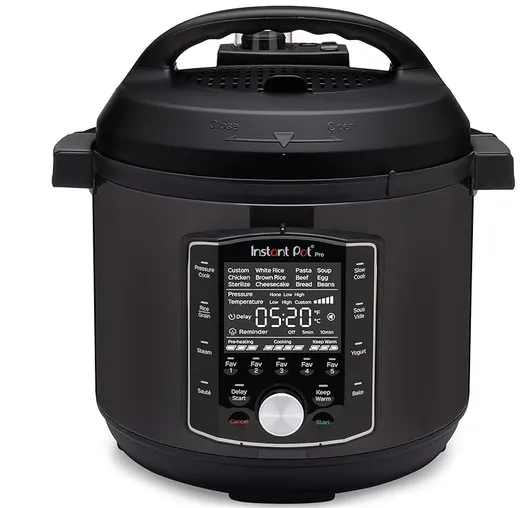
Best overall electric pressure cooker without Teflon
For most people, the best Teflon-free electric pressure cooker is an Instant Pot Pro or Instant Pot Duo Plus with a stainless steel inner pot.
Instant Pot is popular for a reason. It is easy to use, widely available, well supported, and familiar to many home cooks. The biggest reason it belongs in this article is the stainless steel inner pot.
Instant Pot’s official stainless steel inner cooking pot is listed as food-grade 304/18/8 stainless steel without chemical coating. That is exactly the kind of food-contact surface I prefer for pressure cooking.
Why I like it
The Instant Pot Pro or Duo Plus is the safest recommendation for most readers because it is practical.
People can find it. They can find replacement parts. They can find recipes. They can find tutorials. And they can usually find a model with a stainless steel insert instead of relying on a coated non-stick pot.
The Pro and Duo Plus models are especially useful if you want a more modern interface, more cooking programs, and a stronger everyday appliance than the most basic model.
Best for
- Everyday pressure cooking
- Beans and legumes
- Soups and stews
- Bone broth
- Rice and grains
- Meal prep
- Families
- Beginners who want a reliable starter pressure cooker
Who should avoid it
Skip this if you want a truly non-stick cooking experience.
Stainless steel is not non-stick. If you cook lots of oatmeal, sticky rice, or saucy foods, you may need to soak the pot or use proper liquid ratios.
Also skip it if you specifically want air frying in the same appliance. In that case, a pressure cooker plus air fryer model may fit better, but you need to check all coated parts carefully.
Healthy Home Upgrade verdict
Best overall pick.
Choose an Instant Pot Pro or Duo Plus with a stainless steel inner pot if you want the most practical Teflon-free pressure cooker for a healthy home kitchen.
Check the latest price on Amazon
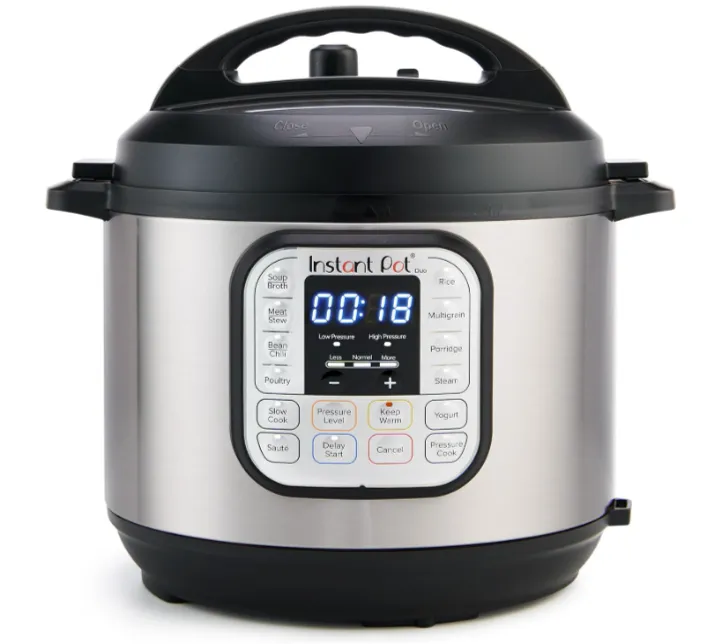
2. Instant Pot Duo
Best budget stainless steel pressure cooker option
The Instant Pot Duo is one of the most familiar electric pressure cookers on the market.
It is not the fanciest model, but it is a strong choice if you want a practical stainless steel inner pot pressure cooker without paying for every premium feature.
The Duo is especially good for people who are new to pressure cooking and want something simple for soups, beans, rice, grains, shredded chicken, stews, and meal prep.
Why I like it
The biggest strength is simplicity.
You do not need a complicated smart appliance to pressure cook well. You need reliable pressure cooking, a safe lid, clear controls, and an inner pot that fits your material standards.
For many people, the Instant Pot Duo is enough.
Best for
- Beginners
- Budget-conscious buyers
- Simple weeknight cooking
- Beans and lentils
- Soups and stews
- Meal prep
- People who do not need Wi-Fi or app features
Who should avoid it
Skip this if you want the most polished interface, sous vide features, upgraded display, or the most premium cooking experience.
Also check the exact model before buying. Instant Pot has many versions, and product details can vary by country and year.
Healthy Home Upgrade verdict
Best budget stainless option.
The Instant Pot Duo is a sensible starting point if you want a Teflon-free pressure cooker with a stainless steel inner pot and no unnecessary complexity.
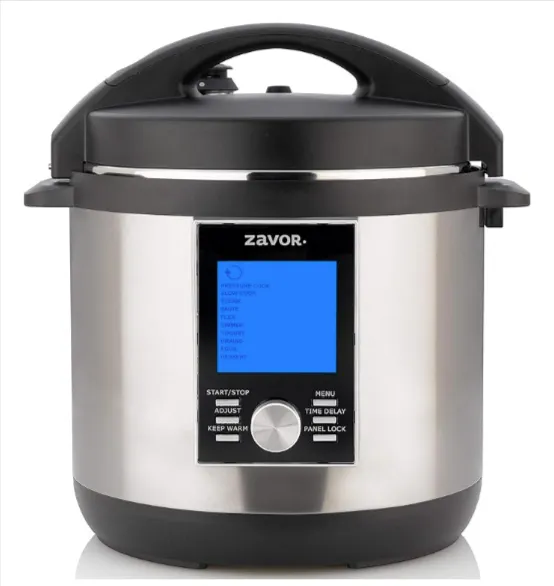
3. Zavor LUX LCD Multi-Cooker
Best US stainless steel alternative, if available
The Zavor LUX LCD Multi-Cooker is a strong alternative if you want an electric pressure cooker with a stainless steel inner cooking pot but do not want the standard Instant Pot choice.
Zavor’s LUX LCD has pressure cook, slow cook, steam, sauté/brown, simmer, yogurt, grains, eggs, dessert, and programmable settings. The stainless steel inner pot makes it more appealing from a low-toxin kitchen perspective than models that rely on coated non-stick inserts.
Why I like it
Zavor is especially interesting for people who want a more serious pressure cooker feel with a stainless steel pot.
It may also appeal to home cooks who want more pressure and temperature control than the simplest budget models.
Best for
- US shoppers
- People who want an Instant Pot alternative
- Stainless steel inner pot shoppers
- Slow cooking and pressure cooking
- More advanced home cooks
- Soups, stews, beans, grains, and yogurt
Who should avoid it
Skip this if you need easy availability in Europe or the UK.
Zavor availability can vary much more than Instant Pot. If there is no reliable live affiliate link with stock for your region, this is not the right product to rely on.
Healthy Home Upgrade verdict
Best US stainless alternative.
Zavor LUX LCD is a strong pick if it is available through a trustworthy retailer and the exact model includes the stainless steel inner pot. If it is out of stock or region-limited, choose another Instant Pot stainless steel model instead.
Check the latest price on Amazon
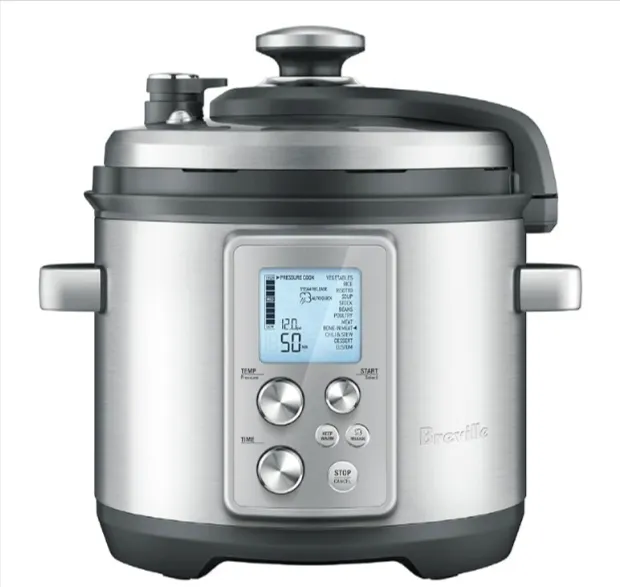
4. Sage/Breville Fast Slow Pro
Best premium ceramic-coated electric pressure cooker
The Fast Slow Pro is sold as Breville Fast Slow Pro in some markets and Sage Fast Slow Pro in the UK and Europe.
It is a premium pressure cooker with a ceramic-coated cooking bowl that Sage/Breville describes as PFOA and PTFE free.
This is not my first choice if someone wants to avoid coatings entirely. But it is a good option for people who want a smarter, more polished appliance and easier cleanup than stainless steel.
Sage/Breville is especially appealing for people who care about controls, pressure levels, automatic steam release, and a more guided cooking experience.
Why I like it
The Fast Slow Pro feels more premium than many basic multi-cookers.
It is designed for people who want more control and less guesswork. The ceramic-coated bowl also makes cleanup easier than stainless steel, which can matter if you cook sticky foods often.
Best for
- Premium kitchens
- People who want guided controls
- Easier cleanup
- Sticky meals
- Rice, risotto-style dishes, sauces, and stews
- Users who accept ceramic coating as a convenience tradeoff
Who should avoid it
Skip this if your goal is a fully uncoated food-contact surface.
Ceramic coating may be PTFE/PFOA-free, but it is still a coating. It should be treated gently, not scratched, and not assumed to last forever.
Also make sure you buy the correct regional product. In Europe and the UK, this product is usually sold under Sage rather than Breville.
Healthy Home Upgrade verdict
Best premium ceramic-coated option.
Sage/Breville Fast Slow Pro is a strong choice if you want a high-end ceramic-coated pressure cooker and accept that stainless steel is still the cleaner long-term material choice.
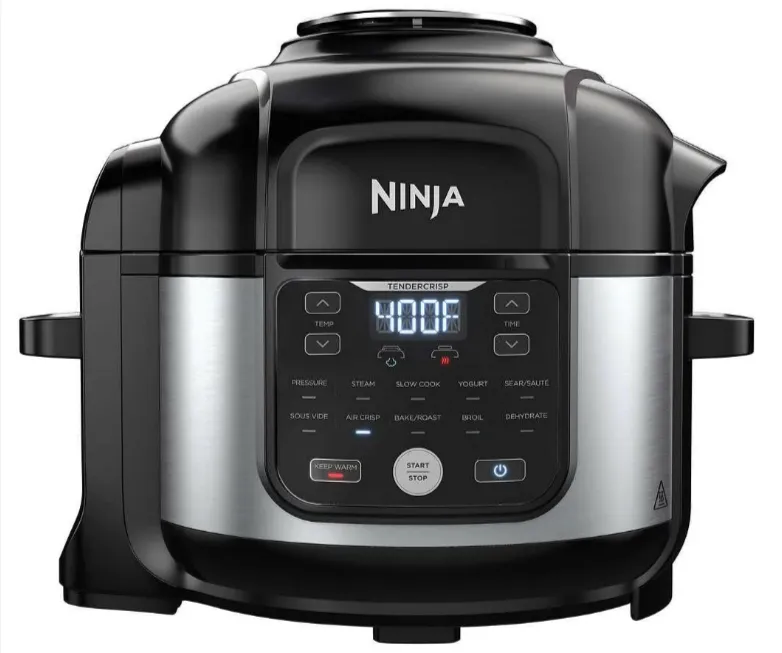
5. Ninja Foodi Pressure Multi-Cooker
Best pressure cooker and air fryer combination
The Ninja Foodi Pressure Multi-Cooker is the best choice if you want one appliance that can pressure cook and air fry.
This is not the cleanest material pick because Ninja Foodi pressure multi-cookers usually use a ceramic-coated non-stick cooking pot and coated crisping accessories rather than a stainless steel inner pot.
But for people who want pressure cooking, air frying, steaming, roasting, and crisping in one machine, Ninja is hard to ignore.
Why I like it
The biggest advantage is versatility.
You can pressure cook a meal and then crisp it with air frying or grilling functions, depending on the model. That is useful for people who want fewer appliances on the counter.
For some households, one Ninja Foodi may replace both a pressure cooker and an air fryer.
Best for
- People who want pressure cooking plus air frying
- Small kitchens
- Families
- Crispy chicken, potatoes, and one-pot meals
- Users who value convenience over pure stainless steel
- People who want one appliance instead of two
Who should avoid it
Skip this if your top priority is avoiding coated cooking surfaces.
Ninja’s ceramic-coated inner pot may be PTFE/PFOA-free depending on the exact product, but it is still coated cookware. It needs gentle utensils and careful cleaning.
Also skip it if you have limited counter space. Many Ninja Foodi models are large and heavy.
Material note
Ninja is a convenience pick, not the cleanest stainless steel pick.
If you choose Ninja, use silicone, wood, or nylon utensils only. Do not use metal utensils on the ceramic-coated pot or crisping accessories, and replace coated parts if they become badly scratched or damaged.
Healthy Home Upgrade verdict
Best combo appliance.
Ninja Foodi is not the purest low-toxin pick, but it is the best option if you want pressure cooking and air frying in one appliance and are comfortable with ceramic-coated parts.
Why Crock-Pot Express Is Not a Main Pick
Crock-Pot Express can be popular and affordable, but I would not make it a main recommendation in this article unless the exact linked model has a documented, uncoated stainless steel inner pot.
Many Crock-Pot Express models use non-stick inner pots. That creates too much confusion for an article focused on electric pressure cookers without Teflon.
If a specific regional Crock-Pot Express model with a 100% uncoated stainless steel inner pot is available, it may be worth considering. But it should not replace Instant Pot unless the material details are clearly verified.
For this article, Instant Pot is the cleaner and simpler stainless steel recommendation.
Best Electric Pressure Cooker Without Teflon by Need
Best overall
Instant Pot Pro or Duo Plus with stainless steel inner pot
Choose this if you want the most practical lower-toxin option for everyday pressure cooking.
Best budget option
Instant Pot Duo
Choose this if you want a simple, reliable, stainless-steel-inner-pot cooker without premium extras.
Best US stainless alternative
Zavor LUX LCD
Choose this only if it is available through a reliable retailer or affiliate link in your region.
Best premium ceramic-coated option
Sage/Breville Fast Slow Pro
Choose this if you want advanced controls and easier cleanup, and you are comfortable with ceramic coating.
Best pressure cooker and air fryer combo
Ninja Foodi Pressure Multi-Cooker
Choose this if appliance versatility matters more than having a stainless steel inner pot.
What About Instant Pot Non-Stick or Ceramic Replacement Pots?
Instant Pot and third-party sellers may offer non-stick or ceramic-coated replacement pots for some models.
I would not make those the default choice for a low-toxin kitchen.
A ceramic-coated insert can be useful for sticky foods, but if you are buying a pressure cooker specifically to avoid Teflon or old non-stick coatings, a stainless steel inner pot is the better first choice.
You can always add a ceramic-coated insert later if you need it for specific foods.
But your everyday pressure cooking pot should ideally be stainless steel.
Are Ceramic-Coated Pressure Cookers Safe?
Ceramic-coated pressure cookers can be a reasonable option if the brand clearly states that the coating is PTFE-free and PFOA-free.
But I would still use them with care.
Ceramic coatings can wear down over time, especially if you use metal utensils, harsh scrubbers, dishwasher heat, or rough handling.
For ceramic-coated pressure cookers:
- Use silicone, wood, or nylon utensils
- Avoid metal tools
- Avoid abrasive scrubbers
- Do not use a damaged or flaking inner pot
- Replace the pot if the coating becomes scratched or worn
- Follow the brand’s exact care instructions
Ceramic-coated does not mean indestructible.
It means easier cleanup with a coating that may be preferable to traditional PTFE-based non-stick for many health-conscious buyers.
Are Stainless Steel Pressure Cookers Hard to Clean?
They can be harder to clean than ceramic-coated models, but not dramatically if you use them properly.
To make stainless steel easier:
- Use enough liquid
- Deglaze after sautéing
- Soak the pot after sticky foods
- Use a soft sponge
- Avoid letting food dry on the surface
- Use baking soda paste for stuck-on residue
- Clean the sealing ring regularly
- Dry the pot before storing
Stainless steel is less slick, but it is forgiving.
You can scrub it more safely than coated cookware, and there is no non-stick surface to baby.
For other durable cookware options, compare this with our stainless steel cookware guide.
Who Should Buy an Electric Pressure Cooker Without Teflon?
This type of appliance makes sense if you:
- Cook beans, lentils, soups, broth, rice, or stews often
- Want faster homemade meals
- Want to reduce reliance on takeout
- Prefer stainless steel food-contact surfaces
- Are replacing an old non-stick pressure cooker
- Want batch cooking with less hands-on time
- Want a healthier meal prep routine
- Want one appliance for many simple meals
A stainless steel pressure cooker can be one of the most useful tools in a healthy kitchen because it supports real food cooking.
It makes basic, nutrient-dense meals easier to repeat.
Who Should Avoid an Electric Pressure Cooker?
You may want to skip an electric pressure cooker if:
- You rarely cook beans, soups, stews, grains, or batch meals
- You have very limited counter or storage space
- You prefer stovetop cooking
- You want strong searing performance
- You do not want to learn pressure release settings
- You already have a stovetop pressure cooker you love
- You mainly need an air fryer, not a pressure cooker
Electric pressure cookers are excellent for soft, moist, cooked foods.
They are not the best tool for crisp texture or deep browning unless combined with an air fryer function.
Stainless Steel Pressure Cooker vs Ceramic-Coated Pressure Cooker
Choose stainless steel if you want:
- More durable food-contact material
- No non-stick coating
- Better long-term value
- Less worry about scratches
- A cleaner low-toxin kitchen standard
Choose ceramic-coated if you want:
- Easier cleanup
- Less sticking
- Better convenience for rice or oatmeal
- A softer transition away from traditional non-stick
- A coated surface clearly listed as PTFE/PFOA-free
My recommendation:
Buy stainless steel first. Add ceramic-coated only if you truly need it.
Electric Pressure Cooker vs Stovetop Pressure Cooker
Electric pressure cookers are easier for most people because they handle timing and temperature automatically.
Stovetop pressure cookers are more powerful and often better for people who already cook confidently.
Choose electric if you want:
- Push-button convenience
- Built-in programs
- Keep-warm function
- Less monitoring
- Beginner-friendly pressure cooking
Choose stovetop if you want:
- More control
- Faster pressure changes
- No electronics
- Longer potential lifespan
- More traditional cookware feel
For most HH readers, electric will be easier to use consistently.
Final Verdict: Best Electric Pressure Cooker Without Teflon
The best electric pressure cooker without Teflon is one with a stainless steel inner pot.
For most people, that means choosing an Instant Pot Pro, Duo Plus, or Duo with a stainless steel inner pot.
If you want an alternative to Instant Pot and you are in the US, Zavor LUX LCD is a strong stainless steel option if it is available through a reliable retailer.
If you prefer ceramic-coated convenience, Sage/Breville Fast Slow Pro is the best premium option, while Ninja Foodi is the best choice if you want pressure cooking and air frying in one appliance.
My final recommendation:
Best overall: Instant Pot Pro or Duo Plus with stainless steel inner pot
Best budget: Instant Pot Duo
Best US stainless alternative: Zavor LUX LCD, if available
Best premium ceramic-coated: Sage/Breville Fast Slow Pro
Best pressure cooker + air fryer: Ninja Foodi Pressure Multi-Cooker
If your goal is a lower-toxin kitchen, do not overcomplicate it:
Start with stainless steel.
Use ceramic-coated only when you knowingly want the convenience tradeoff.
Avoid vague non-stick inserts with unclear coating claims.
FAQ
Are Instant Pots Teflon-free?
Many Instant Pot models use stainless steel inner pots, which are not traditional non-stick. Always check the exact model and inner pot before buying, because accessories and inserts can vary.
What is the safest inner pot for an electric pressure cooker?
For most healthy home kitchens, a stainless steel inner pot is the safest default because it has no non-stick coating to scratch or wear away.
Are ceramic-coated pressure cookers Teflon-free?
Some ceramic-coated pressure cookers are listed as PTFE-free and PFOA-free, but you must check the exact brand and model. Ceramic coating is still a coating, so it should be treated gently.
Is stainless steel better than ceramic coating in a pressure cooker?
Stainless steel is better for durability and long-term food contact. Ceramic coating is better for easy cleanup and reduced sticking. For a low-toxin kitchen, stainless steel should usually be the first choice.
Can you pressure cook in stainless steel?
Yes. Stainless steel inner pots are commonly used in electric pressure cookers and are well suited for soups, stews, beans, broth, grains, and meal prep.
Does food stick to stainless steel pressure cooker pots?
Sometimes, especially with rice, oatmeal, or sautéing. Use enough liquid, deglaze after sautéing, and soak the pot after sticky meals.
Is Ninja Foodi Teflon-free?
Some Ninja Foodi ceramic-coated pots are described as PTFE/PFOA-free, but Ninja Foodi models still use coated non-stick cooking pots and accessories. Check the exact model before buying.
Is Sage/Breville Fast Slow Pro Teflon-free?
Sage/Breville describes the Fast Slow Pro cooking bowl as ceramic-coated and PFOA/PTFE-free. It is still a coated bowl, not stainless steel.
Should I choose Instant Pot or Ninja Foodi?
Choose Instant Pot if you want a stainless steel pressure cooker first. Choose Ninja Foodi if you want pressure cooking plus air frying and are comfortable with ceramic-coated parts.
What should I avoid when buying a Teflon-free pressure cooker?
Avoid vague non-stick claims, unclear coating descriptions, damaged coated inserts, unknown third-party replacement pots, and any product where the inner pot material is not clearly listed.