Last Updated: May 2026
Quick Answer
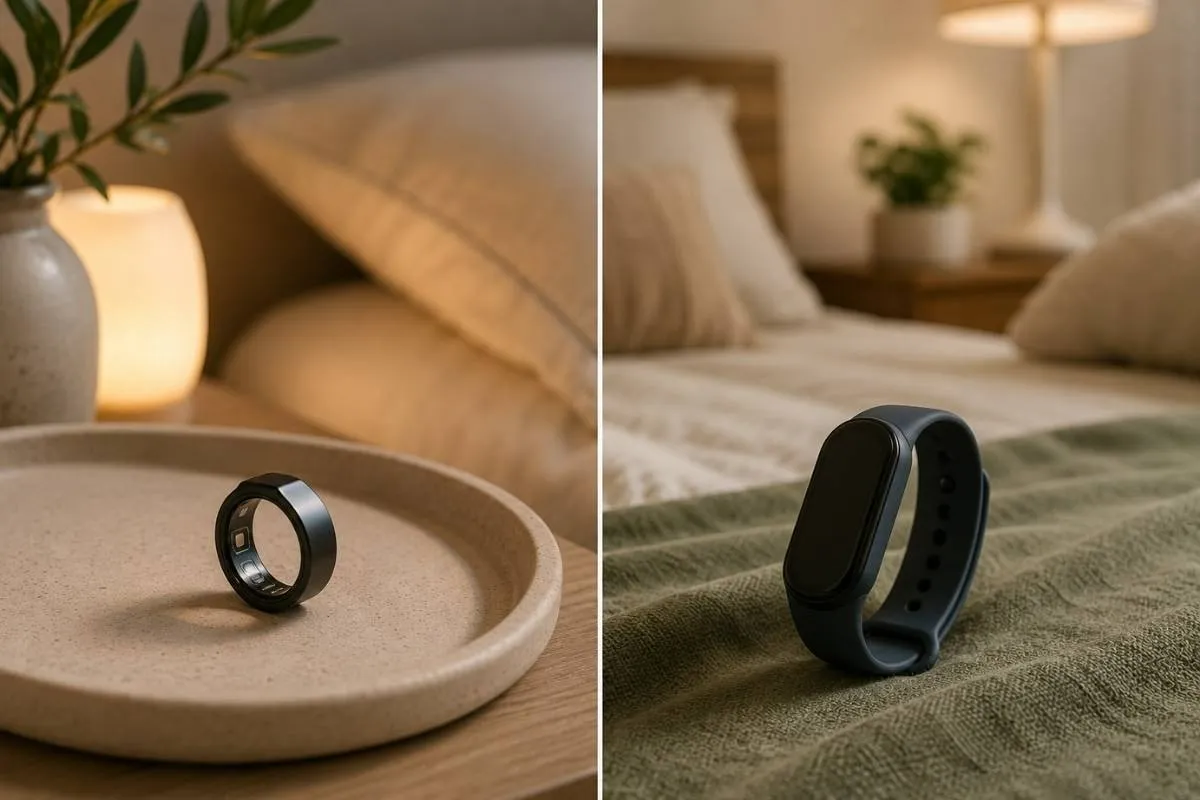
Smart rings and wrist trackers can both be useful for sleep and recovery tracking, but they do not feel the same on the body.
A smart ring is usually better if you want something discreet, calm, and without a screen at night. It may be especially helpful if you dislike sleeping with a watch, feel distracted by screens, or want sleep and HRV trends without a device on your wrist.
A wrist tracker is usually better if you want a larger screen, stronger fitness features, notifications, workout views, timers, and more daytime interaction. A watch can be more practical for walking, running, training, real time heart rate checks, and daily structure.
I use both Oura Ring 4 and Apple Watch, but not for the same purpose. My personal split is simple: the Oura Ring 4 feels calmer and more natural for sleep, while the Apple Watch is more useful as a daytime and activity device.
For sensitive sleepers, the best choice is not only about accuracy. It is also about comfort, skin contact, material sensitivity, light exposure, alerts, and whether the device makes you feel calmer or more distracted.
Consumer sleep trackers can be useful trend tools, but they are not medical sleep studies. The American Academy of Sleep Medicine has stated that consumer sleep technology should be FDA cleared and rigorously tested if it is intended to diagnose or treat sleep disorders.
Also in This Article
- Smart rings vs wrist trackers at a glance
- My real life experience with Oura Ring 4 and Apple Watch
- Comfort during sleep
- Accuracy and sensor contact
- Skin sensitivity and material transparency
- Screens, alerts, and nervous system load
- Which option is better for HRV and sleep trends
- Weaknesses and who should be careful
- Who should choose a smart ring
- Who should choose a wrist tracker
- When to avoid sleep tracking for a while
- Which HH guides to read next
Smart Rings vs Wrist Trackers at a Glance
| Feature | Smart Ring | Wrist Tracker |
| Best for | Sleep, recovery, HRV trends, lower distraction tracking | Workouts, daytime activity, notifications, app interaction |
| Sleep comfort | Often easier for people who dislike watches at night | Can feel bulky, tight, warm, or distracting for some sleepers |
| Screen exposure | No screen on the device | Screen can be distracting unless sleep focus or theater mode is used |
| Skin contact | Small contact area on finger | Larger contact area on wrist and band |
| Fit sensitivity | Must fit the finger correctly | Must be snug enough for sensors but not too tight |
| Fitness use | Often more passive and less interactive | Stronger for real time workouts and wrist feedback |
| Battery rhythm | Often longer battery life depending on model and settings | Often needs more frequent charging |
| Sensitive skin issues | Ring fit, swelling, moisture, metal sensitivity | Band material, sweat, soap, rubbing, nickel, or adhesive sensitivity |
| Best HH use case | Calm sleep tracking with less nighttime stimulation | Daytime movement, workouts, timers, heart rate, and activity routines |
Still choosing your first sleep device? Start with our Best Sleep Tracker guide.
My Real Life Experience With Oura Ring 4 and Apple Watch
I personally use both Oura Ring 4 and Apple Watch, but I do not use them for the same reason.
My Oura Ring 4 feels more natural for sleep. It is small, quiet, and easier for me to forget about at night. That matters because I do not want my bedroom to feel like a tech lab. I want useful data without more stimulation.
My Apple Watch is more useful during the day. It is practical for movement, timers, workouts, quick checks, and general daily structure. But at night, a wrist device can feel more present on the body. For some people, that does not matter. For others, especially sensitive sleepers, it can make a difference.
That is why I do not think the question is simply:
Which device is more accurate?
The better question is:
Which device can you wear consistently without irritation, distraction, or anxiety?
Because if the device bothers you, you will not use it well.

Why Comfort Matters More Than People Think
A sleep tracker has to do something very difficult.
It has to collect useful data while bothering you as little as possible.
That sounds simple, but it is not.
At night, small things feel bigger:
- a tight band
- a warm strap
- a bright screen
- a raised sensor
- a ring that feels too snug
- a device that catches on bedding
- an alert that pulls your attention back to the device
- a score that makes you anxious before the day begins
For some people, a wrist tracker is perfectly comfortable. For others, a smart ring is easier. And for a few people, both may feel like too much for sleep.
The best tracker is not the one with the longest feature list.
It is the one you can wear calmly and consistently.
Comfort During Sleep: Ring vs Watch
Smart rings have one big advantage for sleep: they do not put a screen on your wrist.
That can make them feel less intrusive.
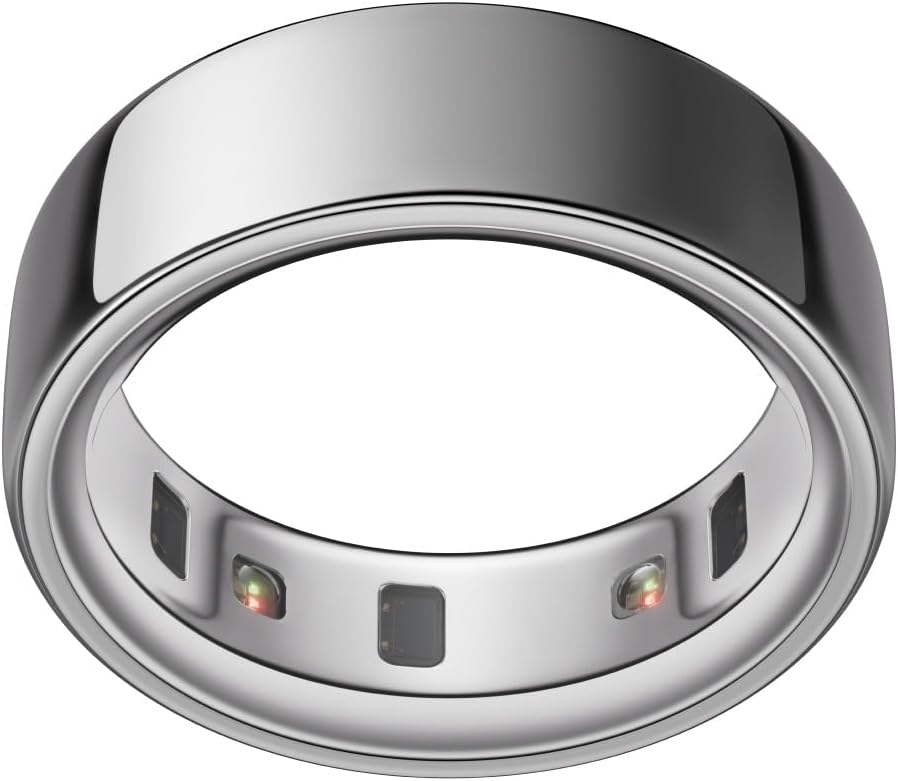
Oura Ring 4 is built with a titanium design and recessed interior sensors. Oura says the ring uses Smart Sensing, which adapts to the finger for continuous data collection day and night. Oura lists typical battery life as 5 to 8 days, depending on ring size, settings, battery age, and use.
For sleep, that combination matters because the device can work quietly in the background.
A wrist tracker can also work well, but the feel is different. Apple says Apple Watch should be snug but comfortable, with skin contact needed for features such as Wrist Detect, the Taptic Engine, and heart sensors. Apple also recommends wearing it above the wrist bone for best sensor contact.
That means a watch may need a more deliberate fit at night.
Too loose and the data may suffer.
Too tight and your skin may complain.
Accuracy: What Wearables Can and Cannot Tell You
Accuracy is complicated because sleep trackers are not measuring sleep the same way a sleep lab does.
A lab sleep study uses polysomnography, which records signals such as brain activity, eye movement, muscle activity, breathing, and heart activity. Consumer wearables estimate sleep using sensors such as movement, heart rate, HRV, temperature, and algorithms.
That does not make wearables useless.
It means they are best used for trends, not perfect sleep stage truth.
A 2024 study comparing commercial wearable devices against polysomnography found that devices can perform reasonably well for some sleep measures, but sleep stage accuracy still varies by device and stage.
Apple also uses careful wording. Apple says Apple Watch can estimate time spent in REM, Core, and Deep sleep, as well as when you might have woken up.
That word matters.
Estimate.
Not diagnose.
Not prove.
Not replace your body awareness.
Why Sensor Contact Affects Accuracy
Both rings and watches need good sensor contact.
A smart ring needs the correct ring size and
placement. Oura states that for best fit and accurate readings, the sensors should be on the palm side of the finger.
A wrist tracker also needs good contact. Apple says the back of Apple Watch needs skin contact for features including Wrist Detect, the Taptic Engine, and heart sensors.
This is where comfort and accuracy overlap.
If a device is too loose, data may be less reliable.
If it is too tight, it may cause irritation.
The goal is not maximum tightness.
The goal is stable contact without pressure.
Oura Ring 4 Smart Sensing: Helpful, But Still a Trend Tool
Oura Ring 4 uses Smart Sensing, which Oura describes as a sensing platform that adapts to the user’s finger structure, skin tone, BMI, age, and activity. Oura also says the multiple sensors form an 18 path multi wavelength PPG subsystem that adjusts dynamically throughout the day and night.
That is impressive for a small ring.
It also supports why a smart ring can be useful for overnight heart rate, HRV, temperature, respiration, and sleep trends.
But I still would not treat any wearable as a medical sleep lab.
More sensors can improve signal quality, but the data is still best used as a pattern over time.
The healthiest question is not:
“Is this number perfect?”
It is:
“Is this trend helping me make better decisions?”
Smart Ring Accuracy Strengths
A smart ring may be strong for sleep because it can be quiet, consistent, and easier to wear all night for people who dislike wrist devices.
For Oura Ring 4 specifically, Oura says its sensors include red and infrared LEDs for blood oxygen during sleep, green and infrared LEDs for heart rate, HRV, and respiration rate, a digital temperature sensor, and an accelerometer for movement and activity.
That makes it a useful trend tool for:
- HRV
- resting heart rate
- sleep timing
- temperature trends
- respiration trends
- sleep regularity
- recovery patterns
But it still should not be treated like a medical sleep lab.
Wrist Tracker Accuracy Strengths
A wrist tracker may be stronger for people who want broad daily and workout context.
Apple Watch can estimate sleep stages when worn to bed, and it also connects sleep with daily activity, heart rate, workouts, and health trends inside the Apple ecosystem.
For many people, that makes it more useful during the day than a ring.
A wrist tracker may be better if you want:
- workout heart rate
- walking and running metrics
- timers and reminders
- activity rings
- on screen feedback
- notifications
- quick app access
- daytime movement prompts
But more interaction can also mean more distraction.
That is the tradeoff.
Skin Sensitivity: The Part Most Reviews Ignore
Most smart ring vs watch comparisons focus on features.
But if you have sensitive skin, the material and fit may matter just as much as the app.
Skin issues can come from:
- pressure
- rubbing
- trapped sweat
- soap residue
- sunscreen
- lotions
- water under the device
- tight bands
- nickel sensitivity
- adhesive sensitivity
- wearing the device nonstop without skin breaks
Apple openly discusses this. Apple says a small number of people may experience reactions to certain materials due to allergies, environmental factors, extended exposure to irritants such as soap or sweat, and other causes. Apple also notes that some Apple Watch models and bands contain nickel, although Apple says they fall below EU REACH restrictions. Apple also states that some parts contain trace acrylates and methacrylates from adhesives, but that these parts are designed not to be in direct contact with the skin.
Apple also recommends keeping Apple Watch, bands, and skin clean and dry, especially after workouts or exposure to sweat, soap, sunscreen, and lotions.
This is exactly the kind of practical detail that matters for HH.
A tracker should not create a skin problem while trying to improve your health.
Healthy Home Upgrade Material Check: Skin Contact, Moisture, and Material Transparency
For Healthy Home Upgrade, the material side of wearables matters because these devices sit directly against the skin for many hours.
That does not mean every wearable is a problem.
It means sensitive users should think about three things:
- what touches the skin
- how much moisture gets trapped
- whether the device creates irritation, pressure, or nervous system stimulation
Apple says Apple Watch and its bands go through extensive material evaluation, including toxicological assessments and dermatologist consultations. Apple also lists different materials across its bands, including fluoroelastomer, silicone, nylon and polyester blends, stainless steel, and titanium depending on the band.
This is why the band matters as much as the watch.
A durable sport band may work well for workouts, but for sleep, some people may notice trapped sweat, pressure, warmth, or rubbing if the fit is not right.
Oura Ring 4 has a different material profile. Oura describes Oura Ring 4 as having a titanium exterior and a non allergenic titanium inner shell, with a medical grade, BPA free inner surface.
That is one reason I personally feel comfortable using Oura Ring 4 at night. It feels like a calmer skin contact option for my sleep routine than wearing a larger wrist device while I sleep.
But no wearable is perfect for every body.
The best choice is the one that gives you useful data without skin irritation, pressure, moisture problems, or sensory overload.
Oura Ring 4 and Skin Contact
Oura Ring 4 has a different skin contact profile than a wrist watch.
It sits on the finger instead of under a band, and it has a smaller contact area. Oura describes Oura Ring 4 as having a fully titanium design and a non allergenic titanium inner shell, with a medical grade, BPA free inner surface.
That material profile is one reason I personally feel comfortable wearing it at night.
But that does not mean a ring is perfect for everyone.
A ring can still feel uncomfortable if:
- the size is wrong
- the finger swells at night
- moisture gets trapped
- the ring is too tight
- the sensors press in an annoying way
- the person dislikes wearing rings while sleeping
Oura also notes that Oura Ring 4 sizing differs from Oura Ring Gen3 and recommends using the correct sizing kit.
Fit matters.
Apple Watch and Skin Contact
Apple Watch has a larger skin contact area, especially because the band wraps around the wrist.
That can be fine for many people.
But for sensitive skin, the band can be the deciding factor.
A breathable band may feel better for sleep than a tight or less breathable one. A band worn too tightly can irritate the skin, while a band worn too loosely can rub and affect sensor contact. Apple specifically says an overly tight band can cause irritation and a loose band can cause rubbing.
For sleep, this becomes practical.
If you wake up with marks, itching, redness, warmth, or discomfort under the watch or band, the issue may not be the sleep tracker data.
It may be the physical device.
The HH Skin Sensitivity Rule
For sensitive sleepers, I would use this rule:
If a device leaves your skin irritated, your nervous system more alert, or your sleep more fragmented, it is not the right night tracker for you, even if the app is excellent.
That does not mean the device is bad.
It means the fit may be wrong for your body.
Screens, Alerts, and Nervous System Load
A smart ring has one quiet advantage:
No screen.
That can be a big deal at night.
A wrist tracker may offer more features, but those features can also keep your attention on the device. Even if the screen is dimmed, it still feels more like technology on the body.
For some people, that is harmless.
For others, it becomes another form of micro stimulation.
At night, I prefer the device that asks less of me.
That is why the Oura Ring 4 fits my sleep routine better than a wrist tracker.
I still value Apple Watch during the day. But for sleep, I want less interaction, not more.
Low Exposure Sleep Tracking
At HH, low exposure does not mean fear based living.
It means thoughtful use of technology.
Oura states that Oura Ring 4 supports Airplane Mode. Oura also describes Airplane Mode as disabling radio transmission from the ring, including Bluetooth connection between the ring and app, while the ring continues to collect and store data.
For a calmer bedroom, I like the idea of collecting sleep data overnight and syncing later, away from the bed.
This is not necessary for everyone.
But for sensitive sleepers, it is a useful option.
If sleep tracking makes you feel overstimulated, read our Best Sleep Tracker Settings for Sensitive Nervous Systems guide.
Which Is Better for HRV?
For HRV, the better device is usually the one you wear consistently, correctly, and calmly.
A ring may feel easier for overnight HRV because it is discreet and has no screen.
A wrist tracker may be more useful if you want HRV alongside workouts, activity, and daytime metrics.
But HRV should always be interpreted as a personal trend.
Do not compare your HRV to someone else’s.
Look at your own baseline.
Ask what changed.
Training.
Stress.
Late meals.
Alcohol.
Illness.
Poor sleep.
Overstimulation.
Travel.
Heat.
Emotional load.
That is where the data becomes useful.
Which Is Better for Sleep Stages?
Neither rings nor watches should be treated as perfect sleep stage tools.
Both can estimate sleep stages, but sleep staging from consumer devices is still an estimate.
Apple explicitly uses the word estimate for REM, Core, Deep, and possible wake periods.
Oura also provides detailed sleep analysis through its app and sensors, but the same HH rule applies:
Use sleep stage data as a trend.
Not as a verdict.
If REM or deep sleep looks low one night, do not panic.
Look for repeated patterns and how you feel.
Which Is Better for Fitness?
For fitness, a wrist tracker often wins.
A watch is easier to glance at during walking, running, cycling, training, or intervals. It can show heart rate, pace, timers, workout zones, and notifications in real time.
A smart ring can track activity, but it is less interactive.
That is why my personal split makes sense:
Oura Ring 4 for sleep and recovery trends.
Apple Watch for daytime structure, activity, and movement.
This is not about one being universally better.
It is about using each tool where it fits best.
Weaknesses and Who Should Be Careful
Both smart rings and wrist trackers have weaknesses.
That does not make them bad products.
It just means the right choice depends on your body, skin, habits, and nervous system.
Smart Ring Weaknesses
A smart ring can be excellent for sleep, HRV, and lower distraction tracking, but it may be less practical for some daytime use.
Possible weaknesses:
- It can feel tight if your fingers swell at night.
- It may be less comfortable during weight training.
- It can get scratched during lifting, gripping, or manual work.
- It does not give the same real time workout screen as a watch.
- Finger based sensors may be affected if your fingers are very cold or have poor circulation.
People with Raynaud’s phenomenon or very cold fingers may need to be extra careful when interpreting finger based readings. Research on oximetry in people with Raynaud’s phenomenon has found that finger measurements can differ from forehead measurements, which supports the general point that finger blood flow can affect some finger based readings.
Who Should Be Careful With Smart Rings?
Smart rings may need extra thought if you:
- have frequent finger swelling
- dislike sleeping with rings
- have Raynaud’s or very cold hands
- lift heavy weights and do not want to remove the ring
- need real time workout screens
- work with your hands in ways that make rings inconvenient
This does not mean a smart ring is wrong for all of these people.
It means comfort, fit, and data interpretation matter even more.
Wrist Tracker Weaknesses
A wrist tracker can be excellent for daytime activity, workouts, timers, and real time feedback, but it may feel more intrusive at night.
Possible weaknesses:
- It can feel bulky during sleep.
- The band can trap sweat, soap, or moisture.
- A tight band can irritate the skin.
- A loose band can rub and reduce sensor contact.
- Screens, haptics, and alerts can add stimulation.
- Some models and bands contain nickel or trace acrylates, which can matter for sensitive users.
- Battery and charging routines can interrupt continuous data if the device is not charged before sleep.
Apple recommends wearing Apple Watch snug but comfortable, with room for the skin to breathe, and keeping the watch, band, and skin clean and dry, especially after sweat, soap, sunscreen, or lotions. Apple also says an overly tight band can cause irritation, while a loose band can cause rubbing.
Who Should Be Careful With Wrist Trackers?
Wrist trackers may need extra thought if you:
- have known nickel sensitivity
- get irritation under watch bands
- feel overstimulated by screens or haptic alerts
- tighten the watch too much for better readings
- sleep worse when aware of a device on the wrist
- dislike charging another device frequently
The point is not to fear wearables.
The point is to choose the one that your body can tolerate calmly.
Who Should Choose a Smart Ring?
A smart ring may be better if you:
- dislike sleeping with a watch
- want a sleep tracker without a screen
- care most about sleep, HRV, and recovery trends
- want something discreet
- are sensitive to wrist bands
- want fewer alerts at night
- prefer a lower distraction bedroom
- like the idea of syncing data later
- want wearable data without checking a screen in bed
A smart ring may not be ideal if you:
- dislike wearing rings
- have finger swelling
- work with your hands in ways that make rings inconvenient
- need real time workout screens
- want calls, timers, apps, and notifications
- are between sizes and cannot get a comfortable fit
Who Should Choose a Wrist Tracker?
A wrist tracker may be better if you:
- want stronger workout features
- like seeing metrics during exercise
- use timers, alarms, reminders, and notifications
- want a larger screen
- want one device for daytime and night
- already live inside the Apple or smartwatch ecosystem
- prefer wrist based heart rate during activity
A wrist tracker may not be ideal if you:
- dislike sleeping with anything on your wrist
- get band irritation
- are sensitive to sweat, soap, or trapped moisture
- feel overstimulated by screens or notifications
- wake up aware of the device
- tighten it too much for better readings and irritate your skin
Who Should Avoid Sleep Tracking for a While?
This matters.
Some people should use sleep trackers very gently, or take a break.
Consider stepping back if:
- you feel anxious before checking your score
- your mood depends on the device
- you keep changing routines based on one bad night
- you panic over REM or deep sleep numbers
- you feel less connected to your body
- you sleep worse because you are trying too hard to sleep perfectly
This is often called orthosomnia, where the pursuit of perfect sleep data can become stressful and counterproductive.
A tracker should make you more informed.
Not more afraid of your own body.
The Best Setup May Be Both
For some people, the best answer is not ring or watch.
It is ring and watch, used differently.
That is how I personally think about it.
A smart ring can be the calmer sleep and recovery tool.
A wrist tracker can be the daytime activity and movement tool.
This avoids forcing one device to be perfect at everything.
The real question is not which device has more features.
The real question is:
Which device helps you live better without adding unnecessary stress?
Best Internal Next Reads
If you are still choosing a sleep device, start with our Best Sleep Tracker guide.
If you want a quieter night wearable, read our Best Sleep Tracking Ring guide.
If you are comparing recovery brands, see WHOOP vs Oura.
If you already know Oura is the right fit, check our Oura Ring Coupon Code page.
If sleep data makes you anxious, read Best Sleep Tracker Settings for Sensitive Nervous Systems.
If you want to make your whole bedroom calmer, read EMF, Motors, and Remote Controls, especially if you use an adjustable bed, smart bed, or remote controlled sleep setup.
If you want a fuller sleep environment stack, read Adjustable Bases, Cooling Mattresses and Sleep Trackers.
FAQ
Are smart rings more comfortable than wrist trackers for sleep?
For many people, yes. A smart ring can feel less intrusive because it has no screen and no wrist band. But comfort is personal. Some people dislike rings or experience finger swelling, while others dislike sleeping with a watch.
Are smart rings more accurate than watches?
Not always. Accuracy depends on the metric, sensor contact, algorithm, fit, and how consistently you wear the device. Both rings and watches are best used for trends, not perfect sleep stage measurements.
Is Apple Watch good for sleep tracking?
Apple Watch can estimate sleep duration, sleep stages, and wake periods when worn to bed. It may be especially useful if you already use Apple Health and want one device for activity and sleep. But some people find a wrist device less comfortable at night.
Is Oura Ring 4 good for sensitive skin?
Oura Ring 4 may be a good option for some sensitive users because Oura describes it as having a titanium exterior and a non allergenic titanium inner shell, with a medical grade, BPA free inner surface. But any wearable can still irritate skin if the fit is wrong, moisture gets trapped, or the person is sensitive to wearing rings.
Can Apple Watch cause skin irritation?
It can for some people. Apple says a small number of people may experience reactions to materials, environmental factors, or irritants such as soap or sweat. Apple also notes that some Apple Watch models and bands contain nickel and that some parts contain trace acrylates and methacrylates from adhesives.
Which is better for HRV, Oura Ring or Apple Watch?
The better HRV tracker is the one you wear consistently with good sensor contact. Oura Ring 4 may feel easier overnight because it has no screen and is designed for continuous wear. Apple Watch may be better if you want HRV connected with workouts and daytime activity.
Which is better for workouts?
A wrist tracker is usually better for workouts because it gives real time feedback on the wrist. A smart ring can track activity, but it is less interactive during exercise.
Should I wear both a smart ring and a watch?
You can, but you do not need to. For some people, a ring for sleep and a watch for daytime activity is a good split. For others, one device is enough.
What should I do if my tracker irritates my skin?
Remove it, clean and dry your skin, clean the device and band, and avoid wearing it again until the skin has calmed down. Apple recommends keeping Apple Watch, bands, and skin clean and dry, especially after sweat, soap, sunscreen, or lotions. If you have redness, swelling, itching, or irritation, Apple recommends consulting a physician before wearing Apple Watch again.
Should people with Raynaud’s use a smart ring?
Some people with Raynaud’s may still choose a smart ring, but they should interpret finger based readings carefully, especially if their fingers are cold or circulation is reduced. Finger blood flow can affect some finger based measurements, so trends should be read with body context.
Final Thoughts
Smart rings and wrist trackers are not really enemies.
They are different tools.
A smart ring may be better for calm, low distraction sleep tracking.
A wrist tracker may be better for workouts, daytime structure, and real time feedback.
For sensitive sleepers, the best choice is not the most advanced device.
It is the device that gives you useful trends without irritating your skin, disturbing your sleep, or making your nervous system more alert.
My personal split is simple.
Oura Ring 4 feels better for sleep and recovery trends.
Apple Watch is more useful for daytime movement and activity.
That balance gives me data without turning the bedroom into a control room.
And that is the real Healthy Home Upgrade goal.
Use technology in a way that supports your body.
Do not let it take over the room.