Whole House Water Filter Installation Cost: A Complete Breakdown of Expenses
Upgrading your home’s water can feel straightforward—until you start getting quotes that vary wildly. Whole House Water Filter Installation Cost in 2025 is usually a mix of four things: the equipment, the labor, the hidden extras, and the ongoing maintenance. This guide breaks down each part so you can compare quotes confidently and avoid paying for features your water doesn’t actually need.
If you buy through our links, we may earn a small commission at no extra cost to you. We only recommend products we genuinely believe can support a healthier home and life.
Quick Answer
Most professionally installed whole-house systems in 2025 cost $1,200–$5,800 total, with many homes landing around $2,500—depending on system type, plumbing complexity, and how many stages you add.
At a Glance
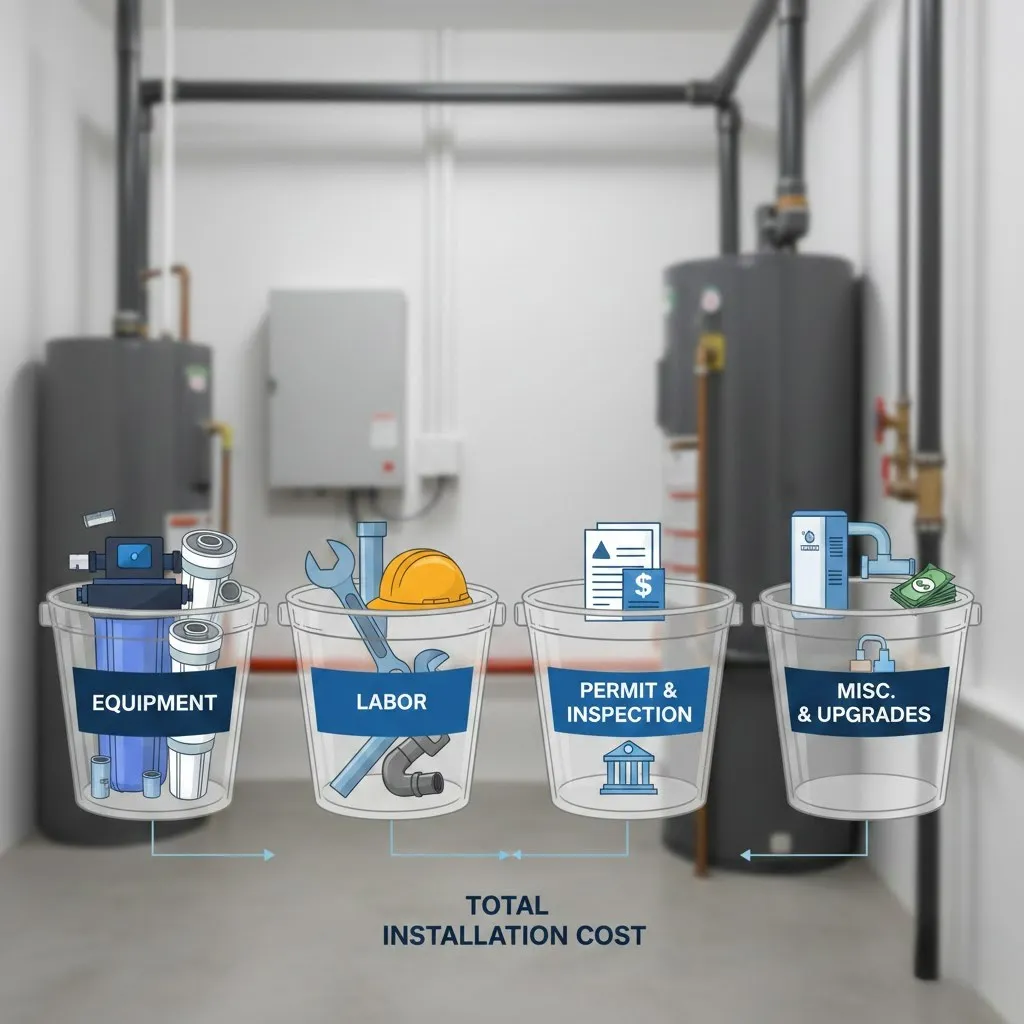
The “four buckets” that make up your total cost
- Equipment: the filtration unit(s) + valves + fittings
- Labor: installation time + plumbing complexity
- Hidden extras: water test, bypass valve, pipe updates, electrical work, permits
- Maintenance: filter replacements, optional service visits, softener salt (if applicable)
Upfront system costs by type (unit only)
| System Type | Average Cost (Unit Only) | Best For |
| Sediment Filter | $30 – $300 | Removing sand, rust, and silt |
| Activated Carbon | $300 – $1,800 | Reducing chlorine, bad tastes, and odors |
| UV Purification | $300 – $2,000 | Disinfecting bacteria and viruses (common for well water) |
| Water Softener | $700 – $3,000 | Managing hard water minerals |
| Reverse Osmosis (Whole House) | $4,000 – $10,000+ | Ultra-pure water at every tap (premium/complex) |
| Well Water Treatment | $800 – $4,000 | Targeted filtration for high iron or sulfur |
Typical installed cost ranges in 2026
Here’s what most homeowners see when hiring a professional:
- Typical installed range: $1,200–$5,800
- Common “average” project: around $2,500
- Higher totals happen when: access is difficult, plumbing needs updates, or you add softening/UV/RO stages
If a quote is dramatically above this range, it’s usually because (1) the system is overbuilt for your needs, (2) the installation is genuinely complex, or (3) the quote is not itemized and includes padded “extras.”
What affects the final cost the most?
1) System technology (and how many stages you choose)
A “whole-house filter” can mean very different things. The cost jumps when you stack multiple treatment stages.
Most common setups include:
- Sediment + carbon (often the best starting point for municipal water)
- Sediment + carbon + softener (when hard water is a real issue)
- Sediment + specialty media (iron/sulfur concerns on well water)
- UV add-on (microbial protection—mostly for wells)
- Whole-house RO (premium route; not the default choice for most homes)
If you still need help choosing equipment, link to your guide: best whole house water filter systems (your 2025 picks).
2) Plumbing access and complexity (this is where quotes diverge)
Your labor cost changes fast when installers must:
- add a proper bypass valve (highly recommended for maintenance)
- replace an old shutoff valve
- re-route pipes, cut into tight spaces, or update older plumbing
- mount heavy tanks securely
- add drainage lines (some systems)
- ensure power access for UV/RO components
3) City water vs. well water
Well water setups often require more targeted treatment, which can raise both equipment and labor costs. If your home is on a private well, it’s usually worth testing first rather than buying “the biggest system.”
Labor and installation expenses
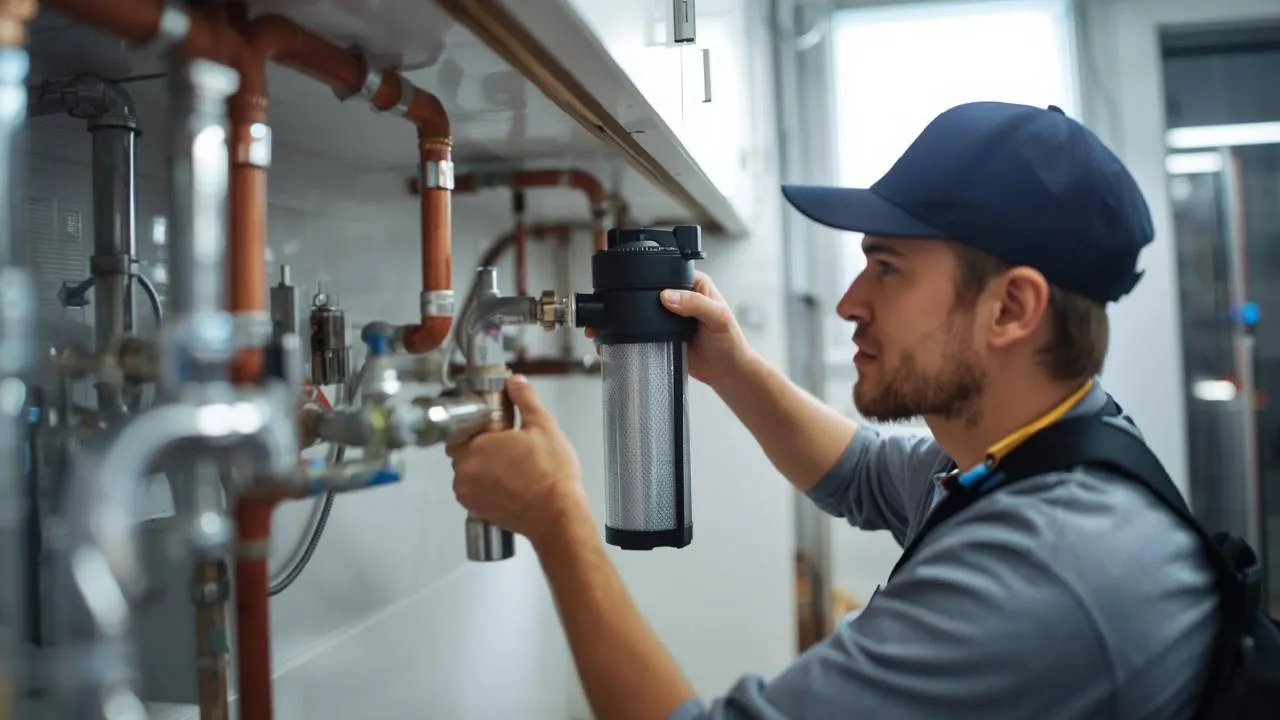
Hiring a professional ensures code-compliant plumbing work and typically includes workmanship warranties.
Standard labor range
Most professional installations fall around $500 to $1,500, depending on complexity.
Hourly rates + time estimate
Plumbers often charge $45 to $200 per hour, and whole-house installations commonly take 4 to 8 hours depending on access and pipe work.
DIY installation (when it can make sense)
DIY can reduce labor costs, but you’ll still spend $50 to $200 on fittings/connectors and you’ll carry the risk of leaks. DIY is best when:
- your main water line is easy to access
- you’re comfortable shutting off water and verifying leak-free connections
- you’re installing a simpler sediment/carbon system
Before calculating installation costs, see which systems are actually worth installing in my Best Whole House Water Filter Systems (2025)
Hidden and “surprise” expenses that change the quote
These are common add-ons that can add hundreds:
- Water quality testing: $50 to $250
- Plumbing modifications (bypass valves, old pipe updates): $150 to $850
- Electrical work (UV/RO requiring power): $150 to $350
- Permits (local regulations): $30 to $500
Tip: Ask for quotes in four buckets (equipment, labor, hidden extras, maintenance). Any installer who won’t itemize is harder to trust.
Worried about water pressure after installation? These No Drop in Pressure: The High Flow Rate Whole House Water Filters You Need
Red flags when getting quotes
These are the most common “watch out” moments:
- They insist you need an expensive multi-stage system without asking for a water test
- They refuse to provide an itemized quote (equipment vs labor vs extras)
- They push whole-house RO as the default solution for every home
- They can’t explain expected flow rate or pressure impact
- They avoid talking about a bypass valve (a practical must for serviceability)
Certifications that add real credibility (and help you buy smarter)
If you’re paying for performance claims, certifications matter. Look for references to NSF/ANSI standards, especially when the system claims to reduce specific contaminants.
Two useful examples to know:
- NSF/ANSI 42 is commonly associated with aesthetic contaminants (like chlorine taste/odor).
- NSF/ANSI 53 is commonly associated with health-related contaminant reduction claims (varies by product claim).
You don’t need to memorize standards—just use them as a credibility filter when comparing systems.
Considering RO? Installation costs differ — learn more in my Best Whole House Reverse Osmosis Systems guide
Whole-house RO vs. a hybrid approach (easy decision table)
Many homes get better value with a hybrid setup: whole-house filtration for showers/laundry + targeted RO for drinking water.
| Option | Pros | Cons | Best for |
| Whole-house RO | Ultra-treated water at every tap | Very high cost, complex install, may require tanks/pumps/electrical | Homes with very specific needs + bigger budgets |
| Hybrid: whole-house carbon + under-sink RO | Lower cost, simpler install, excellent drinking water quality | Not RO-level water at every tap | Most households who want better water without overbuilding |
(Place an internal link near this section to your whole house reverse osmosis system guide.)
Example budgets (more relatable with real-life cases)
Case Study 1: City water, taste/odor upgrade (simple and common)
Emma and Jonas live in a standard family home with municipal water. Their main goal is better taste and less chlorine smell. They choose a sediment + activated carbon whole-house setup with a bypass valve.
- Equipment: $900
- Labor: $850
- Extras (water test + fittings): $150
Final total: ~$1,900
Case Study 2: Hard water home adding softening (bigger jump, still common)
A family in a hard-water area is dealing with scale on fixtures and dry skin. They install carbon filtration + a softener.
- Equipment: $2,800
- Labor: $1,200
- Extras (plumbing modifications): $450
Final total: ~$4,450
If lead is a concern, make sure your system is certified — see the best lead-removal water filters
How to lower your installation costs (without buying the wrong thing)
Use these practical cost-control moves:
- Start with a water test so you buy only what you need
- Make flow rate a deal-breaker (undersized systems cause pressure drop)
- Choose a system with easy cartridge access (cheaper maintenance over time)
- Ask for quotes in four buckets and compare apples-to-apples
- Consider the hybrid approach (whole-house carbon + under-sink RO) if drinking water is the main concern
If you go the hybrid route, pairing a point-of-entry system with a high-quality under-sink water filter focused on drinking and cooking taps can give you great water where it matters most without oversizing the whole-house equipment or your installation bill.
Ongoing maintenance costs (the part people forget)
Plan a simple yearly budget:
- Replacement filters: typically $20 to $400 per year, often replaced every 3 to 12 months
- Optional annual servicing: $100 to $300
- Softener salt refills: around $40 every few months (varies with hardness + usage)
Bold reality: maintenance is where cheap systems sometimes become expensive over time.
FAQs
How much does it cost to install a whole-house water filter?
Most professionally installed systems in 2025 land around $1,200 to $5,800, with many homes near $2,500, depending on system type and installation complexity.
Do I need a permit?
Sometimes. In many areas, permits can range from $30 to $500 depending on local rules.
Is DIY worth it?
It can be, if access is easy and you’re comfortable with plumbing. If not, professional installation reduces risk and often saves money long-term.
Do whole-house systems remove lead?
Some can, depending on the technology and verified performance claims. If lead is a concern, add an internal link to your water filters for lead removal guide and follow the safest path for drinking water.
Key Takeaways
- Your total price is mostly determined by system type + plumbing complexity + number of stages.
- Always ask for an itemized quote (equipment, labor, extras, maintenance).
- Don’t buy a premium multi-stage system without a water test.
- If drinking water is the priority, consider whole-house filtration + under-sink RO instead of full-house RO.
Conclusion
A realistic budget for Whole House Water Filter Installation Cost starts with clarity: separate your quote into equipment, labor, hidden extras, and maintenance. For many homes, the smartest first step is a well-sized sediment + carbon whole-house system with a proper bypass valve, then add softening/UV/RO only when your water test clearly justifies it. And if you also want a backup or off-grid option for drinking and cooking water — or you rent and cannot touch the main line — a countertop gravity system like a Berkey water filter can give you high-level filtration at the tap without replumbing the whole house.