How to Make Your Air Monitor Work Together With Other Devices
Most of us assume our homes are safe havens. But did you know the air inside can sometimes be worse than the air outside? Cooking, cleaning, candles, dampness, and even just people sitting in a closed room can quickly change the air we breathe.
Think about frying food in the kitchen. Tiny smoke particles spread before you notice them. Or a Sunday roast filling the room with smells that also bring along invisible pollutants. Even that cozy candle can give off small smoke clouds you can’t see.
Now picture sitting in a room full of people. After a while, the air feels heavy and stuffy. That’s carbon dioxide building up. It makes you feel tired and less focused. And when bathrooms or bedrooms get too damp, mold has the perfect conditions to grow.
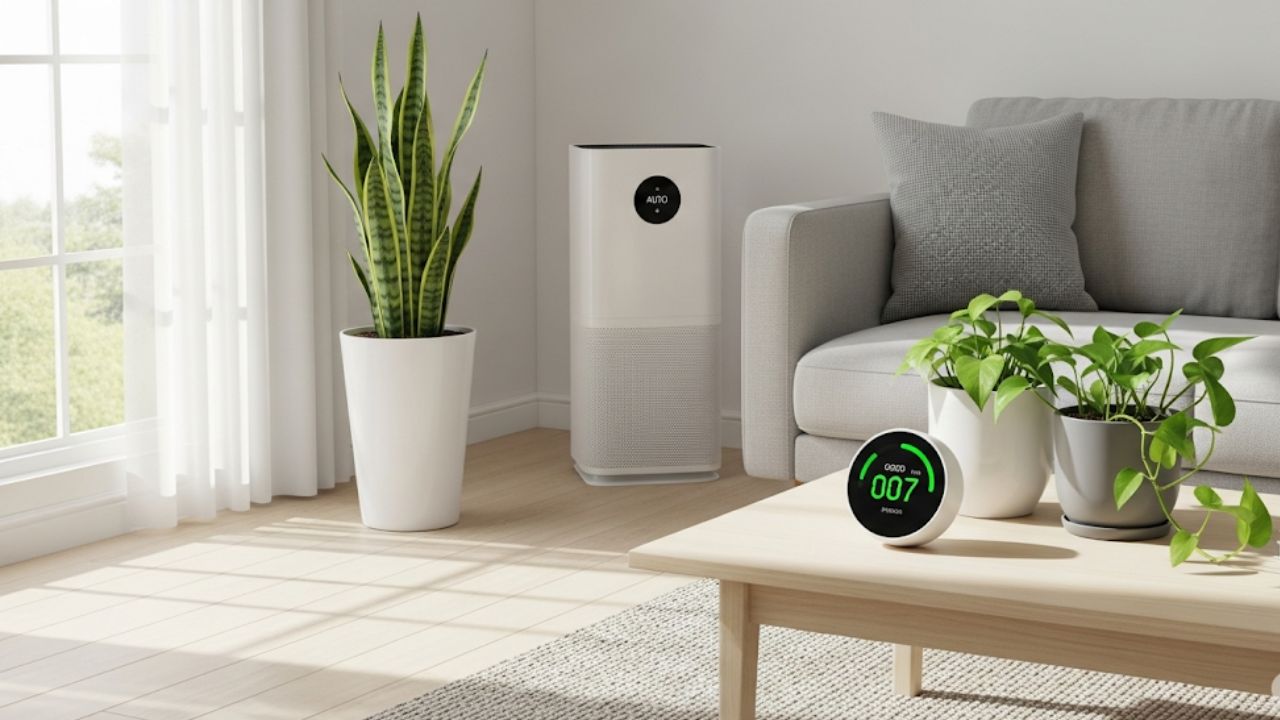
This is where the smart air quality monitor steps in. It’s a small device, about the size of a clock, that quietly checks your indoor air. It has “super senses” to notice things you can’t see or smell, like stale air, tiny smoke particles, or moisture. Think of it as your home’s early warning system.
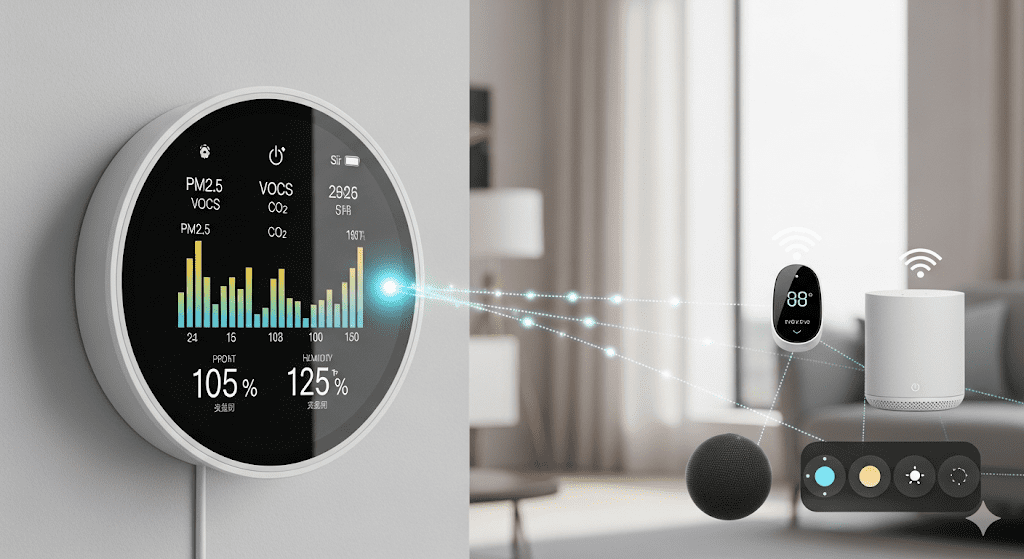
On its own, it’s useful. But the real magic happens when you connect it to other smart devices. Then your home doesn’t just warn you—it fixes the problem automatically.
Everyday Examples of Air Monitors in Action
Cooking in the kitchen
You’re frying food and smoke builds up. Normally you’d notice only after the smell lingers. With a monitor, your air purifier or kitchen fan turns on instantly, clearing the air.
Sleeping at night
Closed bedroom windows cause carbon dioxide from your breathing to build up. You wake up groggy. A monitor can sense this and tell a fan to bring in fresh air while you sleep.
Rainy day or damp bathroom
Moisture in the air creates the perfect environment for mold. A monitor spots the high humidity and switches on a dehumidifier before mold gets the chance.
How Monitors and Devices Work Together
You don’t need to be a tech expert. Most modern devices are designed to connect easily.
- Smart speakers like Amazon Alexa or Google Home act as translators, letting your monitor and purifier “talk” to each other.
- Apps guide you step by step. Most monitors come with one.
- Advanced setups exist for hobbyists, but most homes only need the simple connections.
This isn’t about gadgets for the sake of gadgets. It’s about creating a home that adapts to you. A home that quietly takes care of the air you breathe.
Why Cleaner Indoor Air Matters
- Healthier home without effort – Devices react automatically to improve your air.
- Better sleep and more energy – Fresh air at night means you wake up clear-headed.
- Protection against mold and allergies – Dampness and particles are handled early.
- Peace of mind – Whether you’re home or away, your air is managed.
How to Start With Smart Air at Home
- Choose a smart air monitor – Look for one that measures carbon dioxide and pollution at minimum.
- Add a helper device – Start with something simple, like a purifier or fan.
- Connect them – Use the app or link through Alexa or Google Home.
- Test your setup – Light a candle and watch the purifier turn on when the monitor detects smoke.
- Expand slowly – Once it works, add more devices like a dehumidifier or extra fans.
Final Thoughts: Air That Takes Care of You
A smart air quality monitor is more than a gadget. It’s an extra set of senses for your home. It notices heavy, smoky, or damp air before you do. And when connected to other devices, it can fix the problem automatically.
This is about comfort, health, and peace of mind. Your home should be your safe haven. With smart air tools, it truly can be.
Keep an eye on the Recommended Products section here on HH. Soon I’ll share the monitors, purifiers, and devices I recommend—so you’ll know exactly where to start.
Quick Glossary
- Air Quality Monitor – small device that checks your indoor air.
- Air Purifier – machine that cleans the air of smoke, dust, pollen.
- Fan / Ventilation – moves or brings in fresh air.
- Dehumidifier – reduces dampness and prevents mold.
- Smart Speaker (Alexa/Google Home) – helps your smart gadgets connect.
Follow us on social Facebook
Also know About:
Ai Powered Home Air Quality Management For Asthma Patients
Understanding The Impact Of Air Pollution On Health: What You Need To Know