Portable Red Light Therapy: Top Portable Devices for Targeted Recovery On-The-Go (2026)
Staying consistent with recovery while traveling (or just juggling a busy week) is hard. The biggest problem usually isn’t motivation—it’s friction: if a device is bulky, annoying to set up, or too time-consuming, you won’t use it enough to matter.
This 2026 guide breaks down the most practical portable options—tiny handheld panels, flexible wraps, and wearable straps—so you can choose a format you’ll actually use. Portable Red Light Therapy isn’t a miracle cure, but it can be a helpful add-on for muscle comfort, joint stiffness, and skin support when you use it correctly and safely.
Medical note (educational only): This article is not medical advice. If you have a medical condition or take photosensitizing medication, check with a clinician first.
Affiliate disclosure: This article may contain affiliate links. If you buy through them, we may earn a commission at no extra cost to you.
Quick Answer
If you want the most polished “grab-and-go” experience, Joovv Go 2.0 is a strong all-around option (portable, battery-powered, app-guided sessions). If your main goal is hands-free joint or muscle support, Kineon MOVE+ Pro is built to strap onto areas like knees and shoulders for targeted recovery.
If you want something you’ll realistically use on travel days (hotel, gym bag, long flights), a flexible wrap like Lumaflex Essential is one of the easiest ways to stay consistent. For a compact “precision” device aimed at face/skin and smaller areas, Kala Mini is a popular lightweight style to consider.
Editor’s Pick (most people): Joovv Go 2.0
Best blend of portability + simplicity + a “routine you can stick with” feel. If you only buy one handheld, this is the style most likely to fit a normal life.
At a Glance
| Device | Format | Light type (typical) | Best for | Travel notes | Price bracket |
| Joovv Go 2.0 | Handheld panel | Red + near-infrared | All-around targeted sessions | Battery + app sessions | $$$ |
| Kineon MOVE+ Pro | Wearable module + straps | Red LED + infrared laser diodes (manufacturer-stated) | Joints + focused muscle areas | Hands-free for knees/shoulders | $$$ |
| Lumaflex Essential | Flexible wrap | Red + near-infrared | “I’ll actually use it” consistency | Packable + wearable | $$ |
| Kala Mini | Compact handheld | Red + near-infrared | Face/skin + small joints | Ultra-portable | $–$$ |
| DNA Vibe Jazz Band Live Pro | Wearable band | Red + near-infrared (+ additional modalities, model-dependent) | Multi-modal recovery routines | Wearable for multitasking | $$$ |
| Gleam Mini | Small handheld | Red + near-infrared | Minimalist targeted use | Compact; check availability | $–$$ |
| MitoMIN 2.0 (Mito Red Light) | Small plug-in panel | Red + near-infrared | Hotel-room “bigger coverage” sessions | Needs an outlet | $$ |
Price brackets are relative and vary by region and sales.
How we chose these portable devices
Portable devices vary wildly in what matters in real life. For this list, I prioritized options that:
- clearly state their light type (typically red + near-infrared),
- are truly portable (battery or packable),
- match real use cases (hands-free wraps vs handheld precision),
- have consistent user-reported patterns around usability and comfort (without treating any device as medical treatment).
Important: not all products in this guide are personally tested. Recommendations are based on manufacturer specifications, regulatory listings where stated, and verified customer-review patterns—plus the practical reality of what people can stick with long-term.
Our 2026 portable picks
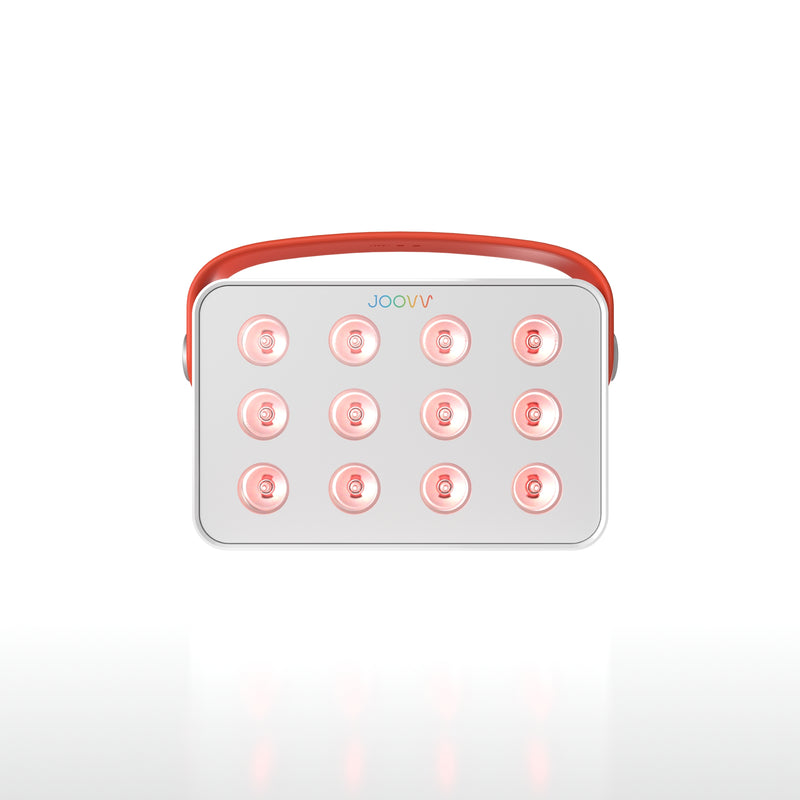
1) Joovv Go 2.0: best “grab-and-go” handheld for most people
Joovv’s portable approach is built for quick, repeatable sessions—without turning recovery into a project.
Why it stands out
- Convenient handheld size that’s easy to store and travel with
- Battery-powered sessions (no outlet dependency)
- App-guided timers and routines (helpful if you like structure)
Best for
- People who want one device that can do a bit of everything: post-workout soreness, stiffness, and targeted skin/muscle sessions.
Watch-outs
- Smaller coverage per session than a wrap or panel—expect to reposition.
- Premium pricing compared to simpler handhelds.
Red light therapy works best when paired with proper lighting. Learn about smart lighting for better sleep and circadian rhythm
2) Kineon MOVE+ Pro: best hands-free option for joints & focused muscle areas
If you want something you can strap on and use while reading, working, or relaxing, wearables can be the difference between “I’ll do it later” and actually doing it.

Why it stands out
- Strap-on format for knees, shoulders, ankles, elbows (hands-free consistency)
- Combines LEDs with infrared laser diodes (as the brand describes it) for targeted sessions
- Built around “use it while you live your life”
Best for
- Joint-focused routines, recurring tight areas, athletes who want a portable, repeatable recovery habit.
Watch-outs
- Wearables can feel expensive if you don’t use them often.
- Results are typically gradual and vary by person and issue.
Track, optimize, and recover with insights from how smart health devices support daily wellnes
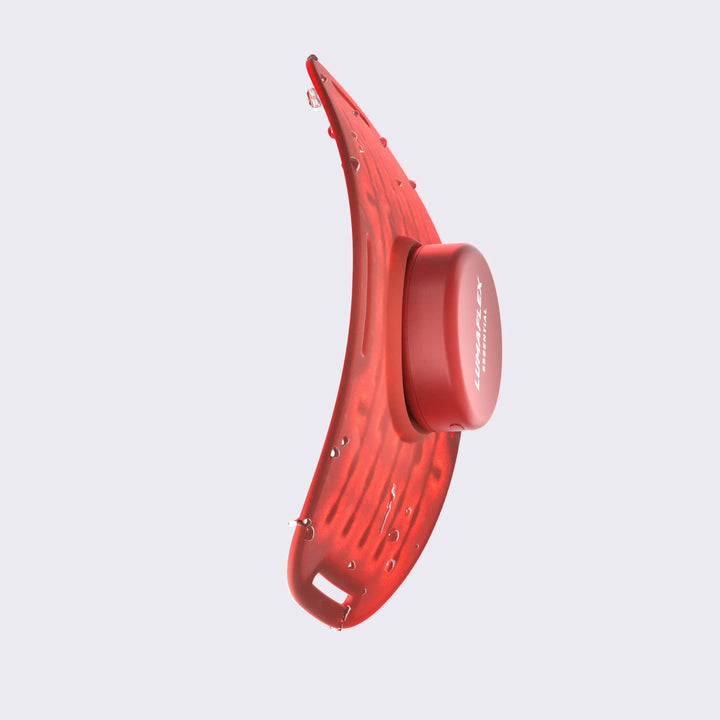
3) Lumaflex Essential: best flexible wrap for low-friction consistency
For travel, wraps can be the simplest answer: place, strap, press start.
Why it stands out
- Flexible, packable format for larger target areas
- Easy to integrate into a daily routine (especially on travel days)
- Great for people who hate “holding a device in place”
Best for
- Back, hips, quads, shoulders—larger areas where handhelds feel too slow.
Watch-outs
- Some wraps prioritize convenience over maximum intensity. If you’re chasing “strongest possible output,” compare specs carefully.
For recovery tracking, sleep matters. Check out our sleep tracker comparison (Oura vs Whoop vs Fitbit)
4) Kala Mini: best compact device for face/skin + smaller areas
If your main use case is face/skin support plus occasional small-area targeting, compact handhelds can be enough—and easier to pack.
Why it stands out
- Lightweight, compact format for quick sessions
- Typically offered with red + near-infrared wavelengths
- Easy for face/neck, hands, jaw area, small joints
Best for
- A simple skincare-friendly routine and targeted use.
Watch-outs
- Small coverage = more repositioning for bigger muscle groups.
Red light therapy complements other heat-based recovery practices. Learn more in the sauna ritual for recovery and relaxation
5) DNA Vibe Jazz Band Live Pro: best for “stacked modality” recovery routines
DNA Vibe is positioned for people who like multi-feature devices and wearable convenience.
Why it stands out
- Wearable band format for targeted areas
- Multi-modal approach (varies by model)
- Often used for routines where you want “set it and go”
Best for
- People who like guided recovery rituals and wearable convenience.
Watch-outs
- More features can mean more complexity. If you want ultra-simple, a wrap or basic handheld may fit better.
Combine light therapy with nervous system recovery—see the Apollo Neuro review
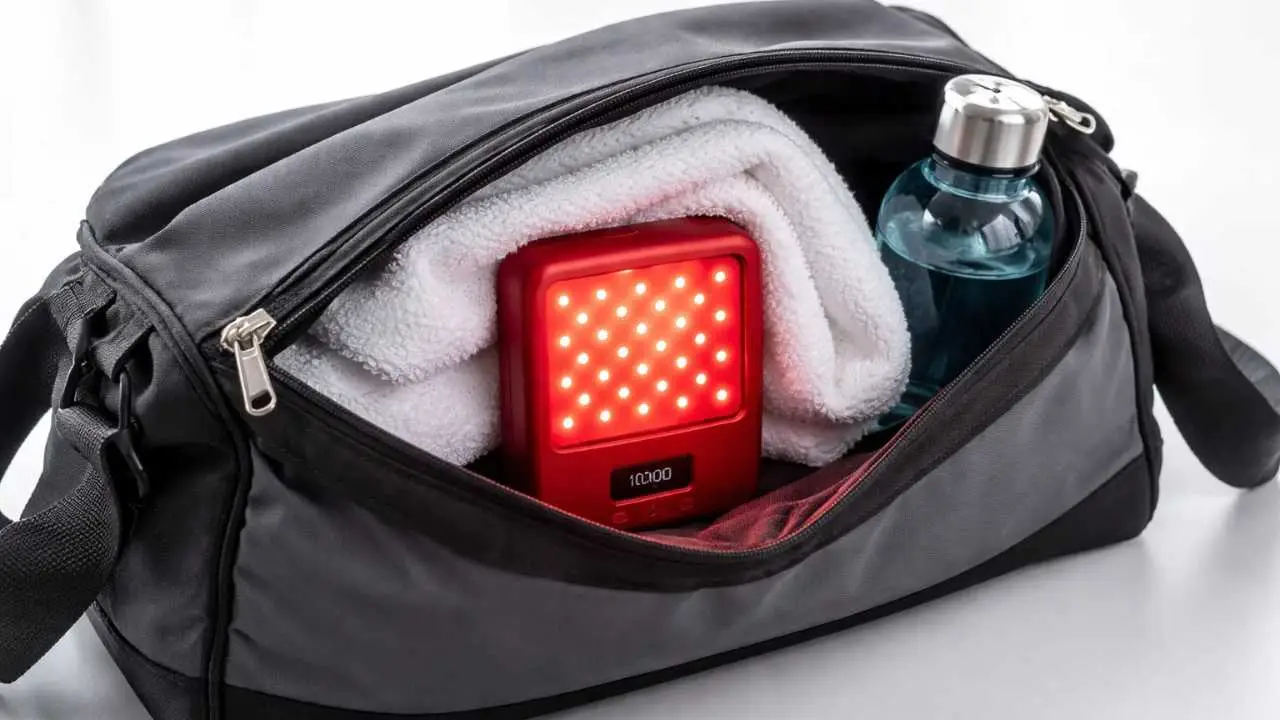
6) Gleam Mini: best ultra-compact style to keep in a gym bag
If you want a very small, lightweight device for occasional targeted sessions, this category can work well—especially if you’re not trying to treat large areas.
Best for
- Minimalists and travelers who want “something is better than nothing.”
Watch-outs
- Tiny devices often mean more repositioning and longer total time for larger areas.
7) MitoMIN 2.0 (Mito Red Light): best small panel for hotel-room “bigger coverage”
Not everyone wants battery-powered. A small plug-in panel can be a simple solution if you want larger coverage in a stationary setup.
Best for
- Broader sessions in a hotel room, home office, or bedside setup.
Watch-outs
- Needs an outlet; not ideal for truly on-the-move sessions.
Portable Red Light Therapy Buying Guide: What Actually Matters
If you want the right device the first time, focus on the practical details that affect consistency and safety.
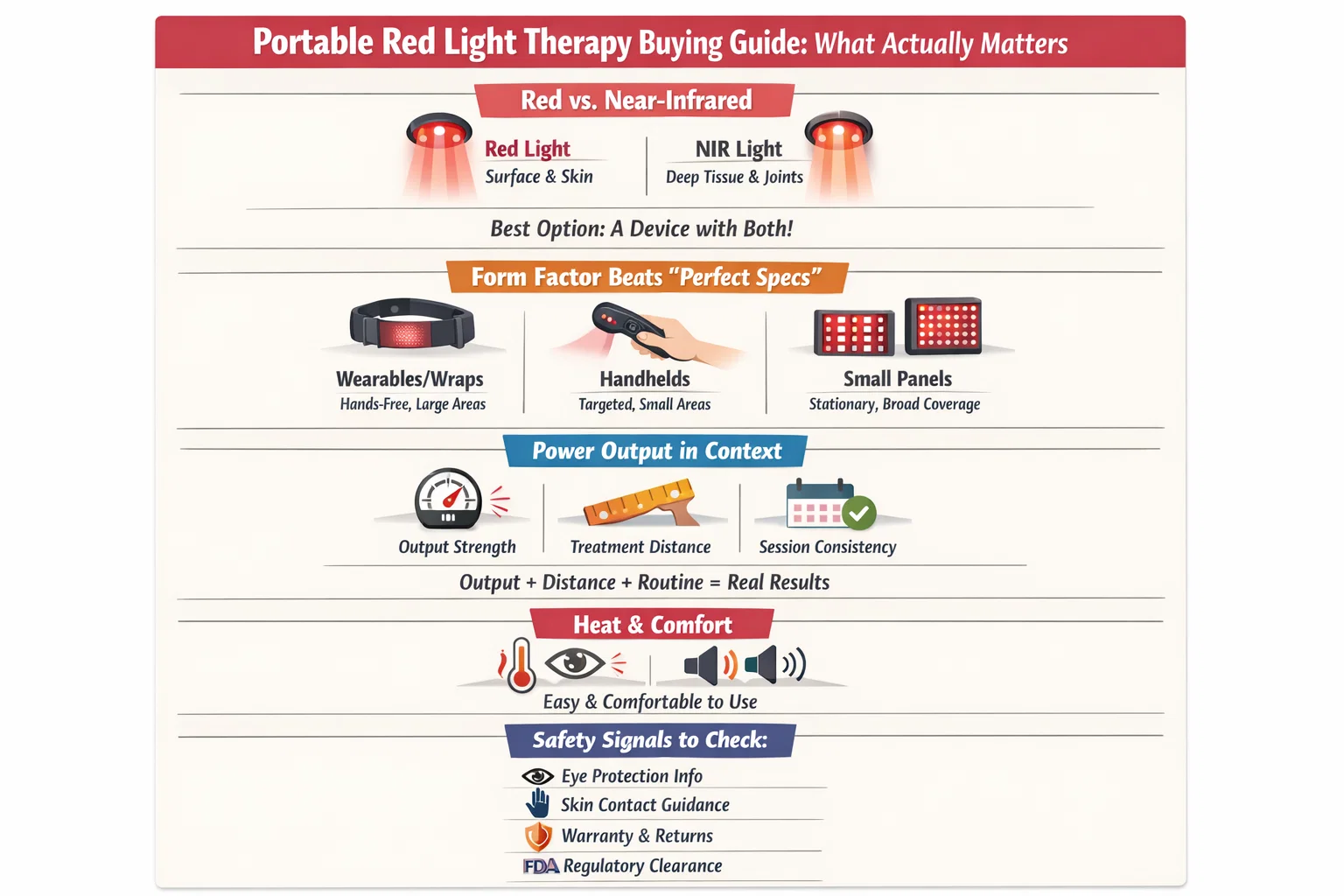
1) Red vs near-infrared (and why most people want both)
- Red light is commonly used for more surface-level goals (skin-focused routines).
- Near-infrared (NIR) is commonly used for deeper tissue targets (muscle/joint comfort).
A simple rule: if you’re buying one device, consider a model that offers both.
2) Form factor beats “perfect specs”
- Wearables/wraps: best for consistency, larger areas, multitasking
- Handhelds: best for precision and small areas
- Small panels: best for broader coverage in a plug-in stationary setup
3) Power output (irradiance) matters—but only in context
Power is often discussed as irradiance (mW/cm²). In real life, your results depend on:
- the device’s output at your actual treatment distance,
- how long you use it per area,
- how consistently you repeat sessions.
If a brand doesn’t clearly explain output, distance guidance, and session timing, that’s a yellow flag.
4) Heat, comfort, and session friction
A device that gets uncomfortably warm, is loud, or is annoying to position usually becomes a “drawer device.” Comfort matters.
5) Safety signals worth prioritizing
Look for clear documentation around:
- eye safety guidance (and whether goggles are included or recommended),
- skin-contact guidance,
- return policy and warranty,
- regulatory status (when a brand claims “FDA registered/cleared,” verify what that means for your region).
How to use portable red light therapy (a detailed, practical routine)
Always follow your exact device’s manual—but this framework helps most people start safely and consistently.
Step 1: Start clean and simple
- Use on clean, dry skin when possible. Thick lotions can reduce light penetration.
- If it’s a wrap, place it snugly (comfortable contact—not tight).
Step 2: Pick one realistic target (don’t treat your whole body)
Choose one:
- a “problem area” (knee, shoulder, lower back)
- a “high-use area” (quads, calves, neck)
- a skin routine area (face/neck)
Step 3: Get distance and placement right
- Handheld/panel: follow manufacturer distance guidance. Too far reduces effect; too close can cause irritation from heat.
- Wrap/wearable: aim for even contact and stable placement.
Step 4: Keep sessions short enough to stay consistent
A practical start:
- 5–10 minutes per area, then adjust based on how you respond.
- For bigger muscles, do two shorter placements instead of one long session.
Step 5: Frequency that actually works for real people
- Start with 3–5 sessions per week.
- For an “acute soreness” phase, many people try daily for 7–14 days, then switch to maintenance.
Step 6: Track one simple outcome
Pick one for 2–4 weeks:
- “morning stiffness” (0–10)
- “next-day soreness” after training (0–10)
- “range of motion feels easier” (yes/no)
- “skin irritation” (yes/no)
Consistency beats intensity.
How NOT to use it (common mistakes)
- Don’t look directly into the light source. Use eye protection for face/near-eye sessions.
- Don’t overdo session time “because more must be better.” More can be counterproductive.
- Don’t use on skin that’s already irritated, inflamed, or broken without clear guidance.
- Don’t use through thick clothing (skin contact is usually recommended for effectiveness).
- Don’t ignore medication interactions. Some antibiotics, acne treatments/retinoids, and other medications can increase light sensitivity—ask a clinician/pharmacist if unsure.
Who should skip portable devices (and what to buy instead)
Portable devices are built for convenience—not maximum full-body power.
You may want a different solution if:
- You want to treat large body areas quickly (look at full-sized panels instead).
- You only use recovery tools at home (a panel may give better coverage per session).
- You won’t realistically do short, repeated sessions (portables work best with consistency).
Can you bring a portable red light device on a plane?
In most cases, yes. The main issue is usually lithium battery rules, not the light itself.
Travel tips:
- Pack battery devices in your carry-on when possible.
- Protect the device from accidental activation and damage.
- If watt-hours (Wh) are listed, compare them to your airline’s battery limits.
When to talk to a clinician first
Consider checking with a clinician before use if you:
- are pregnant (or high-risk pregnancy),
- have a seizure disorder,
- take photosensitizing medication or have a light sensitivity condition,
- recently had surgery, have an active infection, or unexplained swelling/heat,
- have persistent pain, numbness, or symptoms that are worsening.
FAQs
Does portable red light therapy work?
It can help support comfort and recovery routines, but results vary. Most people who benefit see the best outcomes from consistent, moderate use.
Is near-infrared always better than red?
Not always. Near-infrared is often used for deeper tissue targets; red is often used for more surface-level skin-focused routines. Many devices combine both.
How long until I notice a difference?
Some people notice short-term comfort changes quickly; for others it’s a 2–4 week consistency story.
Can I use it every day?
Many people do. If you notice irritation, scale back, shorten sessions, and reassess placement/distance.
Do I need goggles?
If treating the face or anywhere near the eyes, eye protection is strongly recommended.
Is a portable device worth it if I already have a sauna routine or stretching habit?
It can be, mainly because it’s low-effort and repeatable. Think of it as an add-on—not a replacement for movement, sleep, and recovery basics.
Final verdict
The “best” device is the one that fits your routine. If you want a polished handheld option, Joovv Go 2.0 is a strong pick. If your priority is hands-free joint and muscle targeting, Kineon MOVE+ Pro is built for that. For travelers who want the easiest path to consistency, a wrap like Lumaflex Essential often wins.
If you want a simple, realistic recovery habit while traveling, Portable Red Light Therapy is most worth it when you choose a form factor you’ll actually use—three to five times a week—without overthinking it.
References
- Cleveland Clinic: Red light therapy overview (benefits, uses, safety)
- Brown University Health: red light therapy safety considerations
- FAA: lithium battery guidance for air travel (carry-on rules and limits)