Quick answer: The safest cutting board setup in 2026 is a two-board system – a quality hardwood board for plants and ready-to-eat foods, plus a non-porous board (titanium, rubber, or high-quality composite) for raw meat and fish – so you minimize microplastics, toxins, and cross-contamination without making cooking harder.
Top Picks – Best Non-Toxic Cutting Boards in 2026
Material Kitchen — Jump to ReviewBest Dishwasher-Safe:
Epicurean — Jump to Review
Best Pro-Style Rubber Meat Board:
Sani-Tuff NSF Rubber — Jump to Review
Best Gentle Knife-Lover’s Veg Board:
Hinoki Cypress — Jump to Review
Review Section
Our Favorite Non-Toxic Cutting Board Setup
For most home cooks, the best overall non-toxic system is a large maple board like the John Boos Maple Chop-N-Slice for fruits, vegetables, and ready-to-eat foods, paired with a dedicated titanium board like the ChopChop USA Pure Titanium Cutting Board for raw meat and fish to maximize hygiene while minimizing microplastics and knife wear. If you want a more compact, mineral-oil-free option for daily plant prep, the Ziruma-style Acacia Cutting Board / Set is an excellent alternative for the “plants & ready-to-eat” zone.
Why non-toxic cutting boards matter
The most dangerous thing in your kitchen might not be the knife – it might be the board under it.
In the last few years, researchers have shown that plastic cutting boards can release hundreds of microplastic particles with every single cut, many of which end up directly in your food. Over a year, that can add up to several grams of plastic eaten per person, just from chopping vegetables and slicing bread.
At the same time, food safety agencies still warn that any cutting board can become unsafe if it’s deeply scarred, not cleaned well, or used for raw meat and fresh salad on the same surface.
At a glance: best non-toxic cutting boards
If you are ready to buy, here are the top non-toxic cutting board picks by category; you only need two or three of these to build a safe, practical system.
| Board / Brand | Best for | Material | Why it is a healthy choice | Dishwasher safe? | Regions (US/EU/UK/AU) |
| John Boos Maple Chop-N-Slice | Classic, pro-grade main wood board | Solid hard maple (FSC in many models) | Dense hardwood, naturally antimicrobial when properly dried, no plastic or PFAS, many models NSF-certified. | No | US, EU, UK (Amazon & pro kitchen stores) |
| Ziruma Acacia Cutting Board / Set | Daily non-toxic wood board | FSC acacia, beeswax, flaxseed oil, lemon oil | Mineral-oil-free, plant-based finish, gentle on knives, marketed specifically as a non-toxic cutting board set. | No | US, EU, UK via online retailers |
| ChopChop USA pure titanium board (and similar) | Raw meat and fish hygiene | 100% titanium | Extremely non-porous, microplastic-free, non-reactive, dishwasher-safe, ideal as a dedicated raw-protein board. | Yes | US (direct + Amazon); ships to many countries |
| Material Kitchen reBoard | Lightweight “smarter plastic” board | 75% recycled plastic, 25% renewable sugarcane | BPA-free, reduces virgin plastic use, textured and dishwasher-safe; better than generic PP/PE boards. | Yes | US, some EU/UK retailers |
| Epicurean / Richlite wood fiber boards | Thin, durable everyday board | Paper composite (phenolic resin) | Non-plastic, NSF and GREENGUARD Gold certified, very low VOC emissions, knife-friendly and dishwasher-safe. | Yes | US, EU, UK, AU |
| Sani-Tuff / NSF rubber board | Pro-style raw meat board | High-density rubber | NSF-certified, non-porous, can be resurfaced, widely used in professional kitchens. | Often no (check model) | US, EU, UK (pro suppliers) |
| Hinoki cypress board (e.g., Yoshihiro) | Gentle veg and knife board | Single-piece hinoki wood | Naturally aromatic, very gentle on blades, traditional low-toxin option when unfinished or finished with safe oils. | No | Japan, US, EU via specialty shops |
Tip: Start with one board for raw meat and fish (titanium, rubber, or composite) and one board for plants and ready-to-eat foods (maple, acacia, or hinoki); add a third board only if you prep constantly or cook for a big household.
Quick answer: safest cutting board setup in 2026
There is no single “perfect” cutting board material; each comes with trade-offs for hygiene, microplastics, knife health, and ease of use. For most health-conscious kitchens, the safest overall setup is:
- Board 1: high-quality hardwood or acacia wood board
- Use for: fruits, vegetables, herbs, bread, cheese, nuts, chocolate, and other ready-to-eat foods.
- Why: No plastic, no PFAS, naturally antimicrobial behavior when cleaned and dried, and gentle on knives.
- Board 2: non-porous, ultra-hygienic board (titanium, stainless steel, rubber, or certified paper composite)
- Use for: raw meat, poultry, and fish.
- Why: Easy to sanitize, does not shed plastic fibers, and resists stains and strong odors; ideal for high-risk foods.
In many home kitchens, a third lightweight board (like a recycled-plastic reBoard) earns a place for quick, low-risk tasks when you need a dishwasher-safe surface, even though it still contributes some microplastic wear over time.
How I use titanium and acacia boards at home
This is how Anita actually sets up cutting boards in a real family kitchen.
Board 1: titanium cutting board – “high-risk zone”
A pure titanium cutting board is used as a dedicated raw-protein and “messy food” surface.
- What goes on the titanium board:
- Raw chicken, turkey, and duck
- Raw beef, lamb, and pork
- Raw fish and shellfish
- Very juicy, strongly colored items that easily stain (e.g., beetroot, turmeric-heavy marinades)
- Why titanium works here:
- Maximum hygiene: Titanium is non-porous, corrosion-resistant, and does not absorb juices, so bacteria stays on the surface and can be removed with scrubbing or a dishwasher cycle.
- Microplastic-free: Unlike plastic boards, titanium does not shed microplastics when scratched, so each cut avoids plastic fragments entering food.
- Trade-off: Titanium is louder and can be harsher on knives than wood, but in this high-risk zone the priority is hygiene; knives are simply sharpened regularly.
Board 2: acacia wood cutting board – “plants & ready-to-eat zone”
The second main board is an acacia wood board similar to Ziruma-style boards that use FSC-certified wood and plant-based conditioning blends.
- What goes on the acacia board:
- Fruits (apples, citrus, berries, melons)
- Vegetables (onions, garlic, peppers, leafy greens, carrots)
- Herbs
- Bread and pastries
- Cheese, nuts, chocolate, and snack platters
- Why acacia works here:
- Knife-friendly and quiet: The wood absorbs a bit of impact with each cut, helping blades stay sharper and making prep calmer and more controlled.
- Naturally antimicrobial: Like other hardwoods, acacia’s tight grain structure can trap bacteria inside the board and reduce surface contamination as the board dries, provided it is cleaned and dried promptly.
- Low-toxin finish: Beeswax and plant oils instead of petroleum-based mineral oil align with a low-toxin lifestyle when a board is marketed and finished that way.
Why these boards never mix
The boards are always kept separate:
- The titanium board is never used for herbs or salad vegetables immediately after raw chicken, even if washed.
- The acacia board is never used for raw meat or fish.
This two-board separation:
- Drastically lowers cross-contamination risk.
- Reduces the need for harsh sanitizing on wood.
- Creates a simple mental rule:
- Titanium = raw animal foods
- Acacia = plants + ready-to-eat foods
You can recreate the same logic with any combination of:
- Titanium, rubber, or certified composite for raw meat and fish.
- Hardwood, acacia, or hinoki for plants and ready-to-eat foods.
Safety comparison: cutting board materials
Different materials balance hygiene, microplastics, knife health, and toxicity in very different ways.
Safety & hygiene comparison by material
| Material | Safety & hygiene advantages | Safety & hygiene trade-offs |
| Hardwood (maple, teak, walnut, acacia) | Naturally antimicrobial – wood fibers can trap and slowly inactivate bacteria as the board dries. Gentle on knives. Long-lasting if cared for. No plastic, no PFAS. | Needs hand-washing and regular oiling; not dishwasher-safe. If allowed to crack or warp, crevices can harbor bacteria. |
| High-density plastic (HDPE/PP) | Non-porous and easy to sanitize. Often dishwasher-safe and color-coded in professional kitchens for meat vs veg. FDA-approved for food contact. | Deep knife grooves can trap bacteria and release high levels of microplastics into food and dishwater; boards must be replaced frequently. |
| Titanium / stainless steel | Extremely hygienic, non-porous, and non-absorbing. Won’t shed microplastics or leach plastic additives. Dishwasher-safe. Superb for raw meat and fish. | Can be louder and somewhat harsher on knives than wood; some boards feel slippery if they lack texture or non-slip backing. |
| Tempered glass / ceramic | Completely non-porous, non-toxic, and ultra-easy to sanitize. Dishwasher-safe. | Extremely hard on knife edges and can be slippery – which increases cut injury risk. Best as serving boards or trivets, not your main prep surface. |
| Rubber (NSF-style boards) | Dense, non-porous, and used in professional kitchens. Can often be resurfaced instead of replaced. Great grip and impact absorption. | Heavy and usually not as aesthetically pleasing for home use. Some are not dishwasher-safe; check care instructions. |
| Paper composite (e.g., wood fiber boards) | Non-plastic, dense, thin, and knife-friendly; many are dishwasher-safe. Good balance between hygiene and ease. | Still a resin-bound composite; not “pure” wood. Deep gouges still require replacement. |
| Bamboo composites | Fast-growing and eco-appealing. When FSC-certified and made with formaldehyde-free adhesive, they can be a decent low-toxin option. | Many cheap bamboo boards use questionable glues. Often harder and more brittle than hardwood, prone to splitting if not maintained. |
The microplastic issue with plastic boards
Recent systematic reviews show that plastic cutting boards can release 100–300 microplastic particles per knife stroke, with a significant portion ending up in the food itself and the rest washed into the environment. Over time, this can amount to 7–50 grams of plastic per person per year just from cutting board use.
These plastics can carry additives like plasticizers and stabilizers – some linked to hormone disruption and inflammation – which may migrate into food, especially when chopping hot, fatty, or acidic items.
This evidence is a major reason more health-conscious home cooks are phasing out standard plastic boards in favor of systems built around wood, titanium/stainless steel, rubber, and low-emission composites.
Pair your non-toxic cutting board with cookware that is just as clean; non-toxic cookware and food-contact surfaces work together to reduce overall chemical exposure in the kitchen.
Deep dive: recommended non-toxic cutting boards
Below are the most practical non-toxic cutting board options by category, with pros and cons to help you choose.
1. John Boos Maple Chop-N-Slice – classic hardwood safety

John Boos maple boards are the “old-school” answer that still holds up in a modern non-toxic kitchen.
Why they are a good choice
- Dense North American hard maple, a top-rated wood for cutting boards.
- Many models are NSF-certified, meaning they meet professional sanitation standards.
- With regular oiling and care, they can last decades.
Pros
- Excellent main board if you cook often.
- Gentle on knives and naturally antimicrobial when cleaned and dried correctly.
- Comes in many sizes and thicknesses.
Cons
- Requires hand-washing and regular oiling.
- Not dishwasher-safe.
- Heavier and bulkier than some composite options.
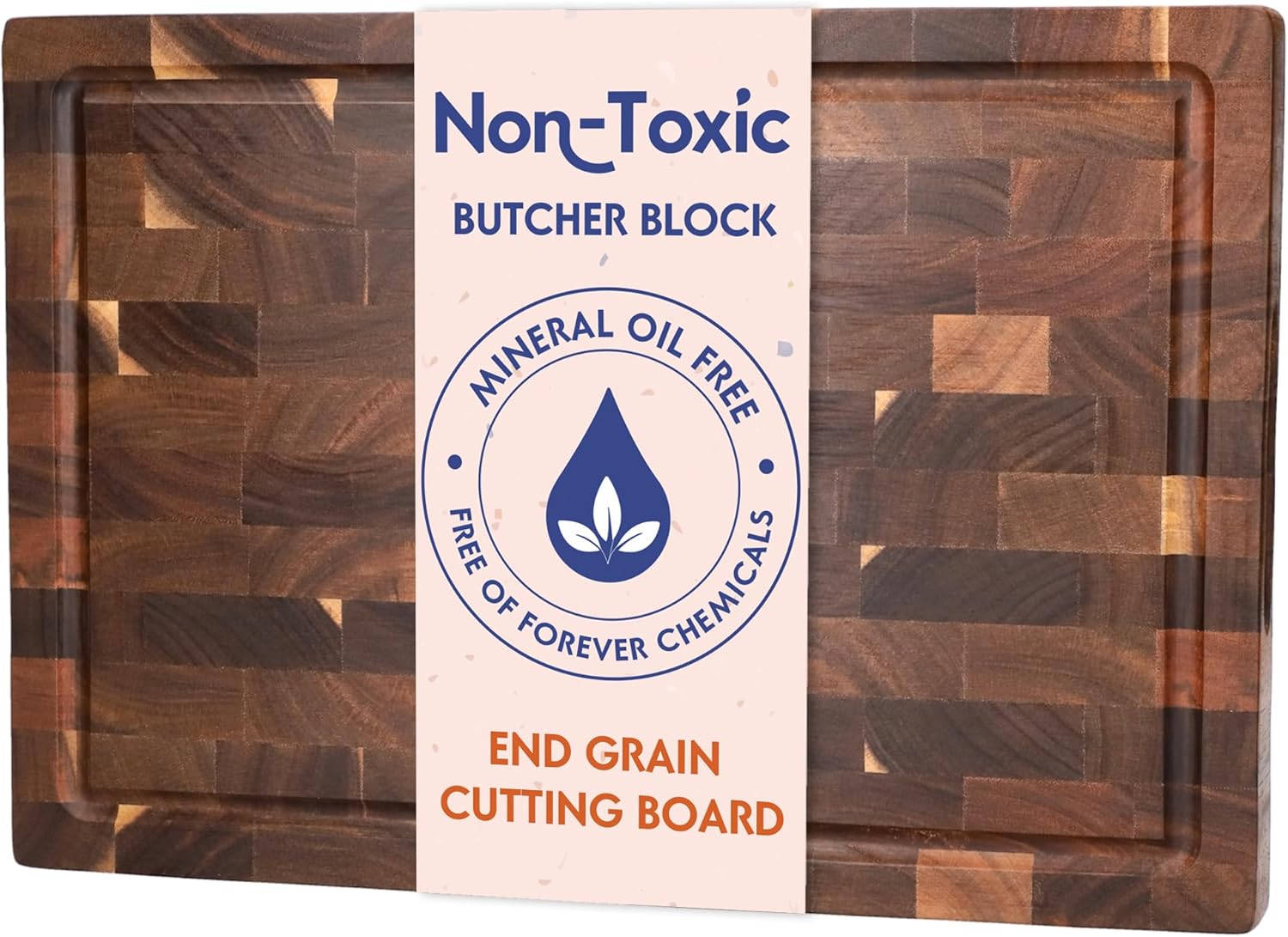
2. Ziruma Acacia Boards – non-toxic, mineral-oil-free wood
Acacia boards that are FSC-certified and finished with beeswax and plant oils offer a low-toxin twist on a classic wooden board.
- Why they are a good choice
- Solid FSC-certified acacia wood with a tight grain.
- Finished with beeswax, flaxseed oil, and lemon oil instead of petroleum-based mineral oil, which appeals to those avoiding petroleum derivatives.
- Often available as sets with icons for separating meat, vegetables, and cheese.
- Pros
- Beautiful grain and warm color.
- Quiet and gentle on knives.
- Great as a daily plant and ready-to-eat board.
- Cons
- Needs periodic conditioning with food-safe oils or wax.
- Not ideal for dishwashers or prolonged soaking.
- Availability can vary by region.
3. Titanium cutting boards (e.g., ChopChop USA) – microplastic-free hygiene
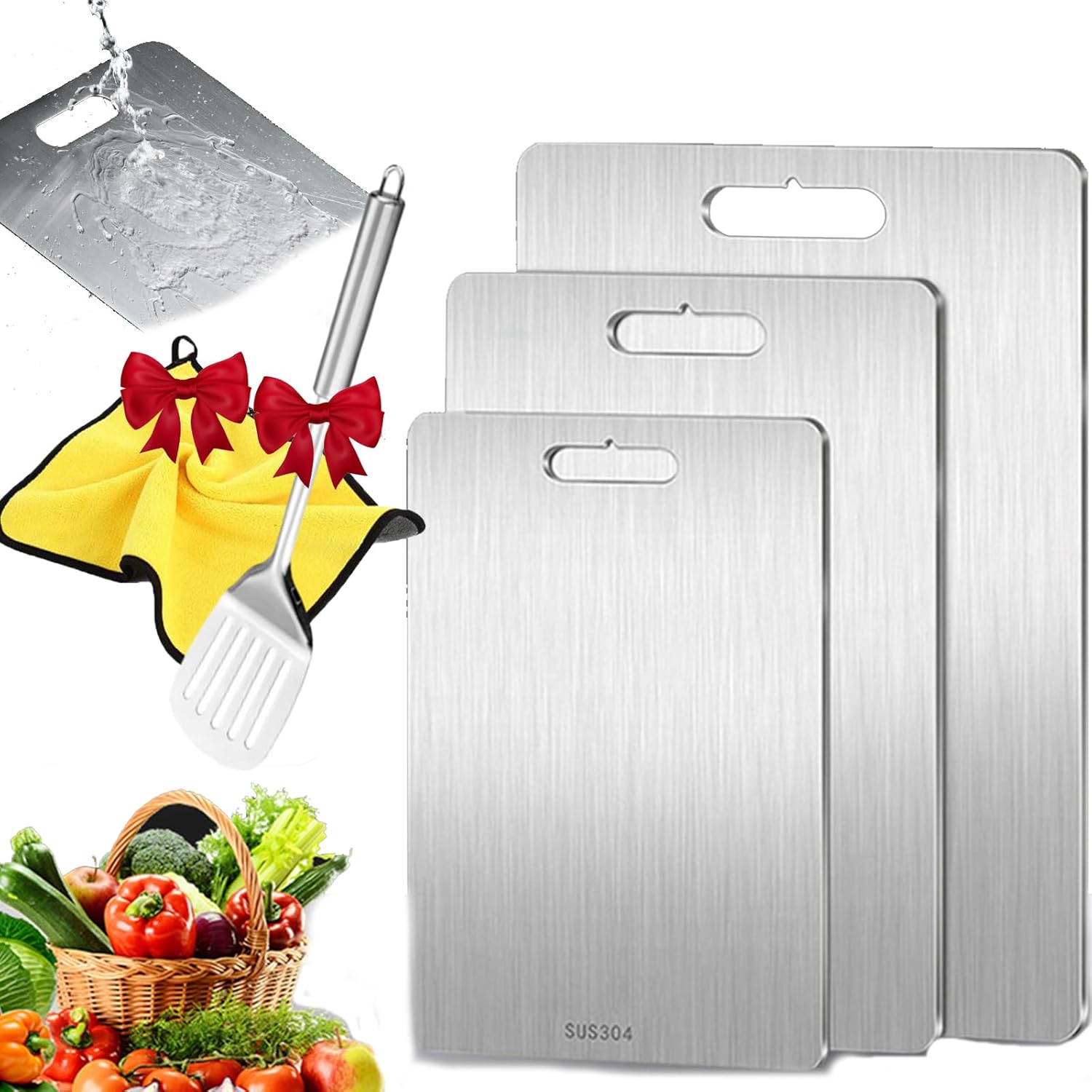
Titanium boards are designed as a direct answer to microplastic and hygiene concerns with plastic boards.
- Why they are a good choice
- 100% titanium, non-porous, non-reactive, and corrosion-resistant.
- Dishwasher-safe and highly resistant to stains and odors.
- Do not shed microplastics, making them appealing for people who want to minimize plastic particle exposure.
- Pros
- Excellent as a dedicated raw-meat and fish board.
- Very durable and long-lasting.
- Easy to sanitize thoroughly.
- Cons
- Louder and more rigid under the knife.
- Harsher on blades than wood, so you may need more frequent sharpening.
- Higher upfront price than many plastic boards.
4. Material Kitchen reBoard – smarter “plastic board”
If you still need the practicality of a thin, light, dishwasher-safe cutting board, a recycled-plastic reBoard is a better bet than a generic plastic board.

- Why it is a better plastic option
- Made from 75% recycled plastic scraps and 25% renewable sugarcane to reduce virgin plastic use.
- BPA-free and designed as a more eco-conscious board than standard polypropylene.
- Dishwasher-safe and textured for grip.
- Pros
- Thin, lightweight, and easy to store.
- Ideal for small kitchens or quick jobs.
- Easy to toss in the dishwasher multiple times a day.
- Cons
- Still plastic-based, so microplastic wear and tear are possible over time.
- Needs replacing once deeply scarred.
- Not the best choice if you want to minimize plastic exposure to the lowest possible level.
5. Epicurean / Richlite Wood Fiber Boards – minimalist and durable
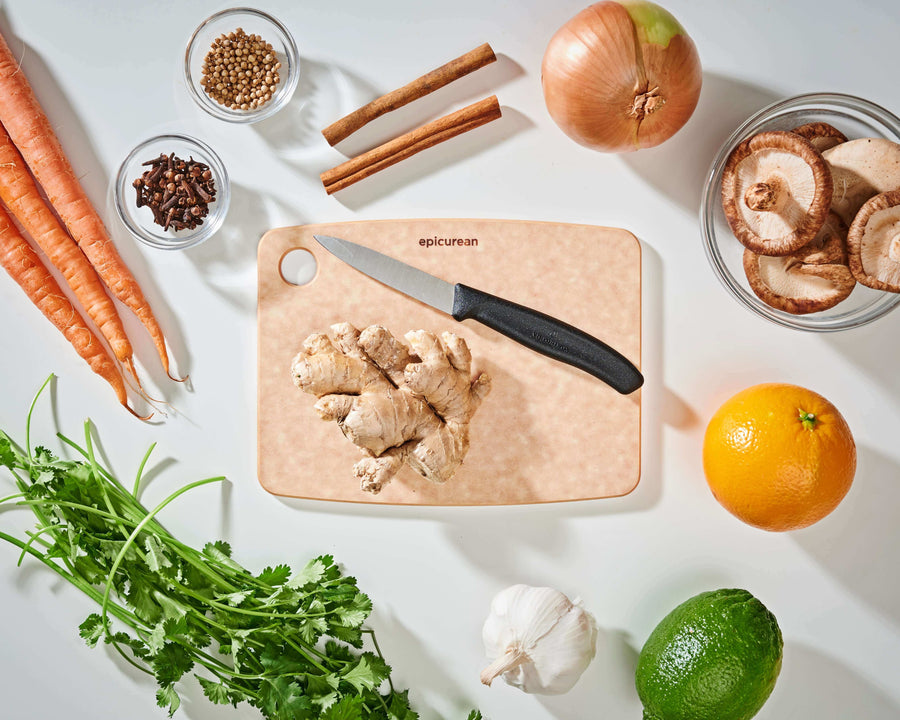
Epicurean-style boards are a popular step up from plastic and are built from paper-based composite material.
- Why they are a good choice
- Made from dense paper/wood fiber composite (Richlite) formed under heat and pressure.
- Many models are NSF certified for food contact and GREENGUARD Gold certified for very low VOC emissions.
- Thin, knife-friendly, and dishwasher-safe, which makes them a practical everyday workhorse.
- Pros
- Won’t crack, split, or stain easily.
- Convenient for frequent dishwashing.
- Non-plastic surface with excellent durability.
- Cons
- Resin is phenol-formaldehyde based, which can alarm some people; however, when fully cured, emissions are extremely low and within strict safety standards.
- Harder than some wood boards and can be a bit tougher on knives.
- Still needs replacing when heavily gouged.
6. Rubber and glass: where they fit in
- Rubber (Sani-Tuff style)
- Fantastic as a professional-style meat board: grippy, non-porous, and often NSF-certified.
- Can be resurfaced instead of replaced.
- Best suited to people who cook a lot of meat and want pro-level hygiene, accepting a heavier board and sometimes hand-wash-only care.
- Tempered glass
- Technically one of the most hygienic materials: completely non-porous, non-reactive, dishwasher-safe, and resistant to heat and stains.
- However, glass is extremely hard and slippery, dulling knives quickly and increasing slip-related injury risk, so it is best as a serving board or trivet rather than your main chopping surface.
<h2id=”review-hinoki” style=”scroll-margin-top: 100px;”>Key safety practices that matter more than the logo
No matter which board you choose, daily habits make the biggest difference to safety.
- Use separate boards for raw meat and ready-to-eat foods
- One board (titanium, rubber, stainless steel, or dishwasher-safe composite) for raw animal foods.
- One board (hardwood, acacia, or hinoki) for plants and ready-to-eat foods.
- Wash immediately after use
- Use hot water and mild, fragrance-free dish soap.
- Scrub all surfaces well, especially knife grooves and edges.
- Follow manufacturer guidance for dishwasher use; not all materials tolerate high heat and detergents.
- Dry completely
- Towel-dry and then air-dry standing upright or on edge so all sides can dry.
- Avoid leaving boards in a damp sink or stacked while wet.
- Retire worn-out boards
- Replace plastic, composite, or bamboo boards when they become deeply scarred, fuzzy, or impossible to clean smoothly.
- Replace or resurface wood and rubber boards when they show cracks, warping, or permanent staining that does not respond to cleaning.
- USDA-aligned guidance is clear: once a board is too worn to clean thoroughly, it is time to replace it, regardless of material.
FAQ – Non-toxic cutting boards
What is the healthiest cutting board material?
For most home cooks, hardwoods like maple, walnut, acacia, and similar close-grained woods are the best balance of safety, knife-friendliness, and longevity when paired with good hygiene. Titanium and rubber boards are excellent as dedicated raw-meat surfaces because they are non-porous and easier to sanitize, while glass and stainless steel are extremely hygienic but too harsh for everyday knife use.
Are plastic cutting boards safe if I replace them often?
High-density plastic boards can be sanitized and are widely used in commercial kitchens, but microplastic shedding is a real concern as boards wear. Replacing them frequently limits bacteria-harboring grooves, but it does not remove microplastic exposure, so wood plus titanium, rubber, or certified composite is a better long-term answer if you want to minimize plastics
Is bamboo non-toxic?
Bamboo boards can be low-toxin, but it depends on the adhesive and finish. Look for bamboo boards that use FSC-certified bamboo, clearly state formaldehyde-free, food-safe adhesive, and label any finish as a safe oil or wax; avoid boards with strong chemical odors.
Do glass cutting boards damage knives?
Yes. Tempered glass is extremely hard, which dulls blades faster and can make the surface slippery, raising the risk of cuts; use glass mainly as a serving platter or trivet, not your main chopping surface.
Are titanium cutting boards safe?
Food-grade titanium cutting boards are generally considered safe for direct food contact, and they do not shed microplastics or absorb juices, making them good candidates for raw protein work. As with any metal board, choose reputable brands using food-grade alloys and avoid unbranded products if you have specific metal sensitivities
Which cutting board is the most hygienic?
Non-porous materials like tempered glass, stainless steel, and titanium are technically the most hygienic because they do not absorb liquids and are easy to sanitize thoroughly. However, because glass and steel are harsh on knives and sometimes slippery, many home cooks prefer a combination: non-porous boards for raw meat and fish plus hardwood for plants and everyday prep.
Conclusion
A quiet upgrade with long-term impact
Switching to the best non-toxic cutting boards won’t change how your kitchen looks overnight – but it will quietly change what goes into your body every single day.
By combining:
- A safe wooden board (like acacia or maple) for everything fresh and ready-to-eat
- A non-porous titanium, rubber, or composite board for raw meat and fish
- Simple hygiene habits and timely replacement
…you dramatically reduce microplastics, chemical additives, and bacteria in your food – without making your life more complicated.
In my own home, the titanium + acacia setup feels natural now: one board for the messy, high-risk work, and one for everything bright, fresh, and ready to serve.
No mystery plastics. No flaking coatings. No silent microplastic dust in your salad.
Just clean materials, clear routines, and a kitchen that quietly supports the long, healthy life you’re designing.