The Best Mini Massage Guns for Travel and Gym Bags (2026)
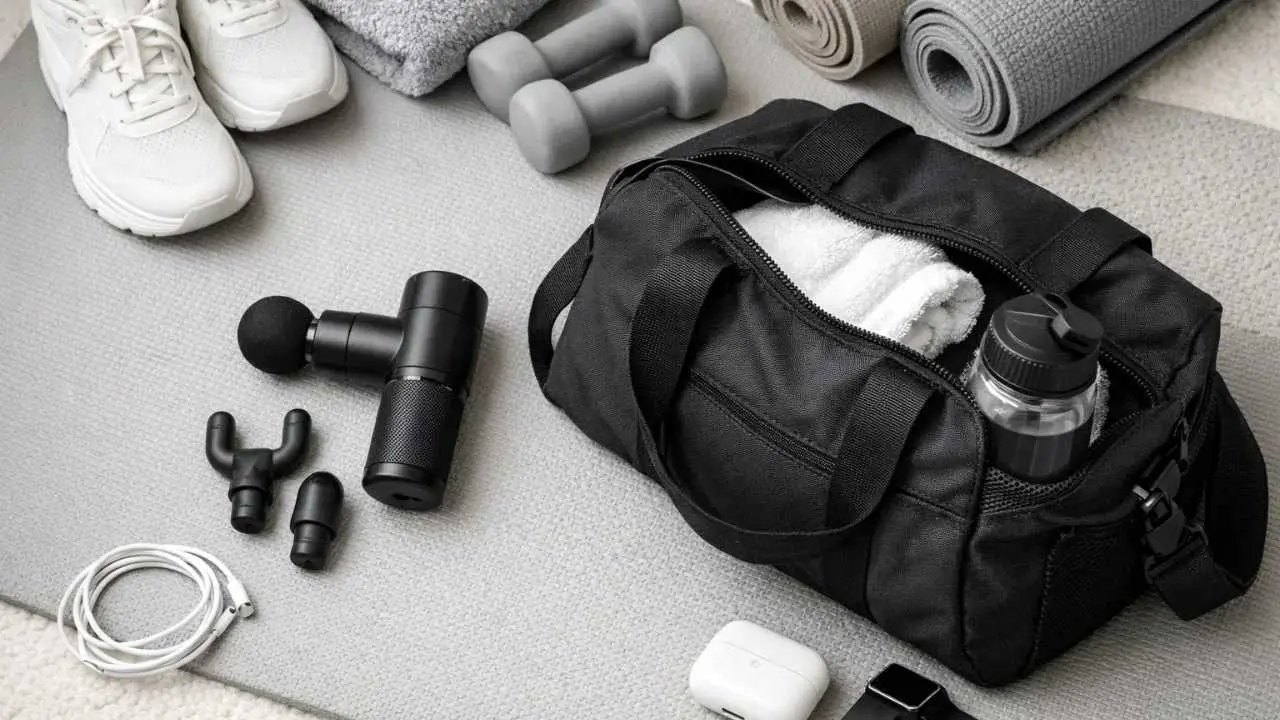
A mini massage gun is one of those rare fitness gadgets that can actually earn its spot in your carry-on or gym bag—because it’s fast, simple, and low-effort. I’ve used compact recovery tools like mini massagers and massage balls on and off for years, and the biggest difference isn’t raw power—it’s whether the device is comfortable, quiet enough, and easy to grab often. If you’re choosing a Portable Massage Gun, the goal isn’t “maximum power.” It’s the best blend of size, comfort, noise level, and enough intensity to loosen tight spots without feeling harsh or awkward to hold.
Affiliate disclosure: This article contains affiliate links. If you buy through them, Healthy Home Upgrade may earn a commission at no extra cost to you.
Quick Answer
- Best premium mini: Therabody Theragun Mini (current Mini line) — the most polished compact option with strong brand support.
- Best all-around for gym bags: Hyperice Hypervolt Go 2 — comfortable, simple, and “daily-driver” friendly.
- Best compact for intensity + warranty: Ekrin Athletics Bantam — a small device that still feels serious, with a strong warranty story.
- Best value comfort pick: RENPHO mini models — approachable pricing and a gentler recovery vibe (choose model carefully).
At a Glance
| Pick | Why it stands out | Best for | Watch-outs |
| Therabody Theragun Mini (Mini line) | Premium build + ecosystem | Frequent travelers who want the “safe choice” | Costs more than most minis |
| Hyperice Hypervolt Go 2 | Balanced size, easy controls | Daily use + gym bags | Not the tiniest “pocket” option |
| Ekrin Athletics Bantam | Compact with a strong feel + warranty | Runners/strength training recovery | Availability varies by region |
| RENPHO mini models | Comfort-focused value | Gentle daily recovery | Specs vary by model |
| Budget mini (category pick) | Cheapest way to try the format | First-time buyers | Noise, durability, warranty can be uneven |
Portable Massage Gun: What to Look For in 2026
Mini massage guns are all about trade-offs. Here’s what actually matters (and what’s mostly marketing):
Amplitude (stroke length)
Amplitude is how far the head travels in and out (mm). Higher can feel deeper, but it’s not a guarantee of better results—motor tuning, stall force, and ergonomics matter just as much.
A practical guide:
- 6–8 mm: lighter “surface” feel (often more comfortable daily)
- 10–12 mm: sweet spot for most people
- 14–16 mm: usually full-size devices with deeper percussion
Stall force (how hard you can press)
This is the “does it stop when I lean in?” factor. Some brands publish it; many don’t. If stall force isn’t listed, lean toward reputable brands and consistent user feedback.
Noise (real-life use)
If it’s too loud, you’ll stop using it. Travel-friendly usually means you can use it while someone else is watching TV or you’re in a hotel room without feeling awkward.
Ergonomics and reach
Minis are great for calves, quads, glutes, forearms, and traps. They’re usually harder for mid-back and shoulder blades unless the design gives you leverage.
Battery + charging
USB-C is a travel win. Battery claims are often optimistic, especially at higher speeds.
Attachments you’ll actually use
Most people use 2–3 heads:
- Ball: general large muscles
- Flat: broader areas
- Bullet: tight spots (use lightly and carefully)
Mini Massage Guns: Quick Comparison Summary (2026)
- Typical Battery Life: 3–6 hours per charge
- Charging Method: USB-C (most models)
- Amplitude Range: ~6–10 mm
- Noise Level: ~35–55 dB
- Weight: ~1–1.5 lbs
- Typical Price Range: $80–$200
- Best For: Travel, gym bags, daily muscle maintenance
- Not Ideal For: Deep-tissue therapy, large muscle groups
How We Chose (Editorial Method)
This guide focuses on mini/compact devices that fit real travel and gym-bag life. Picks are based on:
- manufacturer specs and warranty/support terms,
- carry case + portability practicality,
- common review criteria that correlate with satisfaction (handling comfort, attachments, noise, battery),
- and user-reported patterns from verified reviews (what holds up over time, what annoys people after a month).
Not every device is personally tested by this site. Recommendations are written as buyer-first editorial guidance—without medical promises.
1) Therabody Theragun Mini (Mini line) – Best Premium Mini
Therabody is often the “default premium” choice because the overall experience tends to feel polished: the materials, the fit-and-finish, the support ecosystem, and the way the product is designed to be used.

What it’s great for
- travel-friendly size with a premium feel
- easy to keep in a gym bag consistently
- strong brand ecosystem (support, accessories, and guided routines depending on model/app)
What to know before buying
- you’re paying premium pricing
- minis are still less convenient for your own mid-back than longer-handled tools
Best for
If you want one compact device you can commit to using weekly for years.
Recovery doesn’t stop when the workout ends. Discover the sauna ritual—more than just heat
2) Hyperice Hypervolt Go 2 – Best All-Around for Gym Bags
Hyperice tends to do “simple, clean, reliable” well. The Go 2 isn’t the tiniest option, but it’s compact enough for travel and still feels comfortable and stable in the hand.
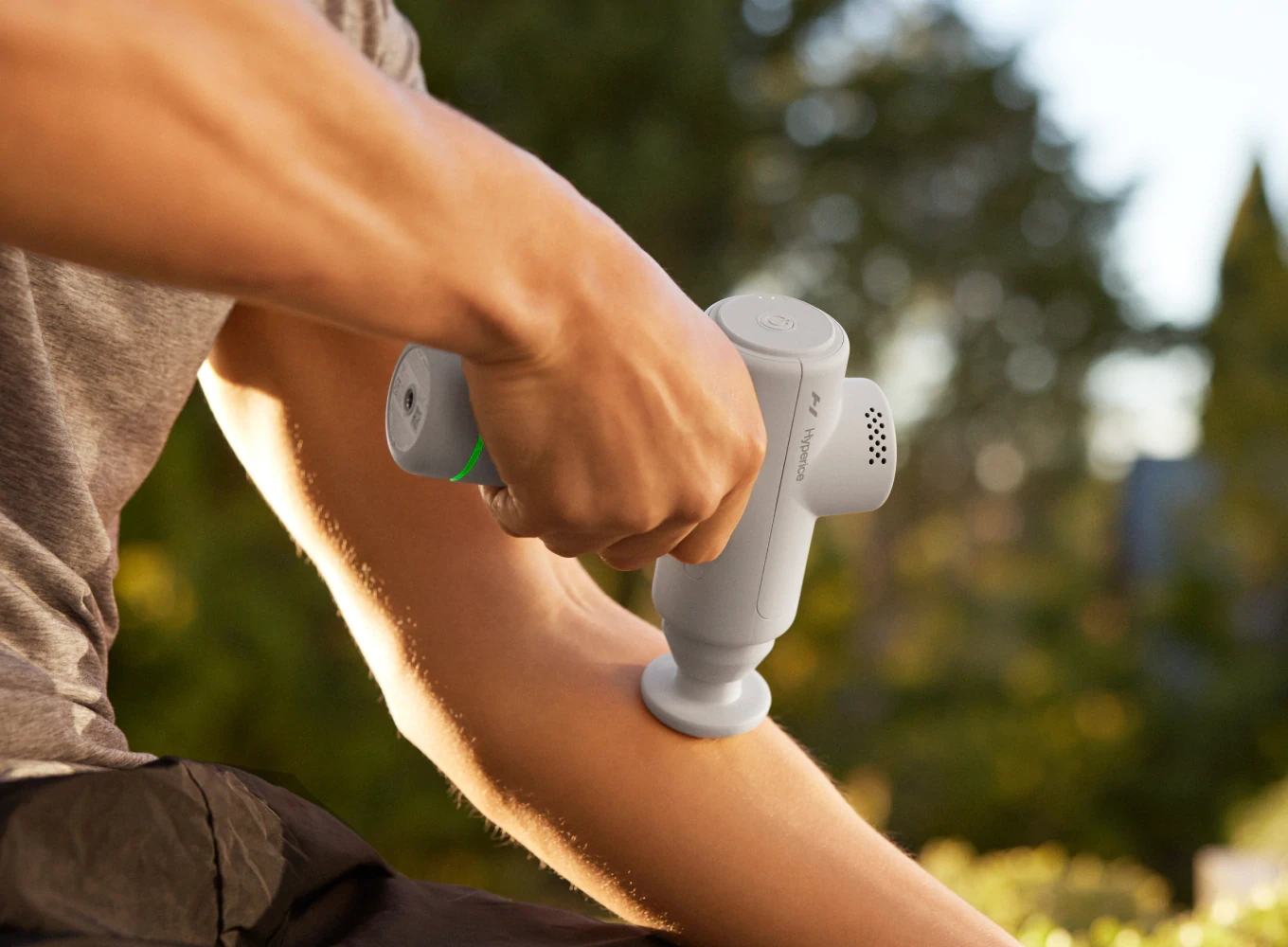
What it’s great for
- daily recovery: calves, quads, glutes, upper traps
- straightforward controls and a no-fuss experience
- a good balance of comfort and power for most users
What to know before buying
- if your priority is the smallest possible device, you may want a smaller mini
Best for
Most people who want a dependable device that’s easy to use after workouts.
Muscle recovery works best with contrast. Explore ice baths and cold/heat therapy
3) Ekrin Athletics Bantam – Best Compact Pick for More Intensity + Warranty
If you want something compact that still feels like it can “do the job,” the Bantam is worth a serious look—especially if warranty and long-term ownership matter to you.

What it’s great for
- a stronger feel in a smaller body
- useful if you like firmer pressure (with good technique)
- typically stronger warranty story than many budget minis
What to know before buying
- availability can vary by region
- if you bruise easily or prefer gentler tools, choose a softer approach
Best for
Runners and strength training recovery (especially legs and hips).
Building a recovery kit? See the top home exercise equipment essentials for beginners
4) RENPHO Mini Models – Best Value Comfort Pick
RENPHO minis are popular because they’re approachable and often priced well. Many users like them as a “consistent habit tool” rather than the most intense device.
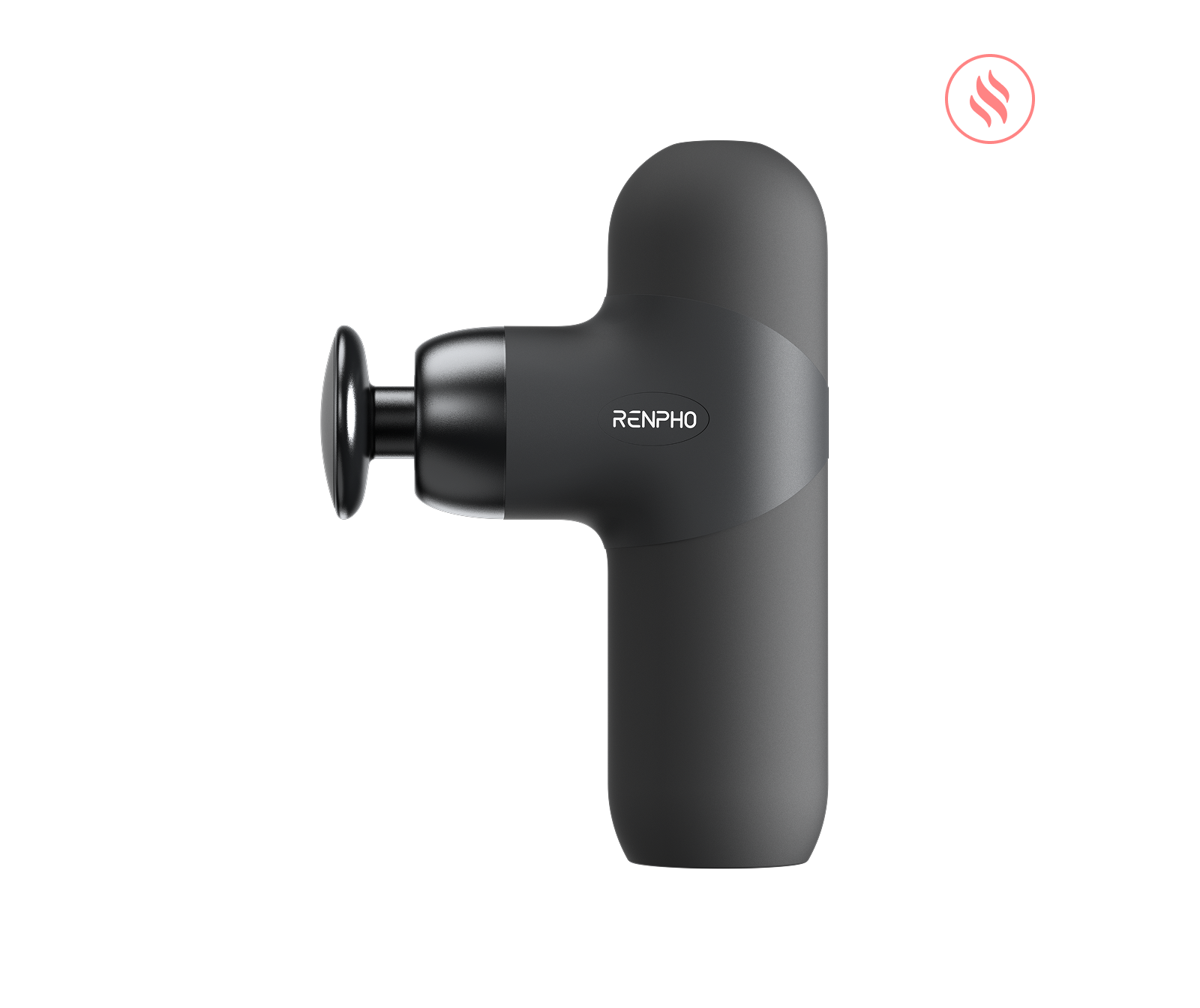
What it’s great for
- gentler daily recovery
- easy entry point if you’re new to percussion tools
- often good value if you buy from a retailer with a strong return policy
What to know before buying
- performance varies by exact model—don’t assume all RENPHO minis feel the same
Best for
Comfort-first recovery: walking-heavy days, travel stiffness, lighter training routines.
Travel recovery is part of long-term health. Explore our Home Gym & Longevity hub
5) Budget Minis (Category Pick) — Best If You’re Not Sure You’ll Use It
A cheaper mini can be a smart “trial run” if you’re worried you’ll buy a premium device and never use it. The trade-off is consistency and support.
How to choose a budget mini without regret
- buy from a seller with easy returns
- prioritize a real warranty and clear support
- look for consistent feedback on noise + battery
- don’t chase the biggest amplitude number
What Mini Massage Guns Can and Can’t Do
Mini massage guns are designed for convenience, consistency, and portability, not maximum force. Understanding their limits is essential for choosing the right device and avoiding disappointment.
What mini massage guns do well:
- Relieve mild to moderate muscle tightness after workouts or long days
- Support daily recovery habits through quick, targeted sessions
- Fit easily in gym bags, backpacks, and carry-on luggage
- Operate quietly enough for shared spaces or travel use
- Encourage consistency by lowering friction to use
What mini massage guns can’t do:
- Replace deep-tissue work from full-size massage guns
- Deliver high stall force for dense muscle groups (glutes, quads, hamstrings)
- Perform therapeutic or clinical muscle treatment
- Eliminate chronic pain or injury-related discomfort on their own
Mini massage guns are best viewed as maintenance tools, not intensive recovery devices. For many users, consistency matters more than raw power—and that’s where compact models excel.
Safety: Where Not to Use a Massage Gun
This article is not medical advice. If you have an injury, a medical condition, or you’re unsure what’s safe for you, ask a clinician.
Avoid using a massage gun:
- on bones and joints (kneecap, ankle bones, spine, elbows)
- on the front/side of the neck
- directly over tendons/ligaments, especially if irritated
- on open skin, bruises, varicose veins, or acute injuries
- on areas with numbness/tingling where sensation is reduced
For stress relief beyond muscles, see my Apollo Neuro review
When to talk to a clinician
If you have sharp pain, swelling, loss of function, numbness/tingling, or symptoms that don’t improve with rest, don’t try to “massage-gun” your way through it.
FAQ
Is a mini massage gun worth it?
Yes—if you’ll use it. Minis win because they’re convenient. If a full-size unit stays in a drawer, the mini is the better tool.
What brand of massage gun is best?
For consistent quality and support, Therabody and Hyperice are common “safe bets.” If warranty and value matter, Ekrin is often a strong contender. For comfort-first budgeting, RENPHO can be a good entry point (choose model carefully).
Can I bring a mini massage gun on a plane?
Usually, yes. The key is battery safety rules and airline policies. Keep the device from turning on accidentally, and follow official guidance for battery-powered devices when packing.
Is 12mm amplitude enough?
For most people, yes. 10–12 mm is often the sweet spot for a mini because it feels effective without being overly aggressive—especially when the motor doesn’t stall easily and the device is comfortable to hold.
Is it okay to use a massage gun every day?
Often yes, as long as it’s not painful and you don’t overdo it. Daily light use tends to be more sustainable than occasional aggressive sessions. Start on low intensity, keep it moving, and use short sessions (30–90 seconds per muscle area).
Is a massage gun better than a vibration massager?
They’re different tools. Percussion can feel more targeted for tight spots; vibration tools can feel smoother and more relaxing. Many people prefer vibration for daily comfort and percussion for post-training muscle tightness.
What is better than a massage gun?
Sometimes the “better” choice is the boring one:
- sleep consistency
- hydration + protein adequacy
- mobility work you actually do
- a foam roller or massage ball for slower, controlled tissue work
If pain is persistent or recurring, a clinician or physical therapist can be more useful than any gadget.
What is 10 minutes on a vibration plate equal to?
There isn’t a reliable conversion like “10 minutes equals X minutes of walking.” Whole-body vibration can be a supplement for some people, but it’s not a replacement for basic movement and strength work.
Where not to use your massage gun?
Avoid bones, joints, front/side neck, irritated tendons, bruises/open skin, acute injuries, and numb/tingly areas.
Final Verdict
If you want the most polished compact experience, go with Therabody. If you want a straightforward daily driver that fits gym-bag life, Hyperice is a strong bet. If you want more intensity in a compact body and care about warranty, Ekrin is worth a serious look. The best Portable Massage Gun is the one you’ll actually keep in your bag—and use consistently without overdoing it.