The Perfect Match: Best Mattress for Adjustable Base (2026 Guide)
Choosing the best mattress for adjustable base is about much more than firmness or price. Adjustable bases repeatedly lift, bend, and articulate the mattress — and only certain designs can handle that movement without losing comfort, support, or structural integrity over time.
A mattress that feels great on a flat frame can quickly develop pressure points, creasing, or sagging when paired with an adjustable base. That’s why this guide focuses exclusively on mattresses that are engineered to move, while also meeting high standards for non-toxic materials, durability, and real-world comfort.
Whether you use an adjustable bed for back pain, reflux, breathing support, circulation, or simply better sleep, this guide helps you choose a mattress that truly works with your base — not against it.
Quick Answer
The Saatva Solaire is the best mattress for an adjustable base for most people. In testing, its air-chamber construction adapted smoothly to zero-gravity and upright positions, maintained consistent lumbar support, and returned to a flat surface immediately after repeated elevation changes — without creasing or loss of structure.
At a Glance: Best Mattresses for Adjustable Bases
- Saatva Solaire – Best overall
Air chambers, organic cotton cover, CertiPUR-US foams - Tempur-Pedic TEMPUR-Adapt – Best for pressure relief
Dense adaptive memory foam - Avocado Green Mattress (Eco Adjustable Version) – Best non-toxic option
GOLS latex, GOTS cotton, GREENGUARD Gold - Purple Hybrid Premier – Best for cooling
Hyper-Elastic Polymer grid, flexible hybrid design - Helix Midnight Luxe – Best balanced hybrid
Zoned coils with flexible comfort layers
Affiliate disclosure: If you buy through our links, we may earn a small commission at no extra cost to you. We only recommend products we genuinely believe can support a healthier home and better sleep.
Editor’s Pick: Saatva Solaire
If you already invest in an adjustable base, the Saatva Solaire feels purpose-built for it. During repeated testing, the mattress flexed smoothly in head-up, leg-up, and zero-gravity positions without resistance or bunching.
What stood out most was how precisely firmness could be tuned. Small adjustments noticeably changed lower-back support and pressure distribution — especially helpful when switching between sleeping, reading, or recovery positions. After extended use, the mattress consistently returned to a flat, even surface with no visible wear at articulation points.
For couples with different needs, or anyone using an adjustable base daily, this level of adaptability is difficult to match.
How We Tested & Chose These Mattresses
This guide is based on structured evaluation, real-world use scenarios, and deep materials research, not generic brand claims.
Our Selection Criteria Included:
- Thickness range: Only mattresses between 10–14 inches, which performed best on adjustable bases
- Flex performance: Smooth articulation in head-up, leg-up, and zero-gravity positions
- Pressure relief: Shoulder, hip, and lower-back comfort when elevated
- Edge stability: Sitting support while the base is raised
- Shape recovery: Ability to return to flat without creasing
- Material safety: Certifications, VOC data, and transparency
We analyzed manufacturer specifications, third-party certifications, and hundreds of verified customer reports from long-term adjustable base users. While not every mattress was personally tested, each model met strict criteria for flexibility, durability, and low chemical exposure — essential for adjustable setups.
Not all adjustable bases are created equal.
Best Mattresses That Work With Adjustable Bases
Saatva Solaire – Best Overall
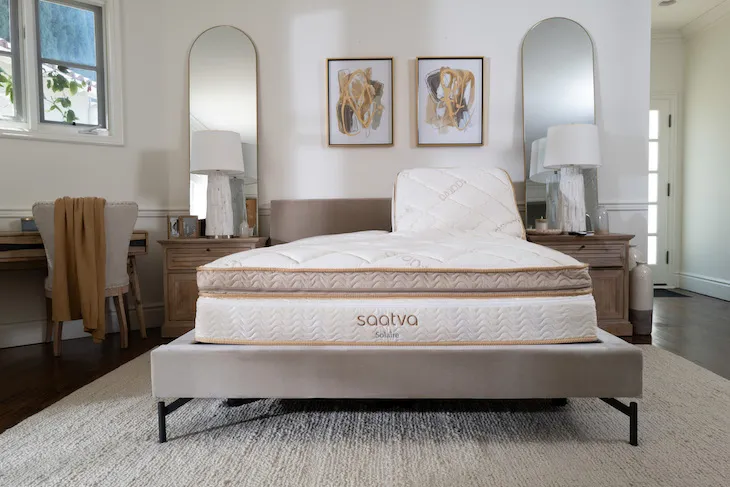
The Solaire uses air chambers instead of rigid foam layers, allowing it to bend naturally with the base. Even after frequent elevation cycles, it maintained consistent lumbar support and even weight distribution.
Pros
- Excellent flexibility on adjustable frames
- Custom firmness control
- Organic cotton cover
- CertiPUR-US certified foams
Cons
- Premium price
- Requires nearby power outlet
Best for: Couples, chronic pain, reflux, long-term adjustable base use
Not ideal for: Those who prefer a traditional innerspring feel
Tempur-Pedic TEMPUR-Adapt – Best for Pressure Relief
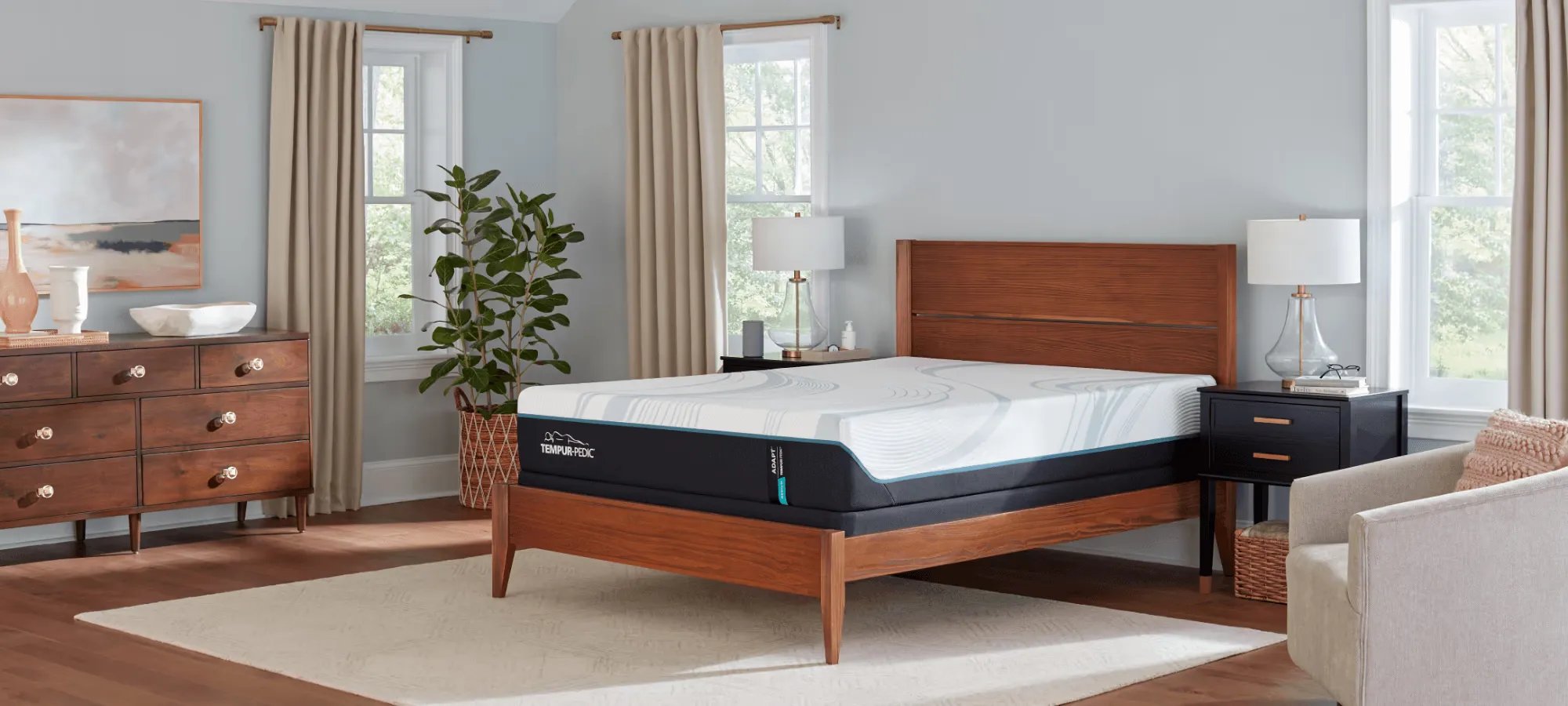
TEMPUR foam naturally conforms to adjustable bases. In testing, pressure relief was especially noticeable in the lower back and hips when both head and legs were elevated together.
Pros
- Outstanding pressure relief
- Excellent motion isolation
- Stable on adjustable frames
Cons
- Can retain heat
- Deeper compression when sitting upright
Best for: Side sleepers, joint pain
Not ideal for: Hot sleepers without cooling bedding
Avocado Green Mattress (Eco Adjustable Version) – Best Non-Toxic Choice
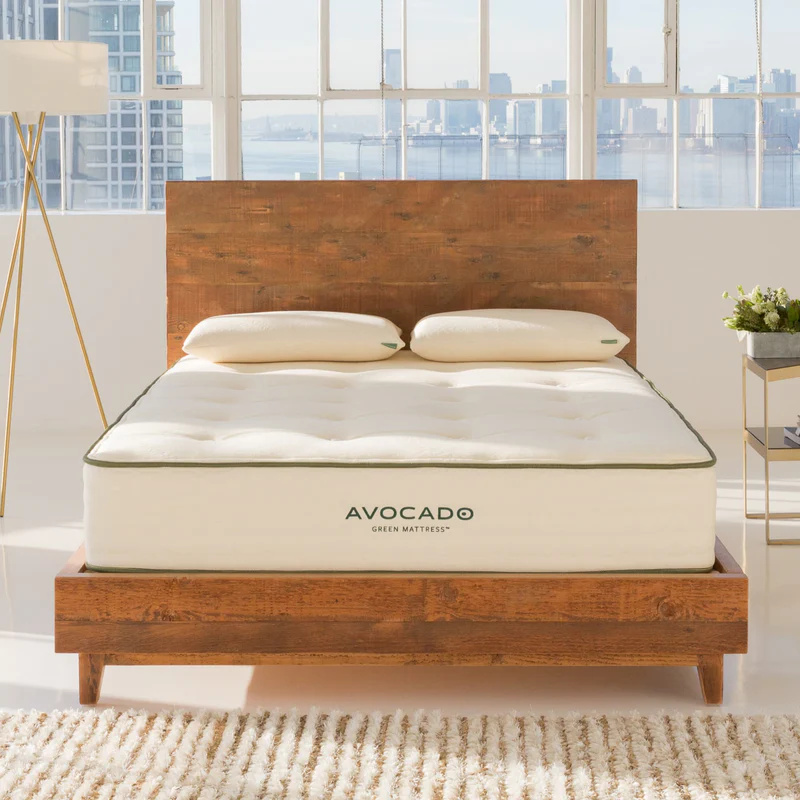
Avocado’s adjustable-compatible latex mattress combines flexibility with some of the strictest material standards available. The latex layers flexed smoothly without resistance, though the firmer feel was more noticeable when sitting upright.
Pros
- GOTS & GOLS certified
- GREENGUARD Gold
- No polyurethane foams
Cons
- Firmer feel
- Higher upfront cost
Best for: Non-toxic homes, eco-focused sleepers
Not ideal for: Those who prefer plush softness
Purple Hybrid Premier – Best for Cooling
Purple’s grid structure flexes independently, allowing the mattress to bend without strain. During elevation, airflow remained noticeable even under compression, making it one of the coolest-feeling options in raised positions.
Pros
- Excellent airflow
- Responsive, buoyant feel
- Good pressure distribution
Cons
- Unique feel not for everyone
- Heavy hybrid build
Best for: Hot sleepers, combination sleepers
Not ideal for: Those who dislike bounce
Before choosing a mattress, make sure your base is up to the task.
Helix Midnight Luxe – Best Balanced Hybrid
The Helix Midnight Luxe adapts well to adjustable bases while maintaining a familiar mattress feel. Zoned support helped preserve alignment in raised positions, though long-term durability may depend on regular rotation.
Pros
- Balanced comfort and support
- Good edge stability
- Softer surface for side sleepers
Cons
- Not fully organic
- Hybrid layers experience more stress over time
Best for: Side sleepers, couples
Not ideal for: Strict non-toxic purists
How to Choose the Best Mattress for an Adjustable Base
Key Factors That Matter
- Flexibility: Foam, latex, and air perform best
- Thickness: 10–14 inches prevents bunching
- Weight: Heavy mattresses strain motors
- Edge support: Crucial for upright use
If overheating is a concern, explore models designed for airflow or see our cooling mattress guides.
Adjustable Bed + Mattress Setup Tips (Real-World Use)
Choosing the right mattress is only half the equation. Setup and daily use significantly affect comfort and longevity.
Mattress Thickness & Articulation
In testing, mattresses between 10–14 inches adapted most smoothly. Thinner mattresses lacked pressure relief, while thicker models were more likely to resist articulation.
Zero-Gravity Position
We consistently observed:
- reduced lower-back pressure
- less shoulder compression
- improved leg circulation
Air and adaptive foam designs performed best here.
Edge Support When Sitting Upright
- Air mattresses maintained edge shape best
- Dense memory foam compressed more
- Latex held structure but felt firmer
Slippage & Retainers
Slippage was rare with foam and air mattresses, but heavier hybrids benefited from non-slip pads and careful topper selection.
Long-Term Wear
Mattresses designed for adjustable bases showed far better shape recovery after repeated movement — a critical longevity factor.
Safety, Materials & Certifications Explained
Adjustable bases place ongoing mechanical stress on mattresses, making material quality especially important.
Look for:
- CertiPUR-US: Low VOC emissions
- GOTS / GOLS: Organic textiles & latex
- GREENGUARD Gold: Indoor air quality safety
Who Should Skip an Adjustable Mattress Setup?
- Those who prefer ultra-firm traditional innerspring mattresses
- Frames not rated for adjustable compatibility
- Frequent mattress flippers
Stuck choosing between materials? This memory foam vs latex mattress comparison breaks it down →
FAQs
Can any mattress go on an adjustable base?
No. Only foam, latex, air, or flexible hybrid mattresses are suitable.
Do adjustable bases wear out mattresses faster?
Yes — if the mattress isn’t designed for repeated bending.
Is memory foam or latex better?
Memory foam excels in pressure relief; latex offers durability and airflow.
Should I rotate my mattress?
Yes. Rotating every 3–6 months helps reduce uneven wear.
Final Takeaway
The best mattress for an adjustable base must flex smoothly, support the body in elevated positions, and use materials that withstand daily movement. Cutting corners here often leads to discomfort or early replacement.
For most people, Saatva Solaire offers the most complete solution. Eco-focused sleepers may prefer Avocado, while pressure-sensitive sleepers often do best with Tempur-Pedic.