Water moves through your home like breath through the body — unseen but essential.
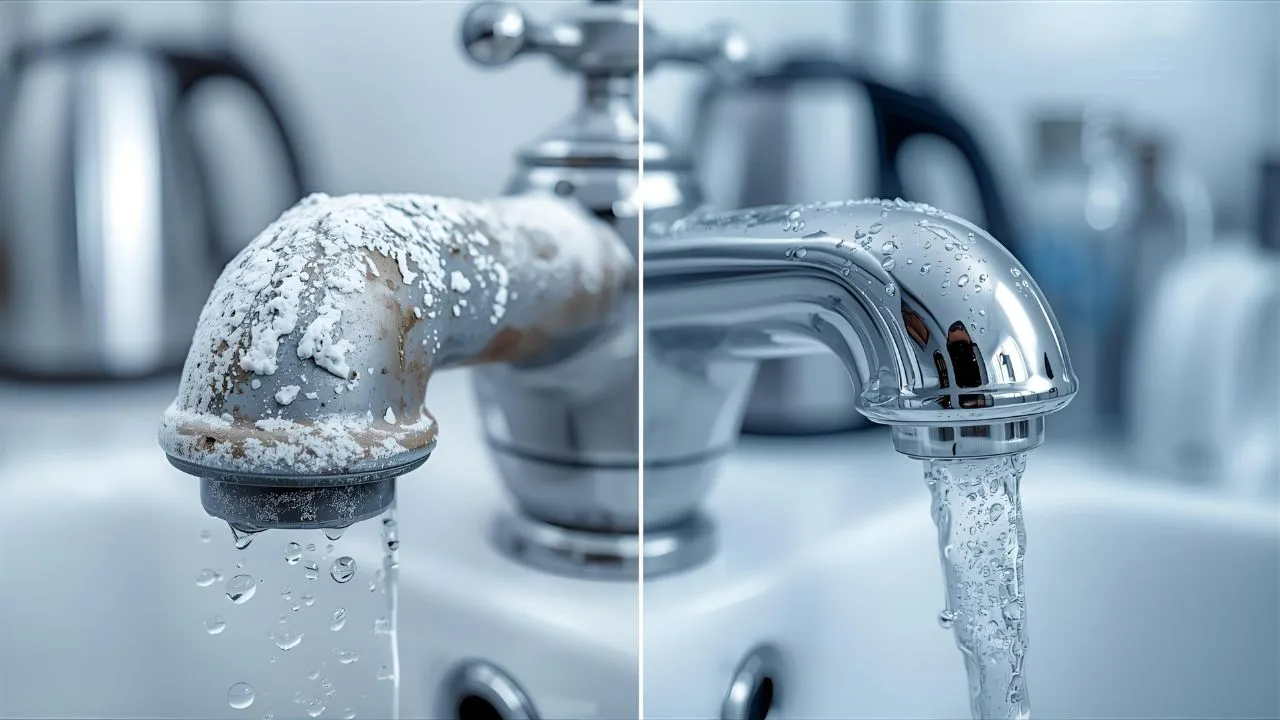
And just as lungs can clog, so can pipes, heaters, and everyday tools when minerals in the water begin to settle and harden. What looks like harmless white dust on your kettle or shower door is actually a symptom of a much larger process called limescale — and over time it quietly costs comfort, energy, and money.
Read first: Hard Water vs Soft Water
When Minerals Turn Against You
Every drop of hard water carries tiny traces of calcium and magnesium.
Individually, they’re harmless — minerals your body actually needs. But inside pipes or heated water, they fuse into chalky crystals that cling to metal and glass, building layer upon layer like coral growing in slow motion.
At first, the signs are subtle: a rough showerhead, cloudy glassware, or laundry that feels stiff no matter how much softener you use. Eventually, scale thickens inside appliances and blocks water flow.
If you’ve ever noticed dull hair or irritated skin, you’ve already met another side of the same problem. The minerals that damage pipes are the same ones that strip moisture from your body.
Learn more in How Hard Water Affects Skin and Hair
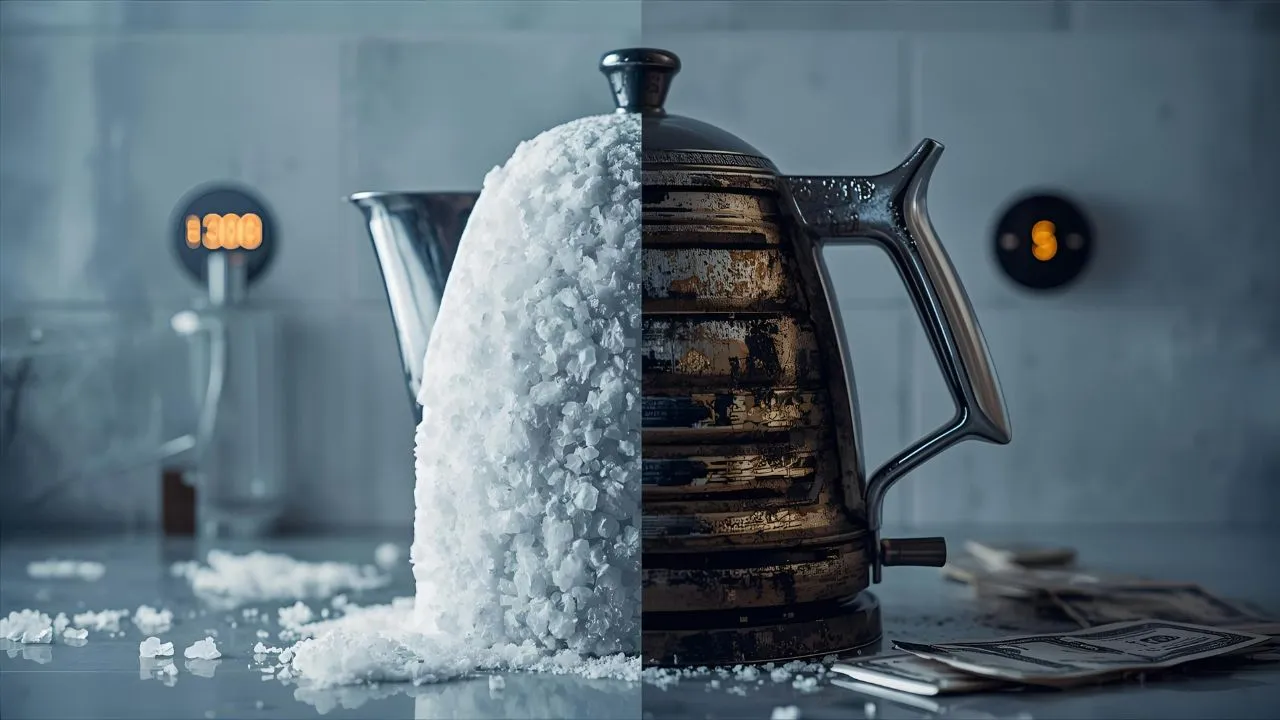
Why It Matters More Than You Think
A thin layer of limescale might seem cosmetic, but each millimeter reduces heating efficiency by roughly ten percent. That means higher energy bills month after month. Over years, mineral buildup corrodes elements, damages sensors, and shortens appliance life by as much as thirty percent.
Beyond the bills, scale creates more cleaning work. Soap reacts with minerals to form scum that clings to tiles and sinks. The more you scrub, the more you scratch the surfaces, giving new scale places to grip.
If you’re curious about long-term solutions, explore our guide to Whole-House Reverse Osmosis Systems.
Natural Defenses for Everyday Life
Before you invest in any system, start with small habits that keep buildup under control.
In the kitchen, run a monthly vinegar cycle through your coffee machine or kettle. In the bathroom, a quick rinse of lemon water or citric acid on shower glass dissolves new deposits before they harden. Wiping surfaces dry after each shower prevents the “drip lines” that turn into crusted patches later.
These small rituals take minutes but save hours of deep cleaning. Never mix vinegar with bleach or chlorine cleaners — it releases toxic gas.
For households with sensitive skin, pairing these small cleaning habits with a filter makes a visible difference.
See our review of the Best Shower Filters for Chlorine and Hard Water (2025)
Technology That Fights Back
When routine care isn’t enough, it’s time to bring in modern water technology.
Water Softeners
Swap calcium and magnesium for sodium, creating truly “soft” water.
Reverse Osmosis (RO)
Removes not only minerals but also PFAS, heavy metals, and microplastics — giving your home the cleanest water possible.
Learn how in Best Water Filters for Lead and PFAS Removal
Magnetic or Electronic Descalers
Reshape mineral clusters so they don’t stick.
Pairing technologies often works best: a carbon pre-filter to trap chlorine followed by RO or a softener unit to handle minerals.
How to Know When It’s Time to Upgrade
Watch for these signs that small fixes have reached their limit: filters clog within weeks, soap scum returns a day after cleaning, appliances break sooner than expected, or you replace showerheads regularly.
At that point, the issue isn’t surface-level anymore — it’s systemic.
A Whole-House RO System becomes the smarter investment. The upfront cost often pays for itself within two to three years through lower repairs and longer appliance life.
Safe Cleaning Without the Toxic Cloud
Many commercial anti-scale sprays rely on strong acids or chlorine compounds. They work fast, but at a cost: harsh fumes and residues that mix dangerously with other cleaners.
Safer alternatives do the job without polluting your air. Vinegar, citric acid, or a paste of baking soda and water cut through limescale gently.
Families with babies or pets benefit most from switching — no fumes, no chemical residue on surfaces little hands might touch.
Related read: How Hard Water Affects Skin and Hair
Your Home’s Hidden Energy Leak
Consider your water heater: even a thin layer of scale insulates the coil from water, forcing it to run longer to reach the same temperature. Homes with untreated hard water can waste up to two hundred kilowatt-hours of energy each year per appliance.
That’s not only an expense; it’s an environmental footprint. Cleaner water means fewer chemicals down the drain and less electricity wasted — and a well-chosen whole house water filter system can protect both your appliances and your energy bill by tackling hardness and contaminants before they circulate through your home.
For toxin removal details, see Best Water Filters for Lead and PFAS Removal
Regional and Seasonal Shifts
Water hardness isn’t constant. It changes with rainfall, temperature, and municipal sources. Winter intensifies scale because we heat water more; summer accelerates evaporation and mineral concentration.
If you live near the coast or in limestone-rich regions, you’ll see limescale faster than mountain-fed areas. Testing hardness once or twice a year keeps surprises away — especially after plumbing repairs or neighborhood construction.
Read: How to Test Your Tap Water at Home
A Simple Home Maintenance Ritual
Monthly: run vinegar or citric-acid cycles through coffee makers and kettles.
Every 3–6 months: replace filter cartridges and descale washing machines.
Yearly: re-test water hardness and inspect for pressure drops.
Caring for water is like caring for breath — the effort is invisible, but the results are felt every day.
Reference: Hard Water vs Soft Water
Final Thoughts — The Balance Between Nature and Nurture
Hard water is not the enemy; it’s nature, simply unfiltered.
But just as you wouldn’t breathe city air without opening a window, your home deserves the same care. Every measure you take — from a simple vinegar rinse to a Whole-House RO System — restores balance between minerals and metal, between what nourishes and what harms.
Clean, scale-free water lets your home function the way it was meant to: effortlessly.
Sources
Information in this article is based on publicly available data and general scientific consensus from the following sources:
-
U.S. Geological Survey (USGS) – What is Hard Water?
https://www.usgs.gov/special-topics/water-science-school/science/hardness-water -
U.S. Department of Energy – Water Heating and Energy Efficiency
https://www.energy.gov/energysaver/water-heating -
World Health Organization (WHO) – Hardness in Drinking-Water: Background Document for Development of WHO Guidelines for Drinking-water Quality
https://www.who.int/publications -
Environmental Protection Agency (EPA) – Understanding Water Hardness and Household Systems
https://www.epa.gov -
National Sanitation Foundation (NSF) – Certified Water Treatment Products and Filtration Standards
https://www.nsf.org -
European Environment Agency (EEA) – Water Hardness and Household Energy Use in Europe
https://www.eea.europa.eu
Follow us on social Facebook