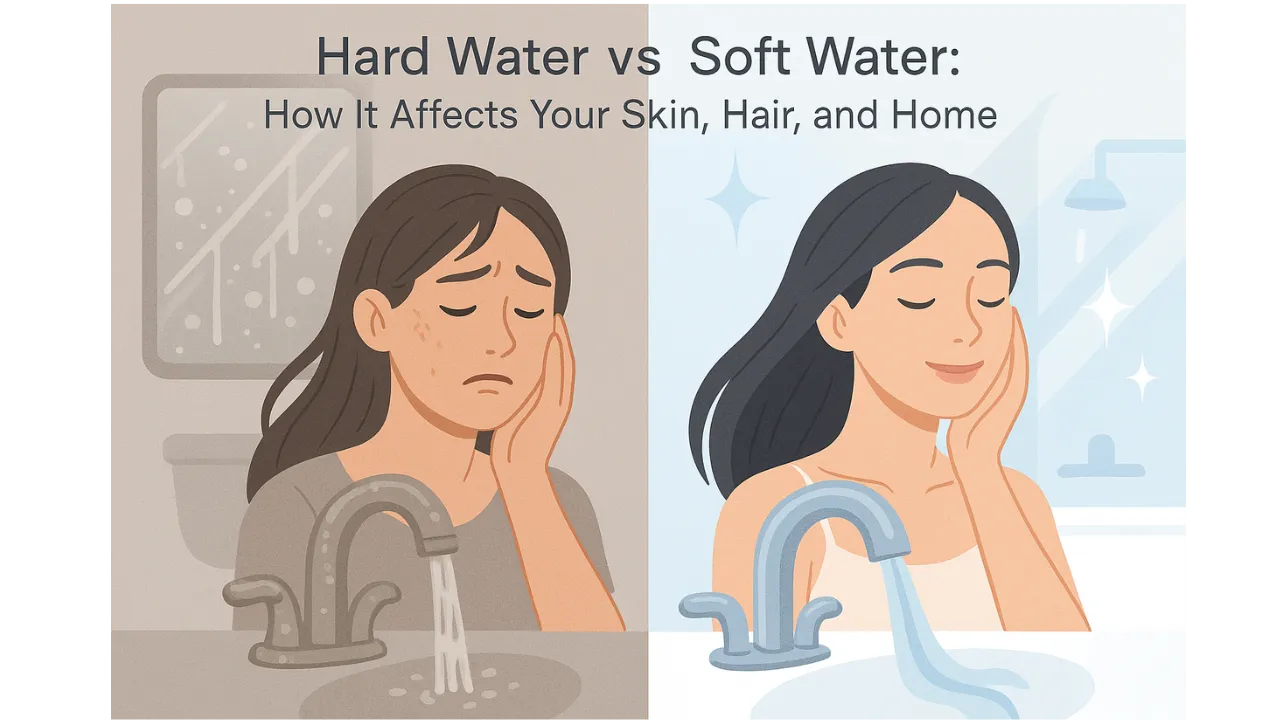
Hard Water vs Soft Water: How It Affects Your Skin, Hair, and Home
Water runs through every part of life—yet few people realize how strongly its quality shapes health, beauty, and comfort. The minerals inside each drop decide whether water feels silky or harsh, whether your skin glows or dries, and whether your home stays clean or becomes coated in scale. Understanding the difference between hard and soft water is the first step toward a healthier home.
If you’re unsure what kind of water flows from your tap, you can easily test your tap water at home. That simple check shows how much calcium, magnesium, and other minerals are in your supply.
What Is Hard Water
Hard water is rich in minerals, mostly calcium and magnesium. These minerals collect as water travels through limestone and chalk underground. They are not dangerous, but in high amounts they change how water behaves. When hard water dries, it leaves behind chalky white spots, residue on skin and hair, and a film on glass and tile. Inside appliances the same minerals form scale that blocks pipes and heating elements.
For homes that struggle with extreme hardness, a whole-house reverse osmosis system can filter minerals before they reach faucets. For many others, smaller under-sink or shower filters are enough to soften water at the point of use.
What Is Soft Water
Soft water has very few dissolved minerals. Rainwater is naturally soft, and filtration systems can create the same gentle balance indoors. Soft water feels smooth on the skin and makes soap and shampoo work more effectively. It also keeps appliances free of scale and saves cleaning time.
Soft water does not automatically mean pure water; it can still contain chlorine, PFAS, or micro-plastics. Combining a softening system with a carbon or reverse-osmosis filter gives the cleanest result for both drinking and bathing.
How Hard Water Affects Skin
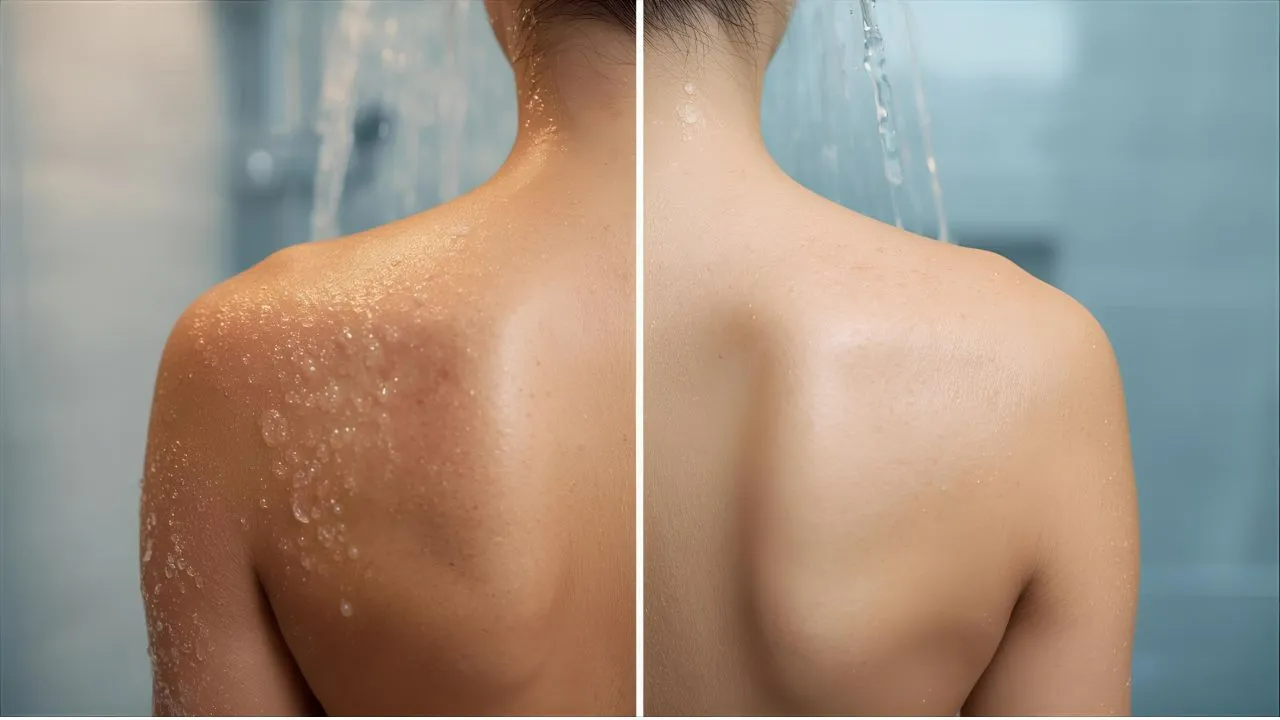
Your skin is your largest organ and it absorbs what you bathe in. Hard water reacts with soap to form an invisible film that clogs pores and blocks moisture. Over time, the barrier weakens and the skin becomes dry, itchy, and dull.
Common signs
-
Tightness or flaking after showering
-
Rough patches on arms and legs
-
Redness or irritation around pores
-
Worsening eczema or acne
Even small improvements in water softness can help the skin retain its natural oils. Installing a shower filter for chlorine and hard water protects sensitive skin by trapping chlorine and mineral particles before they reach you.
How Hard Water Affects Hair and Scalp
Mineral buildup roughens the outer layer of each hair strand. The result is dullness, tangles, and faded color. On the scalp, residue blocks follicles and traps oils.
You may notice
-
Hair that feels heavy or sticky
-
Dandruff or itchiness
-
Hair color losing brightness
-
More split ends than usual
Soft water rinses shampoo completely, restoring shine and movement. Many people notice lighter, smoother hair within a week of switching to filtered water.
Hard Water and the Rest of the Body
The minerals that coat your shower also travel through your drinking glass. Excess calcium and magnesium can make water taste chalky or metallic, and heavy mineral content sometimes accompanies iron or other contaminants from old pipes. Cleaner, balanced water supports digestion, kidney function, and energy levels.
Benefits of well-filtered, mineral-balanced water
-
Improves cellular hydration and energy
-
Helps maintain kidney health
-
Supports gentle detoxification
-
Keeps digestion regular
-
Enhances skin glow from within
Drink filtered water throughout the day instead of bottled water stored in plastic. Glass or stainless bottles preserve freshness and prevent micro-plastic exposure.
The Hidden Cost of Hard Water in Your Home
Hard water quietly wears down everything it touches.
-
Scale on heating elements shortens appliance life
-
White film on dishes and shower doors requires constant cleaning
-
Pipes narrow from mineral buildup, reducing water pressure
-
Water heaters use more energy to warm scaled coils
A good filtration or softening system saves money in repairs and cleaning products. Explore the best home water filtration systems to see options suited for different home sizes and budgets.
How to Solve Hard Water Problems
For apartments or rentals
Use countertop filters for drinking water and a compact shower filter for bathing. These require no plumbing changes.
For small homes
Install an under-sink system that treats all kitchen water. It’s an easy way to protect both cooking and hydration water.
For large households
Choose a whole-house system that combines reverse osmosis with carbon filtration. It keeps every tap clean and prevents mineral buildup throughout plumbing.
For sensitive skin
Pair filtered bathing water with a mild, pH-balanced cleanser. After showering, pat skin dry and seal in moisture with a natural oil such as jojoba or olive.
Healthier Bathing Habits
-
Lower shower temperature to reduce irritation
-
Rinse with cool water for 20 seconds to close pores and add hair shine
-
Replace shower filters every three to six months
-
Use gentle, fragrance-free soaps
-
Moisturize immediately after bathing while skin is still damp
If you enjoy soaking baths, fill the tub with filtered water and add a handful of magnesium flakes or oatmeal to soothe and hydrate the skin.
Healthier Drinking Habits
-
Begin each morning with a glass of filtered water and a squeeze of lemon
-
Drink steadily through the day instead of large amounts at once
-
Clean bottles and pitchers weekly
-
Add a few drops of trace minerals if the taste feels flat
-
Include cucumber, mint, or berries for natural flavor without sugar
Filtered water helps maintain the body’s acid-base balance and supports metabolism. Even slight improvements in daily hydration can increase focus and energy.
Emotional and Energy Effects
Hard water can affect more than the surface of the skin. Constant dryness and irritation increase cortisol, the body’s stress hormone. Bathing in soft, chlorine-free water promotes relaxation and can improve sleep quality. The body feels calmer when it is no longer defending against daily chemical exposure.
Caring for Babies and Sensitive Skin
Infants absorb more through their skin than adults. When bathing a baby, fill the tub with filtered water or use a handheld shower filter to reduce minerals and chlorine. Prepare formula with filtered water to keep minerals balanced and digestion gentle. For adults with eczema or rosacea, these same adjustments often bring visible relief within weeks.
Seasonal Water Care
-
Winter: Lower humidity and indoor heating make skin dryness worse. Keep showers short and use richer moisturizers.
-
Summer: Replace lost minerals naturally by drinking more filtered water with a pinch of sea salt or coconut water.
-
After swimming: Rinse hair with a mixture of filtered water and aloe juice to remove salt and chlorine.
When to Re-Test Your Water
Water composition can change with seasons, pipe repairs, or new municipal sources. Test again every six to twelve months or whenever you notice:
-
Spots on dishes that were not there before
-
A metallic taste or odor
-
Drier skin or duller hair than usual
Regular testing ensures your filters remain effective and your water stays balanced. Guidance for this process is explained in how to test your tap water.
The Bottom Line
Hard water is not a danger, but it is an everyday stressor. It dries skin, dulls hair, and slowly damages home systems. Testing and filtering your water removes that burden and restores natural balance. Start small with a shower filter or under-sink unit, and expand later if needed. Once you experience the comfort of cleaner, softer water, you will never want to go back
Follow us on social Facebook