A gentle roadmap for bringing grounding into real life
If you are reading this, grounding probably isn’t just an interesting theory anymore.
Maybe you’ve already tried a grounding mat and felt something shift in your sleep or stress. Maybe you’re rebuilding your health after illness and want tools that feel gentle, simple and close to nature. Maybe you love the feeling of bare feet on sand or grass, but most of your days are spent indoors, in shoes, under artificial light.
At some point the questions become very practical:
- Should I get a grounding sheet, shoes, socks, bands or blankets – or is a mat enough?
- How do I avoid wasting money on gadgets that end up in a drawer?
- And how do I actually know if I’m grounded and not just touching something that looks “wellness-friendly”?
Your other grounding articles already cover:
- What grounding is and what the science says about sleep, inflammation and stress
- How safe different mat materials are (carbon vs silver and non-toxic choices)
This guide is the third piece: a roadmap and money page that connects everything:
- The main grounding tools beyond mats
- How to put together a simple “grounding wardrobe” that fits your life
- How to test whether you’re really grounded
- Clear next steps so you don’t get overwhelmed
Important: This article is for information only. Grounding tools are not medical treatment. Always talk with your doctor before using them if you have serious health conditions, implanted devices, take blood thinners or are pregnant.
1. Two ways to ground: free and with tools
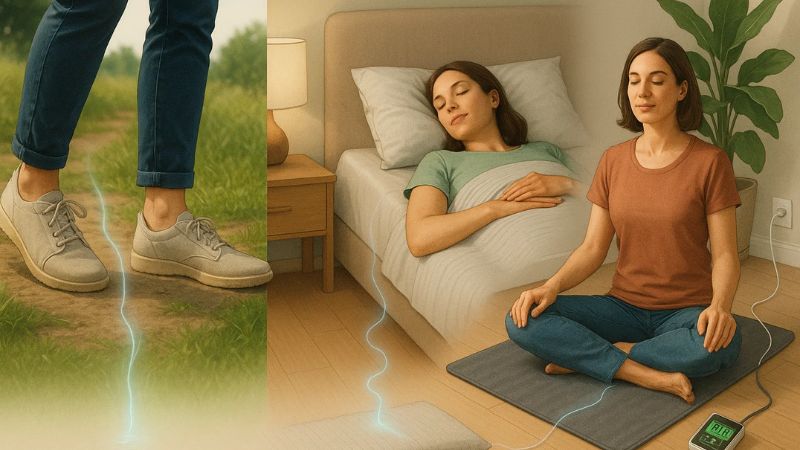
There are only two basic ways to ground:
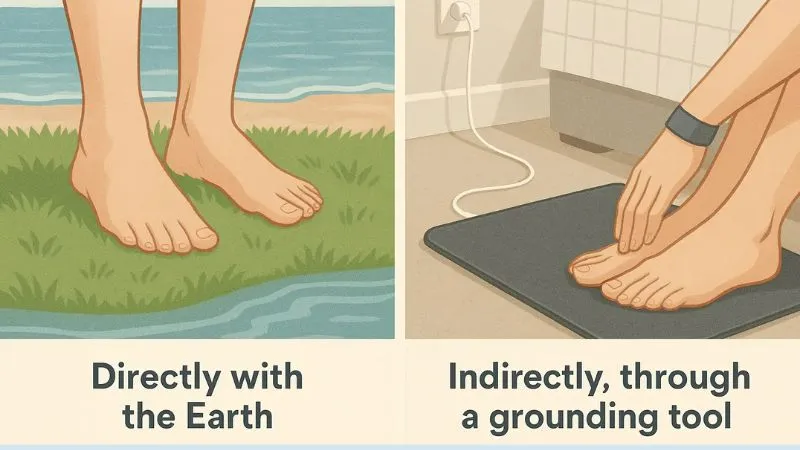
- Directly with the Earth
- Bare feet on grass, soil, sand or stone
- Sitting or lying on the ground
- Swimming in natural bodies of water
- Indirectly, through a grounding tool
- Sheets, mats, shoes, socks, bands, patches, blankets
- Connected to Earth through a grounded outlet or a ground rod outside
The first way is free, beautiful and always worth using when you can.
The second way exists because modern life often looks like this:
- Apartments far above ground level
- Rubber-soled shoes and synthetic floors
- Long days indoors around wiring and screens
- Climates where being barefoot outside all year simply isn’t realistic
Grounding tools are not meant to replace bare feet. They are a way of bringing the outdoors connection indoors, especially when you’re sleeping or working.
2. Your grounding “wardrobe”: tools beyond mats
Instead of thinking “I need every grounding product ever made”, it helps to think in categories, like a small wardrobe:
- Night-time tools
- Daytime tools
- Mobile tools
- Micro tools
You only need the pieces that fit your life and routines.
2.1 Night-time grounding: sheets, mattress pads, pillowcases, blankets
Night-time is powerful for grounding because you’re in one place for hours. A tool that works while you sleep gives a lot of potential grounding time without extra effort.

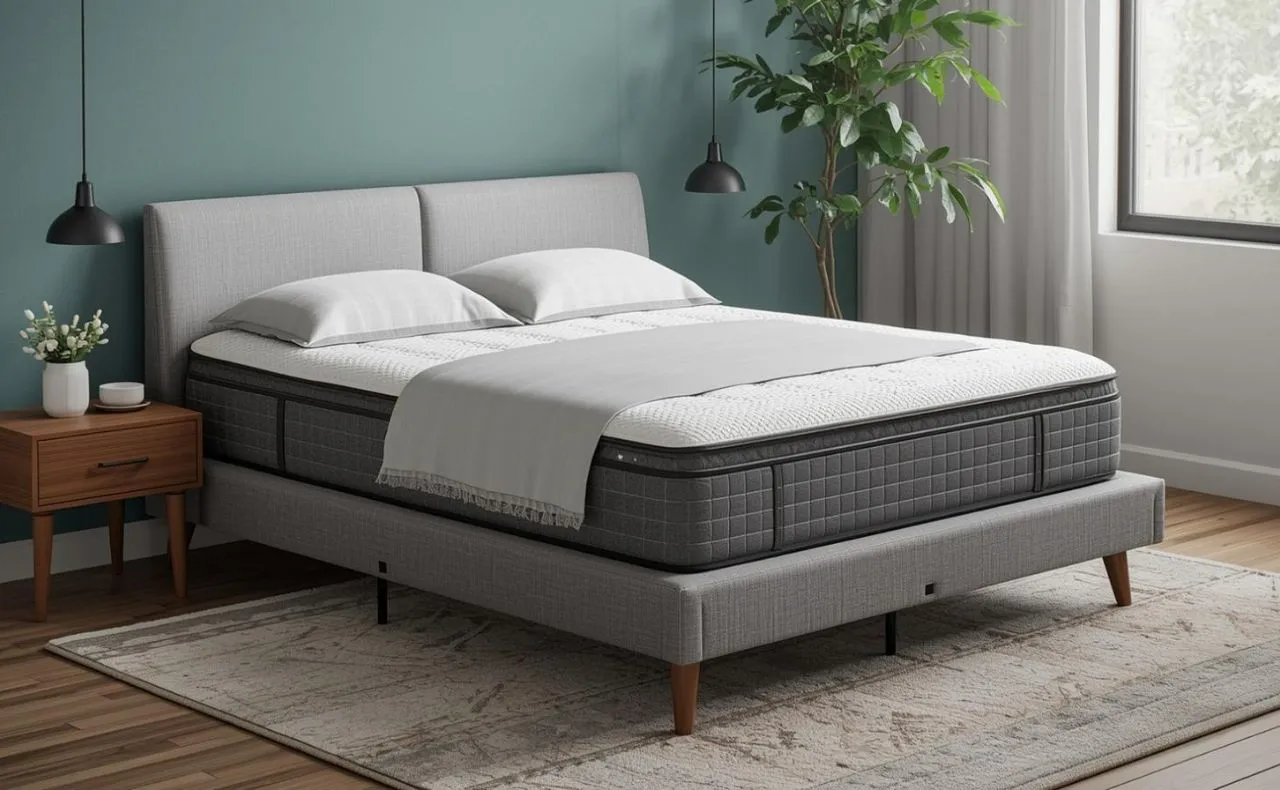
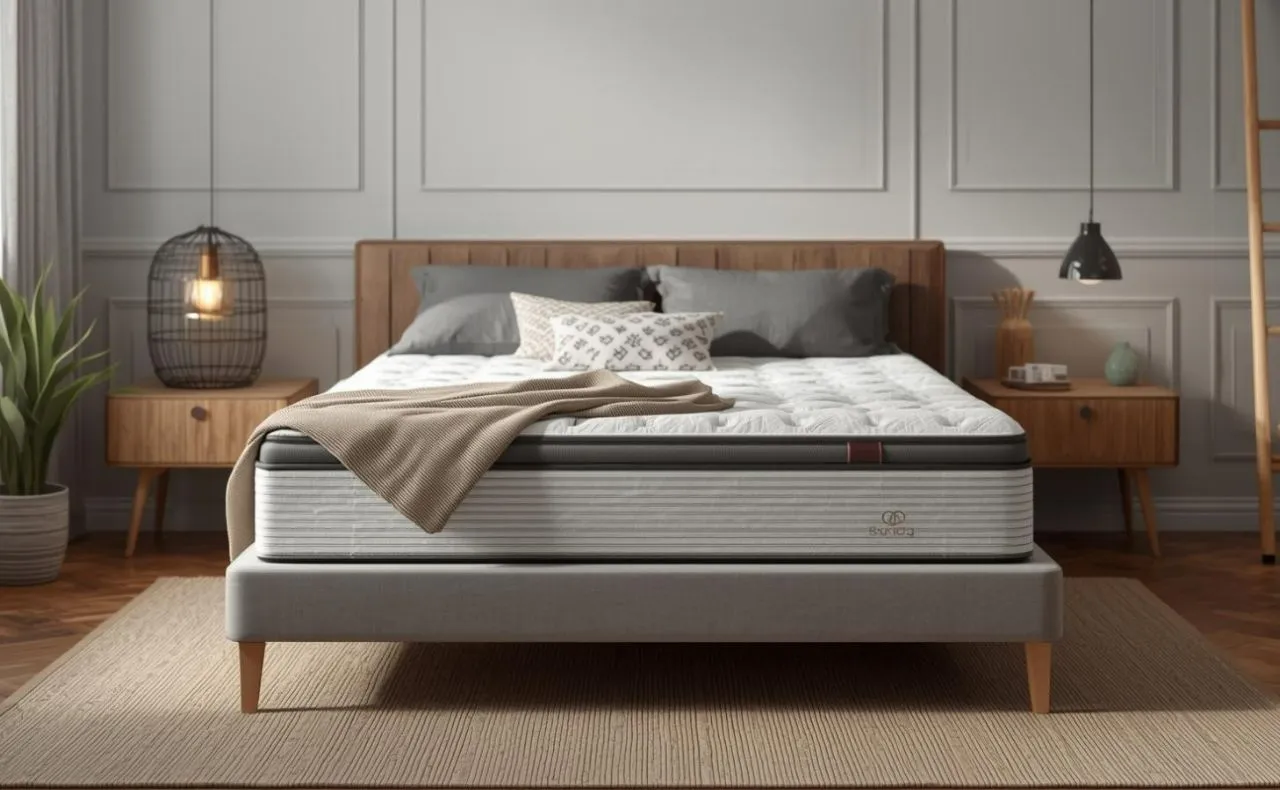
Grounding sheets and mattress pads
These are usually:
- Cotton or organic cotton fabric
- Woven with fine conductive fibres, often silver, so the surface can carry charge
You connect them to ground with a cord and a grounded outlet or ground rod.
They come as:
- Flat sheets
- Fitted sheets
- Mattress pads or underlays that sit under your normal sheet
Best for:
- People whose main focus is sleep, recovery and nervous system calm
- Anyone who likes the idea of “set it up once and let it work quietly in the background”
What to love:
- High “hours grounded” for your money because you’re in bed anyway
- Feels like normal bedding once washed a few times
- Partners and pets often benefit too
What to be aware of:
- Higher upfront cost than small mats or bands
- Need gentle washing (no bleach or fabric softeners) so the conductive fibres last
- Very metal-sensitive people may prefer a thin natural-fibre sheet on top
Grounding pillowcases and blankets
- Pillowcases are a softer entry point if changing the whole bed feels like too much
- Blankets with conductive fibres can be used over or under you, depending on the design
Night-time tools are a good match if your health focus is sleep, pain, heart-rate variability or feeling more “held” while you rest.
Before relying on any grounding tool, understand the science first: Read Do Grounding Mats Really Work? A Look at the Science, Sleep and Inflammation
2.2 Daytime grounding: mats and chair pads
You already know a lot about mats and materials from your other articles, so here we keep it simple.
Daytime grounding tools are:
- Thin mats for the floor, desk or sofa
- Chair pads that go on the seat or back of a chair
You can:
- Put a mat under your bare feet at a desk
- Rest your hands on a mat while you type or read
- Sit on a chair pad while working, meditating or watching TV
Best for:
- People who work at a computer
- Anyone who spends long periods in one spot during the day
What to love:
- Easy to build into routines: “Whenever I sit here, my feet or hands touch the mat”
- Simple to clean
- Portable between rooms or locations
Daytime tools work especially well when the main issues are screen-heavy days, desk work, stress and muscle tension.
Not all grounding materials are equal: See The Safest Grounding Mat Materials: Carbon vs Silver
2.3 Mobile grounding: shoes, sandals and socks
Mobile grounding tools turn movement into grounding time.

Grounding shoes and sandals
Most grounding shoes are based on one of these ideas:
- A sole made from leather or a special conductive rubber, with a metal plug or conductive insert that connects the ground to your foot
- Conductive stitching or layers inside the shoe that link the outsole to the insole and your skin
They are often barefoot-style: thin, flexible soles and a roomy toe box so your feet can move naturally.
Best for:
- Dog walks, school runs, errands, markets, travel
- People who already walk daily and want to make that time restorative
- Anyone who loves the idea of “almost barefoot” but still wants protection and style
What to love:
- Every walk becomes a grounding session
- Many models use natural materials like leather uppers, cotton laces and cork or leather insoles
- They can replace everyday shoes instead of adding another thing to remember
What to be aware of:
- Higher price than generic shoes
- Leather-sole models are best for dry conditions; conductive rubber handles wet ground better
- If you are used to very cushioned shoes, your feet may need time to adapt
Want the biological explanation behind grounding? Read The Science Behind Grounding: How Connecting To The Earth Benefits Your Health
Grounding socks
Grounding socks are made with conductive fibres blended into the fabric.
Alone, on normal floors, they are not enough. They need to be:
- On a grounding mat or sheet
- Inside grounding shoes
They are a comfort upgrade: they help maintain contact when your feet are cold, or when you prefer socks between your skin and a mat or shoe.
2.4 Micro-grounding: bands and patches
Bands and patches are small tools that connect directly to a part of your body:
- Adjustable bands around ankle or wrist
- Adhesive patches placed on the feet, legs or other areas
They are connected to ground with a cord, just like mats or sheets.
Best for:
- Short, focused sessions in the evening
- Times when you want grounding in one area but don’t want to change the whole bed or workspace
What to love:
- Very direct contact with the body
- Easy to move between different positions
What to be aware of:
- Cords can get in the way in a busy household
- Not practical if you move around constantly
For many people, bands and patches are optional. Night-time tools, mats and shoes often cover most real-life situations.
Before relying on any grounding tool, see what the science actually says: The Science Behind Grounding: How Connecting To The Earth Benefits Your Health
3. How to know if you’re really grounded
One of the most reassuring things about grounding is that you don’t have to guess.
There are three simple questions you can answer:
- Is my outlet or ground rod actually connected to Earth?
- Is my product (mat, sheet, band, shoe) truly conductive and connected?
- What happens to my body when I ground?
You can keep this very simple, or go deeper if you like numbers.
3.1 Step 1 – Is the outlet grounded?
If you are using a grounding cord that plugs into a wall outlet, you want to know that:
- The outlet is wired correctly
- The ground port is truly connected to Earth
For that, you can use a small outlet tester designed for your region (EU, UK, US etc.). It plugs into the outlet and shows, usually with indicator lights, whether:
- Live, neutral and ground are in the right place
- Common wiring faults are present
If you can’t confirm the outlet is grounded, you can follow manufacturer instructions for a ground rod placed in the soil outside and connect to that instead.
3.2 Step 2 – Is the product actually connected?
To check that a mat, sheet or band is truly grounded when plugged in, many grounding brands offer continuity or product testers.
These testers:
- Use a tiny, safe signal
- Show a simple pass/fail result, often with a green light
The idea is:
- One part of the tester connects to the grounded outlet or rod
- Another part touches the surface of your mat or sheet
- If the light shows “good”, you know electricity can flow between the two
You can use this to test:
- New products when you unbox them
- Cords after they’ve been bent or moved a lot
- Sheets after many washes
It’s a very quick way to answer “Is this thing actually connected to Earth right now?”
3.3 Step 3 – What happens to my body when I ground?
If you want to go deeper, you can look at body voltage.
Body voltage meters are used to measure the AC voltage on your body from nearby wiring and fields. In simple terms, they can show:
- How much electrical “load” your body is picking up in a certain spot
- How that changes when you connect to ground
A typical home test looks like this:
- You connect the meter to a reference ground
- You hold a probe or wear a band so the meter is reading your body
- You lie in your usual bed position or sit at your desk and note the reading
- You then touch your grounded sheet or mat and see how far the number drops
You don’t need to chase perfect numbers. What matters is whether grounding makes a clear difference in your specific environment.
And alongside these tools, your own body is also a tester:
- Do you feel calmer or more wired?
- Is sleep drifting a little deeper or not changing at all?
- Do you feel more “inside your body” or more agitated?
The numbers and the feelings together tell the full story.
4. Three simple grounding roadmaps (“kits”)
You don’t need every tool. It’s much easier to think in levels and choose what matches your current energy, budget and health.
Level 1 – Curious but cautious
This is the “dip a toe in” level.
You:
- Add a barefoot ritual: 10–20 minutes on grass, soil or sand whenever possible
- Choose one grounding tool:
- A small mat for under your feet at a desk, or
- A band or pillowcase if evenings are your hardest time
You give it a few weeks and track:
- Sleep quality (0–10)
- Pain or tension (0–10)
- Stress/overwhelm (0–10)
If nothing at all shifts, you haven’t invested a fortune. If something does, you have a gentle reason to go one step further.
Level 2 – Sleep-first kit
This level is for people who say, “If I could change one thing right now, it would be my sleep.”
You:
- Choose one grounding sheet or mattress pad that fits your bed and materials preferences
- Add a simple product tester so you can check that the sheet + cord + outlet are working together
- Optionally keep a small mat at the desk for daytime
You commit to:
- Sleeping with the sheet for 3–4 weeks
- Keeping a simple log (bedtime, wake time, night awakenings, daytime energy, mood, pain)
- Talking with your doctor before making any changes to medication or treatment
This kit gives you a lot of grounded time in a place where your body is designed to repair.
Level 3 – All-day grounding lifestyle
This is for people who feel: “Grounding resonates with me and I want it woven gently through my days.”
You:
- Use a sheet or mattress pad at night
- Keep a mat or chair pad in your main work or relax spot
- Wear grounding shoes or sandals for everyday walks and errands
- Use a product tester to check new or older tools
- Optionally explore a body-voltage meter if you like more data
This doesn’t have to feel like a strict protocol. It’s more like an invisible thread through your day:
- Bare feet in grass when you can
- Grounded toes under the desk
- Grounded walks to the shop
- Grounded rest at night
From here, you can always adjust. Some seasons you might lean more on shoes and mats, other seasons more on sheets and outdoor grounding.
5. Q&A: common questions about grounding tools and testing
Q: Should I start with a mat, sheet or shoes?
If sleep is your biggest issue and you can change bedding, a sheet or mattress pad is often the best first tool. If your days are mostly at a desk, try a mat first. If you walk a lot and love minimalist shoes, grounding shoes can be a beautiful place to begin. Choose the tool that fits where you already spend time.
Q: Do I really need a tester?
You don’t have to own one, but a small product tester can be reassuring. It answers the simple question “Is this connected?” and lets you relax into using the tool, instead of wondering if it’s all in your head.
Q: Are grounding shoes enough on their own?
They can give you a lot of grounding if you walk daily, but they don’t help at night or when you’re sitting still for hours. A balanced setup for many people is shoes plus one stillness tool (sheet or mat).
Q: How quickly should I feel something?
Some people feel changes in sleep or calm within days. For others it is more subtle, or nothing noticeable happens at all. Your age, health, medications, stress load and environment all play a role, and tools like Apollo Neuro are designed to work gradually by retraining your nervous system over weeks, not minutes. This is why logging your own experience matters more than anyone’s story online, especially if you’re pairing a sleep tracker with Apollo to watch for shifts in HRV, resting heart rate, and sleep quality over time.
Q: Can I ground “too much”?
From an electrical point of view, being at the same potential as Earth is a natural state. But emotionally and physiologically, you can absolutely do too much too fast. If you feel flooded, wired or strange when you start grounding more, shorten your sessions and build up more slowly.
Q: Is grounding safe with a pacemaker or blood thinners?
This must be decided together with your doctor. Because grounding can influence blood properties and the nervous system, it’s important to get personalised medical advice if you have a pacemaker, cardiac device, serious heart rhythm issues, take anticoagulants or have complex health conditions.
Conclusion: a grounded life that fits your reality
Grounding doesn’t have to be a project or a new identity.
It can simply be:
- A little more bare skin on real Earth
- One or two well-chosen tools that fit your actual routines
- A simple way to check that they are connected to the ground
- A gentle experiment you run with your own body, not against it
You’re allowed to start small. You’re allowed to change your mind. You’re allowed to stop if something doesn’t feel right.
And as new, safer materials, better shoes, smarter sheets and clearer testing tools appear, this grounding roadmap can be updated – so you can keep living your life while your home quietly becomes a place where your body feels a little more connected, a little more held and a little more at peace.