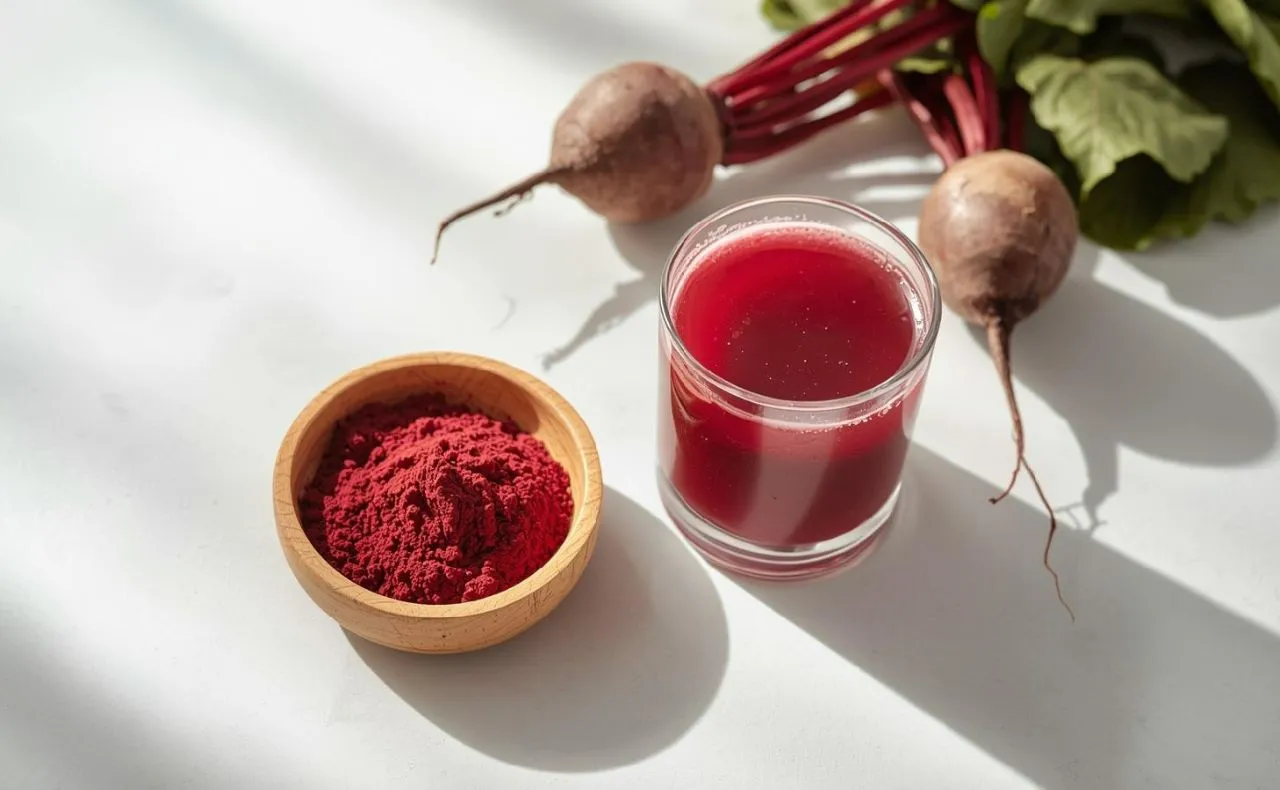
If you’re comparing beet powder vs beet juice as a natural pre-workout, the real difference isn’t “healthier vs not” — it’s how reliably you get the nitrate effect, when it peaks, and which format your body tolerates best.
This is a global, organic-first guide for HealthyHomeUpgrade readers: simple labels, minimal additives, and choices that work whether you shop in the US, EU/UK, Canada, Australia, or elsewhere.
Affiliate disclosure: This post may contain affiliate links. If you buy through them, we may earn a small commission at no extra cost to you.
Educational only — not medical advice.
Quick Answer
For most people, organic beet juice (especially organic beet juice concentrate / “shots”) is the better natural pre-workout because it tends to deliver a more consistent “nitrate hit” in real-world use. Many performance protocols time intake about 2–3 hours before training, as described in dietary nitrate performance reviews.
Choose organic beet powder if you want a lower-sugar, travel-friendly option you can use daily — but treat it like a supplement: pick single-ingredient, certified organic, because nitrate content can vary across products and processing.
At a Glance
| If you want… | Choose (organic-only) | Why |
| Most reliable, “classic” pre-workout feel | Organic beet juice / concentrate | Often more consistent day-to-day |
| Lowest sugar + easiest daily habit | Organic beet powder | Convenient and usually lower sugar |
| Sensitive stomach | Powder (start small) or diluted juice | Less volume (powder) or gentler intake (dilution) |
| HH “clean” standard | Certified organic + minimal ingredients | Avoid sweeteners, flavors, and filler blends |
Beet powder vs beet juice: the real differences
1) Reliability depends on nitrate content (and that varies)
Beets contain dietary nitrate, which your body can convert into nitric oxide — a pathway linked to blood flow and exercise efficiency in some contexts. The challenge is that nitrate content can vary across products, batches, and processing methods. That’s why one beet powder can feel helpful, while another feels like nothing.
Real-world pattern:
- Juice/concentrate often feels more consistent for many people.
- Powder can be just as useful, but quality and transparency matter more.
Prep beets without toxins leaching in: see our complete guide to choosing non-toxic cookware – what you need to know.
2) Convenience vs volume (and why that affects consistency)
- Organic beet juice/concentrate: fast and simple, but you may need to handle taste and volume.
- Organic beet powder: easy to keep as a habit (water, smoothie, yogurt), and often easier to keep low-sugar.
Store your beet powder or juice fresh in the best glass food storage containers.
3) “Clean inputs” matters more than the format
If your HH standard is “no compromises,” the biggest win is unsweetened + minimal ingredients.
- Some juices add fruit blends or sweeteners.
- Some powders add flavors, sweeteners, or “pre-workout stacks.”
HH rule: if the ingredient list is long or vague, skip it.
Mix your beets with instant, contaminant-free water using the best faucet water filter (2026)—removes chlorine, lead, and microplastics while keeping minerals for peak hydration.
Mini-Box: Timing rule (2–3 hours) + test on a normal day
Most people get disappointed with beets because they take them at the wrong time.
Simple timing rule:
- Take your organic beet product 2–3 hours before training for your first 2–3 tries. This timing window is commonly used in performance protocols and described in dietary nitrate performance reviews.
- Test it on a normal workout day first (not race day or your biggest session).
- Keep everything else stable during your first week (coffee, warm-up, meal timing). If you change multiple variables, you won’t know what helped.
If you’re sensitive: start smaller, dilute juice, and increase gradually only if your stomach stays calm.
Organic-only buying checklist (global)
Step 1: Confirm organic certification
Look for an official organic mark appropriate to your region, such as:
- US: USDA Organic
- EU: EU organic leaf
- UK: Soil Association / Organic Farmers & Growers (or equivalent)
- Canada: Canada Organic
- Australia: Australian Certified Organic (or equivalent)
- Japan: JAS Organic (or equivalent)
Exact seals vary by country — the principle is the same: certified organic, not “natural.”
Step 2: Choose the cleanest label
Best: “Organic beetroot juice” or “Organic beetroot juice concentrate”
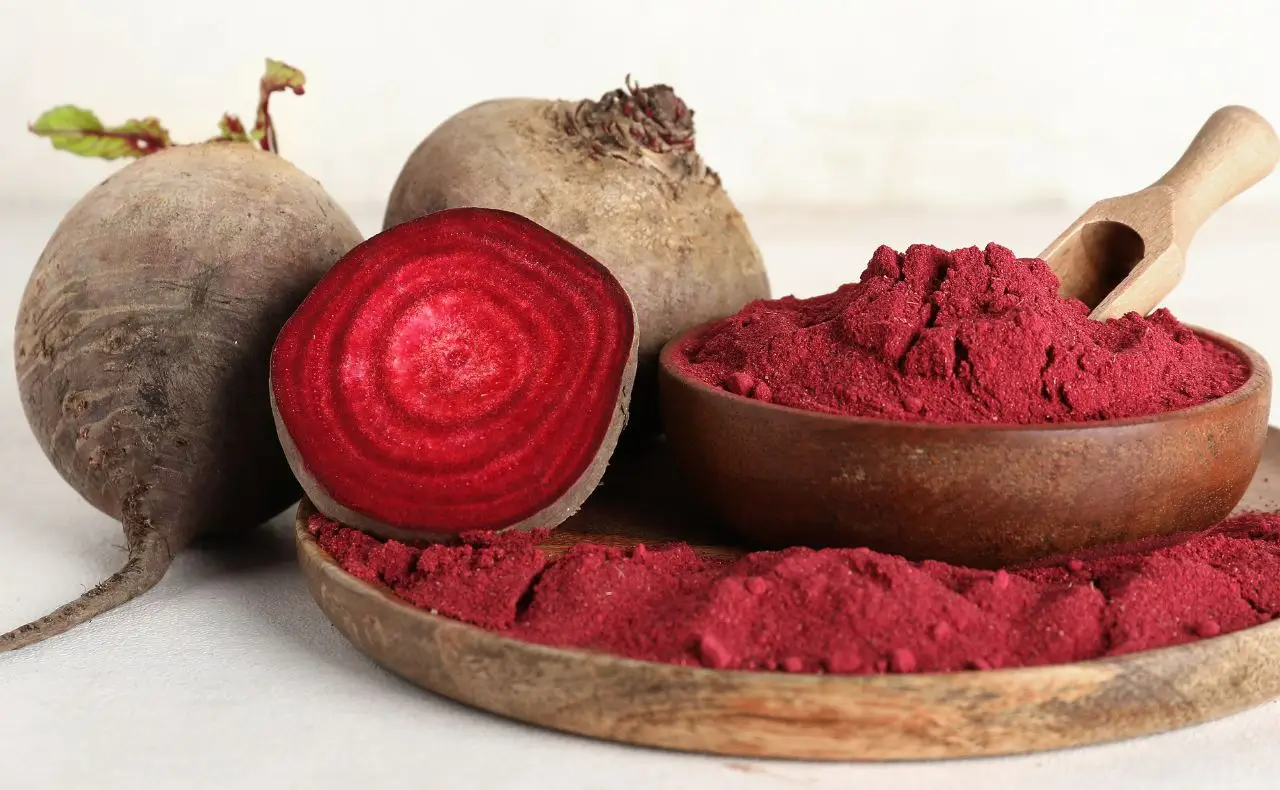
Best: “Organic beetroot powder” (single ingredient)
Avoid:
- “natural flavors”
- sweeteners (even “healthy” ones)
- long blends (“performance matrix,” “energy complex”)
- unnecessary gums/thickeners (in juice blends)
Step 3: Decide based on your routine
Choose juice/concentrate if you want the simplest path to “does this work for me?”
Choose powder if you want the easiest long-term habit and lower sugar.
Safety notes (keep it sensible)
Most people tolerate beets well, but a few practical notes matter:
- Blood pressure: Beet products can lower blood pressure for some people. If you’re on blood pressure medication or you get dizzy easily, speak with a clinician.
- Kidney stones: Beets are higher in oxalates. If you’re prone to stones or have been advised to limit oxalates, check with a clinician.
- Beeturia: Pink/red urine or stool can happen and is usually harmless.
FAQs
1) Which is better for a “pump”?
Many people find organic juice/concentrate more reliable, but individual response varies.
2) Is organic beet powder weaker than juice?
Not automatically. But powder products vary more, so quality matters more.
3) Can I take it with coffee?
Many do. Test it on a normal day first if you’re sensitive.
4) Why do some people feel nothing?
Timing mismatch, product variability, or individual response differences.
5) Do I need to take it every day?
Not necessarily. Some people use it only before training; others like a consistent routine.
6) What if it upsets my stomach?
Reduce the dose, dilute juice, or switch format (powder often means less volume).
Final verdict
If you want the most dependable organic natural pre-workout experience, choose organic beet juice/concentrate and follow the 2–3 hour timing rule. If you want a lower-sugar, easier daily habit, choose organic beet powder — but only the single-ingredient, certified organic kind. That’s the HH-clean way to decide beet powder vs beet juice in 2026.
References
- dietary nitrate timing review → https://pmc.ncbi.nlm.nih.gov/articles/PMC8516348/
- beetroot supplement variability analysis → https://www.mdpi.com/2304-8158/12/5/1017
- beetroot juice & blood pressure review → https://pubmed.ncbi.nlm.nih.gov/32292042/
- USDA Organic overview → https://www.usda.gov/topics/organic
- EU organic regulation (2018/848) → https://eur-lex.europa.eu/eli/reg/2018/848/oj