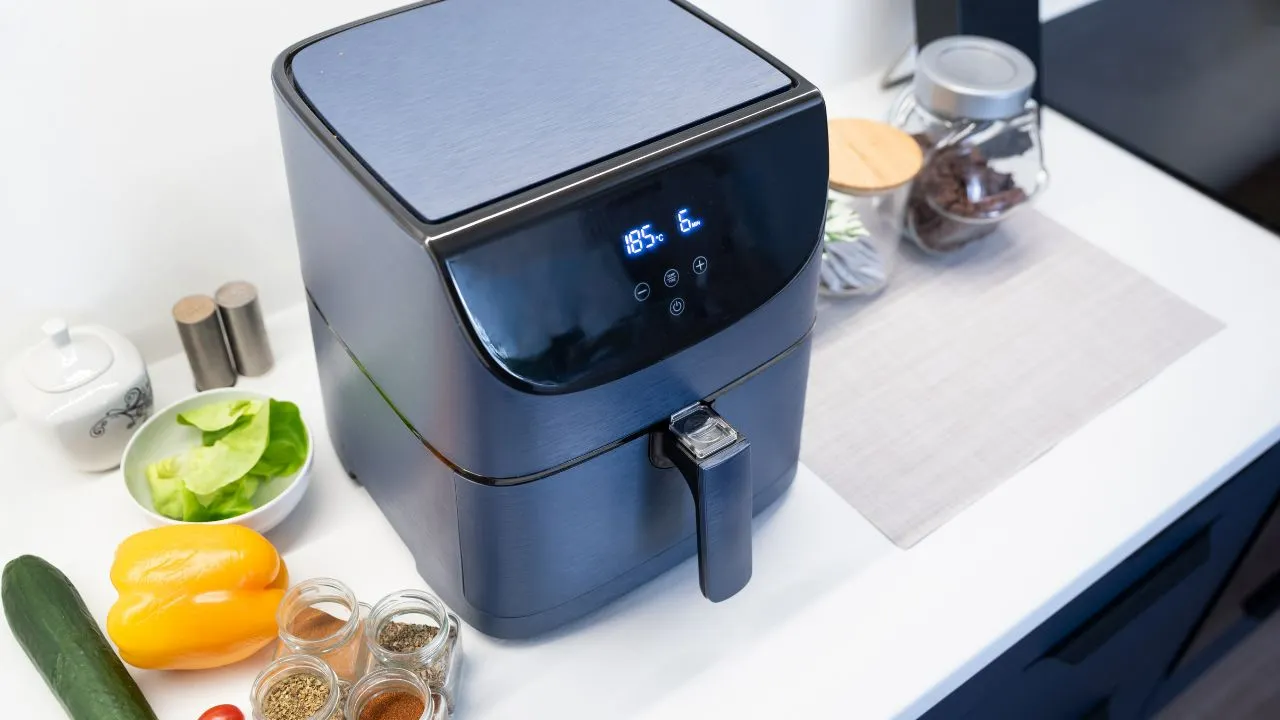
Air fryers have gone from weekend gadgets to everyday essentials, but more home cooks now care as much about what touches their food as how fast it crisps. Many want to move away from mystery non‑stick coatings toward stainless steel, high‑quality ceramic, or glass surfaces wherever food sits.
This guide focuses on “safer‑by‑design” air fryers: models that emphasize stainless steel, ceramic, or glass in the cooking area and clearly state their stance on PFAS and non‑stick coatings, so you can choose a healthier option that fits how you actually cook.
Quick answer
- A “stainless steel air fryer” most often means stainless housing and some internal surfaces, but many baskets and trays still use non‑stick coatings, sometimes with PTFE.
- If you want a safer, lower‑toxicity setup, look for:
- Food‑contact areas in stainless, ceramic, or glass.
- Clear PFAS/PTFE language from the brand.
- Third‑party certifications (CE, ETL, UL, NSF, RoHS, REACH).
- You can further reduce contact with any coating by using stainless inserts, glass dishes, or parchment liners.
At a Glance — 2025 Editors’ Top Picks (Non-Toxic Focus)
These picks are based on manufacturer materials, third‑party testing where available, and how realistically they can be used in a lower‑toxicity kitchen (often with liners or inserts). Always confirm the exact model and region before you buy, as coatings can differ.
| Pick | Type | Best for | Why it stands out |
| Instant Vortex Plus 6‑in‑1 (ClearCook) | Basket‑style | Most families who want a mainstream upgrade | Strong performance with stainless housing and good airflow; works well with stainless racks or liners to reduce coating contact. |
| COSORI Pro III / Pro LE (Stainless line) | Basket‑style | Small kitchens and apartments | Compact, efficient, and widely available; stainless‑accented interior plus PFAS‑aware messaging on newer models. |
| Cuisinart TOA‑70 / XXL stainless interior | Oven‑style | People who want a mini stainless oven | Metal cavity with racks and trays; good for roasting and baking with minimal reliance on basket coatings. |
| Typhur Dome (low‑PFAS tested coating) | Basket‑style | Users who want test‑backed non‑stick | Independent PFAS testing shared publicly; designed to minimize PFAS migration under normal use. |
| HYSapientia air fryer oven | Oven‑style | Tray roasting and batch cooking | Oven‑style layout that pairs well with stainless trays and parchment; clear support info on coating type. |
Important: truly 100% stainless, coating‑free baskets are still rare. Many “stainless steel” air fryers combine stainless shells with non‑stick coated baskets or trays, so treating “non‑toxic” as a spectrum and using inserts/liners is the most realistic approach.
Why Material Matters: Stainless Steel, Ceramic and Glass
Most people asking for a “non‑toxic” or “stainless” air fryer are trying to avoid PFAS‑based non‑stick coatings that can degrade or flake over time. Modern regulations have removed some older chemicals (like PFOA), but PTFE and other PFAS are still common in cookware and appliances.
Stainless steel
- Common in professional and medical settings; inert and heat‑stable when used correctly.
- Highly durable and scratch‑resistant.
- May show cosmetic discoloration or spots but these do not affect safety.
Ceramic
- PFAS‑free ceramic coatings can give a smoother, more non‑stick feel without classic PTFE.
- Require gentler handling to avoid chips or cracks.
- Quality varies widely by brand; choose established manufacturers.
Glass
- Fully inert, with no coatings.
- Makes it easy to see both doneness and cleanliness.
- Appears mostly in lids, doors, or dedicated glass‑basket models.
From a health perspective, high‑quality stainless, ceramic, and glass are all viable for daily cooking. The bigger shift is moving away from older, easily‑damaged non‑stick coatings and toward materials that tolerate heat and cleaning for years.
Stainless steel air fryer vs “non‑toxic”
Competitor guides often label air fryers as “non‑toxic” based on a single label like “PFOA‑free,” but PFOA has already been phased out by law in many regions, so that claim alone is not very meaningful.
When you evaluate a stainless steel air fryer, look for:
- Clear wording like “PFAS‑free,” “PTFE‑free,” or “PFAS‑aware” in official materials (not just retailer copy).
- Honest acknowledgement when a non‑stick coating is used, as with some Instant and Ninja baskets and trays.
- Certifications such as CE, ETL, UL, NSF, RoHS, and REACH, which show the product has met safety and materials standards.
If a product is branded “non‑toxic” but information about the coating is vague, assume there is a non‑stick layer and plan to use liners, inserts, or stainless accessories to minimize direct contact.
For a broader context on building a safer kitchen, see Best Non‑Toxic Cookware Sets and Top 5 Non‑Toxic Cookware Brands
Updated model notes (2026)
Below are refreshed, more accurate notes on some of the popular stainless‑focused models.
1. Instant Vortex Plus 6‑in‑1 (ClearCook window)
- Strong performance, good capacity, and a stainless shell make this a practical “mainstream” upgrade.
- Manufacturer and retailer Q&A indicate baskets and trays typically use non‑stick coatings that contain PTFE, even when the unit is marketed as stainless.
Safer‑use tips
- Treat it as a bridge appliance: a step up from old, heavily scratched pans, but not fully PFAS‑free.
- Use stainless racks, glass dishes, or parchment liners so food spends less time in direct contact with the non‑stick surface.
2. Ninja Foodi DualZone AF series
- Dual baskets are convenient for cooking two dishes at once.
- Product experts confirm that many Ninja baskets are aluminum with PTFE coatings, sometimes paired with ceramic‑coated crisp plates.
Safer‑use tips
- If you choose a Ninja, focus on newer ceramic‑coated or PFAS‑reduced SKUs and combine with liners or inserts.
- Consider a single large basket if you prioritize fewer coated surfaces and easier access for stainless accessories.
3. COSORI Pro series (stainless lines)
- Compact footprint and efficient cooking make COSORI a good option for small kitchens.
- Newer models emphasize stainless interiors and PFAS‑aware marketing, but baskets may still carry non‑stick layers, so check each SKU’s spec sheet.
4. Cuisinart TOA‑70 / XXL stainless interior
- Oven‑style units with metal cavities, racks, and trays are ideal if you want more stainless contact area.
- You can treat them much like a small stainless convection oven, using pans and racks you already trust.
What a safer air fryer is actually good for
A non-toxic air fryer is more than a “healthy fries machine.” Used well, it becomes a small plant-based powerhouse in your kitchen.
Everyday vegan cooking
- Crispy tofu and tempeh
Press, marinate and air fry for protein-rich salad toppers or Buddha bowls. - Veggie burgers and patties
Cook from fresh or frozen without pan-frying in a lot of oil. - Roasted vegetables
Broccoli, cauliflower, carrots, fennel, Brussels sprouts and squash become sweet and caramelised with just a teaspoon of avocado or olive oil.
Hot circulating air means you often need less oil than in the oven and much less than in a frying pan.
Healthy snacks you don’t associate with air fryers
- Chickpea “crunchies”
Boiled or canned chickpeas dried and seasoned, turned into a fibre-rich snack. - Kale or cabbage chips
Lightly oiled and seasoned, then air fried at lower temperature. - Roasted nuts and seeds
Sunflower and pumpkin seeds, cashews, almonds and hazelnuts — gently toasted for granola, salads or snack jars.
All of these can be made with whole ingredients, no mystery oils, and as little salt as you choose.
Drying herbs and making your own tea ingredients
Your air fryer can double as a mini dehydrator on low temperature:
- Dry garden herbs
Mint, lemon balm, thyme, rosemary, oregano and sage can be dried in thin layers and stored in jars. - Dry citrus peel for tea and seasoning
Organic lemon, lime or orange peels sliced thin; once fully dry, they can be used whole in herbal teas or ground into seasoning. - Ginger and turmeric slices
Thin slices can be dried and later simmered in water for warming infusions.
You’re not brewing tea in the air fryer; you’re drying clean ingredients so they keep safely and are ready to infuse in hot water whenever you like.
Plant-based meal prep
- Sheet-pan style bowls
Roast cubes of sweet potato, peppers, zucchini and tofu in batches, then store for grain bowls. - Baked falafel or veggie balls
Skip deep frying and still get a crisp crust. - Leftovers revival
Reheat roasted veg, pizza slices or baked dishes so they regain crispness instead of going soggy.
If you are building a healthier kitchen overall, pair your air fryer with filtered water and safer storage, such as Best Faucet Water Filter and Best Glass Food Storage Containers.
Ceramic vs Stainless: Which Is Healthier in Daily Life?
From a health perspective, high‑quality stainless and ceramic both work well; the bigger difference is durability and how you cook:
- Stainless steel tends to last longer, tolerates metal tools better, and shrugs off staining with proper cleaning.
- Ceramic often feels more non‑stick at first and can be easier for delicate foods, but needs gentler handling and can chip if mistreated.
For most households, the best choice is the one that:
- Comes from a reputable brand with transparent materials info.
- Fits your cleaning style and patience.
- Encourages you to cook more whole foods instead of deep‑fried or ultra‑processed options.
Stainless Steel Air Fryer Oven: When to Choose It
A stainless air fryer oven is worth it if you:
- Cook for several people and want to roast full trays of vegetables or plant proteins at once.
- Use your air fryer daily and want something closer to a primary oven.
- Prefer flat trays and racks over deep baskets for easier use with stainless pans or glass dishes.
If you enjoy roasting, baking, and batch prep, an oven‑style model like a stainless‑cavity Cuisinart can align better with a non‑toxic, whole‑foods kitchen than a small, heavily‑coated basket.
Cleaning a stainless or ceramic air fryer (non‑toxic routine)
Good cleaning habits reduce smoke, off‑flavors, and wear on any surface:
- Let the unit cool, then wash baskets, racks, and trays with warm water, mild soap, and a soft sponge.
- Use baking soda paste for stuck‑on spots; consider diluted vinegar on stainless for mineral marks, then rinse well.
- Avoid harsh oven cleaners and metal scouring pads on baskets or coatings.
Discoloration on stainless is usually cosmetic; the bigger red flag is visible chipping or peeling on any coated part, which is your cue to replace components or move on.
Accessories that play nicely with stainless
To stay in line with a non‑toxic approach:
- Favor stainless racks and trays, oven‑safe glass dishes, and PFAS‑free silicone accessories.
- Avoid overcrowding or blocking airflow; consult your model’s manual for accessory guidance.
Air Fryer Stainless Steel Stains: Cosmetic, Not Crisis
Even the best stainless steel air fryer can show:
- Brown spots from oils and marinades
- Rainbow discolouration from high heat
- Water spots from air-drying
These are almost always cosmetic. Soak, use a mild baking soda paste, rinse and dry — and your basket or tray will usually look very close to new again. The real problem to avoid is chipped non-stick. Choosing stainless, ceramic and glass from the start is how you stay ahead of that.
Large vs Small: Which Non-Toxic Air Fryer Fits Your Life?
- Larger / dual‑zone units suit families and batch cookers who roast full trays and want leftovers.
- Compact models are ideal for one or two people and can be more energy‑efficient on a per‑meal basis.
The “healthiest” option is the one that fits your real life and gets used often enough to replace more processed, take‑out, or deep‑fried meals.
Performance Meets Wellness
Each cycle of the air fryer fan is more than a shortcut to crispness; it is a signal:
- Cleaner materials touching your food
- Less oil and overall fat use
- Less waste, because a durable appliance lasts years
- More plant-based variety, because it becomes easier to cook vegetables and legumes in fun ways
A non-toxic air fryer built from stainless, ceramic and glass can become a cornerstone of a healthy, mostly vegan kitchen, from morning oats and nuts to evening bowls and herbal infusions.
FAQ
Are stainless steel air fryers non‑toxic?
Stainless steel itself is regarded as food‑safe and inert at normal cooking temperatures, and it is widely used in professional kitchens and medical settings; as long as the rest of the appliance is properly certified and you manage any coated parts with inserts or liners, stainless‑focused air fryers are a strong non‑toxic choice.
Do any air fryers have a completely stainless basket with no coating?
Truly coating‑free stainless baskets are uncommon; many “stainless” models still use a non‑stick layer on the basket or tray, so it is important to read the fine print and, when in doubt, treat any smooth dark surface as a coating and use stainless or parchment barriers.
Is ceramic healthier than stainless steel in air fryers?
Both can be very safe when made by reputable brands: ceramic can offer PFAS‑free non‑stick behavior, while stainless tends to be more durable and scratch‑resistant, so the bigger health upgrade is choosing either of these over cheap, easily damaged non‑stick coatings.
How can I make a coated air fryer safer to use?
Use stainless racks, oven‑safe glass dishes, or parchment liners so food spends less time directly on the coated surface, avoid overheating or running the unit empty, and replace baskets or trays that show visible chipping or peeling.
What certifications should I look for in a safer air fryer?
Look for independent marks such as CE, ETL, UL, NSF, RoHS, and REACH, which indicate the product has been evaluated for electrical and materials safety; these do not guarantee PFAS‑free status, but they are a good baseline when combined with transparent coating information.