A gentle guide to what you’re really bringing into your home
If you’re interested in grounding, it’s rarely just curiosity.
Maybe your sleep has been light and broken for years. Maybe your body has already been through a lot, and you’ve started to look at every product that comes near your skin with new eyes.
Maybe you’ve read about grounding mats and you’re thinking:
“If I’m going to lie, sit or stand on this every day, I need to know what it’s made of – and whether carbon or silver is actually safer for me.”
In your other grounding article, you already explore the big question:
“Do grounding mats really work for sleep, inflammation and stress?”
This guide stays with a different, more practical question:
- What are grounding mats actually made of?
- How do carbon vs silver grounding mats compare when it comes to safety, comfort and material toxicity?
- How can you choose something your body can genuinely relax on?
And because knowledge about safer materials keeps evolving, one promise up front:
If trustworthy new information appears about safer grounding materials, this guide will be updated. You shouldn’t have to chase technical changes alone.
Important: This article is for information only. It is not medical advice and it is not a recommendation to start or stop any treatment. Always speak with your doctor or healthcare provider before using grounding products, especially if you have serious health conditions, implanted devices or are pregnant.
Why grounding mat materials matter
Grounding is about reconnecting with the Earth.
Grounding mats are about what you put between your body and that connection.
A grounding mat becomes part of your everyday landscape:
- Under bare feet at your desk
- Under your legs on the sofa
- Maybe even under your body all night in bed
So it isn’t just a technical question of “does it conduct?” It’s also:
- What does this surface feel like on your skin?
- What does it add to the air in your bedroom?
- How does your nervous system respond when you lie down on it?
If you’re working towards a calmer, less toxic home, the material of your grounding mat is part of that story.
What are grounding mats made of?
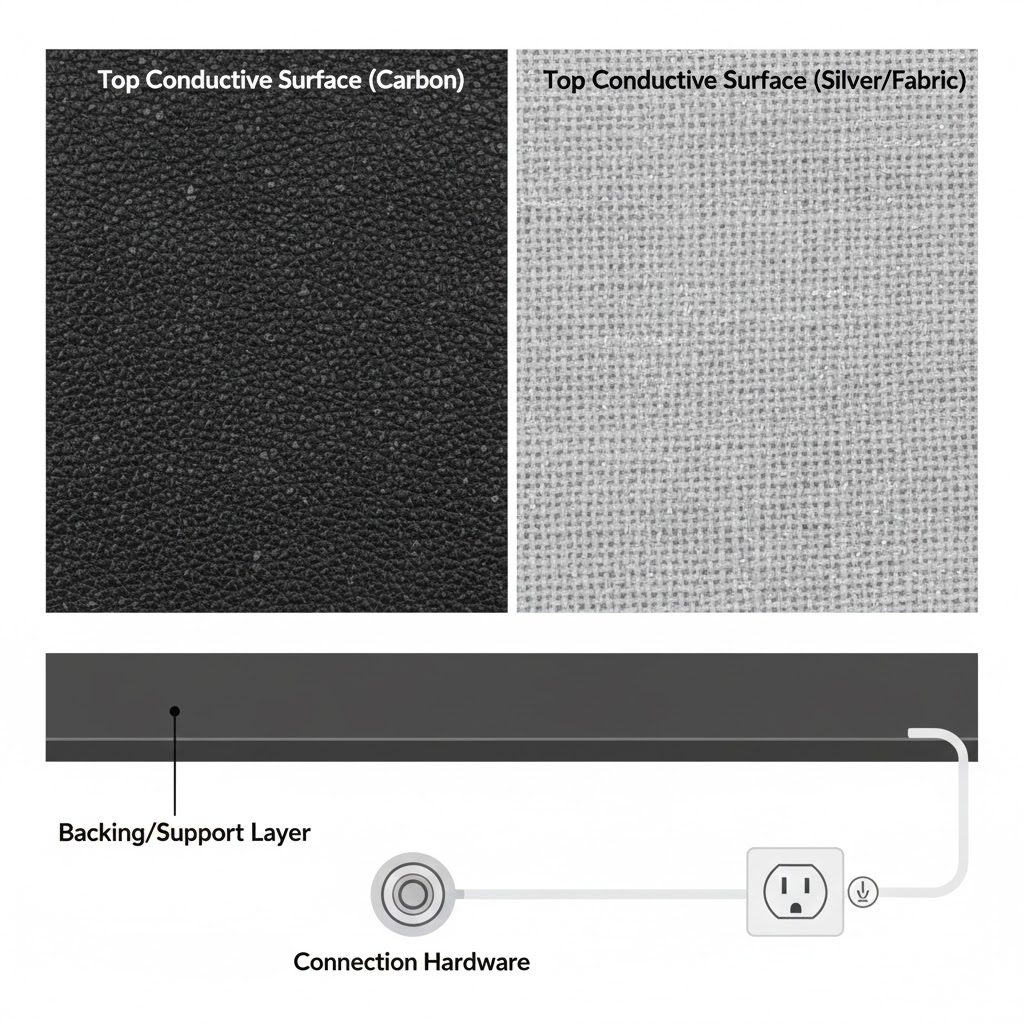
Most grounding mats are not very complicated. They’re basically three layers working together:
- Top conductive surface
This is what your skin (or socks) touch. It is usually either:- A synthetic “leather” surface made from polyurethane (PU) with conductive carbon mixed in
- Or a fabric surface, usually cotton or a cotton blend, woven with fine silver fibres
- Backing / support layer
- A thin layer of rubber or foam (often natural rubber, synthetic rubber or TPE-type foam) to make the mat soft and grippy
- Connection hardware
- A metal snap or button pressed into the conductive layer
- A cord with a built-in resistor that connects to the grounding port of a properly wired outlet or to a ground rod outside, following the manufacturer’s instructions
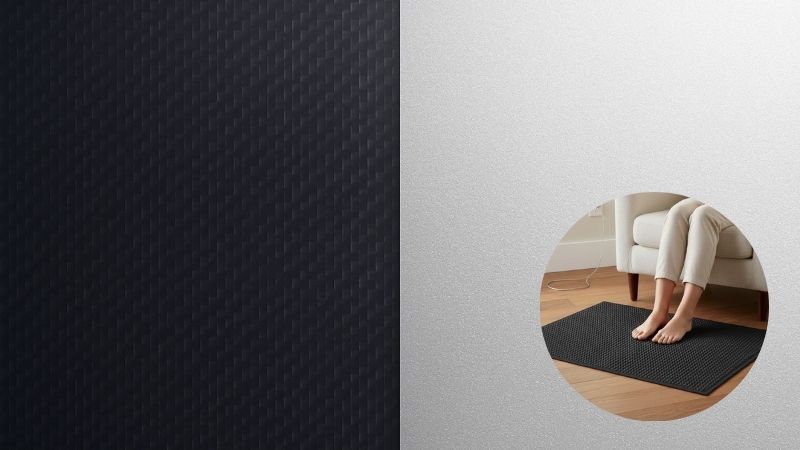
So when we talk about carbon vs silver grounding mats, what really changes is the top surface:
- Carbon mats → PU + carbon surface
- Silver mats/sheets → cotton (or cotton blend) with woven silver fibres
Both can conduct. The big differences are in texture, breathability, smell and how your body tolerates the surrounding materials.
Carbon grounding mats: PU + carbon – practical and robust
What carbon mats usually are
A typical carbon grounding mat looks like this on the inside:
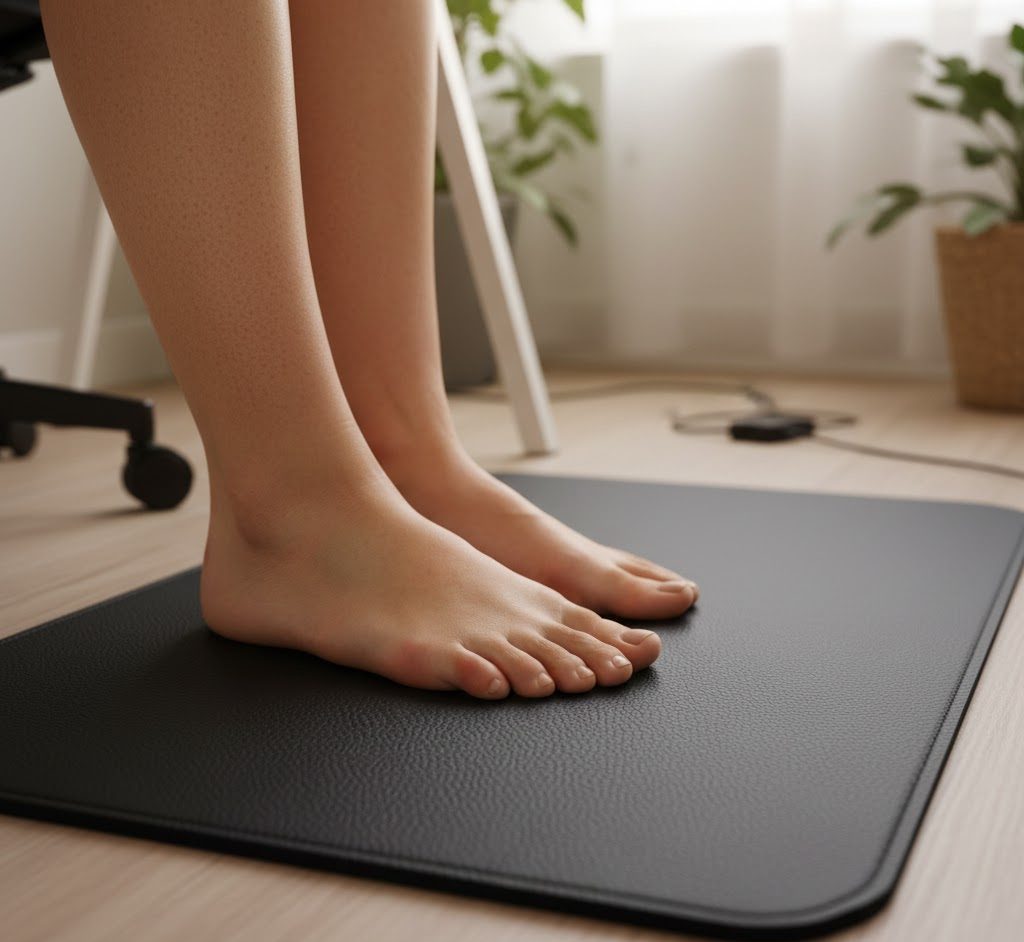
- A top layer of PU “leatherette” – flexible, smooth or lightly textured, easy to wipe
- Conductive carbon pigment blended into that PU so the surface carries charge
- A rubber or foam backing that keeps the mat from sliding and gives some softness
Better brands will often state things like:
- PVC-free / vinyl-free
- Phthalate-free
- Sometimes that they’ve tested for heavy metals and certain problematic chemicals.
Those sentences matter, because many older-style mats and synthetic “leathers” in other industries were made from PVC and could include plasticisers and stabilisers that some people now prefer to avoid.
How a carbon mat feels in daily life
Living with a carbon grounding mat usually feels like this:
- Underfoot it feels like a thin yoga mat or mouse pad with a leatherette top
- It’s easy to clean – a quick wipe with a damp cloth if someone spills something
- It can handle chairs rolling across it, pets, shoes, kids without you worrying too much
For many people, a good carbon mat becomes the “everyday tool” in the grounding kit.
Pros of carbon grounding mats
- Very durable for desks, workspaces and floors
- Simple to wipe clean
- Usually less expensive than silver sheets or textile-based products
- Carbon itself doesn’t tarnish or change colour
Things to keep an eye on
- Very low-priced mats with vague material descriptions may still be based on PVC rather than PU
- A strong chemical smell that doesn’t fade after a few days of airing is a warning sign
- If you are already sensitive to plastics, new furniture or paint smells, a large synthetic surface in a small bedroom may not be ideal for you
With carbon mats, safety is mostly about how clean and transparent the plastic recipe is – and about listening to your own body once the mat is in your home.
Before choosing carbon or silver: Read Do Grounding Mats Really Work
Silver grounding mats and sheets: fabric-first, sleep-friendly
What silver-based grounding products usually are
Silver grounding products are often:
- Cotton or organic cotton fabrics
- Woven with a small percentage of silver fibres so the whole surface becomes conductive
They are sold as:
- Flat or fitted grounding sheets
- Mattress underlays or pads
- Sometimes as soft chair or floor mats with a fabric top and a simple backing
If you are comparing materials, durability, and use-cases, it can help to look at a curated roundup of the Best Grounding Products so you can see how silver-based sheets, mats, and wearables stack up against carbon-based options and choose what fits your home and budget.
How silver feels on the body
People often describe silver textile products like this:
- They feel like ordinary bedding or a thin cotton mat – soft and familiar
- They tend to be more breathable than a synthetic leather surface, which can matter in warm or humid bedrooms
- The fabric can feel a little cool when you first lie down, then quickly warms up with your body
For many, silver fabrics disappear into the background of their sleep environment more easily than a shiny or plasticky surface.
Pros of silver grounding mats and sheets
- Soft, textile feel that many people prefer for night-time use
- The cotton base fabric often fits well with a “natural bedding” approach
- Silver fibres can help keep the surface fresher between washes
Things to consider
- Silver products usually sit at a higher price point
- If you have metal sensitivities or react strongly to jewellery, you may want:
- A thin cotton layer between your skin and the sheet, or
- To start with shorter sessions and watch how your skin reacts
- Cotton is natural, but dyes and finishing agents can still irritate some people, especially in deep or intense colours
If your skin is sensitive, it may be worth choosing lighter colours, washing the sheet a couple of times before sleeping directly on it, and avoiding harsh detergents.
Carbon vs silver grounding mat: which feels safer for you?
There isn’t a universal winner. Instead, you can match the material to your body and your home.
1. How sensitive are you to chemicals and smells?
Ask yourself:
- Do you often react to new paint, furniture or carpets?
- Do strong synthetic smells give you headaches or nausea?
If your answer is “yes”:
- You may feel more at ease starting with a cotton + silver surface, especially in the bedroom
- If you still want a carbon mat, look for very clear wording like:
- PVC-free / vinyl-free
- Phthalate-free
- Reviews mentioning low odour
2. How does your skin react to metals and fabrics?
- If you’ve had reactions to jewellery (earrings, necklaces, watchbacks), you may prefer:
- A carbon mat, or
- A silver sheet with a thin cotton sheet on top, so you mostly touch cotton
- If you have sensitive or eczema-prone skin but no metal allergies, a soft textile surface may feel kinder than synthetic leather
3. Where will you actually use the mat?
- Desks and workspaces:
A carbon mat is usually more practical – it handles rolling chairs, shoes and spills well. - Beds and long night-time use:
Many people prefer silver textiles (or a very soft mat covered with an extra cotton sheet) for overnight grounding, because they feel more like regular bedding. And if you’d rather get your grounding in while you move instead of lying down, a good pair of grounding shoes can turn everyday walks, school runs, or errands into simple, built-in grounding time.
4. Budget and mindset
- Carbon mats are often the entry-level choice, especially if you want multiple grounding spots around the house
- Silver sheets cost more but may feel like an investment in your sleep environment, not just a gadget
5. How safe does it feel emotionally?
There’s the chemistry, and then there’s how your nervous system responds to the idea of each material.
- If the thought of lying on a synthetic surface all night makes you tense, even if it’s technically low-tox, your body may never fully let go
- If cotton and textile surfaces feel softer and safer to you, that emotional safety is important – especially if you’ve been through illness or long-term stress
Your body’s sense of safety counts just as much as the specifications on a product page.
Grounding mat material toxicity: red flags to avoid
Whatever you choose, a few things are worth being careful about if you’re trying to keep your home environment clean and calm.
1. Very vague material descriptions
If a product page only mentions:
- “Eco leather”
- “Environmental resin”
- “High-tech polymer”
…but never clearly says PU or PVC, doesn’t mention the foam type, and avoids words like “PVC-free”, you’re left guessing. That may be fine for some people, but it’s not ideal if you’re actively reducing your exposure.
2. PVC or vinyl with no extra information
PVC and vinyl can be formulated in safer and less safe ways, but you can’t tell which is which from the word alone.
If a mat is described as PVC or vinyl and there is no mention at all of:
- Plasticiser choices
- Phthalate-free claims
- Low-odour or low-VOC testing
…it may not match a low-tox bedroom goal.
3. Strong, persistent odour
It’s normal for both new mats and new fabrics to have a slight “new” smell that fades.
What’s not reassuring is:
- A strong chemical smell when you open the box
- That smell still being there after several days in fresh air
- You noticing headaches, irritated throat or just feeling “off” around it
That’s your body asking you to pay attention.
4. Thick foam with no details
Thick, spongy foam may feel nice, but if there’s no information about what it is, you simply don’t know what’s in it.
If you’re already working on air quality and reducing synthetic load, it’s reasonable to prioritise products with clearer material information.
5. No sign of any safety thinking
Not every small company can afford multiple certifications, but signs of care include:
- A clear explanation of the main materials
- Simple statements about what they avoid
- Honest, modest claims about what grounding can and cannot do
If both the materials and the health promises feel vague and overblown, that’s a signal in itself.
Bringing a new grounding mat into your life gently
Especially if your body has been under pressure for a long time, you do not have to go from “no grounding” to “sleep on it all night” in one step.
A softer approach can look like this:
- Unbox and air
- Open the mat in a room you can ventilate
- Let it air for a few days and notice how the smell changes
- Short, daytime sessions first
- Try 10–20 minutes with bare feet or hands on the mat while you read, work or breathe
- Observe how you feel for the rest of the day and the next morning
- Increase slowly if it suits you
- If you feel calmer, a little more grounded or sleep a bit more deeply, you can extend the time
- If you feel wired, unsettled or get headaches, scale back or pause and see if that feeling passes
- Let your own experience count
- Your body’s response is more important than any review or marketing promise
- It’s okay if grounding mats don’t fit you right now, or if you only use them in short doses
Q&A: Common questions about grounding mat materials
Q: Is a carbon grounding mat automatically more toxic than a silver one?
Not by definition. Carbon is just the conductor. The main question is what kind of plastic or resin surrounds it. A PU + carbon mat that is clearly PVC-free, phthalate-free and low-odour can be a reasonable, practical choice. A silver sheet with harsh dyes or finishes could still irritate sensitive skin. It’s always about the whole material package.
Q: What if I’m very chemically sensitive?
If you react strongly to smells, paints, perfumes and new plastics, a cotton + silver textile is often the gentler starting point, especially for sleep. Wash it a couple of times before first use, start with short sessions, and notice your body’s response. You can also keep a thin cotton sheet between you and the silver if that feels safer.
Q: Should I avoid PVC completely?
That depends on your situation and goals. Some modern PVC products are made with safer plasticisers than older ones, but if you’re consciously building a low-tox environment and have alternatives, choosing PVC-free grounding products keeps things simpler.
Q: Does carbon vs silver change the strength of grounding?
In terms of basic function, both carbon and silver can do the job as long as the mat is well-designed and properly connected. You’re more likely to notice differences in comfort, breathability and how your skin and nervous system feel on each surface, rather than a big difference in “how grounded” you are.
Q: What if I buy a mat and realise I can’t stand the smell or feel?
Then your body has given you a clear answer. If the product doesn’t feel good, even after airing and short tests, it’s perfectly reasonable to return it. No tool deserves a place in your home if it makes your space feel less safe or comfortable.
Conclusion
Choosing a grounding mat your body can trust
If grounding is part of your healing or health journey, the material of your mat matters just as much as the idea behind it.
For many people, a balanced approach looks like this:
- A well-made carbon grounding mat (clearly PVC-free, phthalate-free, low-odour) for desks and floor use, where durability and easy cleaning matter
- A textile-based silver sheet or underlay in the bedroom, where softness, breathability and emotional safety are more important
From there, it’s about listening: to your skin, your breath, your sleep, your sense of calm.
And as new, reliable information appears about even safer materials, better testing or improved designs, this guide can be updated so you don’t have to track those changes alone.